Table of Contents >> Show >> Hide
- The Quick Answer: Yes, But There Is a Catch
- Why Coneflowers Handle Frost Better Than So Many Other Flowers
- What Frost Actually Does to Coneflowers
- When Frost Is Usually No Big Deal
- When You Should Worry a Little
- How to Help Coneflowers Survive Frost and Winter
- Should You Cut Coneflowers Back After Frost?
- What a Healthy Spring Comeback Looks Like
- So, Can Coneflowers Really Survive a Frost?
- Gardeners’ Experiences: What People Notice After the First Frost
- Conclusion
If you have ever walked outside after the first chilly night of fall and found your coneflowers looking like they just read the group chat and regretted everything, you are not alone. Frost has a way of making even sturdy garden favorites look dramatic. Petals droop, leaves darken, and the whole plant can go from “pollinator paradise” to “Victorian ghost garden” overnight.
But here is the part gardeners love to hear: in most cases, coneflowers can absolutely survive a frost. In fact, established coneflowers are tougher than they look. The flowers and upper growth may take a hit, but the root system often shrugs, goes dormant, and comes roaring back when spring returns. The real question is not whether a frost can make coneflowers look rough. It is whether that frost actually threatens the plant long-term.
The short answer: usually no. The longer, more useful answer: it depends on whether your coneflower is established, what type you are growing, how wet your soil stays in winter, and whether that “frost” is a light chilly kiss or a full-on hard freeze with attitude.
The Quick Answer: Yes, But There Is a Catch
Established coneflowers, especially purple coneflower varieties and other hardy Echinacea, usually survive frost just fine. They are perennial plants, which means they are built to live for more than one season. Their tops naturally die back as cold weather settles in, but the roots are designed to overwinter and send up fresh growth in spring.
That said, “survive frost” does not mean “stay pretty through frost.” A light frost may only damage petals and tender leaves. A harder freeze can blacken stems, collapse blooms, and make the plant look finished for the season. That is not necessarily failure. That is often just the normal cue for dormancy.
The catch is that newly planted coneflowers, potted plants, and some flashy hybrid cultivars can be a little less forgiving. If you planted late, your soil stays soggy, or your plant is living in a container where roots are more exposed, winter becomes less of a casual inconvenience and more of a test.
Why Coneflowers Handle Frost Better Than So Many Other Flowers
They Are Hardy Perennials, Not Delicate Annuals
Coneflowers are not one-season divas. They are herbaceous perennials, which means the above-ground growth dies back, but the underground crown and root system can survive winter. That is why a frost that ruins the flowers does not necessarily ruin the plant. To a coneflower, losing top growth in fall is not a tragedy. It is a schedule.
This is also why experienced gardeners do not panic when coneflowers flop after a cold snap. They know the plant is simply closing up shop for the year. The flowers were never meant to last forever. The roots are the real long-term employees.
They Are Native Tough Guys
Many coneflowers are native to parts of North America where weather is not always interested in being polite. Hot summers, dry stretches, wind, occasional rough winters, and unpredictable shoulder seasons are all part of the deal. That native toughness shows up in the garden as good drought tolerance, decent heat tolerance, and strong winter survival when the plant is in the right spot.
In other words, coneflowers did not become a cottage-garden favorite because they are fragile little snowflakes. They became a favorite because they do a nice impression of being easygoing while quietly being built like a pickup truck.
What Frost Actually Does to Coneflowers
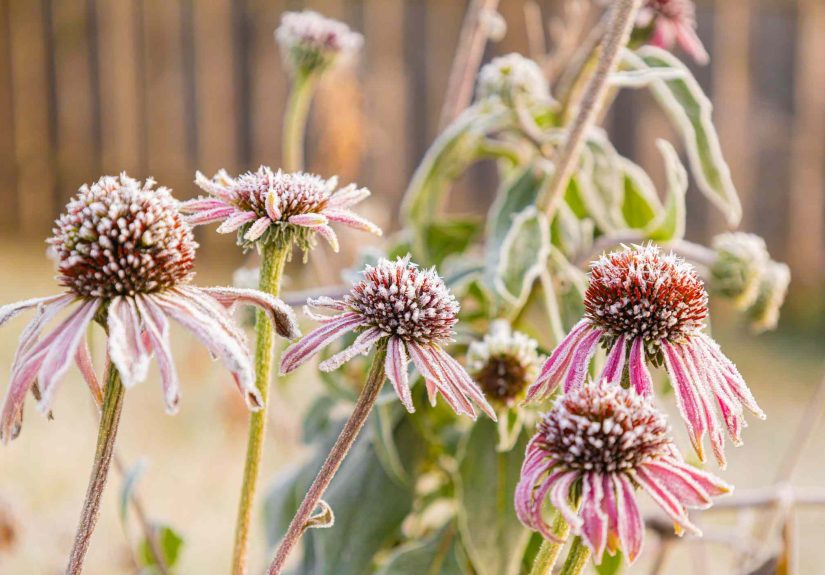
Frost affects the softest, most exposed parts of the plant first. If your coneflowers are still blooming when temperatures dip below freezing, you may notice curled petals, limp leaves, water-soaked stems, or blooms that turn brown seemingly overnight. That is normal frost damage on the top growth.
What matters more is the root crown below the soil line. As long as the crown is healthy and the roots are not rotting in wet ground, the plant can often survive just fine. This is why gardeners sometimes say, “The flowers are done, but the plant is not dead.” It sounds dramatic, but it is accurate.
A light frost might leave the plant messy but functional for a little longer. A hard freeze usually ends the show. Either way, frost is more often the curtain call than the demolition crew.
When Frost Is Usually No Big Deal
Established Plants in the Ground
If your coneflowers have been in the ground for a full season or longer, they are in the best position to handle frost. Their roots have had time to settle in, spread, and store energy. These plants are the ones most likely to bounce back in spring like nothing happened, which is honestly a bit rude to the rest of the garden.
Well-Drained Soil
Cold alone is not always the enemy. Cold plus soggy soil is where the trouble begins. Coneflowers prefer soil that drains well. In winter, wet crowns and poorly drained beds can lead to rot, which is much more dangerous than frost itself. Gardeners often blame cold when the real villain was water hanging around where it should not.
Plants Given Time to Settle Before Winter
Fall is a good time to plant many perennials, including coneflowers, but timing matters. A plant that gets several weeks to root in before the first frost is much more likely to survive winter well. A plant shoved into the ground right before a freeze is basically being sent into battle in flip-flops.
When You Should Worry a Little
Brand-New Fall Plantings
If you planted coneflowers too close to your first frost date, the roots may not have had enough time to establish. That does not guarantee failure, but it does raise the odds of winter stress. In that case, light winter protection can help, especially in colder regions.
Containers and Raised Pots
Coneflowers in containers are more exposed because the roots are not insulated by the ground. A potted coneflower that would be perfectly happy in a garden bed can struggle when its root ball freezes solid over and over. If you grow coneflowers in pots, moving them to a sheltered location or giving extra winter protection is often a smart move.
Some Hybrid Cultivars
Here is where the garden label actually matters. Not all coneflowers are equally hardy. Straight species and tried-and-true selections are often more dependable than some newer hybrids bred for unusual colors or dramatic flower forms. Those orange, coral, lime, and double-petaled beauties can be stunning, but sometimes the trade-off is less vigor or less reliable winter performance.
This does not mean all hybrids are weak. It means you should check the plant tag, hardiness zone, and reputation of the cultivar before assuming it will behave exactly like old-school purple coneflower.
How to Help Coneflowers Survive Frost and Winter
1. Do Not Overreact to Ugly Top Growth
Once frost damages the foliage and flowers, you do not need to panic-prune the plant into a neat little nub that same afternoon. A ratty coneflower in November is not necessarily a gardening emergency. It is just a coneflower in November.
2. Prioritize Drainage
If your garden tends to stay wet in winter, improve drainage before cold weather becomes a problem. Raised beds, amended soil, and careful site selection can do more for winter survival than any last-minute miracle mulch.
3. Mulch at the Right Time
A light layer of mulch can help moderate temperature swings and reduce frost heaving, especially for newer plantings. The trick is timing. Apply mulch after the ground has cooled or after a hard freeze, not too early. Mulching too soon can keep the soil warmer than you want and interfere with proper dormancy.
4. Leave Some Seed Heads Standing
Gardeners who leave coneflower seed heads through winter get a bonus: birds. Goldfinches in particular are famous for visiting those dried cones. The spent stems also add winter structure and can support beneficial insects. It is one of those rare moments in gardening when “doing less” is genuinely the better plan.
5. Water New Plants Before the Ground Freezes
Established coneflowers are fairly drought tolerant, but young plants heading into winter should not go in bone-dry. Give them a good soak before the ground freezes if fall has been dry. Hydrated roots handle winter stress better than thirsty ones.
Should You Cut Coneflowers Back After Frost?
This is where gardeners split into two camps: the tidy crowd and the wildlife crowd. The tidy crowd wants everything cut back the minute it looks crispy. The wildlife crowd likes seed heads, winter texture, and a little mess with a purpose. The good news is that coneflowers can work with either approach.
If the plant had disease issues, such as badly spotted or mildewed foliage, cleaning it up in fall can make sense. If the plant is healthy, many experts suggest leaving stems and seed heads standing until late winter or early spring. That approach supports birds, adds seasonal interest, and may help with insulation.
If you do cut back after several hard frosts, avoid cutting flush to the soil. Leaving a short stub can help mark the plant’s location and, in some gardens, catch a bit of insulating snow. If you leave stems taller, they may also benefit stem-nesting bees. So yes, your lazy-looking flower bed may secretly be a wildlife luxury resort.
What a Healthy Spring Comeback Looks Like
By late winter, coneflowers can look extremely unimpressive. This is not new. In spring, look for fresh shoots emerging from the crown near the soil surface. That is your signal that the plant survived dormancy and is back on the job.
If one clump is slow to emerge, be patient before declaring it dead. Coneflowers are not always the first perennials out of the gate. Some wait for the soil to warm a bit more. If there is no sign of growth well into the season, then you can start investigating whether winter rot, poor drainage, or a weak cultivar was the culprit.
So, Can Coneflowers Really Survive a Frost?
Yes, absolutely. In most gardens, established coneflowers survive frost without much trouble. What usually gets damaged is the top growth, not the life of the plant. That is why the flowers may collapse in fall while the roots quietly prepare for spring.
The main exceptions are plants that are newly installed, poorly drained, stuck in exposed containers, or less reliable hybrid selections. Give coneflowers sun, drainage, time to establish, and a little winter common sense, and they are usually more resilient than their droopy post-frost appearance suggests.
So the next time your coneflowers look tragic after a cold night, resist the urge to deliver a full funeral speech. They are probably just sleeping. Messily. With birds.
Gardeners’ Experiences: What People Notice After the First Frost
Talk to enough gardeners about coneflowers and frost, and a pattern shows up fast. The first thing nearly everyone notices is how sudden the visual change can be. One day the plants are still carrying color, feeding bees, and pretending summer might last forever. Then one crisp night rolls through, and by breakfast the petals look limp, the foliage looks tired, and the whole planting seems to have aged ten years. For new gardeners, that moment can be alarming. For seasoned gardeners, it is more like, “Yep, there it is. The annual frost drama.”
Another common experience is that older clumps almost always perform better than young ones. Gardeners with established purple coneflowers often say the same thing: the blooms get knocked back, but the plants return reliably in spring with very little fuss. These are the clumps that have settled in, built sturdy root systems, and stopped asking for special treatment. They are the dependable friend who shows up wearing boots when the forecast looks questionable.
By contrast, gardeners who lose coneflowers over winter often describe a different setup. The plants were newly installed late in the season, placed in dense soil that stayed wet, or grown in containers that froze and thawed repeatedly. In other words, the problem was not the idea of frost by itself. The problem was frost plus stress. That combination comes up again and again in real-world garden stories.
Many gardeners also mention that the type of coneflower matters more than they expected. Traditional purple coneflowers get a reputation for reliability because they earn it. Some of the more unusual hybrids can still be wonderful, but gardeners often report that not every fancy color performs equally well from one winter to the next. The lesson they learn is simple: if you want bulletproof, go classic; if you want unusual flower color, check the hardiness details before handing over your money.
There is also the question of cleanup. Some gardeners cut everything down as soon as frost blackens the tops, mostly because they like a tidy look and do not enjoy staring at floppy stems all winter. Others leave seed heads standing and end up with a front-row seat to goldfinches pulling seeds from the dried cones. Plenty of gardeners who started in the tidy camp eventually drift into the wildlife camp once they realize dead-looking coneflowers can still be useful, interesting, and surprisingly beautiful in a wintry sort of way.
And finally, there is the spring moment every coneflower grower learns to love: the little green shoots appearing at the base just when you were starting to wonder if the plant had quit for good. That comeback is the reason gardeners trust coneflowers. Frost may win the fall beauty contest, but coneflowers usually win the long game.
Conclusion
Coneflowers are not frost-proof in the sense that their blooms stay flawless through freezing weather. They are frost-tough in the way that matters more: they usually survive it. For most gardeners, that is the distinction worth remembering. Frost can end the show, but it does not usually end the plant.
If your coneflowers are established, planted in well-drained soil, and matched to your hardiness zone, there is a very good chance they will treat frost like an inconvenience rather than a catastrophe. Give them a sensible site, avoid wet winter feet, and do not mistake fall dieback for total defeat. Coneflowers may look battered after frost, but beneath the soil they are often already planning their spring comeback.