Table of Contents >> Show >> Hide
- Why This Caramel Apple Cheesecake Works
- Ingredients
- Equipment Checklist
- Step-by-Step: How to Make Caramel Apple Cheesecake
- Apple Topping: Cinnamon Apples That Behave Themselves
- Caramel Sauce: Homemade Shortcut (Optional)
- How to Decorate and Serve
- Troubleshooting: Common Cheesecake “Oops” and Quick Fixes
- Make-Ahead, Storage, and Food Safety Notes
- Variations You’ll Want to Try
- FAQ
- of “Been There, Baked That” Experiences with Caramel Apple Cheesecake
- Conclusion
If fall had a fan club, this dessert would be the president, vice president, and the person who brings snacks to every meeting.
A caramel apple cheesecake recipe takes everything you love about a caramel applesweet-tart fruit, cozy spice, glossy caramel
and upgrades it with a creamy cheesecake filling that feels like it should come with a tiny velvet rope.
This guide doesn’t just hand you ingredients and vanish like a magic trick. We’ll talk technique (hello, crack prevention),
apple choices (some apples behave, some apples… do not), and how to get clean slices that look bakery-fancy without requiring a culinary degree.
Why This Caramel Apple Cheesecake Works
Cheesecake is basically a custard, which means it loves gentle heat and hates drama. The goal is a filling that’s silky,
not grainy; set, not dry; and rich, not “why is this cheesecake suddenly a sponge?” This recipe leans on a few proven ideas:
- Lower, steadier baking heat: A moderate oven temp helps the center cook without the edges puffing up and cracking later.
- Moist heat (water bath or pan-in-pan): Steam keeps the cheesecake from drying out and reduces sudden temperature swings.
- Room-temp ingredients + gentle mixing: Smooth batter without whipping in extra air (air expands, then collapses… and cracks happen).
- Apple topping cooked down: We sauté apples until most liquid is gone, so your cheesecake doesn’t turn into a cinnamon swamp.
- Caramel used strategically: A layer for flavor, a drizzle for glam, and an optional salted finish for grown-up “wow.”
The result: creamy cinnamon-kissed cheesecake, tender apples that still hold their shape, and a caramel drizzle that makes people
suddenly “just want a tiny slice” (and then return for a second tiny slice… and a third tiny slice…).
Ingredients
For the Graham Cracker Crust
- 2 cups graham cracker crumbs (about 14–16 full sheets, crushed)
- 2 tablespoons granulated sugar
- 1/2 teaspoon ground cinnamon
- 1/4 teaspoon fine salt
- 7 tablespoons unsalted butter, melted
For the Cheesecake Filling
- 32 ounces full-fat cream cheese, softened (4 blocks)
- 1 cup granulated sugar
- 2 tablespoons light brown sugar
- 3 tablespoons all-purpose flour (or 2 tablespoons cornstarch)
- 1 cup sour cream, room temperature
- 1 1/2 teaspoons vanilla extract
- 1 teaspoon ground cinnamon
- Pinch of nutmeg (optional but highly recommended)
- 4 large eggs, room temperature
For the Cinnamon Apple Topping
- 3 medium apples, peeled and diced into 1/2-inch pieces
- 2 tablespoons unsalted butter
- 1/3 cup packed light brown sugar
- 1 teaspoon ground cinnamon
- 1 tablespoon lemon juice
- Pinch of salt
- 1 teaspoon cornstarch + 1 tablespoon water (optional, if your apples are very juicy)
For the Caramel
- 1 to 1 1/2 cups caramel sauce (store-bought or homemade)
- Optional: flaky sea salt for a “salted caramel apple cheesecake” vibe
Apple note: For the best texture, use firm apples that hold their shape when cooked (think tart or sweet-tart varieties).
Super-soft apples can melt into applesauce, which is delicious… but not the look we’re going for here.
Equipment Checklist
- 9-inch springform pan
- Large roasting pan (for a water bath) or a 10-inch cake pan (for “pan-in-pan”)
- Heavy-duty aluminum foil (if using a traditional water bath)
- Electric mixer (hand or stand)
- Rubber spatula
- Instant-read thermometer (optional, but great for confidence)
Step-by-Step: How to Make Caramel Apple Cheesecake
1) Prep the Pan and Oven
Preheat your oven to 325°F. Lightly grease a 9-inch springform pan. For extra insurance against sticking,
you can line the bottom with a round of parchment paper.
2) Make the Crust
In a bowl, mix graham cracker crumbs, sugar, cinnamon, and salt. Stir in melted butter until the mixture resembles wet sand
the kind you’d happily build a tiny sandcastle out of if it tasted like cookies.
Press firmly into the bottom of the pan (and slightly up the sides if you like). Use the bottom of a measuring cup to pack it down.
Bake for 10 minutes, then set aside to cool while you make the filling.
3) Choose Your “Crack-Defense” Strategy
Cheesecake cracks usually come from overbaking, sudden temperature changes, or too much air in the batter. A water bath helps a lot.
Pick one:
-
Traditional water bath: Wrap the outside of your springform pan in 2–3 layers of heavy-duty foil.
Place the pan in a roasting pan and later add hot water until it reaches about halfway up the sides. -
Pan-in-pan method: Set the springform pan inside a slightly larger cake pan, then place that in the roasting pan.
Add hot water to the roasting pan. This reduces the chance of leaks without heavy foil origami.
4) Mix the Cheesecake Filling (GentlyNo Aerobics)
Beat the softened cream cheese on low to medium speed until smooth, scraping the bowl often.
Add granulated sugar and brown sugar, then mix just until combined.
Sprinkle in flour (or cornstarch) and mix briefly. Add sour cream, vanilla, cinnamon, and nutmeg.
Finally, add eggs one at a time, mixing on low and stopping as soon as each egg disappears into the batter.
Overmixing whips in air, and air loves turning into cracks later.
5) Assemble and Bake
Pour the filling into the cooled crust. Smooth the top.
Place the pan into your roasting setup and carefully pour hot water into the roasting pan.
Bake at 325°F for 60–75 minutes. The edges should look set and slightly puffed, while the center should still have a
gentle wobblethink “soft Jell-O handshake,” not “liquid trampoline.”
Optional doneness check: If using a thermometer, aim for about 150–155°F in the center.
6) Cool Like a Pro (Slow and Steady Wins the Slice)
Turn off the oven, crack the door open, and let the cheesecake sit inside for 1 hour.
Then remove it from the water bath and cool at room temperature until no longer warm.
Refrigerate for at least 6 hours, preferably overnight. Cheesecake is the rare dessert that genuinely improves after a nap.
Apple Topping: Cinnamon Apples That Behave Themselves
In a skillet over medium heat, melt butter. Add apples, brown sugar, cinnamon, lemon juice, and salt.
Cook for 10–15 minutes, stirring occasionally, until apples are tender and most liquid has cooked off.
If your apples are extremely juicy and the mixture won’t thicken, stir in the optional cornstarch slurry and cook for 30–60 seconds
until glossy. Cool the topping completely before putting it on the cheesecake (warm apples + cold cheesecake = condensation and slipping).
Caramel Sauce: Homemade Shortcut (Optional)
Store-bought caramel is totally fine. But if you want the “I made this” energy, here’s a simple approach:
- Heat 1 cup sugar with 1/3 cup water in a saucepan over medium heat until dissolved.
- Stop stirring and let it simmer until it turns a deep amber color.
- Carefully whisk in 6 tablespoons butter (it will bubble up enthusiastically).
- Slowly whisk in 1/2 cup warm heavy cream, then add vanilla and a pinch of salt.
Caramel tip: Crystallization often happens when sugar gets stirred or splashed onto the sides of the pan.
Keeping things calm and hands-off while it colors helps a lot.
How to Decorate and Serve
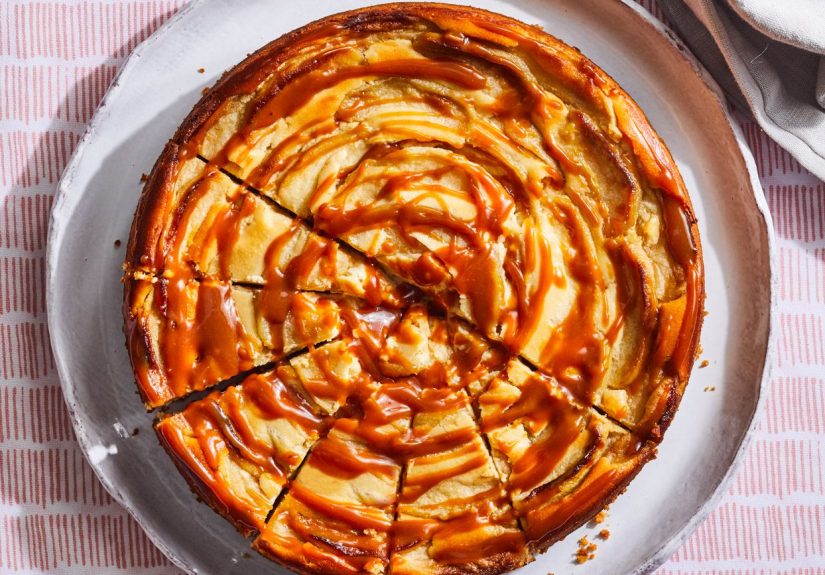
- Run a thin knife around the chilled cheesecake, then release the springform ring.
- Spread or spoon apple topping over the top.
- Drizzle caramel sauce generously. If using flaky salt, add a tiny pinch right at the end.
- Slice with a warm knife (dip in hot water, wipe dry, repeat) for clean edges.
Serving idea: Add a small dollop of whipped cream and a final caramel drizzle. It’s optionalbut so are shoes, and we still love them.
Troubleshooting: Common Cheesecake “Oops” and Quick Fixes
My cheesecake cracked. Is it ruined?
Not at all. Apple topping and caramel are basically delicious spackle. Next time: mix on low, avoid overbaking,
use a water bath, and cool slowly in the oven.
The crust is soggy.
Make sure the crust is prebaked and firmly packed. If using a traditional water bath, double-check foil wrapping or use the pan-in-pan method.
The center seems too soft.
Cheesecake firms as it chills. If it was very jiggly when you took it out, it may have needed a bit longer in the oven.
Next time, bake until the center wobble is small and controlled, not sloshy.
The apple topping made a puddle.
Cook apples longer to reduce liquid, cool completely, and consider the cornstarch slurry if your apples are extra juicy.
Make-Ahead, Storage, and Food Safety Notes
Cheesecake is made for planning ahead. Bake it the day before you want to serve it, then add apples and caramel closer to serving time
for the best texture.
- Refrigerate promptly: Perishable foods shouldn’t sit out longer than about 2 hours (1 hour in hot conditions).
- Fridge life: For best quality, enjoy within 4–5 days. (The crust can soften as time passes.)
- Freezing: Freeze the plain cheesecake (without apple topping) for best results. Wrap tightly in plastic wrap, then foil.
Freeze up to 2–3 months for best quality. Thaw overnight in the fridge.
Tip: Freeze slices individually so you can grab a single piece without committing to a full cheesecake situation. (Though committing is also fine.)
Variations You’ll Want to Try
Salted Caramel Apple Cheesecake
Add 1/2 teaspoon fine salt to your caramel sauce (or finish with flaky salt on top). Sweet + salty makes the apple flavor pop.
Apple Crumble Topping
Add a buttery oat crumble on top of the apples for an apple crisp-meets-cheesecake mashup. Great if you love texture.
Extra-Spiced Filling
Add a pinch of cloves or allspice to the filling for deeper fall spice. Go lightthose spices are powerful and do not need encouragement.
FAQ
What apples are best for caramel apple cheesecake?
Firm apples that hold shape are ideal. Tart apples balance caramel sweetness, while sweet-tart varieties add complexity.
You can even mix two kinds for the best flavor.
Do I have to use a water bath?
You don’t have to, but it’s one of the most reliable ways to prevent cracks and keep the texture creamy.
If you skip it, watch baking time closely and avoid overbaking.
Can I use store-bought caramel?
Absolutely. Choose a thick caramel sauce meant for desserts (not a thin coffee syrup).
Warm it slightly to make drizzling easier.
When should I add the apple topping?
Add it after the cheesecake is fully chilled. Warm topping can cause condensation and slide around.
of “Been There, Baked That” Experiences with Caramel Apple Cheesecake
People don’t just make a caramel apple cheesecake because they want dessert. They make it because they want a moment.
The kind where you open the fridge, see that glossy caramel drizzle, and think, “Yes. This is the correct timeline.”
Along the way, most bakers collect a few very specific experiences that aren’t written on the recipe cardbut absolutely live in the kitchen.
One of the first lessons is that apples have opinions. Dice them too small and they cook down fast, turning your topping into something closer
to apple butter. Dice them too big and you’ll get chunky, half-tender pieces that feel like they missed the memo. The sweet spot is about
1/2-inch pieces: big enough to stay recognizable, small enough to spoon neatly over a slice. And if your apple mixture looks watery in the pan,
the answer is almost always time. Let the liquid cook off so the topping clings instead of puddles. A tiny cornstarch slurry is like an emergency
umbrellauseful when the forecast is “unexpected juiciness.”
Then there’s caramel. Homemade caramel can feel dramatic, but it’s usually just asking for patience. The most common experience is watching sugar
turn from “totally normal” to “deep amber” in what feels like 12 seconds. That’s why many bakers keep everything ready before the color changes:
butter cubed, cream warmed, and a heatproof whisk standing by like a tiny stage manager. If caramel thickens too much after cooling, gently warming
it brings it back to drizzly life. And if you’re using store-bought caramel, warming it slightly (not scorching it) makes the difference between
elegant ribbons and a caramel “blob situation.”
Cheesecake itself teaches the art of not overreacting. The center wobble looks suspicious the first time you bake one.
It can feel wrong to pull it out when it’s not fully firm. But the classic experience is learning that cheesecake finishes setting as it cools and
chillsespecially overnight. Overbake it, and you don’t just risk cracks; you risk a dry texture that feels less like velvet and more like
“I accidentally made sweetened drywall.” Cooling slowly is another lived-in lesson. Many bakers discover that the oven-door crack-and-rest method
isn’t a cute suggestionit’s a crack-prevention strategy. Rapid temperature changes can cause a cheesecake to shrink quickly, and that’s where
dramatic fissures show up.
Finally, serving day comes with its own set of experiences: the warm-knife trick that suddenly makes you feel like a professional, the first slice
that’s never quite as tidy (chef’s snack, obviously), and the moment someone asks for the recipe right after saying they’re “not really a dessert
person.” Caramel apple cheesecake has that effect. It’s familiar enough to be comforting, fancy enough to be celebratory, and forgiving enough that
even if you get a crack or a slightly messy drizzle, it still disappears slice by slice. Honestly? That’s the best experience of all.