Table of Contents >> Show >> Hide
- What Is a Central Venous Catheter?
- PICC Line vs Port: The Fast Explanation
- How Doctors Choose Between PICC Lines and Ports
- The Case for a PICC Line
- The Case for an Implanted Port
- Side-by-Side Comparison
- Risks and Complications
- Daily Life: What Actually Changes?
- Specific Examples: Which One Might Fit Better?
- Questions to Ask Before You Choose
- What the Experience Often Feels Like in Real Life
- Final Thoughts
- SEO Tags
When doctors say you need a central venous catheter, it can sound a little dramatic, like your veins are about to get promoted to upper management. In reality, central lines are simply tools that make treatment safer, smoother, and a lot less irritating for people who need repeated IV therapy. Two of the most common options are the PICC line and the implanted port. They both deliver medication into large central veins near the heart, but they live very different daily lives.
If you are choosing between a PICC line and a port, the question is not which one is universally “better.” The better question is: Which one fits your treatment plan, your body, and your lifestyle? For a few weeks of IV antibiotics, one answer may make perfect sense. For months of chemotherapy, blood draws, imaging contrast, and a schedule that already feels like a second job, the other may be the clear winner.
This guide breaks down the differences in plain English, with the practical details people actually want to know: how each device is placed, how long it usually stays in, what daily care looks like, what the risks are, and what real life tends to feel like once the line becomes part of your routine.
What Is a Central Venous Catheter?
A central venous catheter, often called a central line, is a thin tube placed so its tip ends in a large vein near the heart. Doctors use central lines when a patient needs frequent infusions, blood draws, nutrition support, antibiotics, chemotherapy, or medications that would be too harsh for smaller veins in the hand or forearm.
Central access is useful because large veins can handle repeated treatment more comfortably and more safely. Small veins get tired. They burn. They scar. They hide from nurses. A good central line reduces repeated needle sticks and helps protect peripheral veins over time.
PICC Line vs Port: The Fast Explanation
What Is a PICC Line?
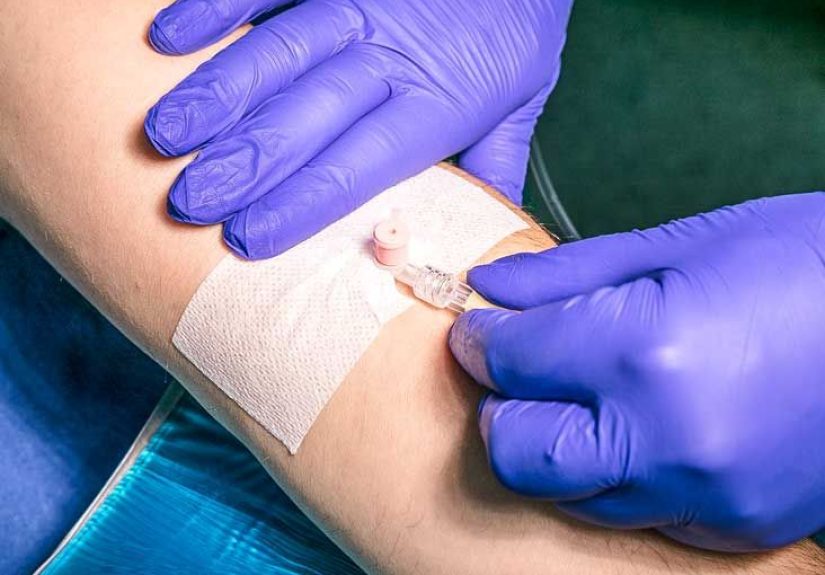
A PICC line, or peripherally inserted central catheter, is inserted through a vein in the upper arm and threaded until the tip reaches a large central vein. Part of the line remains outside the body, which means it is ready for use without a needle every time treatment is needed.
A PICC is often chosen when treatment will last for days to weeks or a few months. It can usually be placed without surgery, often at the bedside or in an outpatient procedure area. That makes it appealing when treatment needs to begin quickly.
What Is a Port?
An implanted port, often called a port or port-a-cath, is placed completely under the skin, usually in the chest and sometimes in the upper arm. It connects to a catheter that also ends in a large central vein. To use it, a clinician places a special needle through the skin into the port’s soft center.
A port is often chosen when treatment is expected to continue for months or even years. Because it sits under the skin, nothing dangles outside the body when it is not being used. That difference sounds small on paper and feels enormous in daily life.
How Doctors Choose Between PICC Lines and Ports
The choice usually comes down to four big factors: duration of therapy, type of medication, vein health, and lifestyle.
1. How Long Will Treatment Last?
If you need short- to intermediate-term treatment, such as a several-week course of IV antibiotics, a PICC line is often practical. It is relatively quick to place, easy to remove, and avoids a surgical procedure.
If you need long-term or intermittent treatment, such as chemotherapy every few weeks over several months, a port often makes more sense. It is built for the long haul and generally demands less day-to-day maintenance once healed.
2. What Kind of Infusions Are You Getting?
Some medications can damage or badly irritate small veins. Central access helps reduce that problem because the medication enters a larger, higher-flow vein. Both PICC lines and ports can be used for serious IV therapies, including chemotherapy, blood products, nutrition support, and certain antibiotics.
If treatment requires frequent access, blood draws, and repeated cycles over time, a port may feel more convenient. If treatment is continuous over a shorter period, a PICC may be perfectly reasonable.
3. What Are Your Veins Like?
Some people have veins that are easy to access. Others have what can only be described as hide-and-seek champion veins. If you have poor peripheral access, repeated failed IV attempts, or veins already irritated by prior treatment, your team may lean toward a central line sooner rather than later.
4. What Does Daily Life Look Like?
This factor is often underrated. A person who works, drives, cooks, showers quickly, travels, exercises lightly, and wants fewer visible reminders of treatment may strongly prefer a port. A person who wants to avoid a surgical procedure and only needs temporary therapy may be happier with a PICC.
The Case for a PICC Line
PICC lines have a lot going for them. First, they are usually faster and less invasive to place than ports. There is no pocket created under the skin and no implanted reservoir. For many patients, placement is straightforward, and removal is simple once treatment is done.
Second, a PICC can be very convenient for therapies that require regular access without repeated needle sticks. Because the line is external, nurses do not need to access it with a special needle each time. For someone receiving daily antibiotics at home, that can be a real advantage.
Third, PICC lines can work well for blood draws, infusions, and nutrition support. They are common in hospital care and home infusion programs because they are versatile and can be used right away once placed and confirmed.
PICC Advantages
- No surgery is usually required.
- Quick placement and easy removal.
- Good for short- to medium-term therapy.
- No needle access needed for each treatment session.
- Useful for home antibiotics, nutrition, and repeated infusions.
PICC Disadvantages
- Part of the catheter stays outside the body.
- It must be kept dry and protected.
- It typically needs regular dressing changes and flushing.
- It may restrict swimming, soaking, and some exercise.
- It can snag on clothing, bedding, seat belts, or enthusiastic pets.
The biggest downside of a PICC is not usually insertion. It is maintenance. The line and dressing must stay clean, dry, and secure. That means shower planning, routine dressing care, and daily awareness of where the tubing is. Many patients tolerate that just fine. Others find it exhausting after the novelty wears off, usually around day three.
The Case for an Implanted Port
Ports are often the favorite for long-term treatment because they are almost invisible in daily life once healed. There is no external tubing when the port is not accessed. You can usually wear normal clothes without arranging fabric around a dangling line. You do not need a dressing all the time. Many people say a port gives them a sense of normalcy that matters more than they expected.
A port also tends to be a strong option for long cancer treatment schedules, especially when infusions happen every few weeks over many months. It protects veins from repeated IV attempts and can support blood draws, medication, fluids, and some contrast injections when the device is appropriate for that purpose.
The tradeoff is that a port requires a minor surgical or interventional procedure to place. And every time it is used, a trained clinician must access it with a special needle through the skin. Some patients do not mind this at all. Others really, really mind it. Numbing cream can help.
Port Advantages
- Completely under the skin when not in use.
- Often better for months or years of treatment.
- Usually less day-to-day care after healing.
- Easier for clothing, bathing, and body image.
- No external tubing to snag or accidentally pull.
Port Disadvantages
- Requires a procedure for placement and removal.
- Needs needle access for each treatment session.
- Can be sore after insertion.
- Still carries infection and clot risks.
- Must be flushed periodically even when not in use.
When a port is not being used regularly, maintenance is lighter than a PICC, but it is not zero. Most centers still require periodic flushing based on their protocol. That schedule may be every few weeks or longer, depending on the device and institution.
Side-by-Side Comparison
| Feature | PICC Line | Port |
|---|---|---|
| Placement | Usually outpatient or bedside, no surgery | Minor surgical or interventional procedure |
| Location | Inserted in upper arm, tubing exits skin | Implanted under skin, usually chest |
| Best for | Short- to medium-term therapy | Long-term or intermittent therapy |
| Daily care | Higher maintenance | Lower maintenance when not accessed |
| Bathing | Must stay dry and covered | Usually easier after healing, depending on team instructions |
| Access for treatment | No needle needed each time | Needle required each time it is accessed |
| Visibility | Visible external tubing | Hidden under skin when not in use |
| Removal | Usually simple | Requires procedure |
Risks and Complications
Neither device is risk-free. The major concerns for both are infection, blood clots, blockage, malposition, and mechanical problems. A central line is incredibly useful, but it is still a foreign object in the body, and the body has opinions about that.
With a PICC, clinicians are often especially alert for site irritation, arm swelling, dressing problems, catheter migration, and arm-vein clotting. Because the line exits the skin, there is more daily handling and more opportunity for moisture or accidental pulling to create trouble.
With a port, the skin barrier stays intact when the port is not accessed, which can simplify life. But ports can still become infected, clog, flip, malfunction, or develop clot-related issues. Accessing a port also requires trained technique and sterile handling.
One important special case involves advanced kidney disease. In people who may need future dialysis access, many clinicians are cautious about PICC placement because arm-vein injury, stenosis, or thrombosis can complicate future dialysis planning. If kidney disease is part of the picture, this discussion should happen early.
Daily Life: What Actually Changes?
Showering and Bathing
PICC lines demand planning. The dressing must stay dry, which means waterproof covering, shorter showers, and no soaking. Ports are often easier after the insertion site heals because there is no external catheter to protect all day long.
Exercise and Movement
With a PICC, repetitive upper-arm motion, contact sports, heavy lifting, and activities that tug on the line may be restricted. Walking and light movement are usually easier to manage. With a port, physical activity is often simpler once healing is complete, although your team may still give temporary restrictions after placement.
Clothing and Sleep
PICC lines can catch on sleeves, blankets, and bra straps. Some people do not care. Others become amateur wardrobe engineers overnight. Ports are usually easier under clothing because they stay under the skin. You may feel the bump, but it does not require daily taping and arranging.
Body Image and Mental Load
This is the part many medical handouts mention politely but patients feel loudly. A visible PICC can make treatment feel present all the time. A port, although still very real, often fades into the background when it is not being used. For some people, that emotional difference matters just as much as the clinical one.
Specific Examples: Which One Might Fit Better?
Example 1: Six weeks of IV antibiotics after a serious infection.
A PICC is often a practical choice. It can be placed quickly, used daily, and removed once the antibiotic course ends.
Example 2: Chemotherapy every two or three weeks for eight months.
A port often fits better. It is built for repeated intermittent access and usually asks less of day-to-day life between infusion visits.
Example 3: A patient with very difficult veins and frequent lab draws.
Either option may help, but long-term planning often favors the device that matches treatment duration and lifestyle burden most closely.
Example 4: A patient with advanced chronic kidney disease.
The conversation becomes more specialized. Preserving veins for possible future dialysis access may affect whether a PICC is appropriate.
Questions to Ask Before You Choose
- How long do you expect I will need central access?
- Will my treatment be daily, weekly, or intermittent?
- Will I need frequent blood draws?
- How often will the device need dressing changes or flushing?
- What activities should I avoid with each option?
- Do I have vein or kidney issues that make one option better?
- Who will handle care if I go home with the device?
What the Experience Often Feels Like in Real Life
The experience of living with a PICC line versus a port is often more revealing than the technical definition. On paper, both are central venous catheters. In real life, they can feel like two completely different roommates.
People with a PICC line often describe the first reaction as relief. No more repeated IV attempts. No more hunting for a decent vein while everyone tries to stay cheerful. Treatment can start, blood can be drawn, and the medical part becomes more efficient almost immediately. But after that relief comes the daily routine. Showering becomes a small production. Dressing changes become calendar events. You learn to notice door handles, backpack straps, long sleeves, seat belts, and restless sleep. None of this is impossible. It is just constant. A PICC is convenient during treatment and demanding between treatments.
Caregivers often notice that a PICC creates a little household choreography. Someone reminds someone else not to get the dressing wet. Supplies need to be stored neatly. Home health visits or clinic visits may become part of the week. If the line looks loose, red, damp, or suspicious, it becomes everybody’s business in about two seconds. The upside is that a PICC can be a very efficient bridge through a finite period of care. When therapy ends, it can often be removed quickly, and that chapter closes without another trip to the operating room.
A port often inspires the opposite emotional arc. The beginning can feel bigger because there is a procedure to place it. The area may be sore for a few days. Some people dislike the idea of a device implanted under the skin, and many dislike the special needle used to access it. But once the incision heals, a lot of patients say the port becomes almost boring, which is very high praise in medicine. They get dressed normally. They sleep normally. They do not have external tubing to tape down, protect from water, or explain every time they change clothes.
Patients on long chemotherapy schedules often say the port makes treatment feel more sustainable over time. It is not that the port is fun. Absolutely nobody is throwing a party for needle access day. It is that the device interferes less with ordinary life between appointments. That can be a huge quality-of-life advantage during a long season of treatment.
Clinicians also see a difference in mindset. When therapy is short and intense, a PICC often feels practical and efficient. When therapy is long and cyclical, a port often feels like a better long-game strategy. The best stories usually come from a good match between the device and the purpose. The worst stories tend to happen when a short-term device gets stretched into a long-term lifestyle, or when a long-term device is placed for a problem that could have been solved more simply.
In other words, the “best” central line is usually the one that fits both the treatment plan and the person living with it every day. Medicine loves the catheter. Real life has to love the routine.
Final Thoughts
When comparing PICC lines versus ports, the smartest choice is rarely about one device being universally superior. It is about matching the tool to the job. A PICC line shines when treatment must start quickly and will likely end within weeks or a few months. A port shines when treatment stretches across months, happens intermittently, and calls for a little more freedom between appointments.
If you are deciding between the two, think beyond insertion day. Ask what life will feel like at home, in the shower, at work, during sleep, during travel, and after month three when motivation gets a little less cinematic. That is usually where the right answer becomes obvious.
The best conversation is a practical one with your care team: how long, how often, how intense, how active, and how much maintenance you can realistically handle. Once those pieces are on the table, the PICC-versus-port debate becomes much less mysterious and a lot more personal.