Table of Contents >> Show >> Hide
- Why Chair Exercises Can Work So Well for MS
- Before You Start: Smart Safety Tips
- 10 Chair Exercises for MS Strength, Mobility, and Flexibility
- How to Build a Simple Chair Exercise Routine
- Tips for Managing Fatigue, Spasticity, and Heat Sensitivity
- Common Mistakes to Avoid
- What the Experience of Chair Exercise with MS Often Feels Like
- Final Thoughts
- SEO Tags
If you live with multiple sclerosis, you already know that movement can feel a little unpredictable. Some days your body says, “Let’s do this.” Other days it says, “Absolutely not, and also please sit down immediately.” The good news is that seated movement still counts. In fact, chair exercises for MS can be one of the smartest ways to build strength, improve flexibility, support balance, and keep your body engaged without picking a fight with fatigue.
A chair is not a downgrade. It is not the “backup plan” for exercise. It is simply a tool, and a very useful one at that. A solid chair gives you stability, reduces fall risk, and makes it easier to focus on posture, range of motion, breathing, and controlled muscle activation. For many people with MS, that means less guesswork and more confidence.
This guide walks through practical chair exercises for multiple sclerosis, along with safety tips, a simple weekly routine, and real-life insight into what this kind of movement often feels like. No gym membership required. No inspirational montage required either.
Why Chair Exercises Can Work So Well for MS
MS affects everyone differently, but several symptoms can make traditional exercise harder than it looks on paper. Fatigue, muscle weakness, spasticity, balance changes, dizziness, coordination issues, and heat sensitivity can all turn an ordinary workout into an overly ambitious life decision. That is where seated exercise shines.
When you are supported in a chair, you can work on key fitness goals in a more manageable way. Chair exercises can help you:
- Maintain or improve joint mobility
- Build strength in the legs, core, shoulders, and arms
- Practice posture and body awareness
- Reduce stiffness from prolonged sitting or inactivity
- Support circulation with gentle lower-body movement
- Exercise with less fear of losing your balance
For people with MS, “effective exercise” does not have to mean intense exercise. Consistent, low-impact movement often delivers the biggest payoff because it is easier to repeat. And when a routine is repeatable, it becomes useful in real life instead of living forever in the “I should probably do that” category.
Before You Start: Smart Safety Tips
Before beginning a new chair workout for MS, check with your neurologist, physical therapist, or rehabilitation provider, especially if you have had a recent flare, frequent falls, severe spasticity, or major changes in strength or sensation.
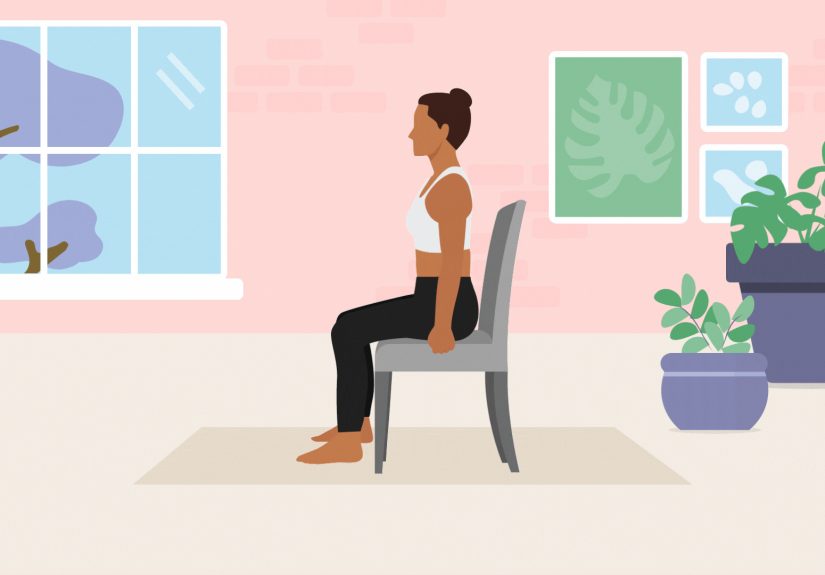
Use a sturdy chair that does not roll. Sit tall with both feet supported when possible. Wear comfortable clothes, keep water nearby, and exercise in a cool room if heat tends to worsen your symptoms. Start small, move slowly, and stop if you feel sharp pain, chest pain, unusual shortness of breath, sudden dizziness, or anything that feels clearly wrong instead of merely challenging.
A helpful rule for MS exercise is this: you want to feel worked, not wiped out. Mild fatigue after movement can happen, but if your symptoms stay noticeably worse long after you finish, scale back the next session. Better to leave a little in the tank than spend the rest of the afternoon negotiating with your nervous system.
10 Chair Exercises for MS Strength, Mobility, and Flexibility
Try these seated exercises in a slow, controlled way. Aim for 6 to 12 repetitions per move, or 20 to 30 seconds for gentle mobility work. Rest as needed between exercises.
1. Seated Belly Breathing
Sit tall with your shoulders relaxed and one hand on your belly. Inhale slowly through your nose and let your belly expand. Exhale gently through your mouth. Repeat for 5 to 8 breaths.
This may look simple, but it sets the tone for the whole session. Controlled breathing can help you relax tight muscles, focus your posture, and ease into movement without rushing.
2. Shoulder Rolls
Lift your shoulders up toward your ears, roll them back, then lower them down. Repeat 8 to 10 times, then reverse the direction.
Shoulder rolls are excellent for loosening upper-body tension, especially if you spend a lot of time seated or using mobility equipment. They are also wonderfully low drama, which is underrated in exercise.
3. Seated Arm Raises
With arms at your sides, slowly lift both arms forward or out to the side to a comfortable height, then lower them with control. You can do this without weights or with very light hand weights if approved by your clinician.
This exercise helps strengthen the shoulders and upper back while encouraging better posture. Keep your neck relaxed and avoid shrugging.
4. Seated Marching
Sit near the front of the chair and lift one knee, then the other, as if you are marching in place. Move slowly and stay upright. Continue for 20 to 40 seconds.
Seated marching is a practical way to wake up the hip flexors, lower abdominals, and circulation. It can also be a nice option on days when walking feels unstable or extra tiring.
5. Knee Extensions
Straighten one leg in front of you until the knee is comfortably extended, then lower it back down. Repeat on the other side.
This seated leg exercise targets the quadriceps, which matter for standing, transferring, and general lower-body function. Move with control and avoid snapping the knee into place.
6. Ankle Pumps
With both feet on the floor, lift your toes while keeping your heels down, then press your toes down and lift your heels. Repeat 10 to 15 times.
Ankle pumps support circulation and gentle ankle mobility. They are especially useful if you spend long periods sitting, have lower-leg stiffness, or want a low-energy move that still counts as productive.
7. Ankle Circles
Lift one foot slightly off the floor and slowly circle the ankle 5 to 8 times in each direction. Switch sides.
This can help with mobility and body awareness around the ankles and feet, which is important for walking mechanics, transfers, and reducing stiffness.
8. Seated Trunk Rotations
Cross your arms over your chest or place your hands on your shoulders. Slowly rotate your torso to one side, come back to center, then rotate to the other side.
This seated stretch encourages spinal mobility and can help counteract the stiff, “I have become one with this chair” feeling that shows up after too much sitting.
9. Seated Side Reaches
Lift one arm overhead and gently lean to the opposite side. Return to center and repeat on the other side.
This move stretches the side body, ribs, shoulders, and trunk. Keep it gentle. You are going for length, not a dramatic yoga pose that requires a soundtrack.
10. Seated Core Brace with Posture Hold
Sit tall, imagine a string lifting the top of your head, and gently tighten your abdominal muscles as if preparing for a light poke in the stomach. Hold for 5 to 10 seconds, then relax. Repeat 5 to 8 times.
This subtle seated core exercise can help improve postural control and trunk stability, both of which matter for daily movement. Small does not mean useless. Small often means sustainable.
How to Build a Simple Chair Exercise Routine
If you are just getting started, do not try to conquer the entire list in one heroic session. Begin with 4 to 6 exercises and keep the workout to about 10 minutes. That is enough to build momentum without overdoing it.
Here is a beginner-friendly example:
- Seated belly breathing: 1 minute
- Shoulder rolls: 10 reps each direction
- Seated marching: 20 seconds
- Knee extensions: 8 reps per leg
- Ankle pumps: 12 reps
- Seated side reaches: 5 per side
Once that feels manageable, increase one variable at a time. You can add a few repetitions, extend the time, include one more exercise, or repeat the circuit twice. Slow progression is usually the better strategy for MS because it respects fatigue, symptom fluctuation, and recovery.
A realistic weekly goal might look like this:
- 2 to 4 chair exercise sessions per week
- 5 to 20 minutes per session
- Extra stretching or breathing work on tougher days
Consistency matters more than perfection. A 10-minute session done regularly will almost always beat a 45-minute workout you dread, postpone, and eventually treat like folklore.
Tips for Managing Fatigue, Spasticity, and Heat Sensitivity
MS exercise is not just about the moves themselves. It is also about how you set up the session. A few simple adjustments can make chair exercises more comfortable and more effective.
For Fatigue
Exercise earlier in the day if you usually have more energy then. Break movement into shorter sessions instead of one long workout. Some people do better with two five-minute rounds than one 20-minute effort.
For Spasticity and Stiffness
Start with breathing and gentle range-of-motion exercises before doing strength work. Move slowly, avoid bouncing, and give your muscles time to settle into the motion.
For Heat Sensitivity
Use a fan, keep the room cool, drink water, and wear light clothing. If heat tends to trigger temporary symptom worsening, shorter seated sessions may feel much better than trying to push through a longer workout.
For Balance Concerns
Choose a stable chair with a firm seat. Keep your feet grounded. If one side is weaker, move carefully and consider working with a physical therapist to tailor the routine.
Common Mistakes to Avoid
- Going too hard on a good day: It is tempting, but overdoing it can backfire.
- Skipping rest breaks: Rest is not quitting. Rest is strategy.
- Rushing through movements: Control matters more than speed.
- Ignoring posture: Slumping turns many exercises into random flailing.
- Comparing yourself to someone else: MS is personal. Your routine should be too.
What the Experience of Chair Exercise with MS Often Feels Like
One of the most overlooked parts of exercising with MS is the emotional side of it. Chair exercise can feel surprisingly complicated at first, not because the moves are difficult, but because they challenge old assumptions about what “real exercise” is supposed to look like. Many people spend years absorbing the idea that workouts only count when they are sweaty, intense, and vaguely intimidating. Then MS enters the chat, rewrites the rules, and suddenly a seated routine becomes one of the most practical and effective tools available.
For some people, the first experience with chair exercises is relief. The body feels supported. The fear of falling drops a notch. Movements that seemed impossible while standing suddenly become doable while seated. That shift can be powerful. It turns exercise from a test into a resource. Instead of asking, “Can I keep up?” the question becomes, “What can I do safely and consistently today?” That is a much kinder and more useful question.
Others describe chair exercise as a confidence rebuild. MS can make people second-guess their body, especially when symptoms change from day to day. A simple seated routine offers proof that movement is still available, even when energy is low or balance feels off. Being able to complete a short session, however modest it looks, often creates a sense of momentum. And momentum matters. It helps people feel more connected to their bodies rather than stuck in a constant negotiation with them.
There is also a practical comfort to chair-based movement. It fits real life. You can do it at home. You can do it in short bursts. You can do it on days when leaving the house feels like too much effort. You can do it while managing fatigue, weather, work, caregiving, or a body that woke up and chose unpredictability. That flexibility is a major reason seated exercise is so valuable for people with multiple sclerosis. A routine only helps if it can survive ordinary life.
Over time, many people notice small wins before dramatic ones. Maybe standing up from a chair feels smoother. Maybe your shoulders are less stiff at the computer. Maybe you feel steadier during transfers. Maybe your posture improves enough that breathing feels easier. These are not flashy victories, but they are deeply meaningful because they show up in everyday life, where function actually matters.
Another common experience is learning to pace without guilt. People with MS often get mixed messages about activity. Move more, but do not overheat. Exercise, but avoid exhaustion. Be active, but listen to your body. Chair exercise can help make those messages feel less contradictory. Because the setup is controlled and adjustable, it becomes easier to experiment and find your sweet spot. You may learn that 12 minutes works better than 20. You may discover that mornings are better than evenings. You may realize that breathing exercises and leg work are great on one day, while stretching is the right call on another. That is not inconsistency. That is skill.
Perhaps the most encouraging part is this: seated movement often becomes a gateway, not a limit. Once people feel safer and stronger in the chair, they may branch into resistance bands, chair yoga, seated dance, transfer practice, or brief standing exercises with support. And if they do not, that is fine too. A chair routine does not need to lead somewhere else to be worthwhile. It already counts. It already helps. It already belongs in a strong, flexible, realistic approach to living with MS.
Final Thoughts
Chair exercises for MS are not a consolation prize. They are a practical, adaptable, low-impact way to stay active while respecting the realities of multiple sclerosis. Whether your goal is better flexibility, stronger legs, less stiffness, improved posture, or just a routine that does not leave you flattened for the rest of the day, seated exercise can meet you where you are.
Start small. Stay consistent. Keep the room cool. Celebrate progress that shows up in daily life, not just on a fitness chart. And remember: if your chair is helping you move more comfortably and more confidently, then that chair is doing excellent work.