Table of Contents >> Show >> Hide
- What “Ceiling Mounted” Really Means (and Why It’s Not Just a Fancy Mood)
- Meet the Cirrus: Minimalist Looks, Maximum “Get Out of My Kitchen Air” Energy
- Quick Specs at a Glance
- Performance: Airflow, Capture, and the Myth of “More CFM Fixes Everything”
- Lighting and Controls: The Hood That Thinks It’s a Lighting Designer
- Installation Reality Check: Plan It Like a Pro (Even If You’re Not One)
- Makeup Air: The Part Everyone Forgets Until a Door Won’t Close
- Maintenance: Keeping Brushed Stainless Beautiful (and Filters Not Gross)
- Who the Cirrus Is Perfect For (and Who Should Swipe Left)
- FAQs
- Conclusion: A Sleek Ceiling Hood That’s Serious About Air
- Real-World Experiences with the Cirrus (the stuff you only learn after it’s installed)
Open-concept kitchens are amazingright up until your “open concept” becomes an “open cologne counter” for last night’s salmon. If your cooktop sits on an island (or you just hate bulky hoods photobombing your sightlines), a ceiling mounted range hood is the sleek, grown-up answer. And the Cirrus Brushed SS Ceiling Mounted Range Hood is basically the stealth bomber of kitchen ventilation: it hangs out up top, looks more like a modern lighting feature, and quietly pulls smoke, steam, and grease out of your air before it has time to redecorate your couch.
This guide breaks down what the Cirrus is, why ceiling-mount hoods behave differently than wall hoods, how to plan installation without surprises, and what “quiet power” really means when you’re pan-searing steak like you’re auditioning for a cooking show.
What “Ceiling Mounted” Really Means (and Why It’s Not Just a Fancy Mood)
A ceiling mounted (or flush/low-profile ceiling) hood is designed for island layouts and open kitchens where you want ventilation without a big, boxy canopy dropping into your line of sight. Instead of “look at me!” duct-chimney drama, you get a streamlined, near-ceiling installation that blends into the architecture and keeps the room visually open.
The trade-off: stealth comes with homework
Because the hood is farther from the cooking surface than many traditional setups, ceiling hoods rely heavily on smart capture design, adequate airflow (CFM), and clean ducting. In other words: the Cirrus can perform beautifullybut only if it’s planned and installed like it matters. (It does.)
Meet the Cirrus: Minimalist Looks, Maximum “Get Out of My Kitchen Air” Energy
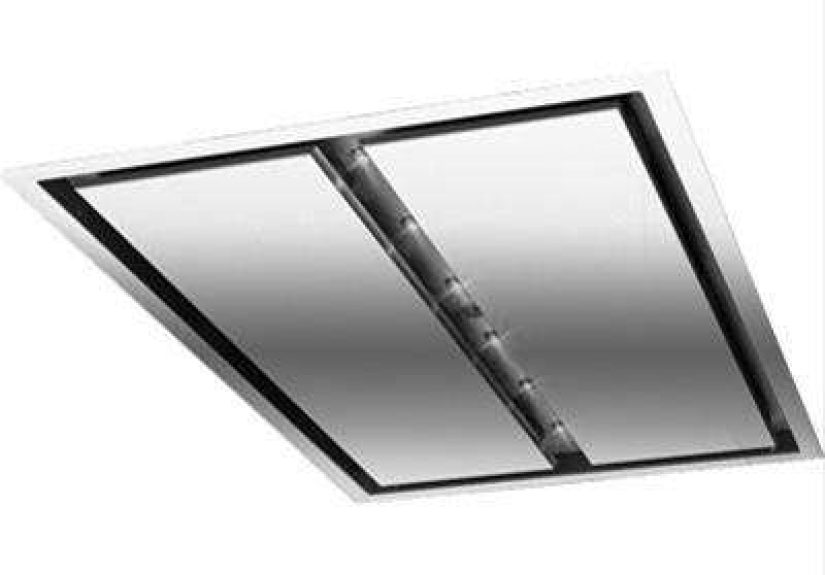
Cirrus is built to be visually discreetalmost like a lighting system that just happens to be excellent at pulling cooking odors upward. Its brushed stainless steel panels sit close to the ceiling for minimal intrusion, making it a natural fit for contemporary kitchens that prioritize clean lines and uninterrupted views.
The model family is commonly seen in a brushed stainless finish (often listed as 430 brushed stainless steel #4), with modern features like multi-speed controls, LED lighting, and convenience touches that make daily use feel less like “operating machinery” and more like “press button, breathe easier.” It’s also known for perimeter aspiration and mesh filters designed to help capture grease efficiently.
Quick Specs at a Glance
Specifications can vary by exact Cirrus configuration (internal iQ blower vs. external blower option), but these are the core characteristics consistently associated with Cirrus ceiling-mount units.
| Mounting style | Ceiling mount / island ventilation |
| Finish | Brushed stainless steel (commonly listed as 430 stainless #4) |
| Approx. size | About 43–44 inches wide; ~27.5 inches deep; ~13.75 inches high |
| Duct connection | 8-inch round duct (typical) |
| Fan speeds | 4 speeds (electronic/light-touch controls) |
| Lighting | Six LED lights (commonly 3W each); some literature notes multiple intensities |
| Filters | Mesh/grease filters; dishwasher-safe; quick-release latch mentioned in retailer specs |
| Convenience | Remote control, delay-off timer (~10 minutes), filter clean reminder |
| Airflow approach | Perimeter aspiration + iQ/GPS tech on certain versions; external blower options on others |
Performance: Airflow, Capture, and the Myth of “More CFM Fixes Everything”
Let’s talk about the number everyone loves to chase: CFM (cubic feet per minute). It’s the airflow rating that tells you how much air the hood can move. But CFM is only part of the storyespecially with a ceiling mounted range hood, where capture matters just as much as raw power.
Perimeter aspiration: why the Cirrus doesn’t just “suck air,” it guides it
Perimeter aspiration pulls air through a narrower intake path around the perimeter, which can increase air velocity at the intake and improve capture of smoke and vapors as they rise. Translation: it’s trying to catch the mess before it spreads like gossip.
Quiet power: what to realistically expect
Cirrus literature frequently highlights quiet operation at normal speeds and higher performance at boost levels, depending on the blower configuration. Some versions emphasize iQ/GPS-style blower systems, while other configurations are designed to pair with external (in-line or remote) blowersoften the secret weapon for keeping noise down in the kitchen while still moving serious air.
Practical advice: if you cook “light” (simmering, boiling, occasional sauté), you’ll live in the lower speeds most of the time. If you cook “loud” (wok, high-heat searing, frying), plan for stronger airflow, excellent ducting, and a makeup air strategy if your setup crosses local code thresholds.
Lighting and Controls: The Hood That Thinks It’s a Lighting Designer
One reason Cirrus blends into modern kitchens is that it genuinely behaves like a sleek ceiling lightexcept it’s also dealing with grease and smoke like a responsible adult.
LED lighting that actually helps you cook
Cirrus models commonly include six LED lights, often cited as 3-watt LEDs, and some product literature notes multiple lighting intensities. This matters more than people think: good task lighting helps you see browning, bubbling, and “is this garlic about to burn?” situations in real time.
Controls that don’t require a pilot’s license
- 4-speed electronic controls let you match ventilation to the cooking chaos level.
- Remote control is included in common Cirrus documentationuseful when your hands are busy (or covered in dough).
- Delay-off keeps the hood running after cooking so lingering odors don’t move in and start paying rent.
- Filter clean reminder nudges you before performance drops and the hood starts “working harder, not smarter.”
Installation Reality Check: Plan It Like a Pro (Even If You’re Not One)
Ceiling mounted range hood installation is not the moment to embrace chaos. The Cirrus is designed to be framed into the ceiling, ducted effectively, and supported properly. In commonly referenced installation guidance for this model family, mounting height is noted as roughly 48 to 72 inches above the cooking surface for best removal of cooking impurities, and the unit is substantial enough that two installers are recommended.
Before you buy: a quick planning checklist
- Ceiling structure: Make sure framing can support the hood. Installation guidance for Cirrus-family units references a hood weight in the neighborhood of ~64 lbs, plus the framing must handle its own load.
- Duct route: Short and straight is best. Elbows and long runs reduce performance, so plan the cleanest path to the exterior.
- Duct sizing: Cirrus specs commonly call for an 8-inch round duct. Undersizing is a classic way to buy “quiet power” and install “loud disappointment.”
- Blower choice: Internal iQ versions vs. external blower configurations can change noise, airflow, and installation complexity.
- Electrical: These are permanent appliancesfollow local code and use qualified pros where required.
Makeup Air: The Part Everyone Forgets Until a Door Won’t Close
High-performing ducted kitchen ventilation exhausts a lot of air. If your home is relatively tight (modern construction often is), strong exhaust can depressurize the spaceleading to backdraft risks for combustion appliances and weird airflow behavior (like your fireplace deciding it’s an air freshener).
The “400 CFM” line in the sand
Many code paths reference makeup air requirements when kitchen exhaust is capable of exceeding 400 CFM. That often means a system that brings in replacement air and is interlocked to operate with the hood.
Why this matters for Cirrus configurations
Depending on the Cirrus blower setup (especially external blower options), airflow capability can exceed that threshold. Some Cirrus/Best literature also highlights “code-ready” style airflow management features on iQ versions to help address local code or makeup air requirements. Bottom line: if your design can move big air, plan for makeup air like it’s part of the appliancebecause functionally, it is.
Pro tip: talk to your HVAC contractor early. It’s easier (and cheaper) to plan makeup air during design than to retrofit after inspectionor after your kitchen starts whistling like a haunted teapot.
Maintenance: Keeping Brushed Stainless Beautiful (and Filters Not Gross)
A ceiling mounted stainless steel range hood is basically a magnet for airborne kitchen realities: grease mist, dust, and the occasional “how did that get up there?” moment. Maintenance is straightforward, but consistency matters.
Filter care: your performance multiplier
Cirrus models commonly use mesh grease filters, and documentation/retailer specs often note dishwasher-safe filters and quick-release latches. Clean filters improve airflow, reduce noise strain, and keep the hood operating the way it did on day one not day 401.
Stainless steel care without turning it into a streaky abstract painting
- Use a soft microfiber cloth and a gentle cleaner made for stainless steel.
- Wipe with the grain (stainless has a “hair direction,” and yes, it’s judging you).
- Avoid abrasive pads that can scratch the brushed finish.
- Stay on top of itlight weekly cleaning beats heavy “why did I wait?” scrubbing.
Who the Cirrus Is Perfect For (and Who Should Swipe Left)
Great fit if you:
- Have an island cooktop and want a flush mount island range hood aesthetic.
- Love open sightlines and don’t want a bulky canopy dominating the room.
- Cook often and want real ducted ventilation instead of “good vibes and charcoal filters.”
- Care about lighting and want your cooktop well lit from above.
Think twice if you:
- Have low ceilings or limited cavity space for ducting and framing.
- Want the simplest DIY install possible (ceiling framing + duct planning isn’t “simple”).
- Primarily need a budget hood for occasional boiling and toast-related emergencies.
FAQs
Is the Cirrus ducted or ductless?
Cirrus ceiling-mount setups are commonly presented as ducted systems, and ducting to the exterior is typically recommended for best performance. Some Best literature references optional recirculation capability on certain iQ configurations, but whether that’s applicable depends on the exact model and accessory kit availability. When in doubt, verify the specific model’s documentation and your installer’s plan.
How much CFM do I need?
It depends on your cooktop size, cooking style, and ducting. A helpful way to think about it: more heat, more grease, more smoke usually means more airflow and better capture design. Ventilation resources commonly cite hood sizing guidance and recommended airflow ranges based on cooktop width. If you routinely sear, stir-fry, or fry, plan for robust performanceand a makeup air plan if your system can exceed code thresholds.
Does ducting really matter that much?
Yes. A straight, short duct run with minimal elbows keeps static pressure lower and helps the hood deliver closer to its rated performance. Poor ducting can turn an excellent hood into an expensive ceiling decoration.
Conclusion: A Sleek Ceiling Hood That’s Serious About Air
The Cirrus Brushed SS Ceiling Mounted Range Hood is for people who want their kitchen to look clean, feel open, and still handle real cooking. It blends into the ceiling, throws bright LED task lighting on the cooktop, andwhen properly ducted and configuredcan deliver the kind of ventilation that keeps your whole living space from smelling like “last Tuesday’s garlic.”
The key is planning: choose the right blower approach, respect duct size and routing, and treat makeup air as part of the system when airflow capability is high. Do that, and Cirrus becomes the rare kitchen upgrade that improves both design and daily comfort.
Real-World Experiences with the Cirrus (the stuff you only learn after it’s installed)
Homeowners who choose a ceiling mounted hood like the Cirrus usually do it for one big reason: they want the kitchen to feel open. The first week after installation tends to be a mix of “Wow, the ceiling looks expensive now” and “Wait… where did the hood go?” That stealthy, low-profile look is the entire point. In open layouts, the Cirrus can feel like a design hack: you get island ventilation without a shiny metal monument hanging in the middle of your room.
The second thing people notice is lighting. Six LEDs aimed at the cooktop sounds like a minor feature until you realize how many kitchens have weird shadow zonesespecially over an island where overhead cans don’t hit the pan properly. With a ceiling hood’s lights doing the job, it becomes easier to spot the exact moment onions go from “sweating politely” to “starting a revolt.” If your model supports multiple lighting intensities, it’s even better: bright for cooking, softer when you’re just grabbing a late-night snack and don’t want your kitchen to feel like a stage interrogation.
Day-to-day usability often comes down to the remote control and the delay-off timer. People don’t talk about it much until they have it, then they get weirdly attached. It’s the small luxury of tapping a button from across the island while your hands are messy, or letting the hood run for ten minutes after cooking while you plate and clean. That delay-off is especially handy after frying or high-heat searingbecause the “smell event” doesn’t end the moment you turn off the burner.
Noise is where expectations need to be realistic. At normal speeds, many users describe ceiling-mount hoods like Cirrus as pleasantly unobtrusivemore background whoosh than conversation-killerespecially when paired with well-planned ducting or external blower setups. But crank any hood to high and physics takes over: moving lots of air makes sound. The win is that you can often cook at lower speeds most of the time and only go high when you’re doing something legitimately smoky, like blackening fish or trying to get restaurant-style crust on a steak.
The most common “wish I’d known” moment is not about the hood itselfit’s about the house. If your Cirrus configuration can move serious air, you may discover that your home is tighter than you thought. Signs show up fast: an exterior door that suddenly feels sticky to open while the hood is blasting, a faint draft from somewhere unexpected, or the sense that the hood isn’t pulling as well as you expected at max. That’s usually the cue for makeup air discussions. Once makeup air is addressed properly (often with an interlocked damper/system), performance tends to become more consistent and the whole house feels calmerlike it stopped holding its breath.
Maintenance is the final “real life” piece. Ceiling hoods feel out of sight, which can trick you into “out of mind.” But grease filters are still doing gritty work. Users who keep up with filter cleaning (dishwasher-safe or hand-clean, depending on your comfort level and what your dishwasher thinks about grease) tend to report steady performance and less lingering odor. People who ignore it often end up describing the hood as “not as strong as it used to be,” which is usually code for “my filters are wearing a winter coat of bacon.”
In short: installed thoughtfully, the Cirrus becomes one of those upgrades you stop noticingbecause it simply works. Your kitchen stays brighter, your air stays cleaner, and your open-concept living space stops smelling like whatever experiment you ran in your skillet. That’s the dream. Cirrus just happens to do it while looking like it belongs in a glossy design magazine.