Table of Contents >> Show >> Hide
- When “Tiny Kitty” Turns Into “Gentle Giant”
- World’s Longest Cat: What Does That Actually Mean?
- Why Some Cats Get So Big
- Big Cat, Big Responsibilities: Care Tips for an Extra-Long Feline
- Nutrition and weight: focus on body condition, not bragging rights
- Health checks: big breeds deserve proactive vet planning
- Grooming: long fur + long body = more maintenance
- Litter box reality: size matters (and so does quantity)
- Enrichment and space: think vertical and interactive
- Spay/neuter timing: talk it through with your veterinarian
- Signs Your “Tiny Kitty” Might Become a Long Cat Legend
- Can You “Make” a World’s Longest Cat?
- If You Think Your Cat Might Be Record-Long
- Conclusion: The Real Surprise Isn’t the LengthIt’s the Love
- Owner Experiences: of “How Did You Get So Big?” Real Life
There are two kinds of kitten photos in the world: (1) “Look how tiny!” and (2) “Wait… why is the kitten wearing a seatbelt like a passenger?”
If you’ve ever adopted a palm-sized furball and later realized you now live with a cat-shaped hallway rug, you already understand the emotional whiplash
of feline growth spurts.
This story has a special twist: a couple brings home a “tiny kitty,” expecting the usual cute chaossmall paws, squeaky meows, and naps inside shoes.
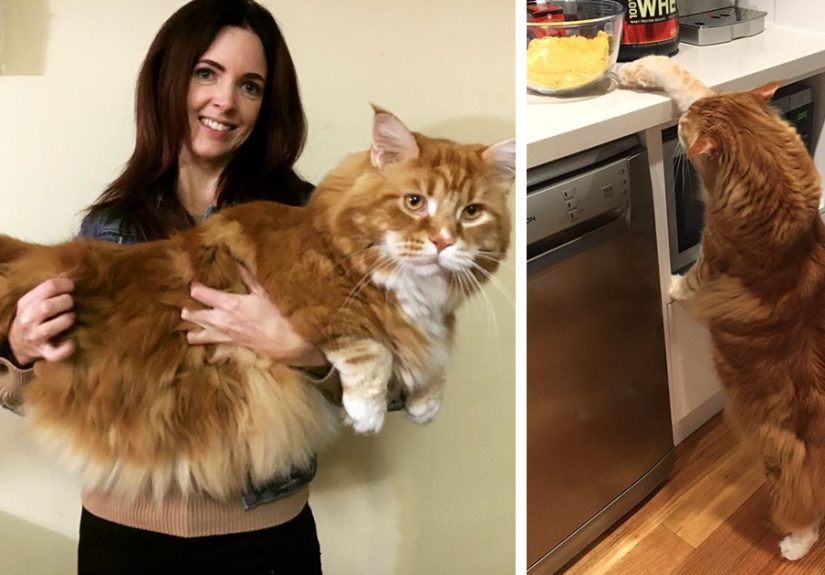
Then the kitten keeps growing. And growing. Suddenly, the cat is longer than your average throw blanket, draped across the couch like it pays rent.
Eventually, the family discovers they may be sharing their home with a world-record-level cat: the world’s longest domestic cat.
Beyond the headline, there’s a surprisingly practical question underneath all the “HOW is that cat real?” comments:
What makes some cats grow so big, how do you keep a supersized cat healthy, and what should you do if your kitten is clearly
auditioning for the role of “living ottoman”?
When “Tiny Kitty” Turns Into “Gentle Giant”
Most cats reach adult size relatively quickly, but some breeds take the scenic route. And the scenic route can include an extra-long body,
a plume of a tail, and paws that look like they were borrowed from a small lynx. Large domestic cat breedsespecially the famously big
Maine Coonare known for slow, steady growth and “surprise, I’m enormous now” energy.
That’s why the “tiny kitten becomes the world’s longest cat” plotline is believable. Record-setting cats aren’t usually created by magic
(or by feeding them protein shakes, whichplease don’t). They’re the result of genetics, breed traits, and a healthy environment that lets
them mature at their natural pace.
World’s Longest Cat: What Does That Actually Mean?
“Longest” is not the same as “heaviest,” “tallest,” or “most likely to steal your spot in bed.” The world-record version of “longest”
focuses on lengthtypically measured from the tip of the nose to the tip of the tail (yes, the whole glorious tail).
How length is measured (without turning your cat into a slinky)
- Choose calm timing: after playtime or a meal, when your cat is in “I have no thoughts” mode.
- Use a soft measuring tape: or a string you can lay along the cat, then measure the string.
- Get a helper: one person gently keeps the cat comfortable; the other measures.
- Don’t force a stretch: you want a natural, relaxed posturenot a dramatic “long cat” pose that ends in betrayal.
- Repeat measurements: cats are not rulers. They are mood-based liquids with opinions.
If you ever pursue a record claim, the key isn’t just lengthit’s verification. Records typically require clear documentation and standardized measuring
methods. Translation: you’ll need patience, proof, and probably treats.
Why Some Cats Get So Big
A couple adopts a kitten. It’s tiny. It fits in a hoodie pocket. Everyone agrees the cat will be “medium” at most. Thenplot twist
the kitten’s body length starts outpacing expectations.
Here’s what commonly drives that kind of growth:
1) Genetics: the blueprint you didn’t read
Just like humans, cats inherit size tendencies. Two average-sized parents can sometimes produce a larger kitten, but in general,
a kitten’s future size strongly reflects its lineage. With large breeds, the genetic “ceiling” is highermeaning the cat has
more growing to do, for longer.
2) Breed traits: some cats are built like SUVs
Maine Coons are famous for being big, rugged, and slow to mature. Breed organizations describe them as solid, hardy cats with a shaggy coat
and a dramatically plumed tailbasically, the cat equivalent of a winter jacket with personality.
And importantly: a long cat doesn’t always mean an overweight cat. Length is structure. Weight is management.
Your goal is a healthy body condition, not “largest possible unit.”
3) Growth timeline: big breeds may take longer
Many cats look “adult” by around 1–2 years old, but large breeds may keep developing longeradding muscle, filling out, and yes,
continuing to lengthen. This is why a kitten that seems normal at six months can feel like it’s doubling in presence by year three.
4) Nutrition: growth needs fuel, but not a buffet
A growing cat needs complete and balanced nutrition for its life stage. But “growing” is not an invitation to free-feed forever,
especially for indoor cats. Overfeeding can add fat, not healthy sizeand extra weight stresses joints, hearts, and overall quality of life.
Big Cat, Big Responsibilities: Care Tips for an Extra-Long Feline
When your cat is the length of a small canoe, the basics matter even more. Here’s how to keep a gentle giant thriving (and keep your home
from feeling like it’s been taken over by a friendly fur octopus).
Nutrition and weight: focus on body condition, not bragging rights
- Pick “complete and balanced” foods: Look for a nutritional adequacy statement (commonly referencing AAFCO standards) that matches your cat’s life stage.
- Adjust portions as your cat matures: a big-framed cat still needs the right calories for its activity level and body condition.
- Be cautious with trendy feeding: some veterinary guidelines advise against raw or non-sterilized animal-origin foods due to safety concerns.
- Store food safely: poor storage can spoil nutrients and invite contamination. Keep dry food cool and dry, and refrigerate leftovers promptly.
Health checks: big breeds deserve proactive vet planning
Large breeds can have breed-associated risks. For example, feline hypertrophic cardiomyopathy (HCM) is a common heart disease in cats and is known to appear
more often in certain breeds, including Maine Coons. If you have a Maine Coon (or suspect you do), ask your veterinarian about appropriate screening.
Genetic testing exists for certain breed-associated mutations, but it’s not a substitute for veterinary evaluation or ongoing monitoring.
Grooming: long fur + long body = more maintenance
Long-haired indoor cats often need grooming every few days to prevent tangles and mats. A big cat has more surface areameaning more coat to manage,
more shedding, and more opportunities for “mystery knot” discoveries. Use gentle combing, take breaks, and make it a low-stress routine.
Litter box reality: size matters (and so does quantity)
A very large cat needs a box that lets them enter, turn, and posture comfortably. Many behavior resources recommend the “one box per cat, plus one extra”
rule of thumbespecially in multi-cat homesbecause cats can be picky, private, and occasionally dramatic about bathroom politics.
Enrichment and space: think vertical and interactive
A long cat with a sharp brain needs outlets: climbing, scratching, hunting-style play, and cozy perches. Indoor-cat enrichment programs emphasize
building an engaging environmentvertical options, hiding places, rotating toys, and daily play that matches your cat’s “prey” style.
Spay/neuter timing: talk it through with your veterinarian
Spaying and neutering supports population control and can have health and behavior benefits. Many veterinary groups support sterilization of cats by around
five months of age, but the right timing for your specific cat should be discussed with your veterinarian, especially if you have a large-breed kitten with
a slower maturity timeline.
Signs Your “Tiny Kitty” Might Become a Long Cat Legend
No one can predict exact adult length from a kitten photo alone (despite what your aunt’s Facebook comment section believes), but there are hints:
- Oversized paws: like the kitten is wearing invisible snow boots.
- Long tail early on: a tail that seems comically out of proportion can be a clue.
- Slow-and-steady growth: not just a fast early spurt, but continuous development over years.
- Breed indicators: tufted ears, shaggy coat, sturdy frameespecially if the cat resembles a Maine Coon type.
- Big appetite with high activity: some growing cats eat more because they’re genuinely burning energy (still, portion guidance matters).
The best indicator isn’t a single traitit’s the pattern over time. If your cat keeps getting longer well past the age when most cats have stopped growing,
you may be living with a slow-maturing gentle giant.
Can You “Make” a World’s Longest Cat?
If you’re asking because you want to be famous on the internet, I support your dreamsbut not at the expense of your cat’s health.
Record-length cats are typically naturally large. Trying to “supersize” a cat through overfeeding is unsafe and can lead to obesity,
orthopedic strain, and other preventable health problems.
The healthiest mindset is: let genetics do what genetics does, and then support your cat’s wellbeing with quality care.
If your cat happens to be record-level long, that’s a delightful bonusnot the mission statement.
If You Think Your Cat Might Be Record-Long
- Measure at home carefully (and gently) multiple times.
- Get clear photos and videos showing the measurement process.
- Schedule a vet visit to confirm your cat is healthy and discuss any breed risks.
- Research official record requirements for measurement, documentation, and verification.
- Keep expectations realistic: records can change, categories vary, and verification standards are strict.
Conclusion: The Real Surprise Isn’t the LengthIt’s the Love
The headline is irresistible: a couple buys a tiny kitty, and it grows into the world’s longest cat. But the best part isn’t the number on the tape measure.
It’s the day-to-day reality of life with a gentle giant: the heavy-footed zoomies, the tail that clears coffee tables, the way a “lap cat” becomes a
full-body hug, and the quiet comfort of a confident cat who knows it belongs.
If your kitten is growing into a long-bodied legend, lean into smart care: balanced nutrition, regular veterinary guidance, grooming, enriched indoor life,
and a home setup that respects your cat’s size and instincts. And if your cat happens to be record-breaking? Congratulations.
Please kiss the giant furry noodle on the head for all of us.
Owner Experiences: of “How Did You Get So Big?” Real Life
Owners of oversized cats often describe the experience like living with a sweet roommate who slowly replaces your furnitureone nap at a time.
At first, it’s subtle. The kitten stretches out on a cushion and looks “so long!” You take a photo. Everyone comments: “That’s a big kitty!”
You feel proud. You feel chosen.
Then the upgrades begin.
The first upgrade is usually the carrier. The original kitten carrier becomes a comedy prop. Your cat sits in it like a grown adult trying to
squeeze into a toddler’s raincoat. So you buy a larger carrier. Then you buy a larger carrier than that. Eventually you realize your cat needs something
that looks less like “pet travel” and more like “small spacecraft.”
Next comes the cat tree situation. Standard cat trees work until your long cat climbs up, perches, and the whole structure looks like it’s
reconsidering its life choices. Owners often end up looking for sturdier towers, wider platforms, and scratching posts that can handle real leveragebecause
a big cat doing a full-body stretch is basically a Pilates class with claws.
Then you notice the tail physics. A long tail can knock over cups, tap your elbow while you type, and somehow find the one wet paintbrush
you forgot existed. Some owners start saying things like, “We tail-proofed the living room,” which is a sentence you never expected to say out loud.
The funniest part is often the lap time math. Your cat still believes it’s the same tiny baby and will attempt to sit on you with full confidence.
You accept your fate. The cat purrs. Your legs go numb. Love wins.
On the practical side, owners commonly report that bigger cats benefit from routines: consistent play (to keep joints and muscles happy), regular grooming
(because longer coats don’t untangle themselves), and portion control paired with body-condition monitoring (because “big frame” and “extra weight” are not
the same thing). Many also describe deeper bondslarge cats can be remarkably social and affectionate, often following their people around like fluffy shadows.
In the end, the surprise isn’t just that a tiny kitten became a record-worthy long cat. It’s that you adapt, your home adapts, and your heart definitely adapts.
You don’t just get a bigger catyou get a bigger daily dose of companionship, comedy, and comfort.