Table of Contents >> Show >> Hide
- The Mom Behind the Magic
- Why These Photos Work So Well
- How Photoshop Turns Real Moments Into Fantasy
- Why Children and Fantasy Photography Are a Perfect Match
- What Makes Her Work Feel Warm Instead of Overproduced
- What Parents and Creators Can Learn From This
- The Real-Life Experience Behind This Kind of Magic
- Final Thoughts
- SEO Tags
Original HTML body only. Source links intentionally omitted as requested.
Some parents document childhood with a phone full of blurry soccer photos, two accidental screenshots, and one heroic picture of a half-eaten waffle. Vanessa Rivera chose a different route. She looked at everyday family life and thought, “You know what this needs? A mermaid, a flying child, and the kind of Photoshop sorcery that makes reality look like it lost a bet.”
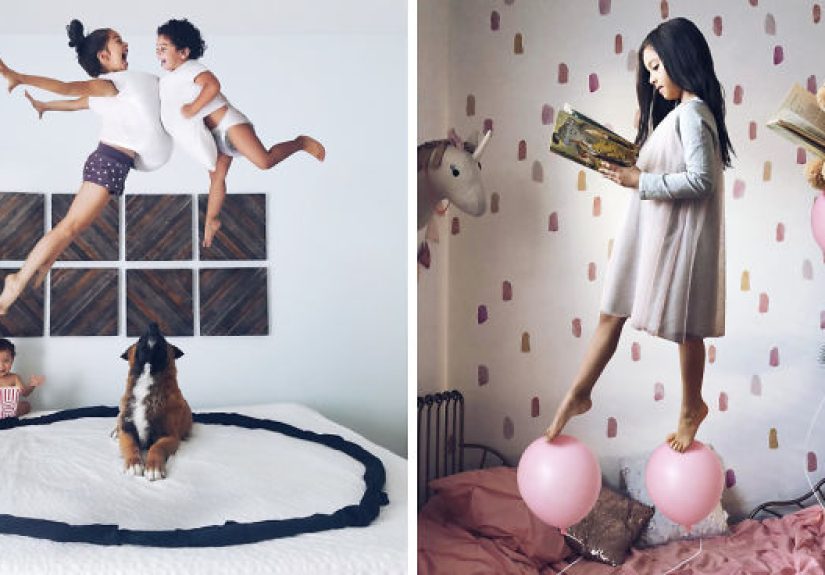
That playful instinct is what makes Rivera’s work so memorable. Her images do not feel like ordinary family snapshots with a little extra polish. They feel like storybook scenes that somehow escaped the nursery shelf, wandered into the living room, and politely asked for better lighting. The result is a body of magical family photography that blends motherhood, digital art, imagination, and just enough chaos to feel real.
And that is the real charm here. These fantasy portraits are not magic because they are perfect. They are magic because they begin with normal kid stuff: untied shoes, goofy expressions, sibling energy, props from around the house, and the wonderful unpredictability of children who absolutely did not read the production schedule. Rivera turns those ordinary moments into whimsical photo composites that feel both cinematic and deeply personal.
The Mom Behind the Magic
Vanessa Rivera did not begin with a giant studio, a truck full of expensive props, or the sort of setup that makes strangers whisper, “Wow, this person definitely owns color-calibrated monitors.” Her creative journey grew from family life itself. Reporting about Rivera’s rise describes how she started experimenting with photography after wanting better photos of her newborn and then learned the basics of Photoshop with help from her husband. Over time, those experiments became a signature visual style and eventually a full-time family business.
That origin story matters because it explains why her work connects so quickly with viewers. These images are not built from distance. They are built from intimacy. Rivera is not standing outside childhood, observing it like a museum exhibit with sticky hands. She is inside it, living it, translating it, and occasionally editing it after the kids go to sleep. That gives the work warmth. You are not just seeing “creative Photoshop art.” You are seeing a mother who understands that a child’s world can swing from cereal to dragon by 8:14 a.m.
Her best-known compositions lean hard into that dreamy, surreal energy. Children appear underwater, suspended in the air, or dropped into elaborate fantasy worlds that still somehow feel rooted in home. Even when the scene is technically complex, the emotional logic is simple: childhood already feels magical, and Rivera is just making the invisible part visible.
Why These Photos Work So Well
They turn daily life into visual storytelling
The smartest thing Rivera does is avoid treating Photoshop like a gimmick. She uses it as a storytelling tool. That difference is everything. Plenty of edited images scream, “Look what software can do!” Her pictures whisper something better: “Look what imagination can do with an ordinary Tuesday.”
That is why a loose shoelace can inspire a full concept, why a child’s habit can become the seed of a fantasy image, and why a family routine can transform into a scene that looks ready for a picture book cover. The digital manipulation is impressive, sure, but the emotional engine is the narrative. Each scene gives viewers a tiny plot to step into. Something happened before the frame. Something might happen after it. The image feels alive.
They preserve childhood without flattening it
Many family portraits try so hard to be polished that they lose the actual child in the process. Hair is neat, outfits are coordinated, everyone smiles like they are auditioning to sell throw pillows. Rivera’s work goes in the opposite direction. It preserves the drama, curiosity, silliness, and unpredictability that define young kids in real life. Her children are not presented like miniature adults. They are presented like children with giant inner worlds.
That gives the images an emotional honesty that glossy family photography often misses. Childhood is not tidy. It is expressive. It is a parade of snacks, questions, odd theories, and mysterious missing socks. Rivera’s work understands that, and instead of sanding down the rough edges, it builds castles on top of them.
How Photoshop Turns Real Moments Into Fantasy
If Rivera’s finished images look effortless, that is only because effort is doing an Oscar-worthy job hiding backstage. Realistic photo compositing depends on careful matching of light, perspective, color temperature, shadows, and depth of field. In other words, the fantasy works only when the technical details stop screaming for attention.
That is the secret sauce of believable Photoshop magic. A floating child is not convincing because the cutout is clean. It is convincing because the shadows make sense, the angles agree with one another, the color grading holds the scene together, and the image feels physically plausible even while the concept is gloriously impossible. The viewer’s brain says, “This cannot be real,” but the eye says, “Okay, but it looks weirdly real.” That little tug-of-war is where visual delight lives.
Rivera’s Adobe features and tutorials highlight the same idea: fantastical compositions still rely on disciplined craft. The dreamiest frame in the world still needs structure. That means collecting multiple source images, isolating subjects cleanly, transforming added elements with care, and blending them into a unified scene. Sometimes a single fantasy portrait can involve many layers and a truly heroic amount of patience. The glamorous part is the final image. The unglamorous part is the invisible labor of getting every fish, chair, shadow, and highlight to behave.
And yet the technical side never overwhelms the emotion. That is why these images feel special. They are not sterile composites designed only to show off editing chops. They are fantasy family portraits with heart. The software is the wand, not the story.
Why Children and Fantasy Photography Are a Perfect Match
There is a reason Rivera’s concept feels so natural. Child development experts have long noted that pretend play is a powerful part of growing up. Imaginative play supports creativity, language, emotional growth, social skills, and flexible thinking. In plain English, when kids pretend a broom is a horse or a cardboard box is a spaceship, they are not “just messing around.” They are building meaning.
That makes Rivera’s work more than a visual novelty. It mirrors a real developmental truth: children naturally live at the border between reality and make-believe. One minute they are eating crackers. The next minute they are royalty, pirates, veterinarians, astronauts, or suspiciously bossy dragons. Experts on early childhood development note that this symbolic play becomes especially rich in the preschool years, when children begin building more detailed fantasy worlds and social narratives. Rivera’s imagery meets children exactly there, in that fertile zone where logic and wonder happily share a bunk bed.
There is also something emotionally smart about an adult taking a child’s imagination seriously. Not in a heavy, overexplained, “let us unpack the metaphysics of your stuffed giraffe” way. Just seriously enough to say: your inner world matters. Your pretend stories matter. The invisible crown, the ocean on the carpet, the monster under the blanket, the pirate ship made from couch cushionsthose things count. Rivera’s art gives those private childhood epics a public, visual form.
That is likely why adults respond so strongly to her images too. Parents see recognition. Kids see possibility. Everyone else sees a reminder that wonder did not disappear; it just got buried under email and dish soap.
What Makes Her Work Feel Warm Instead of Overproduced
Plenty of artists can create surreal images. Fewer can make them feel affectionate. Rivera’s work lands because it is grounded in family dynamics rather than generic spectacle. The scenes may be fantastical, but the emotional tone is domestic. These are not cold, distant fantasy worlds. They are homemade worlds. That distinction matters.
Even the way she photographs children supports that warmth. Good photographers know kids rarely deliver their best expressions when treated like tiny employees with performance reviews. Strong children’s photography depends on timing, natural light, patience, play, and a willingness to work with a child’s mood instead of against it. That approach keeps the portraits lively instead of stiff. You can feel that looseness in Rivera’s work. The children do not look trapped inside a concept. They look like participants in it.
That collaborative feeling changes everything. The images suggest not just a mother making art about her children, but a family making stories together. And that is a much sweeter proposition. It invites creativity without turning childhood into content assembly.
What Parents and Creators Can Learn From This
First, you do not need a fancy life to make memorable art. You need attention. Rivera’s work proves that the raw materials for visual storytelling are usually already in the house: routine, humor, quirks, props, a little mess, and a child who says something so imaginative you have to write it down before it evaporates.
Second, originality often comes from looking harder at what other people overlook. A child’s untied laces. A missing sock. A bath-time obsession with mermaids. These are not “small” ideas. They are seeds. The internet is stuffed with content, but it still stops for specificity. Generic fantasy is forgettable. Personal fantasy sticks.
Third, the best Photoshop art still starts before Photoshop. It starts with concept, mood, light, pose, and emotional clarity. Software can enhance a weak idea, but it cannot rescue one that never had a heartbeat. Rivera’s success makes that clear. Her images work because they are imagined well, not just edited well.
And finally, family creativity has value even when it does not become a business, go viral, or end up tied to a major brand. There is something deeply worthwhile in making things with your children simply because it strengthens memory, play, and connection. Not every family needs a fantasy composite portfolio. But every family benefits from moments that say, “We made something together, and it felt like us.”
The Real-Life Experience Behind This Kind of Magic
Here is the part that makes the whole story even better: turning children’s daily life into magic does not usually look magical while it is happening. It looks like a parent crouching on the floor trying to find one shoe, a child asking for a snack at the exact moment the light gets good, someone stepping on a prop, and a family dog deciding this is the perfect time to become emotionally available and physically unavoidable.
That is precisely why the finished art feels so rewarding. Behind every whimsical composite is a pile of very un-whimsical details. There is the planning stage, where a brilliant idea shows up while you are folding laundry or wiping applesauce off a chair. There is the prop stage, where you suddenly become a set designer because an old sheet, a wooden spoon, and one suspiciously optimistic cardboard box are now “creative assets.” Then there is the photo stage, where the child gives you one astonishing expression, three chaotic ones, and a face that says they are negotiating union terms.
Parents who create images like these often talk about learning to work with the rhythm of family life rather than trying to dominate it. That means taking the shot when the child is in the mood, not when the grown-up wants to be efficient. It means building the concept around the child’s real personality. A dramatic, imaginative kid might thrive in a sweeping fantasy setup. A giggly kid may give you something better: a moment that cracks the whole image open with life. The smartest creative parents understand that control is overrated and timing is everything.
There is also a special kind of tenderness in editing those moments later. The house finally gets quiet. The kids are asleep. The toys are still scattered around like evidence. And now the parent who spent the day doing all the ordinary work of family life gets to sit down and transform that day into something luminous. A bubble bath becomes an ocean. A blanket fort becomes a castle. A living room chair becomes a throne. It is not just photo editing. It is reinterpretation. It is a way of saying that the day held more wonder than anyone noticed while rushing through it.
That experience resonates with a lot of parents, even those who never open Photoshop. Every mother or father has had a moment when they looked at their child and saw two things at once: the literal scene and the imagined one layered on top. A hallway becomes a racetrack. A puddle becomes a sea. A pile of couch cushions becomes an expedition to the center of the earth. Children are constantly offering those alternate versions of reality. Most adults smile and move on. Artists like Rivera stop, listen, and build them into lasting images.
And maybe that is why this kind of work lingers. It honors both sides of parenting at the same time. It honors the labor and the wonder. The tiredness and the creativity. The mess and the beauty. It understands that raising kids is not a permanent fairytale, but it is filled with tiny, absurd, radiant scenes that deserve better than being forgotten in a camera roll between a receipt and a screenshot of a weather app.
In that sense, Rivera’s story is larger than one artist or one viral style of photo editing. It is about what happens when a parent treats family life as worthy of imagination. Not because everything is perfect, but because it is alive. And alive things are always more interesting than polished things. A magical childhood is not built only from vacations, grand gestures, or expensive plans. Sometimes it is built from being seen, being played with, being photographed with affection, and being remembered as larger than life. A child may not recall every staged image years later, but they will remember the feeling of being part of a home where ideas were welcome, make-believe was taken seriously, and creativity was not reserved for special occasions.
That is the real trick behind these fantasy family photos. Photoshop helps, of course. But the deeper magic starts much earlier, in the decision to notice that everyday life with children is already halfway to a fairytale.
Final Thoughts
Creative mom-of-three stories go viral all the time, but this one sticks because it taps into something bigger than social media appeal. Vanessa Rivera’s Photoshop art succeeds not just as visual spectacle, but as proof that everyday family life can be reimagined without losing its emotional truth. Her work is funny, dreamy, technically sharp, and rooted in the real texture of raising children.
That is why these magical children’s portraits feel so satisfying. They do not escape ordinary life; they elevate it. They remind us that the most powerful fantasy art is often built from the most familiar ingredients: family, imagination, patience, play, and a willingness to see a little more wonder in the mess. Or, to put it another way, the laundry pile may still be there, but now it has narrative potential.