Table of Contents >> Show >> Hide
- Meet Dale Gribble, Patron Saint of “I Did My Own Research”
- Why Dale Works as a Conspiracy Character (Even When He’s Wrong)
- QAnon: The New-Age Conspiracy That Dale Would Absolutely Roast
- Dale Gribble vs QAnon: Same Spice Rack, Different Recipe
- King of the Hill Was Teaching Media Literacy Before It Had a Name
- What Dale Gets “Right” (Mostly by Accident)
- How to Channel Your Inner Dale Without Becoming a Menace
- Conclusion: Dale Gribble Still Wears the Crown
- of “Yep, I’ve Met a Dale” Experiences (and What They Teach Us)
If conspiracy theories were a sport, QAnon would be the team that shows up in matching jerseys, livestreams the warmups,
and tries to get the referee arrested. Dale Gribble? Dale is the guy who invented the game in his backyard, using a leaf
blower as a “wind-pattern detector” and a roll of duct tape as his “truth serum.”
And that’s the point: long before “do your own research” became a slogan that could ruin Thanksgiving, King of the Hill
gave us an original blueprint for the conspiracy-minded Americanfunny, oddly human, and somehow always holding a cigarette like it’s a classified document.
Dale Gribble isn’t just a conspiracy theorist character. He’s the OG conspiracy king, and the internet era hasn’t dethroned himif anything,
it’s proved how right the show was to make him both hilarious and a little alarming.
Meet Dale Gribble, Patron Saint of “I Did My Own Research”
Rusty Shackleford, pocket sand, and a business built on bugs
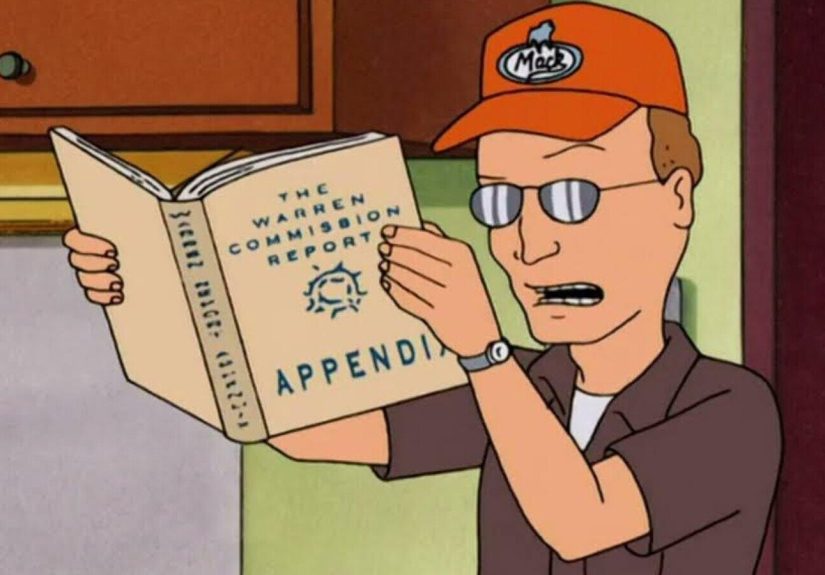
Dale Gribble is your neighbor’s neighbor: a pest-control guy with a survivalist streak, a permanent squint behind glasses,
and the unshakable belief that someoneusually “the government,” occasionally “the globalists,” and always “the man”is watching him.
He’s also a devoted friend to Hank Hill, a loving (if clueless) husband to Nancy, and the proud dad of Joseph (a situation Dale
famously interprets with the confidence of a man who has never once met a fact he couldn’t karate-chop into a theory).
In other words, Dale isn’t “a conspiracy.” He’s an ecosystem. And like any ecosystem, he’s full of fascinating little adaptations:
an alias he treats like a passport to freedom (Rusty Shackleford), a tactical self-defense move that has entered meme history
(“Pocket sand!”), and a mind that can connect two unrelated dots so quickly you can practically hear the yarn board squeal.
Dale was voiced for years by Johnny Hardwick, whose delivery made every paranoid aside sound like it had been rehearsed in a bunker.
When King of the Hill returned in the Hulu revival era, the production honored Hardwick’s work while transitioning the role to Toby Huss,
underscoring what fans already knew: you can recast a voice, but you can’t recast a vibe. Dale is a vibe.
Why Dale Works as a Conspiracy Character (Even When He’s Wrong)
1) He’s paranoid, but he’s consistent
Dale isn’t a “conspiracy tourist” who drops in when it’s trendy. He’s a full-time resident. His worldview is a 24/7 convenience store:
always open, never audited, and somehow stocked with the same items no matter what decade it isblack helicopters, secret agencies,
and a shadowy plot behind whatever Hank is trying to do in peace.
2) His conspiracies are local-first
Here’s what the show nailed: Dale’s paranoia usually points inward, toward the small humiliations and anxieties of regular life.
He’s worried about power, surveillance, and manipulationbig themesbut he experiences them through everyday Arlen inconveniences:
a government form, a new product, a “harmless” policy change, a computer system that knows too much.
That local-first approach is what makes him funny and (weirdly) relatable. Dale is an exaggeration, but he’s also a mirror held up to
the way humans cope with uncertainty: when life feels chaotic, the brain tries to make a story. Dale just does it with more jargon and more dramatic pointing.
3) He’s ridiculous… and that’s the safety feature
Dale is a satire valve. King of the Hill lets you laugh at conspiratorial thinking without pretending it doesn’t exist.
The joke isn’t that “only idiots believe weird things.” The joke is that even a basically decent person can get lost in a narrative
that makes them feel special, prepared, and secretly correct.
QAnon: The New-Age Conspiracy That Dale Would Absolutely Roast
If Dale Gribble is the backyard inventor of conspiracy culture, QAnon is the modern franchise with merch tables, influencer pipelines,
and a plot that expands faster than a streaming-service spinoff. QAnon emerged in 2017 from anonymous “insider” posts on message boards,
promising coded revelations and a grand showdown between heroic forces and a hidden cabal. It blended older conspiracy ingredientssecret elites,
“deep state” villains, apocalyptic momentuminto a single “big tent” story that could absorb almost anything.
The difference is not just tone. It’s scale, speed, and consequence. QAnon didn’t stay a niche internet puzzle; it migrated into real-world politics,
family relationships, and public safety concerns. Researchers and law enforcement have repeatedly noted how conspiracy ecosystems can motivate harassment
or violence when believers feel betrayed, cornered, or “called to act.”
Dale would recognize the emotional mechanics instantly: the thrill of “secret knowledge,” the rush of connecting dots, the reward of community applause.
But he’d also clock the grift. Dale is paranoid, not brand-managed. He doesn’t need a leaderboard to feel alive. He needs a reason to wear his hat indoors.
Dale Gribble vs QAnon: Same Spice Rack, Different Recipe
Harmless weirdness vs. weaponized narrative
Dale’s conspiracies tend to boomerang back into comedy because they’re grounded in his personality flaws: insecurity, bravado, and a deep fear of being ordinary.
QAnon, by contrast, built a sprawling narrative that invited people to outsource their identity to a causeone that framed disagreement as evil and compromise as betrayal.
That shift matters. Dale’s paranoia is mostly a character quirk. QAnon became a social movement with real fallout.
Analog paranoia vs. algorithmic rabbit holes
Dale is a “clip-and-file” kind of conspiracist. Even when he’s using tech, he approaches it like a man trying to fix a satellite dish with a butter knife.
QAnon thrived in the era of engagement-driven platforms, where emotionally charged content spreads because it keeps people scrolling.
Dale’s bunker is physical. QAnon’s bunker is a feed that never sleeps.
Beer-in-the-alley community vs. online crowd psychology
Dale’s social world is small: Hank, Bill, Boomhauer, the occasional gun club, and the neighborhood orbit. That limits damage.
QAnon-style conspiracies can scale instantly, creating swarm behaviormass “research” sessions, coordinated harassment, and the feeling that the crowd can’t be wrong.
Dale may be loud, but he’s usually one guy yelling at the sky. The internet can turn that yell into a chorus.
King of the Hill Was Teaching Media Literacy Before It Had a Name
When the show mocked paranoia, it also explained it
Rewatch classic Dale episodes and you’ll notice something sneaky: the writers weren’t just dunking on a conspiracy nut.
They were mapping the psychology of misinformationhow a person can start with a half-true hunch (“systems collect data”) and then sprint into fantasy
(“therefore the Beast is controlling your life”). The show lets Hank serve as a grounding force: not “anti-curiosity,” just pro-reality.
Specific Dale moments that still feel uncomfortably modern
- “Hank’s Dirty Laundry” gives peak Dale energy: identity panic, dramatic warnings, and a worldview where bureaucracy is never just bureaucracy.
The episode’s running gag about a sinister “Beast” and information control plays funnier now because modern life actually does run on data collectionjust not the way Dale thinks. - “Soldier of Misfortune” features Dale at maximum bravado and maximum chaos, and it gift-wrapped the phrase “Pocket sand!” for the internet.
It’s slapstick, but it’s also classic Dale: fear translated into “tactics,” insecurity converted into performance.
Even the Hulu-era conversation around the revival underlines Dale’s relevance: showrunner commentary has noted that what once read as “extreme” can feel eerily mainstream
in an age where real-life conspiracism gets amplified daily. Dale hasn’t changed nearly as much as the world around him has.
What Dale Gets “Right” (Mostly by Accident)
He senses surveillance without understanding systems
Dale’s great accidental insight is that power does watch, measure, categorize, and monetize. He just assigns that truth to the wrong villains and the wrong mechanics.
In real life, surveillance is often banal: ad tech, data brokers, security cameras, corporate tracking, and the slow creep of “convenience” turning into monitoring.
Dale interprets it as a mustache-twirling scheme because his brain needs a cartoon villain. Ironically, he lives in a cartoonand still overshoots.
He understands how institutions can make people feel small
Dale’s paranoia is a response to powerlessness. Forms, policies, and faceless systems can feel like they’re designed to confuse youbecause sometimes they are.
His coping strategy is to invent a story where he’s the hero fighting back. It’s misguided, but it’s recognizably human.
He’s funny because he can’t fully turn off his humanity
Dale cares about his friends. He panics, but he also shows up. That’s the line that separates “conspiracy as character comedy” from “conspiracy as a recruitment funnel.”
Dale may be wrong, but he isn’t trying to build an army. He’s trying to feel safe in a world that keeps changing the rules.
How to Channel Your Inner Dale Without Becoming a Menace
Want the curiosity without the chaos? You can borrow Dale’s energyjust swap out the conclusions.
A practical, non-bunker checklist
- Interrogate the claim: Who benefits if you believe it? Is there evidence beyond screenshots and vibes?
- Triangulate sources: If only one corner of the internet is screaming it, maybe don’t build your personality around it.
- Watch for “story addiction”: The more a theory feels like a thriller, the more likely it’s selling you a feeling.
- Talk to real humans: Offline relationships are reality’s best fact-checking tool.
- Keep humor: If a belief system can’t survive a gentle joke, it’s not knowledgeit’s identity armor.
of “Yep, I’ve Met a Dale” Experiences (and What They Teach Us)
Most people don’t meet a QAnon “drop” in the wild. They meet a Dale. Not the exact Dale, of courseno one you know has perfected the tactical art of
carrying sand like it’s a licensed concealed weapon. But you’ve met the spirit of Dale: the guy who hears one weird rumor and immediately upgrades it into a documentary.
Maybe it’s the coworker who leans in at the break room like he’s about to confess state secrets and says, “Ever notice how the new badge scanners
blink twice?” You nod politely, because you are an adult with bills, and you don’t want to get involved in a conversation that ends with,
“Anyway, long story short, the vending machine is listening.” That’s Dale energy: sincere curiosity, no brakes, and a conclusion that arrives before the question finishes.
Or it’s the family group chat, where an uncle posts a grainy image with seventeen red circles and the caption: “WAKE UP.”
You reply with a thumbs-up emojibecause arguing in a group chat is like wrestling a greased pig in a phone booththen you privately Google the claim and discover it’s
either false or “true” in the sense that the sky is technically full of chemicals because air is made of chemicals. Dale would be proud. Hank would sigh so hard the grill lid would rattle.
Then there’s the friend who is otherwise normal, kind, and capable of parallel parking, but who has a hobby that is basically “collecting suspicious coincidences.”
They’re not malicious; they’re overwhelmed. The world is complicated, and conspiracy stories offer a tempting shortcut: everything connects, nothing is random,
and the chaos has a villain. When you watch Dale Gribble, you realize how seductive that is. Dale’s mind is a coping mechanism in a funny hat.
The best “Dale experience” is when you catch yourself. You read a headline that makes you angry, and suddenly you want the most dramatic explanation.
You want the plot twist. You want to feel smarter than the room. Dale lives there permanently. The rest of us visit when we’re stressed, tired, or doomscrolling
like it’s an Olympic event. That’s the lesson: the impulse is human. The skill is what you do next.
So the healthiest way to enjoy Dale Gribble in 2026 is to laughthen use the laugh as a checkpoint. If a claim feels too perfect, too cinematic, too designed to
make you feel like the chosen detective of the internet, take a breath. Step outside. Talk to a friend. Touch grass. And if you must keep a pocket of sand,
keep it metaphorical: a little grit of skepticism you can toss in the eyes of a too-convenient story before it chases you down the rabbit hole.