Table of Contents >> Show >> Hide
- First, a quick refresher: what is Dark Eagle, exactly?
- The canceled flight test: which one are we talking about?
- So what actually happened during the pre-flight checks?
- Okay, but did the program recover?
- What a canceled test means for fielding (and why deadlines keep slipping)
- Why “canceled” doesn’t equal “failed” (and sometimes is the smart move)
- What to watch next for Dark Eagle
- Conclusion
- of “Real-Life” Experience Around Launch Scrubs (and Why They Feel So Brutal)
Nothing says “welcome to the future” like a hypersonic missile test that… doesn’t happen.
The U.S. Army’s Dark Eagle hypersonic missile (officially the Long-Range Hypersonic Weapon, or LRHW) has been one of the most watched weapons programs of the last few yearspartly because hypersonics are strategically important, and partly because every time a flight test gets canceled, the internet immediately asks the same question:
“Okay, but what actually happened?”
Let’s break down what “flight test canceled” really means in the Dark Eagle story, why those cancellations happened, and what the Army and Navy have been doing since. Spoiler: it’s less “mysterious sabotage” and more “engineering is hard, and physics refuses to be impressed by PowerPoint.”
First, a quick refresher: what is Dark Eagle, exactly?
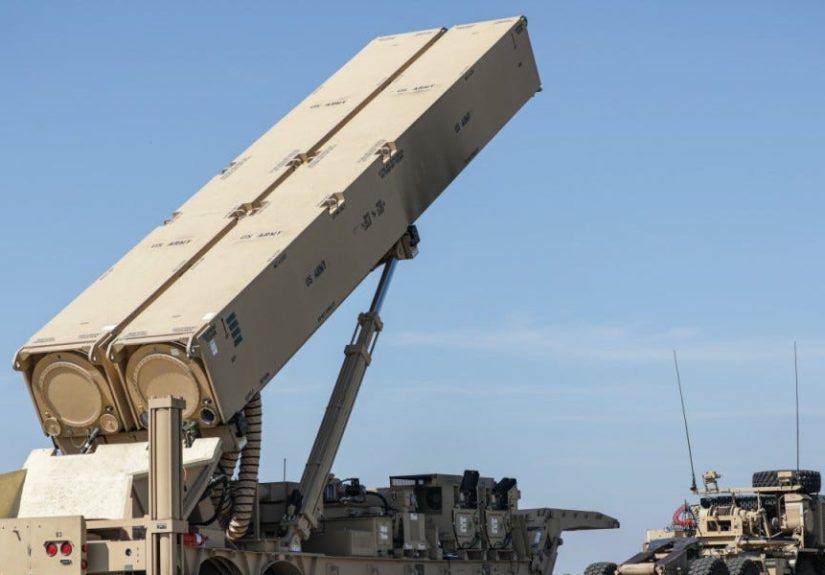
Dark Eagle is the Army’s ground-launched hypersonic strike capability. Think of it as a “boost-glide” system:
a rocket booster launches the weapon upward and fast, then a hypersonic glide body separates and races toward the target at speeds above Mach 5, maneuvering along the way.
The key twist: the Army and Navy built this as a shared family project. The services co-develop a common missile stackoften discussed in terms like Common Hypersonic Glide Body (C-HGB) and All Up Round (AUR)so the Navy can field a sea-based version (Conventional Prompt Strike, or CPS) while the Army fields LRHW/Dark Eagle. Same core missile technology, different launch methods, lots of shared testing, andunavoidablyshared headaches.
A tiny glossary (because hypersonics love acronyms)
- LRHW / Dark Eagle: The Army’s ground-launched hypersonic weapon system.
- CPS: The Navy’s sea-based version of the same broader hypersonic missile effort.
- C-HGB: The glide vehicle that actually does the hypersonic “gliding” after booster separation.
- AUR: “All Up Round,” basically the integrated missile round used for end-to-end testing.
- TEL: Transporter-Erector-Launcher (the big truck/trailer that moves and launches the missile).
- BOC: Battery Operations Center (the command-and-control brain of an Army battery).
The canceled flight test: which one are we talking about?
When people say “the Dark Eagle flight test was canceled,” they’re usually referring to the high-profile 2023 scrubsespecially the September 2023 attempt at Cape Canaveral that ended in a no-launch. But it’s more accurate to say Dark Eagle had a run of cancellations and scrubs during that period, and each one teaches you something different about what can go wrong.
March 2023: the “battery didn’t wake up” problem
In early March 2023, the Army and Navy were preparing to execute a hypersonic flight test. The attempt was ultimately called off after pre-flight checks flagged a problemdescribed publicly as a battery activation issue / battery failure during the pre-launch sequence. Translation: a critical component that needed to power on and behave perfectly… didn’t. And for a weapon where “perfect” is the bare minimum, that’s an automatic stop sign.
This is the kind of failure that sounds small until you realize it’s like your car refusing to start when you’re already on the freeway ramp. Engineers can’t “just send it” with hypersonics. If the system isn’t 100% green before ignition, you don’t get a dramatic movie momentyou get a very expensive investigation.
September 2023: pre-flight checks cancel the Cape Canaveral attempt
Fast-forward to September 2023, and another Dark Eagle-related test attempt at Cape Canaveral was canceled after pre-flight checks. Public statements at the time stayed frustratingly high-level (the military rarely publishes a play-by-play when a cutting-edge test campaign is still ongoing), but the key point was clear:
the countdown was stopped because something in the system did not meet launch criteria.
In other words, it wasn’t a “boom” failure. It was a “we found something before launch, and we are not about to learn lessons the hard way” cancellation.
October 2023: another scrub, another round of questions
Later in 2023, reporting indicated the Army faced yet another before-launch issue (including an October test attempt that didn’t proceed). At that point, officials acknowledged the reality every program manager hates to say out loud:
repeated scrubs can push schedules, and schedules are usually attached to budgets, baselines, and political expectations.
So what actually happened during the pre-flight checks?
“Pre-flight checks” sounds like a pilot walking around an aircraft with a clipboard. In missile testing, it’s more like running a thousand-item checklist across software, electronics, mechanical interfaces, safety interlocks, telemetry, and launch support systemsoften in a compressed window with range safety rules that do not care about your feelings.
For Dark Eagle, later reporting and official comments pointed toward a not-so-glamorous culprit: the launcher and launch-sequence integration. That’s the hardware and engineering that connects an extremely advanced missile to a very real, very physical transporter-erector-launcher system that must hold it, power it, communicate with it, and launch it safelyevery time, under operational conditions.
The “launcher problem” in plain English
Imagine building a world-class race car engine and then discovering the custom mounting bracket flexes at exactly the wrong moment. The engine might be amazing. The bracket still stops the whole race.
With Dark Eagle, officials indicated there was a mechanical engineering issue with the launcher systemessentially a problem where the missile, the canister, and the launcher had to interact flawlessly, and they weren’t yet doing that consistently. A “launcher problem” can include alignment, canister interfaces, electrical connections, environmental control, launch sequencing, or other integration points where the physical world refuses to be abstracted away.
Why those issues are harder than they look
Hypersonic weapons add extra pressure (sometimes literally). The system has to survive transportation, vibration, storage, temperature swings, and operational handling, then execute a launch sequence that is safe for the crew and compliant with range safety. You can’t treat the launcher as “just a truck.” It’s part of the weapon.
And because LRHW is designed for mobile, fieldable use (not only pristine test-stand launches), the Army has to prove the entire chain: command-and-control, launcher operation, and missile performance. That’s a bigger bite than “we launched something once.”
Okay, but did the program recover?
Yesand this is where the story gets more “long, boring competence” (the rarest competence) than “endless chaos.”
After the 2023 stumble-fest, the Army and Navy executed successful end-to-end hypersonic missile flight tests in 2024, including a major June 2024 test from Hawaii and a December 2024 live-fire event tied closely to the Army’s operational configuration.
In December 2024, the Department of Defense described the event as the second successful end-to-end flight test of the AUR in 2024, and noted it was the first live-fire using an Army Battery Operations Center and a Transporter Erector Launcher. That detail matters: it suggests progress from “we can fly a missile” to “we can operate the system in a way that resembles real Army use.”
In 2025, the Navy also highlighted progress toward sea-based launch approaches for CPS, including a test involving the Navy’s cold-gas launch methodanother reminder that “common missile” doesn’t mean “common everything.” Different platforms, different engineering problems.
What a canceled test means for fielding (and why deadlines keep slipping)
Here’s the part that makes headlines: canceled tests don’t just dent pride. They can shift fielding timelines.
Dark Eagle’s early public goals aimed at fielding in the FY2023 time frame, then moved as testing and integration realities set in.
Subsequent reporting and government assessments show the Army repeatedly adjusting its projected timelinesbecause you don’t field a hypersonic weapon by wishing harder.
Testing vs. fielding: they are not the same thing
“Fielding” isn’t just handing a unit a shiny new missile and saying, “Good luck!”
It includes delivering operational missiles, validating procedures, training soldiers, proving safety, and demonstrating performance in tests that resemble real-world employment. The Army can have trained units and prototype hardware while still lacking the full, validated missile inventory needed for operational use.
Cost and test reality: you can’t spam retries
Hypersonic tests are expensive, range time is limited, and each shot carries enormous learning value. That means programs often plan fewer, higher-value tests rather than endless rapid iteration.
Government oversight bodies have also emphasized the importance of disciplined acquisition and testing approaches, especially for advanced hypersonic programs that involve multiple services and industrial partners.
Why “canceled” doesn’t equal “failed” (and sometimes is the smart move)
A scrub can be embarrassing, but it can also be a sign the system is working exactly as intendedat least the part that says, “Do not launch unless conditions are safe and the system is ready.”
Launching when a battery won’t activate or a launcher interface isn’t right is how you turn one problem into five, plus a Congressional hearing with uncomfortable facial expressions.
In hypersonics, the stakes are higher because the physics are less forgiving. These systems push thermal limits, guidance requirements, and integration complexity. The most “boring” programs are the ones that quietly cancel a test, fix the issue, and eventually succeedwithout adding any new craters to Florida.
What to watch next for Dark Eagle
- Soldier-operated testing: milestones that look less like lab demos and more like real unit operations.
- Operational fielding updates: when the Army confirms missiles are delivered and usable, not just “on the path.”
- Navy CPS integration: sea-based launch methods and platform integration (Zumwalt-class and beyond) are their own engineering saga.
- Industrial base ramp-up: consistent production of glide bodies, boosters, canisters, and support equipment without quality slips.
Conclusion
The Dark Eagle hypersonic missile flight test cancellations weren’t a single dramatic momentthey were a cluster of real-world engineering and integration problems showing up at the worst possible time: during countdown.
In 2023, pre-flight checks stopped multiple attempts, including one tied to a battery activation issue and others linked to launcher/launch-sequence integration challenges. Since then, the Army and Navy have demonstrated successful end-to-end tests and continued moving toward operational use, even as timelines have shifted.
If there’s one takeaway, it’s this: hypersonics aren’t delayed because people forgot to set an alarm. They’re delayed because building a fieldable, safe, repeatable hypersonic weapon system is one of the hardest engineering tasks on Earthand Earth is not known for being cooperative.
of “Real-Life” Experience Around Launch Scrubs (and Why They Feel So Brutal)
If you’ve never watched a launch campaign up close, here’s what the “canceled test” experience often looks like in the real worldwhether it’s rockets, missiles, or anything with a countdown clock that can ruin your weekend.
First, there’s the buildup: weeks (sometimes months) of planning, rehearsals, safety reviews, range scheduling, logistics convoys, and checklists that multiply like rabbits. Then you get to test week, where everyone’s sleep schedule becomes a vague suggestion rather than a plan.
On launch day, the atmosphere is equal parts excitement and dread. Not because people expect failure, but because everyone knows the truth: the closer you get to ignition, the more your system becomes a chain, and the chain is only as strong as the most overlooked connector, sensor, or line of code.
This is where “pre-flight checks” become the main character. Teams run automated sequences, validate telemetry links, check power systems, confirm software states, verify environmental conditions, and make sure the range is clear. Every subsystem is essentially asked, “Are you okay?” and every subsystem has the right to answer, “Actually, no.”
When something trips a red flagsay, a battery that doesn’t activatethe emotion isn’t just disappointment. It’s a specific kind of frustration that comes from doing 95% of a marathon and then discovering your shoes are tied together. Because a scrub doesn’t just reset the clock; it can trigger cascading consequences:
range windows close, weather shifts, personnel rotate, hardware has to be safed, data has to be pulled, and the entire plan may need to be rebuilt around new constraints.
The most misunderstood part is that canceling can be the most responsible, professional decision imaginable. Nobody in a serious program wants to “see what happens” when a critical check fails. That’s how you lose hardware, waste a test, and potentially endanger people. So teams scrub, document, investigate, fix, and only then try again.
That loop can look like incompetence from the outside, but from the inside it often looks like competence refusing to take shortcuts.
And for hypersonic programs like Dark Eagle, the pressure is even higher. These aren’t one-off science experiments; they’re supposed to become fieldable weapons. That means the launcher, the command systems, the canisters, and the missile itself must function as a reliable whole.
It’s not enough to prove “it can fly.” You have to prove “a unit can operate it, safely, repeatedly, on demand.”
So when you hear “flight test canceled,” you’re often hearing the sound of engineers doing the unglamorous work of preventing bigger failuresand quietly dragging a very stubborn future into existence.