Table of Contents >> Show >> Hide
- Meet the Artist: Martijn Schrijver’s “Nature, But Make It Impossible” Style
- Why These Surreal Photo Manipulations Feel Real (Even When They Aren’t)
- A Quick (Very Fun) History: From Photomontage to Photoshop Surrealism
- How Surreal Photo Manipulations Are Made: The Modern Composite Toolkit
- Step 1: Start with a strong “base plate”
- Step 2: Cut cleanly (without making it look cut)
- Step 3: Match perspective and scale before you “beautify” anything
- Step 4: Light and shadow are the difference between “wow” and “nope”
- Step 5: Color match like you’re forging a passport
- Step 6: Add realism glue (a.k.a. the finishing pass)
- The Ethics Line: Fine Art Fantasy vs. Documentary Truth
- Reality Gets Weirder: AI, Deepfakes, and Why Craft Still Matters
- How to Create Your Own Surreal Photo Manipulation (Without Copying Anyone)
- 52 Prompt Ideas to Spark Surreal Composites
- Experience Section: What It Feels Like to Build a Believable Lie (and Why We Love It)
- Conclusion: The Best Surreal Photo Manipulations Don’t Break Reality They Borrow It
You know that moment when your brain says, “Yep, totally a real photo,” and then your eyes zoom in and go,
“Hold up… is that a turtle made of cliffs?” That delightful mental faceplant is exactly the point of surreal
photo manipulation: it’s visual magic that follows the rules of reality just long enough to break them in the funniest,
weirdest, most satisfying way possible.
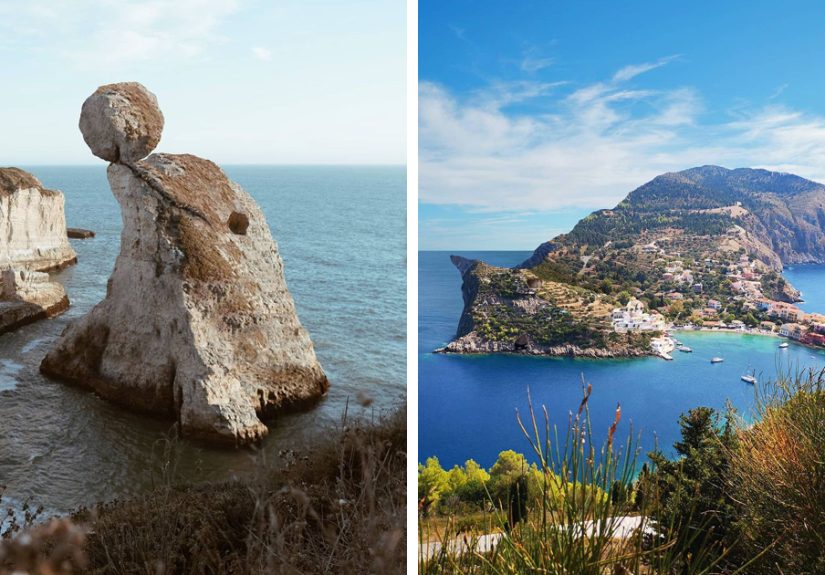
In a collection of 52 surreal photo manipulations, Amsterdam-based digital artist Martijn Schrijver
blends animals, landscapes, and everyday nature photography into images that feel both believable and impossible.
The result is a body of work that’s equal parts “nature documentary” and “dream you had after eating spicy ramen at 2 a.m.”
Meet the Artist: Martijn Schrijver’s “Nature, But Make It Impossible” Style
Schrijver’s surreal digital art is inspired by nature and built around a simple-but-powerful concept:
take something we recognize (a rock formation, a shoreline, a forest silhouette) and fuse it with something that
shouldn’t logically belong there (a shark, a peacock, a hippo, a wolf) then make it look like the camera captured it
on a perfectly normal Tuesday.
The charm comes from the near-real shown as real. Many pieces feel like clever visual riddles:
a landmass that reads as an animal from one angle, or an animal whose texture seamlessly becomes terrain.
Some works lean whimsical; others feel like modern myth. And across the set, you can spot a consistent signature:
crisp edges where they matter, soft blending where it sells the illusion, and a sense of humor that keeps things playful.
Think of it as photo manipulation that’s not trying to “trick” you into believing a lie forever it’s trying to
let you enjoy the moment your brain realizes it’s been delightfully bamboozled.
Why These Surreal Photo Manipulations Feel Real (Even When They Aren’t)
1) They obey the boring rules of photography
The fastest way to ruin a composite is to ignore the stuff reality is picky about: light direction, perspective,
scale, depth, shadows, and color temperature. Your eyes may not know the technical terms, but they know when something
is off. Strong surreal photo manipulation makes the “impossible” element match the “possible” world.
When the lighting makes sense, when edges don’t scream “cut-and-paste,” and when shadows behave like shadows,
your brain accepts the scene as a plausible photograph even if the subject is a mountain that appears to be a wolf.
2) They use texture as the ultimate lie detector
Texture is where composites either graduate to “convincing” or get stuck at “meme with ambition.” Schrijver’s work
often blends fur, rock, bark, water, and atmospheric haze in a way that feels physically consistent.
If the cliff has a gritty grain and the “animal” doesn’t? Your brain calls foul. If both share the same micro-contrast
and environmental softness? Your brain shrugs and says, “Sure, why not.”
3) They give you a clear focal point
Great surreal digital art isn’t a scavenger hunt of random elements. It has a main idea. One dominant shape. One joke.
One “aha.” That clarity is why these images share so well online: the story reads instantly, even as details keep you
looking longer.
A Quick (Very Fun) History: From Photomontage to Photoshop Surrealism
Surreal imagery didn’t start with software it started with artists who wanted to rearrange reality long before
“Undo” existed. Early 20th-century photomontage (and related photo-collage practices) assembled
photographs into seamless or intentionally jarring new worlds. Dada and Surrealist circles used photographic fragments
to critique society, poke fun at “common sense,” and build dream logic into visual form.
Today’s surreal photo manipulations are descendants of that same impulse only now the scissors are digital, the glue
is a layer mask, and the darkroom fits inside your laptop. The goal is similar: make images that feel like reality
wandered into fiction without asking permission.
How Surreal Photo Manipulations Are Made: The Modern Composite Toolkit
Let’s pull back the curtain. You don’t need a secret wizard license to make a convincing composite but you do need a
workflow. Most successful photo manipulation in Photoshop (or similar software) tends to follow a few consistent steps.
Step 1: Start with a strong “base plate”
The base plate is your main environment: the landscape, room, street, or background photo that carries the scene.
A good base plate has clear lighting direction and enough resolution to survive editing without turning into crunchy
pixel cereal.
Step 2: Cut cleanly (without making it look cut)
This is where layer masks earn their paycheck. Masks let you hide and reveal parts of an image
non-destructively, which is fancy talk for: you can change your mind without crying. In a believable composite,
edges are rarely perfect. Hair, fur, fog, branches, water spray they all want softer blending and smarter selections.
Step 3: Match perspective and scale before you “beautify” anything
If your subject is the wrong size or the horizon lines don’t agree, no amount of color grading will save you.
Transform tools, warps, and smart objects help keep edits flexible while you nudge elements into alignment.
Many pros treat this like set design: put the furniture in the right place before you paint the walls.
Step 4: Light and shadow are the difference between “wow” and “nope”
In surreal photo manipulations, shadows are the receipts. If the light hits the landscape from the left, then the
added animal/rock/tree shape must respect that. Often the magic is in subtle contact shadows, soft ambient shading,
and careful contrast control so the subject feels anchored to the ground (or water, or cloud, or existential dread).
Step 5: Color match like you’re forging a passport
Even when the scene “works,” mismatched color temperature will expose the composite instantly. Many editors align
blacks, midtones, and highlights between layers, then unify everything with a final color grade.
The goal is not to make every pixel identical it’s to make them feel like they lived under the same sky.
Step 6: Add realism glue (a.k.a. the finishing pass)
The finishing pass is where your composite stops looking like separate photos stacked together and starts looking
like one coherent photograph. Common “glue” includes:
- Depth cues (haze, softness, atmospheric perspective)
- Unified texture (subtle grain/noise so layers share the same “camera” feel)
- Dodge and burn (micro-light shaping to guide the eye)
- Selective sharpening (sharp where the viewer should look, softer where they shouldn’t)
The funny truth: the more surreal your idea, the more disciplined your realism has to be. You can bend reality,
but you can’t bully lighting into cooperating. Lighting always wins. Always.
The Ethics Line: Fine Art Fantasy vs. Documentary Truth
Here’s where things get serious for a minute (don’t worry, we’ll bring snacks). In fine art,
surreal photo manipulation is celebrated: it’s openly imaginative, clearly constructed, and meant to be interpreted.
But in photojournalism and documentary contexts, manipulation can damage public trust when it changes
the meaning of what the camera recorded.
That’s why major journalism organizations have strict guidance around altering image content. The general principle:
don’t add or remove elements in a way that could mislead viewers about what actually happened. Even respected outlets
have had very public “yikes” moments when edits crossed the line, which is why many editorial teams maintain
rigorous review processes for authenticity.
In short: surreal digital art is a playground; journalism is a courtroom. Both use images. Only one is allowed to
invent a dragon-shaped island without consequences.
Reality Gets Weirder: AI, Deepfakes, and Why Craft Still Matters
We’re now living in an era where synthetic media can be produced quickly and not always for delightful, artful
reasons. That has sparked more interest in provenance, labeling, and ways to help audiences understand whether an image
is a documentary record, a creative composite, or an AI-generated fabrication.
Ironically, this makes skilled, transparent photo manipulation more valuable not less. A crafted surreal composite
that clearly signals “this is art” becomes a kind of honesty. It reminds viewers that images can be constructed,
and it invites them to enjoy the illusion knowingly, instead of being fooled unknowingly.
How to Create Your Own Surreal Photo Manipulation (Without Copying Anyone)
Want to try the genre yourself? Here’s a beginner-friendly blueprint that keeps you learning the right lessons:
realism, cohesion, and storytelling.
Pick one surreal idea, not twelve
Start with a single concept: “A waterfall that pours into a teacup,” “A city skyline shaped like a sleeping cat,”
or “A tree whose branches turn into birds.” If your first project needs a flowchart, it’s too big.
Choose images that already “agree” with each other
Match lighting direction and time of day as much as possible. You can fix small differences in editing, but if one photo
screams “golden hour” and another screams “fluorescent office,” you’re signing up for advanced suffering.
Mask slowly, zoom in often, and don’t trust your first edge
The cleanest composites come from patience. Refine selections, feather where needed, and remember: a slightly imperfect
edge that matches the environment looks more real than a perfect edge that looks pasted.
Do a shadow pass before a color pass
Get contact shadows and form shading believable early. Once the subject feels anchored in the scene, color matching
becomes much easier because your eye already believes the object belongs there.
52 Prompt Ideas to Spark Surreal Composites
If Schrijver’s 52-image set makes you want to open Photoshop immediately, borrow the structure, not the
finished ideas. Here are prompt directions that can generate dozens of unique photo manipulations:
- Landforms shaped like animals (but use your local geography for originality)
- Clouds that become creatures when they “touch” mountains
- Forests that form silhouettes only from one angle
- Water reflections revealing a different world than the sky above
- Buildings that blend into trees like modern camo
- Wildlife textures applied to everyday objects (shells, rocks, sidewalks)
- Season swaps: snowy shadows in summer landscapes (or vice versa)
- Giant-scale micro-worlds: insects as “wildlife” in canyon-like macro shots
Experience Section: What It Feels Like to Build a Believable Lie (and Why We Love It)
Watching a surreal photo manipulation land properly is a strangely physical experience. Your eyes take in the scene,
your brain runs a quick reality-check, and then when it finally realizes something is impossible you get that tiny
internal jolt that feels like stepping off a curb you didn’t see. It’s not fear; it’s surprise with a grin. And the
best artists learn to time that moment like comedians time a punchline.
If you’ve ever tried making a composite yourself, you learn fast that the “cool idea” is the easy part. The hard part
is everything your idea owes reality: where the light comes from, how shadows behave, what should be sharp, what should
fade into haze, and what textures belong together. Beginners often expect the process to feel like stacking stickers.
In practice, it feels more like negotiating with physics. You can absolutely convince the viewer a mountain is
also a wolf but only if the wolf-mountain obeys the same sun and atmosphere as the rest of the landscape.
There’s also a surprisingly emotional side to it. Building surreal photo manipulations can feel like translating a dream
into a photograph. Dreams are vivid but sloppy; they jump cuts, change scale, and ignore continuity. Editing is where you
take that dream logic and give it structure so another person can “read” it. You’re not just placing pixels you’re
guiding attention. You’re deciding where the viewer looks first, what they understand immediately, and what they discover
on the second glance. The experience becomes less “editing photos” and more “directing a tiny silent movie that happens
all at once.”
Many creators describe a moment in the workflow when the image suddenly “clicks.” Before that, it looks like a collage.
After that, it looks like a world. That click often happens when shadows finally match, when colors stop fighting,
or when you add the tiniest bit of atmospheric softness that makes everything share the same air. It’s the point where
the illusion stops being an arrangement and starts becoming an environment. And it’s deeply addictive because it feels
like you’ve invented a place that didn’t exist five minutes ago.
On the viewer side, surreal digital art scratches a modern itch. We’re surrounded by images optimized for “realness”:
phone photos, security footage, live streams, documentary clips. A surreal composite flips that script. It says,
“Reality is optional today.” But it does so without abandoning craftsmanship. That combination wild imagination with
disciplined realism is what makes a series like Schrijver’s stand out. It doesn’t rely on chaos; it relies on control.
And maybe that’s why these images travel so well online. In a feed full of literal content, a believable impossibility
is a relief. It’s playful. It’s clever. It’s safe to get lost in. You can admire the technical skill, chuckle at the
visual pun, and still feel that childlike thrill of seeing something that shouldn’t be possible rendered so convincingly
that for a split second, you almost believe nature really did make a shark-shaped island just to show off.
Conclusion: The Best Surreal Photo Manipulations Don’t Break Reality They Borrow It
Martijn Schrijver’s 52 surreal photo manipulations succeed because they understand a paradox: to make fiction look real,
you have to respect reality’s rules. Perspective, light, texture, and story do the heavy lifting the surreal twist is
just the payoff. Whether you’re here to admire the art, learn photo manipulation in Photoshop, or build your own surreal
digital worlds, the takeaway is the same: imagination gets attention, but realism earns belief.