Table of Contents >> Show >> Hide
- The Before: What Most Master Closets Look Like on Day One
- The After: What We’re Building (and Why It Works)
- Step Zero: Take Inventory (Yes, Before You Buy Anything)
- Closet Math That Saves Your Sanity: Key Dimensions and Spacing
- Choose Your Build Style: Three Smart DIY Paths
- DIY Master Closet Makeover: Step-by-Step (Before to After)
- Step 1: Demo the old setup (and patch like a pro)
- Step 2: Plan zones on paper (or painter’s tape on the wall)
- Step 3: Find studs, mark level lines, and commit
- Step 4: Install the backbone (rails, standards, or cleats)
- Step 5: Add shelves, drawers, and rods (in that order)
- Step 6: Upgrade lighting (the glow-up that changes everything)
- Step 7: Add the finishing touches that keep it organized
- Budget Snapshot: What a DIY Master Closet Can Cost
- Mistakes to Avoid (So Your After Stays “After”)
- How to Keep the Closet Looking “After” (Not “Before, But Faster”)
- DIY Experiences From the Closet Trenches (What People Learn After the First Weekend)
- Conclusion
A master closet can be one of two things: a calm, boutique-style “I have my life together” space…
or a fabric avalanche waiting to happen the second you open the door. If yours currently feels like
a game of Jenga played with sweaters, shoes, and mystery items from 2017, you’re in good company.
The good news? A true DIY master closet makeover doesn’t require a celebrity budget
or a team of elves. It requires a plan, a tape measure, and the willingness to say goodbye to at least
one shirt that has been “almost flattering” for three presidential administrations.
This guide is written in the spirit of a classic Hometalk-style before-and-after: real-life, practical,
a little funny, and heavy on the “you can totally do this.” We’ll walk through the transformation from
a builder-grade closet setup (wire racks and sad lighting) into a custom-feeling system with shelves,
rods, drawers, and organization that actually stays organized.
The Before: What Most Master Closets Look Like on Day One
The “before” closet usually has the same greatest hits:
- One long wire shelf + rod combo that sags like it’s emotionally overwhelmed.
- Not enough hanging space for both long items (dresses/coats) and short items (shirts/pants).
- Dark corners where shoes go to retire permanently.
- Wasted vertical space above the top shelf and below hanging clothes.
- Zero zoneseverything is “wherever it fits,” which is how chaos wins.
Functionally, it’s less “closet” and more “storage unit with a door.” Visually, it’s… fine.
But “fine” is not the vibe when you’re trying to get dressed at 6:45 a.m. and you can’t find
the other boot.
The After: What We’re Building (and Why It Works)
A great DIY master closet upgrade does three things:
- Creates zones so items live where you actually use them (tops with tops, shoes with shoes).
- Uses vertical space with double-hang sections, top shelves, and smart storage down low.
- Makes it easy to maintain because the system supports your habits instead of fighting them.
In the “after,” you’re aiming for a layout like this:
- Double-hang for shirts and pants (twice the hanging capacity without expanding the closet).
- A long-hang bay for dresses, coats, and anything that should not be folded unless you enjoy wrinkles.
- Shelves and/or drawers for folded clothes, workout gear, handbags, and accessories.
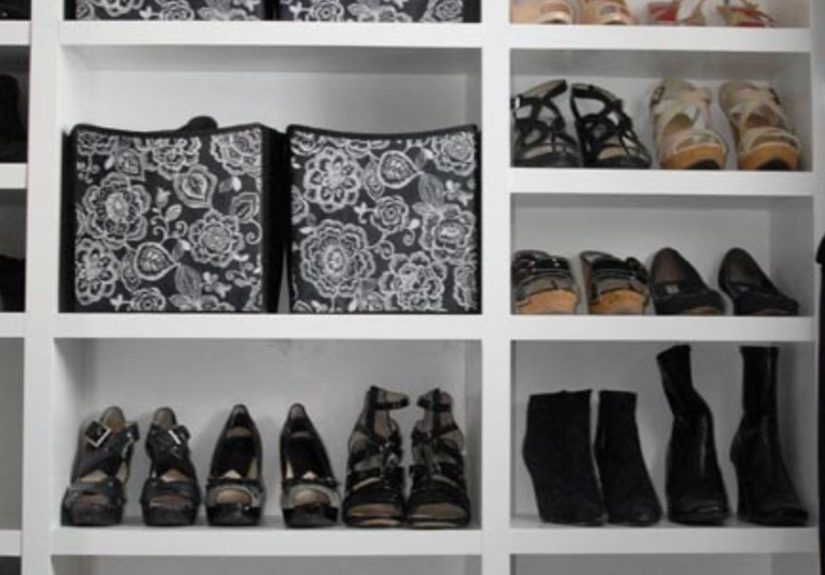
- Shoe storage that keeps pairs together and visible.
- Better lighting so you can actually see colors (and not discover your “black pants” were navy at noon).
Step Zero: Take Inventory (Yes, Before You Buy Anything)
The fastest way to waste money is to design a closet around imaginary habits. So do this first:
1) Pull everything out (everything)
Empty the closet completely. It’s annoying. It’s also the only way to see what you’re truly storing.
Bonus: You’ll find at least one missing item and at least one object you cannot explain.
2) Sort into categories
- Long-hang: dresses, coats, jumpsuits
- Short-hang: shirts, blouses, jackets
- Pants/skirts (hung)
- Folded: sweaters, tees, jeans, gym clothes
- Shoes
- Accessories: belts, scarves, jewelry, hats
- Seasonal / rarely used items
3) Measure your space like you mean it
Measure wall-to-wall width, depth, ceiling height, door swing/track, baseboards, and any oddities
(like angled ceilings, attic access, or a random outlet placed exactly where you want a tower).
Write it down. Put it in your phone. Tattoo it on your forearm if you must.
Closet Math That Saves Your Sanity: Key Dimensions and Spacing
If you want your DIY closet system to feel “custom,” the secret is not expensive materialsit’s
correct spacing. Here are the guidelines that keep clothes from dragging, shelves from being useless,
and hangers from scraping walls.
Closet depth
Most closets work best at roughly 22–24 inches deep so hangers and clothes clear the back wall.
Deeper is fine for bulkier items, but too shallow means sleeves get crushed and doors don’t close.
Hanging rod heights
- Single rod (long-hang): typically around 60–70 inches from the floor depending on your needs.
- Double rods: top rod roughly 80–84 inches, bottom rod about 40–42 inches.
Think of double-hang as the closet equivalent of adding a second story to your housewithout permits.
Shelf spacing
- Folded clothes: about 12 inches between shelves is a practical starting point.
- Shoes: many setups work well with 6–7 inches between shelves for flats/heels.
Rod-to-shelf clearance
If you’re adding a shelf above a rod, leave enough clearance so hangers don’t jam into the shelf.
A common approach is allowing roughly 2.5 inches between the rod and the shelf above.
Choose Your Build Style: Three Smart DIY Paths
There isn’t one “best” master closet systemthere’s the best one for your budget, time, tools, and
tolerance for sawdust. Here are three reliable approaches.
Option A: Modular rail systems (clean look, flexible layout)
Rail-based systems mount a suspension rail to the wall, then hang uprights/towers from it. They’re
appealing because they’re modular, adjustable, and often feel more “built-in” than wire shelving.
Many homeowners choose systems like IKEA-style modular solutions because they’re customizable with
shelves, drawers, rods, and basketsand they can be installed over a weekend with decent instructions.
Best for: renters-turned-homeowners, small walk-ins, anyone who wants a polished look without building from scratch.
Option B: Wire + shelf-track systems (budget-friendly, easy to adjust)
Wire systems have come a long way. Adjustable tracks and brackets let you move shelves and rods as
your wardrobe changes. They’re also great for airflow. The key is installing properly: correct anchors,
correct spacing, and enough support so shelves don’t bow.
Best for: tight budgets, utility closets, and DIYers who want flexibility more than a furniture-like finish.
Option C: DIY built-ins (plywood/melamine) for a truly custom feel
Built-ins look incredible when done well: vertical panels, fixed shelves, cubbies, and a tailored layout.
You can build with plywood (often painted) or melamine (wipeable, clean edges). This route takes more
measuring and cutting, but it also gives the most “wow” in the before-and-after reveal.
Best for: homeowners who want the closet to feel like permanent cabinetry and don’t mind a weekend (or two) of building.
DIY Master Closet Makeover: Step-by-Step (Before to After)
Step 1: Demo the old setup (and patch like a pro)
Remove the old wire shelf/rod and any brackets. Patch holes with spackle, sand smooth, and wipe dust.
If your closet walls have a “landlord beige” vibe, now is the perfect time to paint. A bright neutral
makes the space feel larger and helps you see what you own (which is occasionally terrifying, but helpful).
Step 2: Plan zones on paper (or painter’s tape on the wall)
Decide where each category goes. A simple, high-function layout for many master closets looks like:
- One long-hang section (about 24–30 inches wide, depending on your wardrobe)
- One double-hang section for daily clothing
- A shelf/drawer tower for folded items and accessories
- Shoe shelves low and visible
- Top shelf for seasonal bins/extra bedding
Step 3: Find studs, mark level lines, and commit
The difference between “sturdy closet” and “shelf collapse documentary” is fastening to structure.
Use a stud finder, mark stud locations, and keep a level handy. Even adjustable systems benefit from
being anchored thoughtfully.
Step 4: Install the backbone (rails, standards, or cleats)
Your “backbone” depends on the system you choose:
- Rail systems: mount the suspension rail level, then hang vertical panels/uprights.
- Shelf-track wire systems: install the top hang track level, then standards and brackets at the recommended spacing.
- Built-ins: mount cleats/ledgers and vertical panels, ensuring everything is plumb and square.
Tip: If you’re cutting rods or wire shelving, use the recommended tools (pipe cutter or hacksaw for rods;
bolt cutters/hacksaw for wire). Clean cuts matter more than you think, especially when you’re sliding hangers.
Step 5: Add shelves, drawers, and rods (in that order)
Start with fixed components (vertical panels/towers), then shelves, then rods. Why? Because rods are easy to
place once you can see exactly where shelves land.
- Shelves: space them to match your items. Folded clothes want breathing room; shoes want visibility.
- Drawers: fantastic for socks, underwear, workout gear, jewelry, and anything that becomes clutter when it’s loose.
- Rods: install at heights that match your clothing. Double-hang where possible to multiply capacity.
Step 6: Upgrade lighting (the glow-up that changes everything)
If your closet lighting is “one tired bulb,” fix that. Better lighting makes the closet feel bigger and
the whole makeover feel more expensive. Motion-activated LED fixtures are popular because they turn on when
you walk in (which feels like the closet is welcoming you, like a tiny butler).
Safety note: Electrical upgrades can be simple (battery-powered LEDs) or more involved (hardwired fixtures).
Choose what matches your skill level and local code requirements.
Step 7: Add the finishing touches that keep it organized
- Labels: bins and baskets stay useful when you don’t have to guess what’s inside.
- Dividers: shelf dividers keep stacks from toppling like tiny textile towers.
- Hooks: belts, hats, bags, robeshooks turn “dead wall” into storage.
- A mirror: makes the space feel larger and adds function without eating floor space.
- Uniform hangers: visually calming and surprisingly space-efficient.
Budget Snapshot: What a DIY Master Closet Can Cost
Costs vary wildly based on materials and whether you add drawers, lighting, or flooring. Here’s a realistic
way to think about it:
- Low budget: wire/track systems + bins and labels (often the best dollars-to-storage ratio).
- Mid budget: modular systems with drawers/shelves/rods for a polished look.
- Higher DIY budget: built-ins with plywood or melamine, upgraded hardware, and lighting.
The biggest “budget surprise” is accessoriesdrawers, baskets, dividers, pulls, and lighting add up fast. But
they also deliver most of the daily convenience, so spend where it actually improves how you use the space.
Mistakes to Avoid (So Your After Stays “After”)
- Designing for a fantasy wardrobe: build for what you own and wear, not what you hope to become.
- Skipping the purge: a new closet system won’t fix an overstuffed closet; it will simply organize the chaos.
- Mounting everything into drywall: use studs and proper anchors so shelves don’t sag over time.
- Forgetting long-hang needs: everyone has at least a few items that demand full length.
- Under-lighting: if you can’t see it, you won’t use it well.
- Ignoring the door swing/track: make sure drawers and doors can open without collisions.
How to Keep the Closet Looking “After” (Not “Before, But Faster”)
A closet stays tidy when maintenance is built into the design:
- Put daily items at eye level so you don’t create piles.
- Give every category a home (even “random accessories”).
- Do a seasonal resetswap bins, donate what you didn’t wear, and adjust shelves as needed.
- Limit shelf stacks so you can remove one item without triggering an avalanche.
DIY Experiences From the Closet Trenches (What People Learn After the First Weekend)
If you’ve ever read a “before and after” closet story on a DIY community site, you’ve seen the same
emotional arc: excitement, optimism, a brief dip into regret (usually around hour four), and then
a triumphant reveal where the closet looks so good you want to offer tours. The experience is surprisingly
universalhere are the most common lessons DIYers share after tackling a DIY master closet makeover.
First: the purge is harder than the build. People often assume the construction will be the tough part,
but the real challenge is deciding what stays. Once everything is on the bed, it becomes obvious how many items
you’re storing “just in case.” DIYers regularly report that letting go of a handful of rarely worn pieces instantly
reduces design pressure. Suddenly you don’t need to cram 200 hangers onto one rodand your new closet can be built
for comfort, not survival.
Second: measuring is where confidence goes to get tested. The difference between “this fits perfectly”
and “why is there a two-inch gap mocking me?” is usually one missed detail: baseboards, trim, door casing, or a
corner that isn’t square. Many DIYers find that the best approach is to measure three times (and then measure once
more just to be dramatic). Painter’s tape mockups on the wall can save you from installing a shelf exactly where
a hanging dress needs to exist.
Third: lighting changes the mood more than expected. People upgrade shelves and rods and think,
“Nice!”then they add a brighter fixture or motion-activated light and suddenly it feels like a boutique. DIYers
often say this is the “secret upgrade” that makes the entire project look more expensive. It also reduces daily
frustration: you can actually tell navy from black, and you stop buying duplicate items because you couldn’t find
the original.
Fourth: drawers are the unsung heroes. A lot of closet plans start with rods and shelves, but DIYers
who add even a couple of drawers tend to rave about them afterward. Drawers hide visual clutter (socks, tees, gym
clothes) and keep small items from becoming messy piles. The closet doesn’t just look organizedit stays organized,
because the “miscellaneous” category finally has a proper home.
Fifth: the “after” is a system, not a photo. The prettiest closet in the world falls apart if it’s
designed like a showroom instead of a real space. DIYers who feel happiest with their results usually build in
maintenance: labeled bins for seasonal items, a hamper solution, a spot for bags, and zones that match how they get
dressed. When the design reflects real routines, the closet becomes easier to keep tidy than to mess upwhich is
the ultimate win.
And yes, almost everyone has a moment mid-project where they wonder if they should have just “lived with it.”
That moment passes. The first morning you walk into a bright, functional closet and find exactly what you need in
seconds, you’ll understand why before-and-after closet makeovers are so addictive. You didn’t just build shelves
you built back a little daily peace.
Conclusion
A DIY master closet before-and-after isn’t about chasing perfectionit’s about building a space that supports your
life. With smart measurements, the right rod and shelf heights, good lighting, and zones that match your wardrobe,
you can turn a frustrating closet into a space that feels calm, customized, and genuinely enjoyable to use.
The best part? You’ll save time every single day… and you may never go back to “the chair” as a clothing storage solution.




![Veterans in Law - Service and Justice [Podcast]](https://2quotes.net/wp-content/uploads/2026/03/veterans-in-law-service-and-justice-podcast-SKUPnp9n-thumb.jpg)