Table of Contents >> Show >> Hide
- Quick takeaway (for people who are already late)
- What brake fluid actually does (and why heat is the villain)
- What “DOT 3” and “DOT 4” really mean
- DOT 3 vs DOT 4: the headline differences
- So… which one should you use?
- Can you mix DOT 3 and DOT 4?
- Maintenance: why “new” brake fluid doesn’t stay new
- Common myths (and the truth, with fewer internet rumors)
- Safety note (because brakes are not a hobby project)
- Wrap-up: what to remember the next time you’re staring at the shelf
- Real-world experiences: what drivers and shops notice (extra perspective)
Brake fluid is one of those “boring” car parts that only becomes interesting when it stops doing its job.
And when it stops doing its job, you don’t get a cute dashboard notification like, “Hi bestie, your braking performance
has left the group chat.” You get a brake pedal that feels wrongat the exact moment you want it to feel right.
So if you’ve ever stared at a shelf (or an online listing) wondering whether DOT 3 and DOT 4
are basically the same thing, or whether choosing the “wrong” one will cause your car to dramatically audition for an
action movie… you’re in the right place.
Quick takeaway (for people who are already late)
- DOT 4 has higher boiling points than DOT 3, which helps under heavier braking heat (towing, mountains, performance driving).
- DOT 3 and DOT 4 are typically glycol-based and compatible/miscible, but mixing can reduce the advantage of DOT 4.
- Use what your owner’s manual specifies. “Upgrading” isn’t always harmful, but it isn’t always necessary either.
- Both absorb moisture over time (they’re hygroscopic), which is why brake fluid needs periodic service.
What brake fluid actually does (and why heat is the villain)
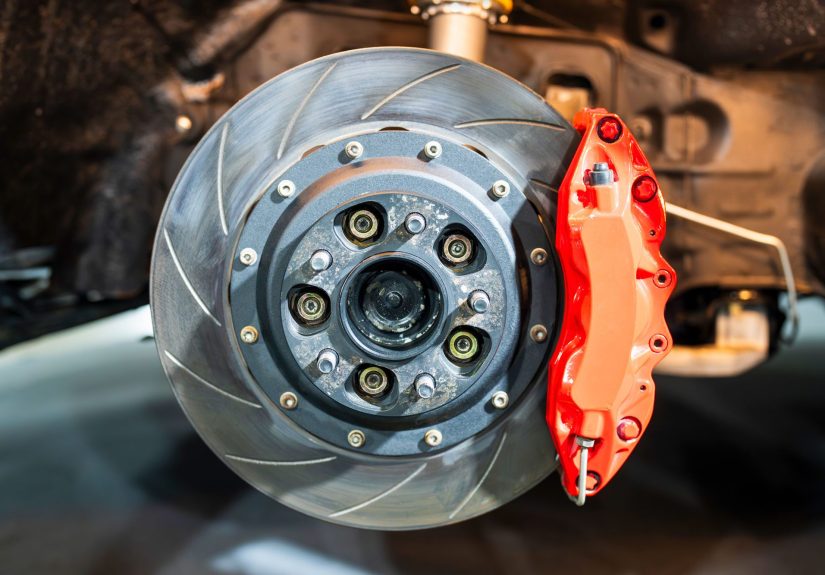
In most passenger vehicles, braking is hydraulic: you press the pedal, pressure moves through brake lines, and that pressure
helps clamp pads on rotors (or expand shoes in a drum). Brake fluid is the middleman that has to do two big things at once:
- Transmit pressure consistently (so your pedal feels firm and predictable).
- Stay a liquid under heat (because compressible vapor bubbles are the enemy of firm braking).
Here’s the not-fun physics: liquid doesn’t compress much, but gas compresses a lot. If brake fluid boils and creates
vapor bubbles, the pedal can feel soft or sinky because you’re compressing gas instead of moving the calipers the way you expect.
That’s why boiling point matters so muchespecially in conditions that generate extra brake heat (long downhill grades,
stop-and-go towing, repeated hard braking).
What “DOT 3” and “DOT 4” really mean
“DOT” refers to a U.S. Department of Transportation classification under the federal safety standard for brake fluids:
FMVSS No. 116. This standard sets performance requirements like boiling points, viscosity at cold temperatures,
corrosion control, and more.
Important note: DOT numbers are not a simple quality ranking like “4 is always better than 3.”
They’re categories with minimum requirements. A high-quality DOT 3 can outperform a bargain-basement DOT 4 in some real-world
scenarios, depending on formulation and maintenance.
Dry vs. wet boiling point: the two numbers that matter most
Brake fluid specs typically talk about:
- Dry boiling point: fresh fluid (minimal moisture).
- Wet boiling point: fluid that’s been conditioned with moisture to simulate real-world absorption over time.
Why the two numbers? Because most DOT 3 and DOT 4 fluids are hygroscopic, meaning they absorb moisture from the air over time.
Even small amounts of water reduce boiling points and can increase corrosion risk inside the system.
DOT 3 vs DOT 4: the headline differences
1) Boiling points (DOT 4 wins the heat contest)
Under FMVSS 116 minimums, DOT 4 must meet higher boiling point thresholds than DOT 3. Here are the commonly cited minimums:
| Spec (FMVSS 116 minimum) | DOT 3 | DOT 4 |
|---|---|---|
| Dry boiling point (ERBP) | 205°C / 401°F | 230°C / 446°F |
| Wet boiling point (Wet ERBP) | 140°C / 284°F | 155°C / 311°F |
| Max viscosity at -40°C | 1500 mm²/s | 1800 mm²/s |
Translation: DOT 4 is designed to handle higher temperatures before it boilsboth when new and when it has absorbed moisture.
That’s the core reason it’s specified for some vehicles and driving conditions.
2) Moisture absorption (DOT 4 often absorbs faster, but “it depends”)
Many mainstream automotive references describe DOT 4 as absorbing moisture faster than DOT 3. The logic is that DOT 4’s chemistry
(often including borate esters) is engineered to raise boiling points, but moisture management and service interval can become
more important. In real life, the rate depends on the exact product, how often the reservoir is opened, climate/humidity,
and how long the fluid has been in service.
The practical point isn’t to panicit’s to understand that any glycol-based brake fluid degrades over time.
If you’re chasing performance benefits, you also have to respect maintenance.
3) Chemistry (both are usually glycol-based; DOT 4 commonly adds borate esters)
Most DOT 3 and DOT 4 fluids in passenger vehicles are glycol-ether based.
DOT 4 formulas commonly include borate ester components that help achieve higher boiling points and performance under heat.
Product data sheets and manufacturer explainers frequently mention glycol ethers and borate esters for DOT 4 formulations.
The big chemistry warning label: DOT 5 is different. DOT 5 is silicone-based (and is typically purple under the standard),
and it is not meant to be mixed with DOT 3 or DOT 4. If you remember only one “don’t do that” rule, make it this one.
4) Viscosity in the cold (yes, it matters for modern braking systems)
Brake fluid has viscosity requirements for cold temperatures because ABS/ESC systems can move fluid quickly through small passages.
FMVSS 116 includes maximum viscosity limits at -40°C, and DOT 4 allows a higher max viscosity than DOT 3 under the standard.
That doesn’t automatically mean DOT 3 is “better in winter” or DOT 4 is “worse”it means each grade has its own performance window.
If you live in a very cold climate or your vehicle has specific stability-control requirements, the safest call is still:
follow the manufacturer’s specified grade.
So… which one should you use?
Use the grade specified on your reservoir cap or in your owner’s manual. Not because carmakers are being dramatic,
but because brake systems are engineered around fluid performance, seal compatibility, and heat management.
DOT 3 is usually the right choice if:
- Your manual specifies DOT 3 (obviously).
- You drive a typical daily-driver with normal braking heat (commuting, errands, regular highway driving).
- You want a widely available, cost-effective fluid that meets the system’s requirements.
DOT 4 is usually the right choice if:
- Your manual specifies DOT 4 (also obviously).
- You regularly tow, haul, or drive long mountain descents (more heat = more need for boiling-point headroom).
- You drive a performance-oriented vehicle or do repeated hard braking (spirited driving, track days, autocross).
- Your car’s braking system is designed around DOT 4 performance margins.
A realistic example
Two drivers own similar-looking midsize vehicles. One mostly drives flat highways and suburban roads. The other lives in a hilly area,
carries gear, and spends weekends towing a small trailer. The second driver’s brakes see higher average heat loads, so DOT 4’s higher
boiling-point cushion can be a meaningful benefitif the vehicle allows/specifies it and the fluid is maintained properly.
Can you mix DOT 3 and DOT 4?
In most passenger-car contexts, DOT 3 and DOT 4 are both glycol-based and are typically considered compatible/miscible.
That means if your system uses DOT 3 and you need to top off with DOT 4 in a pinch, you’re generally not creating an instant chemical disaster.
But there are two important “fine print” realities:
- Mixing tends to average out performance. If you mix DOT 4 into DOT 3, the final boiling point isn’t magically “full DOT 4.”
You can dilute the benefit. - Your vehicle spec still matters. If your car requires DOT 4, repeatedly using DOT 3 can mean you’re below the intended thermal margin.
The safest move is to keep the system on the specified grade and treat any “mixing” as temporary until the fluid can be serviced properly
by a qualified technician. (Brake systems are safety-criticalthis isn’t the place to freestyle.)
Maintenance: why “new” brake fluid doesn’t stay new
Brake fluid doesn’t get “used up” like gasoline; it degrades because of moisture absorption and heat cycling.
Over time, moisture lowers boiling points and can contribute to internal corrosion. That’s why many service providers offer
brake fluid testing and exchange services, and why maintenance schedules often recommend periodic brake-fluid service.
A useful reality check from AAA: in a survey of AAA Approved Auto Repair facilities, a large share reported that drivers often miss
brake-fluid maintenance compared with other common items. In other words, brake fluid is frequently neglected until braking feel or
component wear forces attention.
“How often should brake fluid be changed?”
The best answer is: follow your manufacturer’s interval. If no interval is available, many industry references and service providers
commonly suggest a 2–3 year range depending on use, environment, and the vehicle’s braking demands.
Also: brake fluid has a shelf-life issue. Once a container is opened, it can absorb moisture from the airso smaller containers and tightly sealed storage
are often recommended by manufacturers and retailers. If your bottle has been opened and living in a humid garage for ages, it may not be the hero you want.
Common myths (and the truth, with fewer internet rumors)
Myth: “DOT 4 is always an upgrade.”
Truth: DOT 4 has higher boiling-point minimums, but “upgrade” depends on what your vehicle was designed for.
If your system calls for DOT 3 and you drive normally, you might not gain anything noticeableexcept a lighter wallet and a false sense of superiority
at the auto-parts checkout line.
Myth: “ABS means you must use DOT 4.”
Truth: ABS doesn’t automatically demand DOT 4. Some ABS-equipped vehicles specify DOT 3, others DOT 4.
The correct fluid is the one your manufacturer specifies for that braking system.
Myth: “If the fluid is amber, it’s fine.”
Truth: Color isn’t a reliable quality test. The standard allows DOT 3 and DOT 4 fluids to be colorless to amber, and fluid can darken with age and contamination.
Actual condition is better assessed with proper testing and professional inspection.
Myth: “Brake fluid is a ‘set it and forget it’ fluid.”
Truth: Brake fluid is more like a sponge in a sealed systemit slowly absorbs moisture over time. Even if the reservoir looks “full,” the fluid’s performance can degrade.
Safety note (because brakes are not a hobby project)
Brake fluid can damage paint and is not something you want on your skin, eyes, or driveway. More importantly, brake systems are safety-critical.
If you suspect your brake fluid is wrong, degraded, or contaminatedor your pedal feel changeshave the system inspected by a qualified technician.
Wrap-up: what to remember the next time you’re staring at the shelf
DOT 3 and DOT 4 are both common, glycol-based brake fluids used in hydraulic braking systems. DOT 4 is built around higher boiling-point performance,
which can matter a lot under high heat. DOT 3 is widely used and perfectly appropriate when it matches the vehicle specification.
The smartest “choice” is usually not a choice at all: it’s reading the cap/manual and matching the grade.
If you want the most dramatic improvement in braking confidence, it’s rarely about picking a higher DOT numberit’s about
using the correct spec and keeping the fluid in good condition.
Real-world experiences: what drivers and shops notice (extra perspective)
People usually don’t think about brake fluid until they feel something “off.” And the stories tend to sound the same:
“My brakes worked fine… until they didn’t.” The thing is, brake-fluid problems often show up in specific situationsespecially heat.
That’s why DOT 3 vs. DOT 4 feels like an abstract debate until you put the car in a scenario that turns heat into a full-time job.
The mountain-descent moment
A classic experience: long downhill driving with frequent braking. Many drivers report that early warning signs aren’t always squeaks or grinding
it’s a change in pedal feel after repeated braking. In these situations, DOT 4’s extra boiling-point headroom can be the difference between
“everything feels normal” and “why does my pedal feel like a stress ball?”
This is also where misconceptions start. Some people conclude, “DOT 3 is bad.” But the more accurate takeaway is:
when braking heat is consistently high, you want the fluid spec and maintenance schedule that keeps boiling points safely above operating conditions.
For many vehicles and driving styles, DOT 3 is completely fine. For heavy heat loads, DOT 4 can be a better matchassuming the vehicle permits it.
The towing and hauling crowd
Drivers who tow often describe brakes feeling “more confident” after switching to the manufacturer-specified fluid and staying on top of service intervals.
The interesting part is that the improvement is not always because DOT 4 is a magical potionit’s because the fluid in the system was old,
moisture-laden, and working with a lower wet boiling point than it had when it was new.
In other words: sometimes people experience a “DOT 4 upgrade,” but what they’re really experiencing is “fresh fluid that’s back inside spec,”
plus the additional boiling-point margin that DOT 4 provides. It’s like replacing worn running shoes: the difference feels dramatic not because
new shoes are a performance hack, but because your old ones were basically pancakes with laces.
The performance-driver perspective (where DOT 4 earns its reputation)
Autocross and track-day drivers talk about brake fluid the way coffee people talk about water temperature: with surprising intensity.
That’s because repeated high-speed braking can generate extreme heat fast, and brake fluid is a real limiting factor. In that world,
DOT 4 is often the baseline choice because of its higher boiling points. Some drivers go even further (DOT 5.1 or specialized racing fluids),
but the point remains: when your brakes are consistently hot, boiling-point margin isn’t triviait’s confidence.
Another common observation: people sometimes blame pads or rotors when the real issue is fluid condition. On performance drives,
if the pedal gets soft after repeated braking, it can feel like the car suddenly forgot how physics works. Often, it’s simply heat and fluid behavior
colliding in an expensive way.
The “my car is totally normal” reality check
For everyday commuting, many drivers would never notice a difference between DOT 3 and DOT 4 in normal usebecause their braking system
never gets close to boiling points. That’s not a flex; it’s just math. If your brakes are rarely pushed hard, DOT 3’s performance window may be
more than sufficient. In those cases, the bigger win is making sure the fluid is the correct grade and not overdue for service.
The shop-side pattern: brake fluid is often neglected
Many service centers mention that brake fluid maintenance is frequently overlooked compared to oil changes and tire rotations.
That tracks with what AAA has reported from repair-facility feedback: brake fluid is a commonly missed maintenance item.
The “experience” here is less about drama and more about preventiondrivers often feel surprised that brake fluid can be a scheduled service
at all, because it’s out of sight and doesn’t get marketing love like synthetic motor oil.
If there’s a final “real-world” lesson, it’s this: the best brake-fluid choice isn’t about winning an argument online.
It’s about matching the spec your braking system was designed for, and keeping the fluid healthy so the boiling points and corrosion protection
stay where they belong.