Table of Contents >> Show >> Hide
- What Exactly Is a “Dover Coat”?
- Why a Hat Hook Is the Unsung Hero of Entryway Organization
- Choosing a Hat Hook That Can Handle a Dover Coat
- Placement: The “Goldilocks Zone” for Coat and Hat Hooks
- Installation Without the Drama: Studs, Anchors, and Renter-Friendly Options
- Style Tips: Make the Hook Area Look Like It Was Planned (Not Apologized For)
- Keeping a Dover Coat Looking Expensive (Even If You Got It on Sale)
- Real-Life Experiences: Living With a Dover Coat + Hat Hook
- Conclusion
Some relationships are complicated: cats and Christmas trees, white sneakers and mud, “I’ll just have one cookie” and reality.
But one pairing is gloriously simple: a great coat and a great place to hang it.
Enter the Dover coat and the humble hat hookthe closet-meets-entryway duo that saves your mornings, your floors, and (quietly) your sanity.
If you’ve ever watched a beautiful wool coat slide off a sad little hook like it’s auditioning for a soap opera fall scene,
you already know this isn’t “just hardware.” It’s infrastructure.
The right hook keeps your coat looking sharp, your entryway looking intentional, and your hat from becoming a crushed pancake with dreams.
What Exactly Is a “Dover Coat”?
“Dover coat” isn’t one single historical uniform with one strict definitionit’s a name that different brands use for different outerwear silhouettes.
What matters (for real life) is what Dover coats usually have in common: they tend to be substantial, structured, and made to be seen.
Dover can mean “formal wool statement coat”
One modern example is a long, 100% wool formal coat sold under the Dover namedramatic length, polished vibe, and the kind of presence
that makes your jeans and sweatshirt feel like they should apologize and try harder.
A coat like that belongs on a hook that’s equally confident.
Dover can also nod to “toggle/duffle heritage” energy
In the broader style conversation, many people connect “Dover” with classic British outerwear vibesespecially duffle/toggle coats:
thick wool, a big hood, and closures designed to be workable with cold hands (and gloves that turn your fingers into bratwursts).
Historically, duffle coats have military roots and became widely popular as civilian outerwear after wartime surplus made them accessible.
Translation: they’re built warm, built sturdy, and built to be worn a lot.
So for this guide, think of a “Dover coat” as: a heavier, nicer outer layerusually wool, often longer, and absolutely worthy
of a better home than “the chair” (you know the chair).
Why a Hat Hook Is the Unsung Hero of Entryway Organization
Entryways are chaos magnets: keys, mail, backpacks, umbrellas, and a mysterious single glove that appears every winter like a seasonal cryptid.
Hooks fight that chaos using one simple strategy: vertical storage.
When coats and hats go up, floors and surfaces stay clearand your entryway stops looking like a lost-and-found bin.
Hooks beat the “pile method” every time
- Faster mornings: grab-and-go beats scavenger hunts.
- Less wear: no more coats crushed under bags and regret.
- Cleaner space: outerwear stays off benches, chairs, and that one spot on the floor you swear you’ll mop “this weekend.”
A well-planned hook setup also turns your entryway into a “drop zone” that actually workscoats hang, hats land, keys get a tray,
and suddenly you’re a person with their life together (at least within a 6-foot radius of the front door).
Choosing a Hat Hook That Can Handle a Dover Coat
Here’s the secret: the best wall hook isn’t the prettiest one. It’s the one that doesn’t betray you.
Dover coatsespecially wool or lined versionshave real weight. Add a scarf, a tote, maybe a hat, and you’ve built a small wearable boulder.
1) Pick the right shape (your coat’s shoulders will thank you)
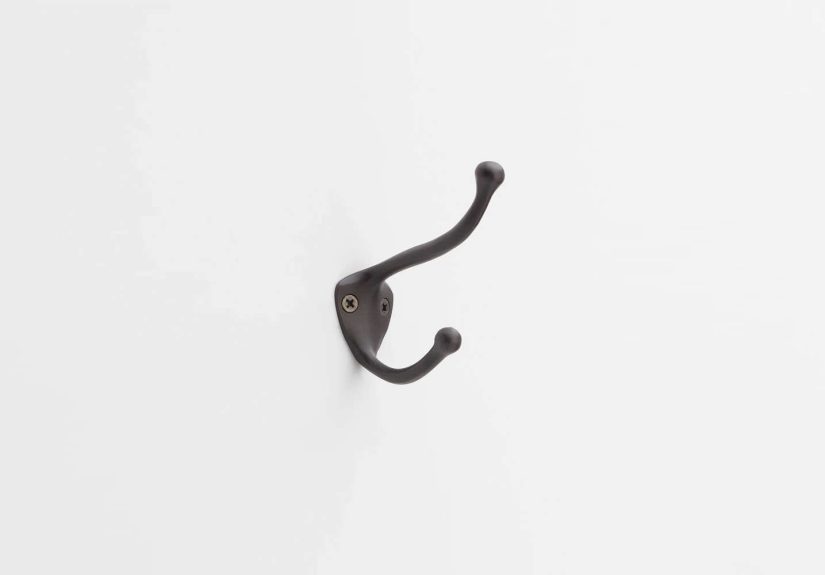
Look for hooks with a curved profile rather than a straight peg.
A curve “cradles” the garment and helps keep straps and collars from sliding.
If you hang hats, aim for a hook that’s not so sharp it dents brims or snags knits.
For heavier outerwear, double hooks are underrated: coat on the big hook, hat/scarf on the smaller one.
This prevents the “everything on one hook” tower that collapses the moment a breeze enters your zip code.
2) Choose materials like you’re building a tiny bridge
Solid metal hooks (steel, iron, brass) are common for a reason: durability.
Wood pegs can work beautifully too, especially if they’re thick and well-mountedjust treat “decorative” pegs like “decorative” chairs:
cute, but not always ready for daily abuse.
3) Respect weight ratings (and the laws of physics)
If you’re renting or avoiding drills, adhesive hooks can be usefulbut you must play within their limits.
Many adhesive hook systems list specific weight capacities by product type.
A heavy wool coat can easily exceed what smaller adhesive hooks are designed to hold, especially when the load sticks out from the wall
(that leverage is not your friend).
For homeowners (or renters who are allowed to drill), the gold standard is a hook (or hook rail) secured into a stud,
or properly installed anchors rated for the real-world load you’re putting on it.
Placement: The “Goldilocks Zone” for Coat and Hat Hooks
Hook placement is where good intentions go to die.
Too high and shorter people need a step stool (and a prayer). Too low and coats drag, hats get bumped, and your wall becomes a scarf mop.
General height guidelines
A common starting point is mounting hooks around 60 inches from the floor for adult use.
Adjust based on who actually lives in the house: if kids use it daily, add a lower row so they can hang their own gear
without launching coats like lasso practice.
Spacing: give each coat a little personal space
Heavy coats need room to breathe. If hooks are too close, sleeves overlap, everything tangles,
and you’ll swear the coats are plotting to keep you late.
As a rule of thumb, spacing hooks so coats don’t mash together improves airflow (less odor, less dampness)
and makes the setup look tidy even on weekday mornings.
Think in “systems,” not single hooks
A hook rail (a board with multiple hooks) spreads weight and keeps alignment clean.
A set of hooksoften around five in a typical family entry nookcan keep jackets, hats, and leashes ready without taking over the room.
Add a small bench underneath and you’ve created the holy trinity: hang, sit, shoe.
Installation Without the Drama: Studs, Anchors, and Renter-Friendly Options
Let’s talk about how hooks actually stay on wallsbecause “it looked fine until it didn’t” is not the vibe.
The correct method depends on your wall type, your load, and whether you’d like to keep your security deposit.
Option A: Mount into studs (best for heavy Dover coats)
If you can hit studs, do it. This is the safest approach for heavy coats and multi-hook rails.
Use appropriate screws for wood framing and make sure the rail sits level.
Bonus: you won’t have to do the “please don’t fall” glance every time you hang your coat.
Option B: Use the right drywall anchors (if studs don’t line up)
Drywall itself isn’t solid enough to hold much weight reliably, which is why anchors exist.
There are multiple anchor typesexpansion, self-drilling, hollow-wall/molly, toggle stylesand each has its own strengths.
The goal is simple: distribute weight and lock the fastener behind the wall surface so it can’t tear out.
A practical tip: weight ratings can be optimistic and often assume a flush-mounted load.
Coats and hook rails extend outward, increasing leverage, so it’s smart to build in a safety margin.
If your hook setup is going to hold heavy wool plus bags, choose anchors rated above what you think you need
and follow the manufacturer’s directions like they’re a recipe for brownies you actually want to eat.
Option C: Adhesive hooks (best for hats, light layers, and “no drills” homes)
Adhesive hooks are great for lighter itemshats, keys, dog leashes, a scarf that weighs approximately nothing.
But many adhesive options are rated in the low single-digit pounds per hook.
That’s not “winter wool coat after a rainy commute” territory.
If you go adhesive, keep it honest: reserve those hooks for hats and accessories, not your heaviest Dover coat.
You’ll still win the organization gamewithout turning your hook into a surprise wall ornament on the floor.
Style Tips: Make the Hook Area Look Like It Was Planned (Not Apologized For)
The magic of a Dover coat is that it can upgrade your whole look.
The magic of a hat hook is that it can upgrade your whole spaceif you treat it like part of the decor, not an afterthought.
Use the “entryway formula”
- Hooks: for coats, hats, bags.
- Landing zone: a tray or bowl for keys and wallet.
- Mirror: checks your face and bounces light.
- Light: warm lighting makes even “Monday morning me” look slightly more alive.
If your hook setup is visible from the living room, choose hardware that complements your finishes:
matte black for modern, brass for warm and classic, wood pegs for Scandinavian calm, iron for farmhouse grit.
Your coats become texture and colororganized, intentional, and oddly satisfying to look at.
Keeping a Dover Coat Looking Expensive (Even If You Got It on Sale)
Wool coats are famously forgivingbut they’re not indestructible.
The biggest enemies are friction, grime at collars/cuffs, and overwashing.
Good news: maintenance is easier than people think.
Brush, air, and spot-clean before you panic
For most day-to-day wear, a quick brush to remove dust and lint + a little airing out does a lot.
For small stains, gentle spot treatment is usually better than a full clean.
And yes, structured coats often do best with professional cleaning when they truly need itespecially if they have linings and internal structure.
Don’t overwash winter coats
Many laundry pros recommend washing winter coats far less often than people assumeoften once per season unless they’re visibly soiled.
Between wears, steaming, airing, and spot cleaning can keep a coat fresh without grinding the fibers into early retirement.
Store smart to avoid “mystery moth damage”
At the end of the season, store coats clean and fully dry.
Use breathable garment storage and consider cedar blocks or similar deterrents for pests.
Translation: protect the coat you love from becoming an all-you-can-eat buffet.
Real-Life Experiences: Living With a Dover Coat + Hat Hook
The first week I upgraded my entryway hooks, I didn’t feel like a new person. I felt like the same person… just faster.
The old routine was a daily mini-tragedy: coat tossed on a chair, hat balanced on a bag, scarf draped over a doorknob like it was trying to escape.
By Friday, the “chair pile” had become a full ecosystem. I’m pretty sure it was generating its own weather patterns.
Then came the Dover coatthe kind of coat that makes you stand up straighter because it’s quietly judging your posture.
It was heavier than my usual jacket, which meant it instantly exposed every weak link in my home-organization chain.
The flimsy hook I’d been using (more “optimistic screw” than “hardware”) lasted exactly two hangs.
On the third, it popped loose with the confidence of a champagne cork, and my coat slid down the wall like it was dramatically leaving the scene.
I swear the hat looked embarrassed.
That’s when the hat hook became non-negotiable. I switched to a sturdier hook rail, spaced the hooks so sleeves weren’t tangled,
and gave the Dover coat its own dedicated spot.
The difference wasn’t just visualit was behavioral. When a hook is easy to use, you actually use it.
When it’s inconvenient, you revert to throwing things on furniture like you’re reenacting a college dorm.
The surprising part: my hat started looking better, too. A soft knit beanie is forgiving, but anything structureda brimmed hat, a wool cap with shape
really benefits from being hung carefully. I learned to hang hats by a loop when possible, or on a hook with a smoother curve so the brim wouldn’t get dented.
And I stopped cramming scarves on top of everything like they were packing peanuts.
Winter mornings became less of a scavenger hunt. Keys lived in a small tray.
The coat was where it belonged. The hat didn’t smell like yesterday’s subway ride because it wasn’t trapped under a backpack.
Even guests noticedmostly because they didn’t have to awkwardly ask, “Uh… where should I put this?” while holding a parka the size of a sleeping bag.
A row of hooks answers that question instantly, like a polite but firm host.
The best moment was the first rainy day.
Wet coat, damp hat, dripping scarfnormally that would turn my entryway into a soggy mess.
With the hook setup, everything hung separately and dried faster.
No wet heap, no mildew smell, no frantic “why is the floor slippery?”
It’s not glamorous, but it’s the kind of small upgrade that feels like you’ve finally stopped wrestling your own house.
And yes, I still have “the chair.” I’m not a wizard. But now the chair is a chair againrather than a textile mountain range
starring my Dover coat as the reluctant summit.
Conclusion
A Dover coat is built for real winter livingwarmth, structure, presence. A hat hook (done right) is built for real daily livingorder, speed, and fewer “where did my scarf go?” mysteries.
Pair them thoughtfully: choose a hook that matches the coat’s weight, mount it securely, place it at a height that fits your household,
and you’ll get an entryway that’s both stylish and functional. The coat looks better, the space feels calmer, and your mornings stop starting with a wrestling match.
That’s a winno matter what the weather’s doing outside.
![“[Am I The Jerk] For Telling My Wife I’m Not Going To Sacrifice My Hobbies Just So That I Can Babysit?”](https://2quotes.net/wp-content/uploads/2026/04/am-i-the-jerk-for-telling-my-wife-im-not-going-to-sacrifice-my-hobbies-just-so-that-i-can-babysit-iqoh9o4a-thumb.jpg)