Table of Contents >> Show >> Hide
- What Dry Eye Really Means (And Why It’s Not Just “Not Enough Tears”)
- Symptoms: The Usual Suspects
- Why Dry Eyes Happen (Causes and Risk Factors)
- Diagnosis: How Eye Doctors Confirm Dry Eye
- Dry Eyes Remedies You Can Start Today
- 1) Use artificial tears the right way
- 2) Warm compresses for evaporative dry eye (MGD)
- 3) Eyelid hygiene (especially if you have blepharitis)
- 4) Upgrade your environment
- 5) Screen-friendly habits (the “my eyes hate my job” section)
- 6) Hydration and nutrition: helpful, but don’t expect miracles overnight
- When Home Remedies Aren’t Enough: Medical Treatments
- Dry Eye Prevention: Your “Future Me Will Thank Me” Checklist
- When to See an Eye Doctor (Don’t Tough It Out Forever)
- Quick “Build Your Plan” Examples
- Real-World Experiences: What People Often Notice (And What Helps)
- Conclusion
- Research Basis (US Sources Consulted)
Dry eyes are the ultimate petty problem: your eyeballs are literally watering… while also feeling like sandpaper.
If you’ve ever blinked and thought, “Why does it feel like my contact lens is made of cardboard?” welcome.
Dry eye disease (often called “dry eye syndrome”) is extremely common and, thankfully, very manageable.
This guide covers practical dry eyes remedies, smart prevention strategies, and how to know when it’s time to see an eye doctor.
We’ll stick to real-world, evidence-based options (not “rub a potato on your eyelids under a full moon”).
What Dry Eye Really Means (And Why It’s Not Just “Not Enough Tears”)
Your tears aren’t just salty feelings. They’re a three-part system: an oily layer (to slow evaporation),
a watery layer (for moisture and nutrients), and a mucous layer (to help tears spread evenly).
Dry eye happens when you don’t make enough tears, your tears evaporate too quickly, or the tear quality is off.
Two common types of dry eye
-
Evaporative dry eye: Tears leave the building too fast, often because the oil glands in your eyelids
(meibomian glands) aren’t doing their job well. - Aqueous-deficient dry eye: Your eyes don’t produce enough of the watery tear component.
Symptoms: The Usual Suspects
Dry eye symptoms can be obvious or weirdly misleading. Common complaints include:
- Burning, stinging, itching, or a gritty “something’s in my eye” feeling
- Redness and irritation (especially after screens, wind, heat, or AC)
- Watery eyes (yepreflex tearing can happen when the surface is irritated)
- Blurry or fluctuating vision that improves after blinking
- Light sensitivity
- Contact lens discomfort
Why Dry Eyes Happen (Causes and Risk Factors)
Dry eye is usually a “many small problems” condition. The most common triggers include environment, habits,
medications, and underlying inflammation.
Everyday triggers
- Screen time: You blink less when staring at a screen. Less blinking = more evaporation.
- Dry air: Heat, air conditioning, airplane cabins, and winter air can dry the ocular surface fast.
- Wind, smoke, fans: If your eyeballs could talk, they’d ask you to stop aiming the fan at their face.
- Contact lenses: Lenses can disrupt the tear film and make evaporation worse.
Medical and medication factors
- Age-related changes in tear production
- Hormonal shifts (including menopause)
- Autoimmune conditions (for example, Sjögren’s syndrome)
- Eyelid inflammation (blepharitis) and meibomian gland dysfunction (MGD)
- Some medications (antihistamines, certain antidepressants, acne meds like isotretinoin, and others)
Diagnosis: How Eye Doctors Confirm Dry Eye
If symptoms persist, an optometrist or ophthalmologist can evaluate the tear film and ocular surface and check for
eyelid gland issues. Testing may include tear break-up time, staining of the cornea surface, tear volume tests,
and examination of eyelid margins. This matters because the best treatment depends on the “why,” not just the “ow.”
Dry Eyes Remedies You Can Start Today
Most dry eye treatment plans start with basic comfort measures and build from there. Think of it like skincare:
you don’t jump straight to prescription-strength stuff unless you need it.
1) Use artificial tears the right way
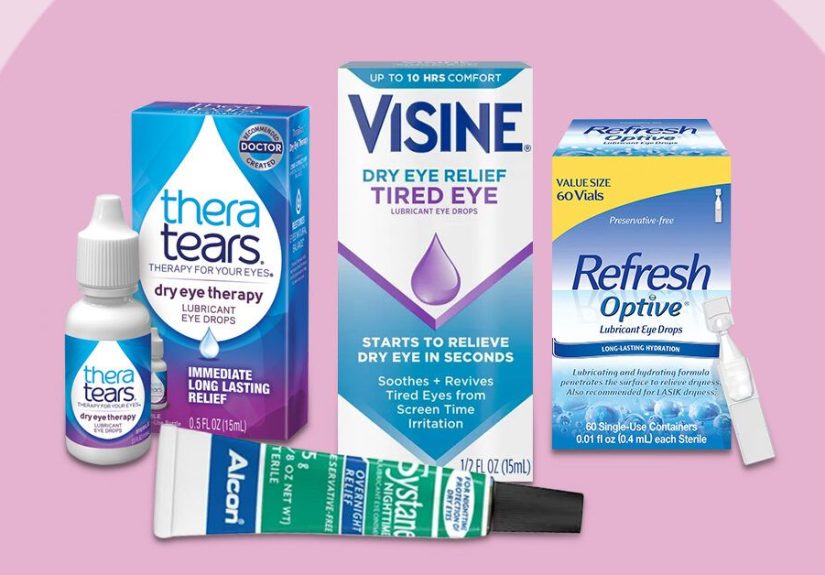
Over-the-counter lubricating eye drops (“artificial tears”) are often first-line for mild to moderate symptoms.
They can reduce irritation and stabilize the tear film.
- Match the drop to the job: Thinner drops feel natural but may not last long; gel drops last longer but can blur vision briefly.
- Consider preservative-free: If you’re using drops frequently (like several times daily), preservative-free single-use vials may be gentler.
- Avoid “get-the-red-out” drops for routine use: Decongestant drops can worsen irritation over time for some people.
2) Warm compresses for evaporative dry eye (MGD)
If your dry eye is driven by eyelid oil gland dysfunction, warm compresses can help loosen thickened oils and improve flow.
Aim for comfortably warmnot “I microwaved lava.”
- Apply a warm compress over closed eyelids for about 5–10 minutes.
- Follow with gentle lid massage if advised by your clinician.
- Consistency matters: doing it regularly tends to work better than “once when you remember.”
3) Eyelid hygiene (especially if you have blepharitis)
If your eyelids are inflamed, crusty, or oily, cleaning the lid margins can reduce inflammation and improve tear stability.
Many people use lid wipes or gentle cleansers designed for eyelids.
4) Upgrade your environment
- Humidifier: Adding indoor humidity can reduce tear evaporation.
- Airflow control: Don’t aim fans, car vents, or hair dryers at your eyes.
- Wraparound sunglasses: Helpful in wind and bright sun.
- Smoke avoidance: Smoke and pollutants are frequent irritants.
5) Screen-friendly habits (the “my eyes hate my job” section)
- 20-20-20 rule: Every 20 minutes, look 20 feet away for 20 seconds to reset your blink rate and reduce strain.
- Blink on purpose: Slow, complete blinks help spread oils across the eye surface.
- Adjust your setup: Lower your monitor slightly so your eyelids cover more of the eye surface, reducing evaporation.
6) Hydration and nutrition: helpful, but don’t expect miracles overnight
Dehydration can worsen dryness. Drinking adequate water and maintaining a balanced diet supports overall eye health.
Omega-3 fatty acids are often discussed for dry eye; research results are mixed. Some people report symptom improvement,
but large high-quality trials have found no clear benefit versus placebo for many patients.
If you want to try omega-3s, consider it a “maybe helpful” add-on, not the main eventand discuss supplements with your clinician
if you have bleeding risks or take anticoagulants.
When Home Remedies Aren’t Enough: Medical Treatments
If your eyes still feel dry despite consistent basics, it doesn’t mean you “failed at blinking.” It may mean you need
targeted therapy for inflammation, tear drainage, or gland dysfunction.
Prescription options your eye doctor may discuss
-
Anti-inflammatory prescription drops: Certain medications reduce ocular surface inflammation and can improve tear production or stability.
These often take weeks to show full benefit. - Short-course steroid drops for flares: Used carefully and typically for limited periods under medical supervision.
- Prescription nasal spray that stimulates natural tears: Some treatments work via neurostimulation to increase tear production.
In-office and device-based therapies
- Punctal plugs (tear-duct plugs): Tiny plugs can reduce tear drainage so moisture stays on the eye longer.
- Thermal pulsation / gland treatments: For meibomian gland dysfunction, certain in-office devices can help improve gland function.
- Scleral lenses: Specialized lenses can create a “moisture reservoir” for more severe cases.
Dry Eye Prevention: Your “Future Me Will Thank Me” Checklist
Daily prevention basics
- Use artificial tears preventively during known triggers (long screen sessions, flights, winter heating).
- Protect your eyes from wind and sun with good eyewear.
- Keep indoor air from turning into a desert: use a humidifier when needed.
- Get enough sleepyour tear system loves a well-rested human.
If you wear contact lenses
Dry eye and contact lenses can coexist, but hygiene and good habits are non-negotiable.
Poor contact lens care increases irritation and infection risk.
- Wash and dry hands before handling lenses.
- Follow your replacement schedule (don’t “stretch” lenses like they’re leggings).
- Avoid sleeping in contacts unless specifically directed by your eye care provider.
- Keep lenses away from water (no rinsing, swimming, or showering in them).
- Ask your eye doctor about lenses designed for dry eyes or switching to glasses more often.
Medication and health review
If dry eyes started after a medication change, don’t stop meds on your ownbut do tell your prescribing clinician and your eye doctor.
Sometimes a dosage change, alternative medication, or added dry eye therapy solves the issue.
When to See an Eye Doctor (Don’t Tough It Out Forever)
Occasional dryness is common. But persistent symptoms deserve an eye examespecially if you have pain, significant light sensitivity,
worsening redness, discharge, or changes in vision. Severe or untreated dry eye can lead to surface damage and recurring irritation.
Quick “Build Your Plan” Examples
Example 1: The all-day laptop worker
Start with preservative-free artificial tears during the day, 20-20-20 breaks, a humidifier at your desk area,
and intentional blinking. If symptoms persist after a few weeks of consistency, ask your eye doctor to evaluate for MGD and inflammation.
Example 2: The frequent flyer
Airplane cabins are famously dry. Use lubricating drops before and during the flight, avoid overhead vents aimed at your face,
and consider thicker gel drops after landing if you get lingering irritation.
Example 3: The “my eyelids are crusty” situation
Prioritize warm compresses + lid hygiene. That combo can be a game-changer when blepharitis or meibomian gland dysfunction is driving symptoms.
If you’re not improving, an eye doctor can check for eyelid inflammation and recommend targeted treatments.
Real-World Experiences: What People Often Notice (And What Helps)
Let’s talk about the part no one warns you about: dry eye isn’t always constant. For many people, it behaves more like a moody houseplant.
Some days it’s fine, and other days it’s dramatically wilted because you sat under an air vent for 90 minutes or stared at spreadsheets
like they personally offended you.
A common experience is the “morning vs. afternoon flip.” Some folks wake up with scratchy eyes that improve after a shower and a few blinks,
while others feel okay in the morning and progressively drier by late afternoonespecially after heavy screen time. That pattern often points to
evaporation issues and blinking habits, which is why warm compresses and intentional blinking can be surprisingly effective when used consistently.
Many people report that the first week feels underwhelming (“Is this doing anything?”), but by week two or three the “grit” calms down
and contacts feel less like tiny windshield wipers.
Another classic: watery eyes that make you feel like you’re crying at absolutely nothing. This is often reflex tearingyour eye surface is irritated,
so your body overreacts with watery tears that don’t stick around long. People frequently notice that lubricating drops help more than they expected,
not because they stop tearing instantly, but because they calm the surface irritation that triggers the reflex.
People who try artificial tears for the first time often discover there’s a learning curve. The “right” drop can feel amazing, and the wrong one can feel
like you blinked into a swimming pool. Many end up rotating: lighter drops for daytime, gel drops for evenings, and ointment at night only if needed.
Another frequent realization: using drops before a trigger (a long drive with blasting AC, a long Zoom marathon, a flight) works better than
waiting until your eyes are already furious.
Dry eye can also come with a strange emotional side effect: it’s annoying. Not tragic, not dramaticjust relentless in a “tiny daily paper cut” way.
That’s why people tend to do best with a simple, repeatable routine. The most successful routines are the ones that don’t require heroic motivation:
warm compress while listening to a podcast, lid hygiene in the shower, drops next to the laptop, a small humidifier that quietly does its job.
And finally, many people find relief once they stop treating dry eye as “one problem” and start treating it as “a system.”
If your plan includes just drops but ignores airflow, screens, eyelid health, and contact lens habits, symptoms often return.
But when you stack small fixeshumidity + blink breaks + targeted drops + lid carethe improvements add up.
It’s not glamorous. But neither is sandpaper eyes, so we take the win.
Conclusion
The best dry eyes remedies are usually boring (in the most effective way): consistent lubrication, eyelid care, smarter screen habits,
and environmental tweaks. If symptoms persist, prescription therapies and in-office treatments can target inflammation, tear drainage, and gland dysfunction.
Dry eye is treatableand your eyes deserve better than suffering through another workday like two angry raisins.
Research Basis (US Sources Consulted)
American Academy of Ophthalmology (AAO); National Eye Institute (NIH); Mayo Clinic; Mayo Clinic Health System; Cleveland Clinic; American Optometric Association (AOA);
Johns Hopkins Medicine; Centers for Disease Control and Prevention (CDC); Harvard Health Publishing; New England Journal of Medicine;
U.S. Food and Drug Administration (FDA); ClinicalTrials.gov; PubMed; JAMA Ophthalmology; NIH PubMed Central (PMC).