Table of Contents >> Show >> Hide
- What the “Radiology List” Actually Is (and Why It’s More Than a To-Do List)
- One Line, Many Stakes: How Imaging Changes Decisions
- The Hidden Science of “Who Goes First”
- The Backlog Puzzle: Why Radiology Lists Grow (and What Actually Helps)
- Patients See the Report Faster Than Ever (and That Changes Everything)
- Safety Is Part of the Line, Too
- Building a Radiology List That Respects the Patient
- Conclusion: The List Is Made of People
- Experiences from the Queue: What That “Line in the Sand” Feels Like (Real-World Moments)
Somewhere in a hospital (or a clinic, or a mobile imaging van that looks like it’s about to deliver a NASA rover),
there’s a list. It might be called a worklist, a queue, a schedule, an order pool, a reading stack, orif you ask the
staff on a rough day“the never-ending scroll of destiny.”
To the system, it’s logistics. To the radiology team, it’s triage, timing, and responsibility. But to the person
attached to each lineyour shoulder that won’t stop hurting, your child’s sudden abdominal pain, your parent’s
confusing symptomsthat line is a boundary. A “before” and “after.” A moment where uncertainty either tightens its
grip… or finally lets go.
That’s what the phrase means: each line on the radiology list is a patient’s line in the sand.
It’s the point where a decision gets made, a diagnosis becomes clearer, or a plan changes direction. And it’s why
radiology isn’t “just pictures.” It’s a high-stakes communication and patient safety engine that runs on precision,
prioritization, and trust.
Note: This article is educational and not medical advice. If you have urgent symptoms, seek medical care.
What the “Radiology List” Actually Is (and Why It’s More Than a To-Do List)
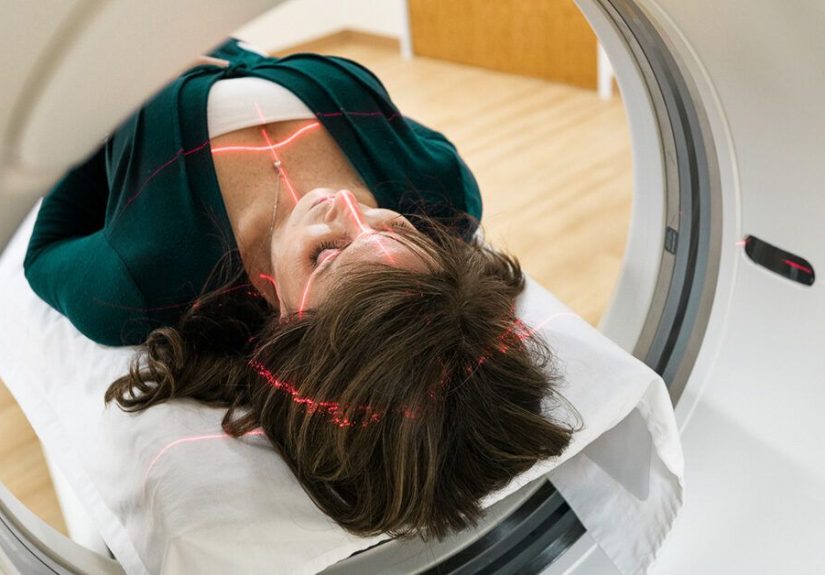
When most people imagine radiology, they picture a scanner and a printed image held up to the light like a movie
detective. In reality, modern imaging is a workflow chainreferral to protocol to scan to interpretation to report to
follow-upbuilt from multiple handoffs and time-sensitive steps.
The “radiology list” is the living record of that chain. It can include:
- Scheduling queues (who needs imaging, when, and how soon).
- Acquisition worklists for technologists (who’s ready, who needs prep, who needs a special protocol).
- Radiologist reading worklists (what studies are waiting to be interpreted and dictated).
- Follow-up and communication tasks (critical results, addenda, callbacks, clarified recommendations).
One line might represent a quick chest X-ray for pneumonia. Another might represent a complex MRI with contrast, a
detailed protocol, and a patient who waited weeks because they needed insurance authorization and the right appointment
slot. The list is where clinical urgency meets real-world constraints.
One Line, Many Stakes: How Imaging Changes Decisions
Imaging is a decision amplifier. It can confirm a suspicion, rule out a dangerous possibility, or reveal a surprise
that changes everything. That’s why the wait can feel so intense: patients aren’t just waiting for a testthey’re
waiting for a path.
Concrete examples of “the line in the sand” moment
- Stroke pathway: A head CT (and sometimes CT angiography/perfusion) helps separate “this is a stroke”
from “this looks like something else,” and can shape immediate treatment choices. - Appendicitis question: Ultrasound or CT can turn “maybe it’s a virus” into “call surgery,” or spare
someone an unnecessary operation. - Chest pain workup: Imaging can help evaluate for pulmonary embolism, pneumonia, or other causes that
change the urgency of care. - Cancer staging: Imaging can shift a plan from “remove it” to “treat it first,” or from “we think it’s
localized” to “we need a broader strategy.” - Incidental findings: Sometimes imaging finds something unrelatedan unexpected nodule, a cyst, a
benign-looking surprisewhich can either be a helpful early warning or an anxiety grenade if it’s not explained well.
In every case, the radiology line is a pivot point. It’s where a clinician’s differential diagnosis meets evidence,
and where a patient’s story meets a new layer of clarityor complexity.
The Hidden Science of “Who Goes First”
If you’ve ever wondered why some studies jump the line, here’s the honest answer: radiology prioritization isn’t about
fairness in the “everyone waits the same” sense. It’s about fairness in the “the sickest, riskiest situations get
answered first” sense.
Most systems stratify imaging by urgencyterms like STAT, urgent, and
routinebut those words aren’t magic. They’re shorthand for clinical risk, resource needs, and how
quickly results will change management.
When minutes matter: critical and actionable findings
Radiology isn’t only about writing a report. It’s also about communication when the findings are urgent or unexpected.
That’s why many departments have escalation rules and “nonroutine communication” expectationsphone calls, secure
alerts, documentation, and read-backsso critical results don’t just exist in a report that nobody reads quickly
enough.
In practice, “actionable findings” are often grouped by how quickly a clinician needs to actthink “minutes,” “hours,”
or “days,” depending on severity and context. The details vary by institution, but the principle is consistent:
when time changes outcomes, communication must outrun the clock.
When days matter: follow-up that can’t fall through the cracks
Not every important finding is an emergency. Some findings require timely outpatient follow-upadditional imaging,
specialist referral, or repeat studies in a defined interval. These are the lines where patient safety is threatened by
something quieter than crisis: missed messages, unclear responsibility, and the “I thought someone else was handling
it” problem.
Strong systems assign responsibility clearly, track acknowledgements, and use closed-loop communication so results are
not only delivered, but received and acted upon.
The Backlog Puzzle: Why Radiology Lists Grow (and What Actually Helps)
Radiology lists grow for the same reason airports get jammed: demand spikes, capacity is finite, and every “small”
delay ripples. Imaging volume has risen over time, studies can be more complex, and staffing and equipment availability
are not infinitely elastic. Add prior-authorization hurdles, patient prep requirements, contrast safety screening, and
urgent add-ons from the ED, and you get the perfect recipe for a queue that breeds like rabbits.
The fix is rarely one heroic solution. It’s usually a bundle of workflow upgrades that protect quality while reducing
friction.
Appropriateness: getting the right test the first time
One of the most practical ways to reduce unnecessary backlog is to reduce unnecessary imagingwithout denying needed
care. Evidence-based referral tools help clinicians choose the study that best matches the clinical question. When the
right test is ordered up front, patients avoid repeat scans, delays shrink, and radiology capacity is preserved for
the people who truly need it.
Appropriateness isn’t just about cost. It’s about patient experience and safety: fewer unnecessary scans means fewer
incidental findings that trigger worry, fewer exposures to ionizing radiation when alternatives exist, and faster
access for urgent cases.
Turnaround time: the metric everyone loves to hate
“TAT” (turnaround time) sounds simple until you ask, “From when to when?” Some teams measure order-to-report. Others
measure exam-complete-to-final-report. Others track the time from critical finding to clinician notification.
Definitions vary, but the theme is consistent: faster isn’t just a bragging right. It can influence throughput,
hospital length of stay, and patient satisfactionespecially in emergency and inpatient settings.
The caution: speed can’t become the only god in the room. Radiology quality depends on careful interpretation,
comparison with prior studies, and clear reporting. The real goal is reliable timelinessnot reckless
haste.
Patients See the Report Faster Than Ever (and That Changes Everything)
A decade ago, many patients didn’t see their imaging report until a clinician explained it. Now, patient portals and
federal rules around access to electronic health information mean that many radiology reports are released to patients
quicklysometimes immediately after final signature.
That’s a win for transparency, and it can help patients feel informed and empowered. It also creates a new reality:
a patient may read the words “mass,” “lesion,” or “suspicious” on their phone while sitting in a parking lot, long
before anyone has explained what the radiologist actually meant.
This is where radiology communication becomes human, not just technical. Many reports include an “Impression” section
that summarizes the key takeaways. Patient-facing education resources also emphasize a simple truth:
radiology language is precise, but not always emotionally considerate. The system has to bridge that
gapthrough clear recommendations, consistent follow-up, and clinicians who are ready to interpret the report in
context.
Safety Is Part of the Line, Too
When someone says, “I’m waiting for my scan,” they’re often holding two thoughts at once: “I need answers” and “I hope
this doesn’t hurt me.” Radiology teams take that second thought seriously.
Radiation risk, in plain English
Many imaging tests (like ultrasound and MRI) do not use ionizing radiation. Others (like X-ray and CT) do. For most
patients, the benefit of appropriate imaging outweighs the risk, and the added cancer risk from medical imaging
exposure is generally considered small. Still, dose mattersespecially when imaging is repeated or when patients are
young.
That’s why “dose optimization” and the ALARA principle (as low as reasonably achievable) are built into protocols,
equipment calibration, and technique choices. The goal is not “lowest dose at any cost,” but the lowest dose that
still answers the clinical question well.
Contrast is helpfulbut deserves respect
Contrast agents can dramatically improve diagnostic clarity. They can also cause side effects or allergic-like
reactions in some patients, which is why screening questions, kidney function checks (in some cases), and clear
instructions matter. Safety is not a speed bump; it’s part of the job.
Building a Radiology List That Respects the Patient
If each line on the list is a patient’s line in the sand, then the list deserves design principlesnot just
persistence.
What great radiology workflow looks like (even under pressure)
- Clinical urgency is defined clearly (and reviewed when it’s abused).
- Protocols match the question so patients don’t come back for “the real test” later.
- Turnaround time is measured honestly with consistent definitions.
- Critical results are communicated with closed-loop systemssent, received, acknowledged, documented.
- Reports are structured and readable with clear impressions and actionable recommendations.
- Follow-up responsibility is explicit so results don’t vanish into the void.
- Patients are treated like participants, not parcelsprep instructions, expectations, and next steps included.
Put differently: the best radiology departments don’t just move images. They move decisionssafely, consistently, and
with respect for the person waiting on the other end.
Conclusion: The List Is Made of People
It’s easy to talk about radiology in the language of operations: backlogs, metrics, capacity, utilization. But the
phrase “each line on the radiology list is a patient’s line in the sand” is a reminder that radiology is not an
assembly line. It’s a series of turning points.
Every entry represents someone hoping for clarity, fearing bad news, or needing a fast answer so treatment can start.
When the system prioritizes wisely, communicates urgently, uses appropriate imaging, and protects safety, the list
becomes what it’s supposed to be: a pathway from uncertainty to action.
And if you’re the patient on that list? You’re not “just one more study.” You’re the reason the list exists.
Experiences from the Queue: What That “Line in the Sand” Feels Like (Real-World Moments)
If you could hoverpolitely, invisiblyover a radiology department for a day, you’d see that the list is less like a
neat checklist and more like a living ecosystem. The schedule looks calm at 7:00 a.m., the way a kitchen looks calm
before the brunch crowd shows up. Then reality arrives. A trauma alert. A “rule out stroke” CT. A patient who didn’t
know they needed to fast. A contrast allergy that requires a safer plan. A scanner that decides to have a personality
at the worst possible moment. And through it all, the list keeps updating like it’s trying to win an argument.
For the patient, the experience is often a strange mix of boredom and intensity. You may be told, “We’re just waiting
for your slot,” which sounds casualuntil you realize that your “slot” is the dividing line between guessing and
knowing. Some people fill the time with small talk. Others stare at the ceiling tiles like they’re trying to decode a
secret message. The most honest description might be: waiting, but with consequences.
For technologists, each appointment is a mini-mission. You’re not just positioning a body part; you’re translating a
clinical question into the cleanest, most diagnostic images possible. The best techns have a calm, practical empathy:
they know how to explain the loud MRI sounds without turning it into a horror movie trailer, and they know how to keep
a nervous patient steady without making them feel rushed. They also know the quiet heroism of getting it right the
first timebecause a repeat scan isn’t just inconvenient, it can be another delay on the list.
For radiologists, the list can feel like reading the world’s most intense inboxone where the subject lines are
“severe headache,” “shortness of breath,” “new mass,” and “please confirm this isn’t terrible.” There’s a particular
kind of adrenaline when a study contains a critical finding: the moment you stop being only an interpreter and become
a communicator. You make the call, send the alert, document the handoffbecause it’s not enough to be right. The right
person has to know, in time to act. That’s the invisible work patients rarely see, and it’s one reason “radiology
turnaround time” is not just about typing speed. It’s about closing loops.
Then there are the modern moments that didn’t exist in quite the same way before: patients reading their report in the
portal before anyone has talked to them. You can almost predict the emotional weather based on vocabulary. “No acute
findings” tends to produce relief so strong it should be billable. “Recommend correlation” sounds harmless to a
clinician but can read like “good luck, buddy” to a worried patient. These are the moments when good medicine needs
translationsomeone to say, “Here’s what it means, here’s what it doesn’t mean, and here’s what happens next.”
The most meaningful experiences often come down to small, human things: a clear explanation; a quick callback; a
clinician who doesn’t let a follow-up recommendation drift into the abyss; a radiology team that treats the patient as
more than a timestamp. Because in the end, the line on the radiology list isn’t a number. It’s a turning point. And
everyone in the chainscheduler, technologist, radiologist, clinician, patientstands on one side of that sand line,
working toward the other.