Table of Contents >> Show >> Hide
You’d think putting the word “Dirty” in a title would scare studios away.
Instead, Hollywood has treated it like glitter: once they started sprinkling it around, they never stopped.
From gritty crime thrillers to swoony dance romances and reality shows about truly filthy jobs,
“Dirty” has become one of pop culture’s favorite attention-grabbers.
In this guide, we’ll walk through the major movies and TV shows with “Dirty” in the title –
the ones that made serious waves at the box office, on TV, or in the cultural imagination.
Think of it as your all-purpose “Dirty” watchlist, whether you’re in the mood for Patrick Swayze’s hips,
Robert De Niro’s chaos grandpa era, or real-life sewer divers bravely doing jobs you’d never touch.
Why “Dirty” Works So Well In Titles
Before we dive into specific movies and shows, it’s worth asking: why “Dirty” at all?
The word instantly suggests rebellion, rule-breaking, or things that happen after dark.
It grabs attention, hints at trouble, and makes you wonder, “Okay, but how dirty are we talking?”
It’s no accident that many of these titles belong to crime films, raunchy comedies, or steamy romances.
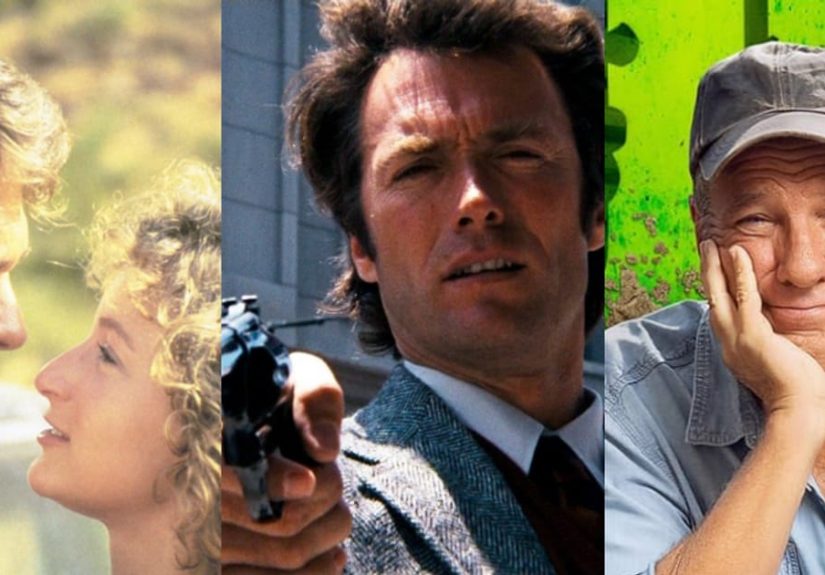
Over time, “Dirty” has been used in titles to sell danger (Dirty Harry), sensuality
(Dirty Dancing), outrageous humor (Dirty Grandpa), and even real-world grime
(Dirty Jobs). Same word, very different vibes.
Iconic “Dirty” Movies Everyone Should Know
The Dirty Dozen (1967)
Let’s start with a war classic. The Dirty Dozen is a World War II action film
about a group of convicts recruited for a near-suicidal mission behind enemy lines. It stars Lee Marvin,
Charles Bronson, Jim Brown, and a stacked cast of tough guys.
The “dirty” here isn’t about hygiene or scandal – it’s about morally compromised men doing
the ugliest kind of work war has to offer. The film became a huge hit and influenced everything from
war movies to modern “team of misfits on a mission” stories like Suicide Squad.
If you want to see where a whole subgenre really clicked into place, this is it.
Dirty Harry (1971)
Dirty Harry helped define the ‘70s cop thriller and turned Clint Eastwood’s
Inspector Harry Callahan into a pop-culture archetype: the hard-edged, rule-bending cop who’s
just as scary as the criminals he chases. The “dirty” in his nickname refers less to personal filth
and more to the morally gray methods he’s willing to use.
The film’s success spawned multiple sequels and decades of debate over police power and
vigilante justice. Whether you see Harry as a hero, a problem, or both, the movie’s title and
attitude are burned into movie history.
Dirty Dancing (1987)
On the complete other end of the “Dirty” spectrum, we have the beloved romance
Dirty Dancing, in which good-girl Baby (Jennifer Grey) falls for
dance instructor Johnny (Patrick Swayze) at a 1960s resort. It blends coming-of-age drama,
forbidden romance, class tension, and some of the most quoted lines in film history
(“Nobody puts Baby in a corner”).
The “dirty” here points to social taboos: close-body dancing, crossing class lines, and
confronting topics like abortion and prejudice. The film was initially expected to flop,
but it exploded into a cultural phenomenon, spawned a soundtrack juggernaut, and was later
selected for the U.S. National Film Registry for its cultural significance.
Dirty Rotten Scoundrels (1988)
Dirty Rotten Scoundrels is a sharp, stylish comedy about two con men
(Michael Caine and Steve Martin) competing to swindle a wealthy heiress at a glamorous resort town
on the French Riviera.
The “dirty” in the title is moral: these men are charming, hilarious, and absolutely untrustworthy.
The movie’s twisty plot and memorable performances made it a long-standing favorite, and it later
inspired the 2019 gender-flipped remake The Hustle. If your idea of fun “dirty” is smart
schemes and epic comeuppances, this should be near the top of your watchlist.
Dirty Pretty Things (2002)
Moving into more serious territory, Dirty Pretty Things is a British thriller
that follows undocumented immigrants in London who discover a horrifying black-market organ trade.
The title plays on the contrast between surface beauty and the “dirty” exploitation beneath it.
The movie explores immigration, power, and survival with nuance and suspense. It’s far from a raunchy comedy;
here, “dirty” is a critique of systems that profit from invisible people.
Dirty Work (1998)
If you’re in the mood for something sillier, Dirty Work stars Norm Macdonald
and Artie Lange as two friends who start a revenge-for-hire business: you pay them, and they do the
“dirty work” of getting even on your behalf.
It’s unabashedly goofy and proudly lowbrow, packed with pranks, gags, and cameos.
Not all the jokes have aged gracefully, but for fans of ‘90s comedy, it has cult-favorite status.
Dirty Grandpa (2016)
Dirty Grandpa leans fully into outrageous, raunchy humor.
Robert De Niro plays Dick, a newly widowed retiree who drags his uptight grandson Jason
(Zac Efron) on a spring-break road trip before Jason’s wedding. The result is a mix of wild parties,
inappropriate hookups, and jokes that gleefully cross the line.
Critics were not kind – the movie collected Razzie nominations and plenty of negative reviews –
but it still made over $100 million worldwide, proving that audiences will show up for De Niro
doing absolutely unhinged things on a beach.
Major TV Shows With “Dirty” In The Title
Dirty Jobs
Dirty Jobs is the wholesome kind of dirty. Hosted by Mike Rowe,
this long-running reality show follows workers who do tough, extremely messy, often dangerous jobs
that keep society running: sewer inspectors, animal waste collectors, crab fishermen, and more.
The series became a love letter to blue-collar labor and practical skills. It’s the kind of show
that makes you appreciate your relatively clean desk job while also secretly wondering if you’d
survive one day on a sludge barge.
Dirty Sexy Money
ABC’s drama Dirty Sexy Money revolves around the absurdly wealthy Darling family
of New York and Nick George, the lawyer tasked with managing their endless scandals. As the title suggests,
this show is less about dirt under the nails and more about the “dirty” secrets that come with extreme wealth
and power.
Expect affairs, cover-ups, mysterious deaths, and enough family drama to make your worst holiday gathering
look peaceful. While it only ran for two seasons, it developed a devoted fan base for its soapy, glamorous chaos.
Dirty John
Dirty John started as a true-crime podcast and became a scripted anthology series.
The first season follows a charismatic con man who infiltrates a woman’s life with devastating consequences.
The second season, Dirty John: The Betty Broderick Story, dramatizes a notorious real-life
divorce and murder case.
Here, “dirty” captures emotional and psychological toxicity rather than physical mess.
The show taps into our fascination with how charming people can hide monstrous behavior,
and how easy it can be to fall into the orbit of the wrong person.
Other Notable “Dirty” Titles Worth Mentioning
Beyond the headliners, there’s a whole constellation of “Dirty” titles that have earned cult followings
or niche acclaim:
- Play Dirty (1969) – A gritty North African World War II film starring
Michael Caine, often praised by war-movie fans for its cynical tone and realistic portrayal of combat. - Dirty Mary, Crazy Larry (1974) – A car-chase cult classic about two criminals
on the run, known for its stunt driving and downbeat ending. - Dirty (2005) – A crime thriller about corrupt cops in Los Angeles, leaning
heavily into the idea that the badge isn’t always clean. - Dirty Dancing: Havana Nights (2004) – A loosely connected follow-up to the
original Dirty Dancing, set in late-1950s Cuba with a new cast and storyline.
Once you start looking, you’ll find “Dirty” popping up across decades, genres, and countries,
from classic Hollywood to modern streaming originals.
How To Build Your Own “Dirty” Watch Marathon
Want to turn this into a themed movie night (or weekend)? Try organizing your marathon by tone:
- Classic & Gritty Block:
The Dirty Dozen, Dirty Harry, and Play Dirty make a solid lineup if you’re
in the mood for war missions, crime, and moral gray areas. - Romantic & Emotional Block:
Dirty Dancing and Dirty Dancing: Havana Nights give you a double dose of dance-fueled romance. - Comedy Chaos Block:
Dirty Rotten Scoundrels, Dirty Work, and Dirty Grandpa bring the laughs
(and a lot of bad behavior). - True-Crime & Drama Block:
Pair Dirty John with a few episodes of Dirty Sexy Money to explore “dirty” behavior
in both real-world inspired stories and fictional high-society scandals. - Reality Check Block:
Add in Dirty Jobs to remember that the dirtiest work is often the most necessary.
Mix and match depending on your mood, and don’t forget snacks: popcorn for the movies,
something stronger for getting through the more stressful true-crime twists.
500+ Words Of “Dirty” Viewing Experiences & Takeaways
One fun thing about the “Dirty” collection of titles is how different the viewing experiences can feel,
even when you’re technically on a themed binge. You can sit down for a “Dirty marathon” and end up walking
through the entire emotional spectrum in a single weekend.
Start with Dirty Dancing, and the vibe is all about nostalgia and longing.
For many viewers, this is a comfort-film ritual: putting it on during a rainy evening,
mouthing the lines in sync with Baby and Johnny, and waiting for that iconic lift at the end.
The joy isn’t just in the story but in the choreography, the soundtrack, and the way the movie captures
that feeling of realizing you’re on the edge of adulthood. It’s the kind of “dirty” that feels rebellious
but ultimately hopeful and tender.
Switch over to Dirty Harry or The Dirty Dozen,
and suddenly you’re in a completely different world. These films are less about romance and more about
survival, violence, and choices made under extreme pressure. Watching them today can feel like a time capsule:
you see 1960s–70s attitudes about justice, masculinity, and authority play out on screen.
Some viewers are drawn in by the tough-guy energy; others watch them as historical artifacts that shaped
later action films. Either way, it’s a stark contrast to the dancing and flirting that “Dirty” might suggest
in other contexts.
Then there are the comedies. Sitting down with friends for Dirty Rotten Scoundrels
or Dirty Work has a different charm: the experience is less about deep analysis and more
about shared laughter. People tend to quote favorite lines, anticipate specific gags, and root for whoever
gets the most satisfying revenge. If you add Dirty Grandpa to the mix,
the energy often shifts to “I can’t believe he just did that.” Some jokes land, some don’t,
but the overall experience is about watching performers absolutely commit to reckless,
over-the-top behavior. It’s the kind of movie that might split the room – a few people cackling,
a few shaking their heads – but that’s part of the fun of a group viewing.
Reality-based titles like Dirty Jobs create yet another kind of “dirty” experience.
Viewers often report a mix of fascination and mild horror watching people literally climb into sewers,
handle hazardous materials, or wrangle animals in miserable conditions. There’s a strange satisfaction in
seeing these tasks done well and with a sense of humor, and a lot of people come away with a new respect
for the workers they never see but rely on every day. It also makes that “ugh, my desk is so messy” complaint
feel slightly ridiculous in comparison.
When you bring Dirty John or Dirty Sexy Money into the lineup,
the word “dirty” shifts again – this time to emotional mess, deception, and the darker corners of relationships
and power. These shows can be binge-watched with friends who love to pause episodes and dissect every character
choice: “Why did she stay?” “How did he fall for that?” “Would you forgive someone if they did that to you?”
The viewing experience becomes a kind of group therapy mixed with armchair psychology, especially with true-crime
inspired stories that echo real-world cases.
What ties all these experiences together isn’t the type of dirt – literal or metaphorical – but how
effectively these titles use it to promise something a little bit bold, a little bit risky, or a little bit taboo.
It doesn’t mean every “Dirty” title is a masterpiece (some are absolutely not), but it does mean you rarely feel
neutral when the credits roll. You’re either energized, amused, unsettled, or at least grateful that your own life
involves far fewer con men, explosives experts, or dangerous spring-break detours.
So if you’re building your own “Dirty” marathon, think of it less as a single type of story and more as a sampler
of extremes. You can move from tender to terrifying, from glamorous to grimy, just by following that one little word
across different genres and decades. And the next time you see a new series or movie pop up with “Dirty” in the title,
you’ll have a pretty good idea what it’s really promising: not cleanliness, not safety, but something a bit messy,
complicated, and impossible to look away from.
Conclusion
“Dirty” may be a short word, but in movie and TV titles, it carries a whole lot of personality.
From The Dirty Dozen and Dirty Harry to Dirty Dancing,
Dirty Rotten Scoundrels, Dirty Jobs, Dirty Sexy Money,
and Dirty John, each major title uses that word to hint at something transgressive –
whether it’s breaking social rules, bending moral codes, or just getting absolutely covered in mud on camera.
If you’re a film or TV fan, these “Dirty” titles give you a ready-made theme for marathons,
deep dives, or casual rewatches. They also map out how pop culture has used one word to sell
everything from romance and comedy to war stories and true crime. And honestly, in a world full
of generic titles, a little dirt goes a long way.
from Dirty Dancing and Dirty Harry to Dirty Jobs, Dirty Grandpa, and more.
sapo:
From Dirty Dancing and Dirty Harry to true-crime hits like Dirty John
and reality favorite Dirty Jobs, “Dirty” titles have shaped pop culture across genres and decades.
This in-depth guide breaks down every major movie and TV show with “Dirty” in the title, explaining what
makes each one stand out, how they use the word to signal danger, desire, or outright chaos, and how to
build the ultimate “Dirty” watch marathon for your next movie night.