Table of Contents >> Show >> Hide
- Why Smoking Can Make Your Chest Hurt
- Does Chest Pain While Smoking Always Mean Lung Damage?
- Smoking-Related Causes of Chest Pain You Should Know
- When Chest Pain During Smoking Is an Emergency
- How Doctors Figure Out What Is Causing the Pain
- What Happens If You Keep Smoking Through the Pain
- What Improves When You Stop Smoking
- What This Often Feels Like in Real Life: Common Experiences Related to Smoking and Chest Pain
- Conclusion
- SEO Tags
Lighting up is supposed to bring “relief,” at least according to the lie cigarettes have been telling for decades. But when smoking starts coming with a side of chest pain, your body is no longer whispering. It is filing a formal complaint.
Chest pain while smoking can happen for several reasons. Sometimes it is irritation in the airways. Sometimes it is inflammation in the lining around the lungs. Sometimes it is a warning sign of chronic lung damage that has been building quietly for years. And sometimes, in a plot twist nobody enjoys, the pain is not coming from the lungs at all but from the heart and blood vessels, which smoking also damages with miserable efficiency.
If you feel pain in your chest when smoking, the safest assumption is not “I’m just coughing too hard.” The safer assumption is “This needs attention.” While not every ache means permanent lung injury, chest pain during or after smoking can be a sign that your lungs, airways, or cardiovascular system are under real stress. That is why this symptom deserves more respect than the average smoker tends to give it.
Why Smoking Can Make Your Chest Hurt
Cigarette smoke is loaded with toxic chemicals and particles that irritate the respiratory tract from the moment they enter your mouth. As the smoke moves through your throat, bronchi, and lungs, it can trigger inflammation, increase mucus production, tighten the airways, and reduce the lungs’ ability to exchange oxygen efficiently. That combination can create a tight, sore, burning, or stabbing sensation in the chest.
Over time, smoking damages the tiny air sacs in the lungs and the small airways that carry air in and out. This is one reason smoking is strongly linked to chronic obstructive pulmonary disease, or COPD, which includes emphysema and chronic bronchitis. These conditions often cause shortness of breath, wheezing, chronic cough, mucus production, and chest tightness. In other words, when smokers say, “My chest feels weird,” the lungs may already be waving several red flags.
Smoking also increases the risk of infections, irritates the pleura, which is the lining around the lungs, and raises the risk of lung cancer. And because smoking harms blood vessels and reduces oxygen delivery, it can also contribute to chest pain caused by reduced blood flow to the heart. So yes, the chest is crowded territory. Many important organs live there, and smoking is rude to all of them.
Does Chest Pain While Smoking Always Mean Lung Damage?
No. But that does not make it harmless.
Chest pain during smoking does not always mean you already have severe lung damage. It can result from temporary airway irritation, a harsh coughing fit, acid reflux triggered by smoking, or muscle strain from repeated coughing. Still, those “smaller” explanations do not give smoking a free pass. Repeated irritation is exactly how temporary problems grow into chronic ones.
Think of it like driving with a check-engine light on. Maybe the car still moves. Maybe it even sounds fine on good days. That does not mean the engine is thriving. It means you are gambling with expensive parts. Your lungs are even less replaceable than your transmission.
Smoking-Related Causes of Chest Pain You Should Know
1. Airway Irritation and Bronchospasm
Some people feel chest pain or tightness almost immediately when they smoke. This can happen because smoke irritates the airways and causes them to narrow. If you already have asthma or sensitive airways, smoking can trigger coughing, wheezing, chest tightness, and trouble breathing. The pain may feel burning, squeezing, or heavy, especially after a deep inhale.
This kind of pain is easy to dismiss because it comes and goes. But repeated irritation is not harmless. If your chest routinely hurts during smoking, your lungs are not being dramatic. They are reacting to injury.
2. Chronic Bronchitis and COPD
Chronic bronchitis is common in long-term smokers and is often known as the classic “smoker’s cough” problem, except there is nothing classic about waking up every morning hacking like an old lawn mower. Chronic bronchitis causes long-lasting inflammation in the bronchial tubes, leading to cough, mucus, wheezing, chest discomfort, and shortness of breath.
Emphysema, another form of COPD, damages the air sacs in the lungs. This reduces the surface area needed for oxygen exchange and makes breathing harder. People with COPD often describe chest tightness, effortful breathing, fatigue, and a sensation that they can never quite get a satisfying breath. Smoking is the leading cause of COPD, and continuing to smoke usually speeds the disease along.
3. Pleurisy, Pneumonia, or Other Lung Inflammation
If the pain is sharp and gets worse when you breathe in deeply, cough, or sneeze, inflammation around the lungs may be involved. Pleurisy can cause stabbing pain that feels very different from simple soreness. Pneumonia may also cause chest pain, especially when paired with fever, cough, chills, or shortness of breath.
Smokers are more vulnerable to respiratory infections and often recover more slowly because smoking impairs the lungs’ natural defense mechanisms. Translation: the tiny cleaning crew inside your airways stops doing its job well, and germs get a much easier commute.
4. Collapsed Lung
A sudden, intense chest pain with shortness of breath can signal a pneumothorax, also called a collapsed lung. This can happen spontaneously, but it is more likely in people with underlying lung damage, including emphysema. It is not a “drink some water and see how you feel” situation. It is a get-medical-help-now situation.
5. Lung Cancer Warning Signs
Chest pain is also one of the possible symptoms of lung cancer, especially when it comes with a cough that does not go away, coughing up blood, hoarseness, repeated bronchitis or pneumonia, unexplained weight loss, wheezing, or increasing shortness of breath. Not every smoker with chest pain has lung cancer, of course. But smoking remains the biggest risk factor, and early symptoms are often brushed aside until the disease is more advanced. That is a terrible strategy and an unfortunately popular one.
6. Heart-Related Chest Pain
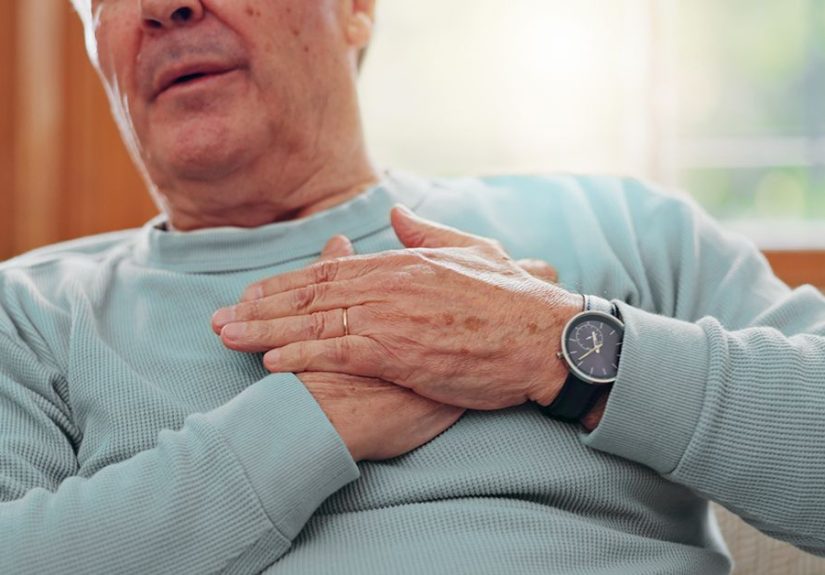
Here is the part many people miss: chest pain while smoking may not be from the lungs at all. Smoking damages blood vessels, promotes plaque buildup, increases clotting, and raises the risk of coronary heart disease and heart attack. That means chest discomfort during smoking can reflect angina or another cardiac problem, especially if it feels like pressure, squeezing, heaviness, or pain spreading to the arm, jaw, neck, or back.
So while the title of this article focuses on lung damage, the responsible truth is broader: chest pain when smoking can come from the lungs, the airways, the pleura, or the heart. None of those are body parts you want to annoy for sport.
When Chest Pain During Smoking Is an Emergency
Some situations call for urgent medical care, not internet detective work. Get immediate help if chest pain happens with:
- Shortness of breath that is sudden, severe, or worsening
- Pressure, squeezing, or fullness in the center of the chest
- Pain spreading to the arm, jaw, neck, shoulder, or back
- Coughing up blood
- Fainting, confusion, severe weakness, or a cold sweat
- Blue lips or fingernails
- Sudden sharp pain after a cough or deep breath
- Chest pain lasting more than a few minutes or repeatedly coming back
Those symptoms can point to a heart attack, a collapsed lung, a pulmonary problem, or another serious emergency. Waiting it out because “it might pass” is one of the least impressive decisions a nicotine habit can inspire.
How Doctors Figure Out What Is Causing the Pain
When chest pain is connected to smoking, a clinician will usually want details about the pain itself: when it started, whether it feels sharp or crushing, whether it changes with breathing, whether you cough, whether you are short of breath, and how much you smoke. They may also ask about wheezing, mucus, fever, weight loss, exercise tolerance, and family or personal history of lung or heart disease.
Depending on the symptoms, evaluation may include listening to the lungs and heart, measuring oxygen levels, doing a chest X-ray, ordering breathing tests, running blood work, or checking the heart with an ECG. If cancer, infection, COPD, pleurisy, or pneumothorax is suspected, imaging and follow-up testing may be needed. The goal is not just to treat the pain. It is to find the source before it gets worse.
What Happens If You Keep Smoking Through the Pain
Plenty of smokers know something feels wrong and keep smoking anyway, often because the symptoms are intermittent. That is where trouble grows roots. Continued smoking keeps the airways inflamed, accelerates loss of lung function, worsens cough and mucus production, and increases the risk of COPD flare-ups, lung infections, lung cancer, and cardiovascular events.
In practical terms, the pattern often looks like this: first there is chest tightness only while smoking, then coughing in the morning, then shortness of breath on stairs, then reduced exercise tolerance, then infections that seem to hit harder and last longer. The body rarely jumps straight to catastrophe without sending smaller warnings first. Chest pain can be one of those warnings.
What Improves When You Stop Smoking
Quitting smoking does not turn your lungs into those of a person who has never smoked, but it can absolutely reduce ongoing damage and improve symptoms. The health benefits start early and continue over time. Once smoking stops, airway irritation drops, carbon monoxide exposure falls, and the body begins repairing some of the damage. The risk of heart disease, lung disease progression, and multiple cancers also declines after quitting.
For people with chest pain linked to smoking, quitting can reduce cough, chest tightness, wheezing, and repeated inflammation. It can also make treatment for COPD, bronchitis, or heart disease more effective. In short, quitting does not erase history, but it stops adding new damage to the bill.
What This Often Feels Like in Real Life: Common Experiences Related to Smoking and Chest Pain
The experience of chest pain while smoking is not always dramatic at first. That is part of the problem. Many smokers describe it beginning as a small, annoying sensation rather than a cinematic medical crisis. A person might notice a pinch or burn after the first cigarette of the day, especially on a cold morning. Another person may feel chest tightness only when taking deep drags or when smoking during stress. Because the symptom is inconsistent, it gets explained away. Maybe the cigarette was strong. Maybe the air was dry. Maybe lunch was too spicy. The excuses are creative. The lungs remain unimpressed.
One common pattern is the “morning reset” experience. A smoker wakes up with a heavy chest, coughs up mucus, feels temporarily cleared out, and then lights a cigarette only to feel the chest tighten again within minutes. The sensation may not be sharp pain. It may feel more like pressure, rawness, or the strange sense that breathing takes more effort than it should. Over weeks or months, that uncomfortable routine starts showing up more often, and physical activity becomes less forgiving. Stairs seem ruder. Carrying groceries feels less cute. The body is signaling that the baseline has changed.
Another common experience is chest soreness after repeated coughing. Smokers with chronic bronchitis often describe a cycle where smoking triggers cough, the cough irritates the chest wall and airways, and the next cigarette makes everything worse again. At that point, people sometimes think the pain is “just muscular.” Sometimes part of it is. But the cough itself may be the result of ongoing airway inflammation caused by smoking, which means the bigger problem is still very much in the room.
Then there is the more alarming experience: the sudden sharp pain that appears with a deep breath, a hard cough, or seemingly out of nowhere. People describe it as stabbing, localized, and impossible to ignore. It may come with shortness of breath or the feeling that one side of the chest is not moving normally. That is the sort of symptom that pushes the situation out of the “watch and wait” category and into “get checked now.” Smokers with underlying lung damage are not doing themselves any favors by assuming a severe new pain is just one more weird smoking side effect.
Some smokers also report chest pain that appears during exertion rather than during smoking itself. They smoke regularly, feel “mostly fine,” and then notice pressure or heaviness when walking fast, climbing stairs, or doing yard work. Because the pain happens outside the actual cigarette moment, they may not connect it to smoking. But smoking affects the heart and blood vessels as well as the lungs, so chest pain with effort can be a major warning sign.
The shared theme in these experiences is simple: smokers often normalize symptoms that should not be normalized. A burning chest, chronic tightness, repeated soreness, breathlessness, and pain with coughing are not personality traits. They are not quirks. They are signs the respiratory or cardiovascular system may be under strain. The longer those signals are ignored, the more likely the underlying condition has time to become bigger, louder, and harder to treat.
Conclusion
If your chest hurts when you smoke, take the hint. It could be airway irritation, bronchitis, COPD, pleurisy, infection, or something more serious such as lung cancer or heart disease. The key point is not to self-diagnose with heroic confidence from the couch. The key point is that chest pain while smoking is not something to normalize.
The smartest move is to get evaluated, especially if the pain is new, recurrent, worsening, or paired with shortness of breath, wheezing, cough, mucus, fever, or pressure-like discomfort. And if smoking is part of the picture, quitting is not just a lifestyle upgrade. It is damage control for organs that have put up with enough already.