Table of Contents >> Show >> Hide
- What Is All-Clad MC2?
- Design & Build Quality
- Cooking Performance: Where MC2 Shines
- Important Limitations You Really Need to Know
- How All-Clad MC2 Compares to Other All-Clad Lines
- Who Is All-Clad MC2 Best For?
- Pros & Cons at a Glance
- Final Verdict: Is All-Clad MC2 Still Worth It?
- Real-World Experiences with All-Clad MC2 Cookware
If you’ve ever fallen down a cookware rabbit hole at 1 a.m. comparing ply counts and handle angles (no judgment), you’ve probably seen one name pop up again and again: All-Clad MC2. Legendary among serious home cooks, a little misunderstood by beginners, and yesofficially discontinuedMC2 is the line people still hunt on resale sites, in restaurant supply stores, and in the forgotten corners of clearance shelves.
This in-depth expert review breaks down exactly what made All-Clad MC2 special, how it performs compared to modern alternatives, who it’s right for today, and whether it’s still worth chasing down in 2025 and beyond.
What Is All-Clad MC2?
A quick origin story
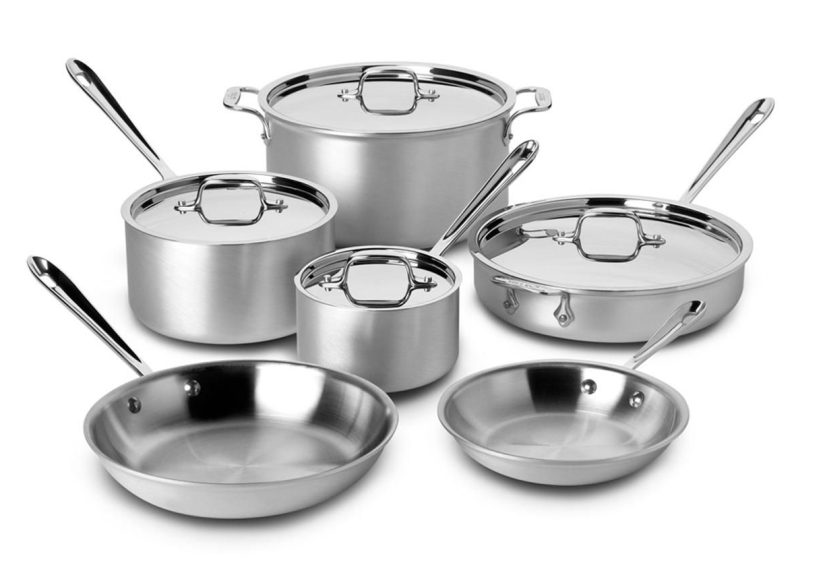
MC2 (short for “Master Chef 2”) was designed as the evolution of All-Clad’s original professional line. It kept the no-nonsense, industrial aesthetic chefs loved and paired it with updated construction for better performance and durability. The line became a favorite of passionate home cooks who wanted pro-level results without flashy copper exteriors or overly delicate finishes.
Tri-ply construction in plain English
All-Clad MC2 uses a classic three-layer (tri-ply) build:
- Interior: 18/10 stainless steel cooking surface – non-reactive, great for searing, deglazing, and building pan sauces.
- Core: A thick layer of aluminum running up the sides for fast, even heat distribution.
- Exterior: Brushed aluminum – lightweight, efficient, and unapologetically “working kitchen” in appearance.
The result: a pan that heats quickly and evenly, feels solid without being absurdly heavy, and looks like it belongs in a serious kitchen, not just an Instagram flat lay.
Design & Build Quality
MC2 feels like gear, not decor. The brushed aluminum exterior softens reflections and hides some wear while still signaling “I cook a lot.” Stainless steel lids and riveted handles complete the professional vibe.
Handles & ergonomics
The long stainless handles run cool enough on the stovetop, with the familiar All-Clad groove that some people adore for its secure grip and others side-eye as “weirdly pokey.” Larger pans include helper handles, which you will appreciate the first time you’re transferring a full pan of braised short ribs out of a 450°F oven.
Fit & finish
Like other U.S.-made All-Clad lines, MC2 pieces are precisely riveted, sit flat, and feel confidence-inspiring. This is cookware built to live on your stovetop for years, not hide in a cabinet “for special occasions only.”
Cooking Performance: Where MC2 Shines
Heat distribution & responsiveness
The standout feature of MC2 is its thick aluminum core. Compared to many stainless-clad lines, MC2 delivers extremely even heating across the base and into the walls, helping reduce hot spots when searing steaks, crisping chicken thighs, or simmering cream sauces.
It’s also responsive: turn the burner down, and the pan follows. That control makes MC2 excellent for tasks like caramelizing onions without burning, reducing sauces smoothly, or working delicate proteins once you learn your stove-pan combo.
Searing, browning, and everyday use
The stainless interior gets hot enough for a deep, even sear on meats and fish, while the aluminum backing keeps that heat consistent. Deglazing is a joy: fond forms fast and releases cleanly into pan sauces.
Day to day, MC2 handles:
- Golden pancakes and grilled cheese without obvious hot rings
- Beautifully reduced tomato or wine sauces without metallic off-flavors
- Reliable performance for one-pot pastas, risottos, and pan-roasted vegetables
Oven performance
MC2 is fully oven-safe at typical roasting and braising temperatures. It transitions smoothly from burner to oven for dishes like frittatas, skillet lasagna, or seared-then-roasted steaks. This versatility is one reason many owners keep their MC2 even after adding newer lines.
Important Limitations You Really Need to Know
Now for the fine printbecause this is where MC2 is absolutely not for everyone.
1. Not induction compatible
The brushed aluminum exterior means MC2 does not work on induction cooktops. If your present or future kitchen is induction, MC2 is a no-go as your primary set.
2. Not dishwasher-safe
Dishwasher detergents and high-heat cycles can discolor or pit the aluminum exterior. MC2 is strictly a hand-wash line. Warm water, mild detergent, non-abrasive tools. If you know you’ll “just toss it in,” choose something else.
3. Scratches and discoloration
Aluminum is softer than stainless. Expect scuffs, marks, and a patina over time. Functionally, this is cosmetic, but if you want your cookware to look pristine forever, MC2 will emotionally challenge you.
4. Discontinued (aka: the treasure hunt tax)
All-Clad has discontinued MC2, which means you’ll mostly find it via remaining stock, specialty retailers, or the secondhand market. Availability, pricing, and condition vary widely. On the flip side, deals can be excellent if you know what you’re looking at.
How All-Clad MC2 Compares to Other All-Clad Lines
MC2 vs D3 Stainless
- Performance: MC2’s thicker aluminum tends to deliver slightly more even heating; D3 is still excellent.
- Compatibility: D3 works on induction and is dishwasher-safe; clear win for modern convenience.
- Look: MC2 = industrial brushed aluminum; D3 = polished stainless “showpiece.”
- Who it suits: MC2 for the serious stove-top cook; D3 for most home kitchens balancing performance and practicality.
MC2 vs D5 & Copper Core
D5 and Copper Core focus on ultra-precise heat control and premium aesthetics. They’re also more expensive. MC2 can hang with them on real-world performance for many tasks, but lacks the induction compatibility, refined finishes, and marketing sparkle. If you care more about power and value than shine, MC2 remains compellingespecially at a discount.
MC2 vs LTD2 (successor)
LTD2, with its hard-anodized exterior, was positioned as a tougher, more scratch-resistant evolution of the MC concept. If you love the MC2 idea but want something less prone to cosmetic wear, LTD2-style hard-anodized lines make sense. However, many long-time owners still prefer the original MC2 feel and heat spread.
Who Is All-Clad MC2 Best For?
MC2 is a smart choice if you:
- Cook frequently on gas or electric (not induction)
- Value performance and control over “mirror-shine perfection”
- Don’t mind hand-washing your cookware
- See patina, scuffs, and wear as proof of a life well-cooked
- Want U.S.-made, pro-level bonded cookware without paying Copper Core money
It’s not ideal if you rely on induction, prefer low-maintenance dishwasher-safe pans, or want something that looks flawless for staged kitchen photos.
Pros & Cons at a Glance
Pros
- Excellent, even heat distribution with a thick aluminum core
- Responsive temperature control for sauces, searing, and delicate cooking
- Durable stainless interior: non-reactive, versatile, good for high heat
- Oven-safe, great for stovetop-to-oven recipes
- Serious, professional aesthetic; often strong value on the secondary market
Cons
- Not induction compatible
- Not dishwasher-safe; requires a bit of care
- Exterior scratches and discolors easily
- Discontinued, so availability is inconsistent
Final Verdict: Is All-Clad MC2 Still Worth It?
If you cook on gas or standard electric, enjoy hand-washing quality cookware, and care more about performance than polish, a well-priced All-Clad MC2 set or individual pan is still a fantastic buy. Its thick aluminum core and stainless interior deliver restaurant-grade results for searing, sautéing, reducing, and roasting.
However, if your kitchen is moving toward induction, if you depend on the dishwasher, or if cosmetic wear will drive you up the wall, you’re better off with modern All-Clad lines like D3 or D5, or other fully stainless-clad options.
In short: MC2 is a workhorse for serious home cooks who like their pans honest, fast-heating, and a little battle-scarred. If that sounds like youand you can find it at a fair priceit absolutely deserves a spot in your arsenal.
sapo: Looking at a set of All-Clad MC2 cookware and wondering if this cult-favorite, brushed aluminum line is still worth your money now that it’s discontinued? This expert review breaks down its tri-ply construction, real-world heat performance, pros, cons, and how it stacks up against All-Clad D3, D5, Copper Core, and modern alternativesso you can decide if MC2 is a smart long-term investment or a nostalgic nice-to-have.
Real-World Experiences with All-Clad MC2 Cookware
Specs and ply diagrams are great, but cookware lives or dies in home kitchens: rental apartments with sketchy burners, gas ranges that run hot, glass tops that punish warped pans, and long weekends of batch cooking for friends who always “forget” to help clean up.
Owners who’ve lived with All-Clad MC2 for five, ten, even fifteen years consistently describe it as the pan that never leaves the stove. The 10- or 12-inch fry pan becomes the default for everything: eggs (with a bit of preheat and fat), seared salmon, grilled sandwiches, pan sauces, reheated leftovers that suddenly feel fancy again. The even heat means fewer singed spots and more confidence turning the heat up when you want serious browning.
In larger pieceslike the sauté pan or stockpotthe thick aluminum core really shows off during big jobs. Long simmers for chili or Bolognese stay stable without constant stirring; cream-based soups are less likely to scorch; risotto holds a steady gentle bubble instead of cycling between “cold” and “boiling lava.” For home cooks moving up from thin discount stainless or random nonstick, the difference feels dramatic.
Of course, MC2 demands a little respect. Forget it over high heat and you’ll see discoloration. Drag it across rough grates or stack it haphazardly and you’ll pick up scratches. Skip proper preheating and food can stick more than you’d like. But those who take a few days to learn how stainless likes to be treated usually find MC2 rewards them with predictable, repeatable resultsand that reliability is exactly what makes good cookware feel “professional.”
The “used market factor” is also part of the real-world story now. Many shoppers score MC2 pieces secondhand at prices that would be impossible for new All-Clad lines. When the pan is structurally soundflat base, tight rivets, no warpingthe scuffs on the aluminum are mostly cosmetic. For budget-conscious but quality-obsessed cooks, that combination of top-tier performance and approachable resale pricing is a huge win.
In day-to-day cooking, MC2 behaves like the friend who tells you the truth: it shows your technique honestly. Heat too high? You’ll know. Didn’t use enough oil? You’ll know. Nailed the preheat and timing? You’ll be rewarded with beautifully seared food and cleanly deglazed pans. For many serious home cooks, that honest feedback loop is exactly why their aging MC2 skillet still earns front-row space on the stovetopbattle scars, brushed aluminum, and all.