Table of Contents >> Show >> Hide
- What the EZVIZ Mini O 720p Is (and Who It’s For)
- Design & Installation: Small, Magnetic, and Surprisingly Flexible
- Video Quality: 720p HD That’s Better Than You’d Expect (With Limits)
- Night Vision: The “Lights Out, Still Watching” Feature
- Two-Way Audio: Talk to People (or Pets) Like a Sci-Fi Intercom
- Motion Alerts: Helpful… and Sometimes Overly Enthusiastic
- Storage Options: microSD vs CloudPlay (and Why You Might Want Both)
- Smart Home Compatibility: Alexa, Google Assistant, and the IFTTT Reality Check
- Security & Privacy: How to Use an Indoor Camera Without Feeling Weird About It
- Pros and Cons: The Honest Scorecard
- How the Mini O Fits in a Modern Home (Without Pretending It’s 4K)
- Buying & Setup Tips to Get the Best Results
- Conclusion: A Small Camera With Big “Good Enough” Energy
- Real-World Experiences: What Life With the EZVIZ Mini O Usually Looks Like (500+ Words)
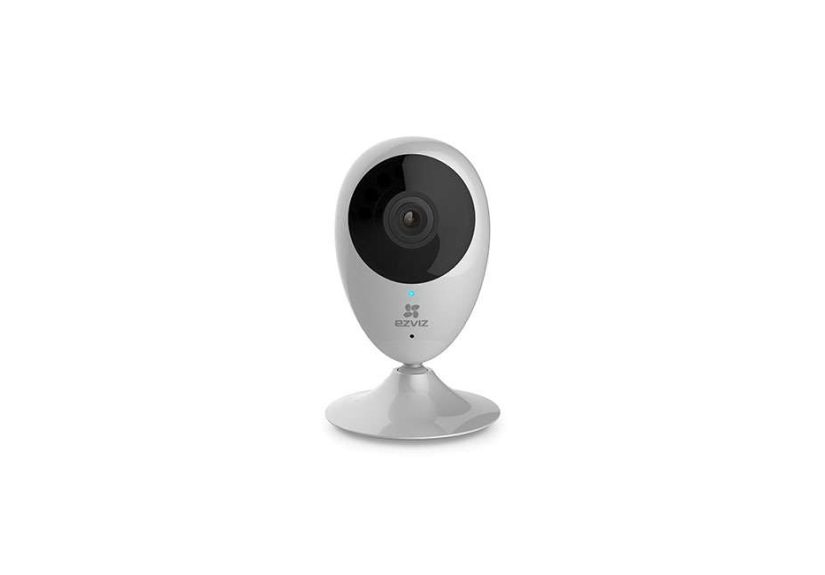
Let’s talk about the EZVIZ Mini O 720p HD Wi-Fi home video monitoring security cameraa tiny indoor cam that’s basically
a nosy roommate you actually want around. It sits quietly on a shelf, stares lovingly at your living room, and sends you updates
when something moves (including, yes, your curtain… and also that one dust bunny that lives rent-free under the couch).
The Mini O is part of EZVIZ’s budget-friendly indoor camera lineup. It focuses on the essentials: 720p HD video,
infrared night vision, two-way audio, and flexible storage through microSD or
EZVIZ CloudPlay. If you want an affordable indoor Wi-Fi camera for quick check-inspets, packages inside, kids’ rooms
(minus the creepy vibes), or just peace of mindthis one still has a solid case.
What the EZVIZ Mini O 720p Is (and Who It’s For)
Think of the Mini O as a “plug it in, connect it, and stop wondering what that noise was” camera. It’s best for:
- Apartments and small homes where you need basic indoor coverage
- Pet monitoring (the “who shredded the pillow?” investigation unit)
- Baby room check-ins (as long as you’re mindful about placement and privacy)
- Home office supervision when you’re away (or when your cat “helps” on Zoom)
- Budget-first buyers who want practical features without premium pricing
If your top priorities are 2K/4K sharpness, advanced AI person detection, or a modern app experience with zero quirks,
you’ll likely want a newer model. But if you’re aiming for dependable basics with flexible storage, the Mini O still earns a spot on the shortlist.
Design & Installation: Small, Magnetic, and Surprisingly Flexible
That magnetic base is the Mini O’s secret weapon
EZVIZ designed the Mini O with a magnetic base, which sounds like a tiny detail until you realize it makes placement
hilariously easy. Stick it on a metal surface, use the included mounting accessories, or just set it on a shelf and call it a day.
It’s the opposite of those cameras that require a full construction project and a minor engineering degree.
Setup: quick, app-driven, and mostly painless
Setup runs through the EZVIZ app (iOS/Android). In normal conditions, you’ll plug the camera in, connect it to your
2.4GHz Wi-Fi network, name it something responsible like “Living Room,” and then immediately rename it to something
accurate like “WitnessCam_01.”
One honest note: some reviewers across the EZVIZ ecosystem have reported occasional Wi-Fi connection hiccups, especially in homes with
weaker signals or crowded networks. The camera tends to behave best when it’s not fighting three streaming sticks, two laptops,
and a smart fridge that’s updating its feelings.
Video Quality: 720p HD That’s Better Than You’d Expect (With Limits)
720p in 2026? Yes, and here’s when it still works
The Mini O records in 1280×720 (720p HD). That won’t win any pixel beauty contests, but it can absolutely deliver useful,
watchable footage for indoor monitoringespecially in smaller rooms. For everyday use, 720p is often enough to:
- Identify who entered a room
- See what a pet is doing (or what it’s destroying)
- Confirm whether the “I heard something” moment was real
- Check doors, hallways, and common indoor areas
Where 720p struggles is detail at distance: tiny text, fine facial detail across a large room, or any “enhance… enhance… ENHANCE”
fantasies you’ve been promised by crime shows. (Real cameras do not come with a magical “make it a 4K close-up” button. Tragic.)
Field of view: wide enough for most rooms
The Mini O’s wide-angle lens helps it cover a decent chunk of spacegreat for living rooms, nurseries, and entryways inside your home.
Position it in a corner and you can often cover the majority of a room without needing a second camera immediately.
Night Vision: The “Lights Out, Still Watching” Feature
The camera uses infrared night vision to see in the dark. Translation: once the lights go out, it switches to that classic
black-and-white “ghost documentary” look. For indoor distances, it’s generally effectiveperfect for checking on a sleeping pet,
monitoring a hallway, or making sure your garage door (inside view) really is closed.
Pro tip: avoid aiming it straight at reflective surfaces like windows at night. IR + glass can create glare, and your footage may look like
a paranormal investigator’s highlight reel.
Two-Way Audio: Talk to People (or Pets) Like a Sci-Fi Intercom
The built-in microphone and speaker enable two-way communication. In real life, this usually means:
- “Hey, don’t touch that.”
- “Yes, I’m watching you. Put the cookie down.”
- “Buddy, stop barking at the air. The air is innocent.”
Two-way talk is especially handy for pet training moments, quick family check-ins, or telling a delivery person (through someone at home)
where to place something. Just remember: indoor cameras are powerful toolsuse them thoughtfully, and be transparent with household members.
Motion Alerts: Helpful… and Sometimes Overly Enthusiastic
Motion detection is a core feature of the EZVIZ Mini O indoor security camera. You’ll get alerts when it sees movement,
which is the whole pointuntil your ceiling fan becomes the most suspicious character in your home.
In practice, you’ll want to tune sensitivity and be strategic about placement. Security reviewers testing EZVIZ cameras often note
that reducing false alerts can take a bit of trial-and-error. The good news: once you dial it in, it becomes far more usefuland far less
“I detected motion: your shadow.”
Storage Options: microSD vs CloudPlay (and Why You Might Want Both)
Local storage: microSD is the budget hero
The Mini O supports microSD card recording (capacity depends on model/region, commonly up to 128GB).
Local storage is great if you want recurring recording without monthly fees. It’s also helpful for privacy-minded users who prefer to keep
recordings in-house.
Practical advice: use a reputable microSD card and format it through the app when possible. Cheap cards can cause corrupted clips,
missed recordings, or performance issuesbasically the digital equivalent of writing important notes on a napkin in the rain.
Cloud storage: CloudPlay for convenience and backup
EZVIZ offers CloudPlay with event-based video history tiers (commonly 7-day or 30-day options), and a free trial
is often bundled with camera purchases. Cloud storage is helpful if you want off-device backup or easy access to clips without pulling the card.
The smartest setup for many homes is “belt and suspenders”: microSD for everyday recording, CloudPlay for critical event backup.
That way, if something happens and the camera is unplugged or damaged, you still have cloud-stored clips for the important moments.
Smart Home Compatibility: Alexa, Google Assistant, and the IFTTT Reality Check
Many Mini O packages advertise compatibility with Alexa and Google Home through IFTTT.
In plain English: you can connect it into a smart home routine, but it may not feel as seamless as newer “native integration” cameras.
The most common smart use case is pulling up a camera feed on an Alexa-enabled display (“Alexa, show me the living room”).
Just keep expectations realisticsome setups report delays when streaming to smart displays, while the live feed in the EZVIZ app is typically snappier.
Security & Privacy: How to Use an Indoor Camera Without Feeling Weird About It
Any indoor Wi-Fi security camera deserves a “privacy reality check.” The Mini O can be a great tool, but your best security feature is still
your settings and your habits. Here’s how to keep things responsible and locked down:
- Use a strong, unique password for your EZVIZ account (no repeating your Netflix password from 2014).
- Enable two-factor authentication if available in your account settings.
- Keep the firmware updatedsecurity patches matter.
- Put IoT devices on a guest network when possible to reduce exposure.
- Be intentional about placement: aim at entry points and shared spaces, not private areas.
- Use privacy features like sleep mode or camera scheduling if your setup supports it.
Also: buy cameras from brands that publish security practices and respond to vulnerabilities. As privacy-focused testers often point out,
manufacturer behavior matters as much as hardware specs. A camera is only “secure” if the company treats security like a product feature,
not an optional accessory.
Pros and Cons: The Honest Scorecard
Pros
- Affordable indoor security camera with the features most people actually use
- Easy placement thanks to a magnetic base
- Two-way audio is great for families and pets
- IR night vision for after-dark monitoring
- microSD + cloud storage flexibility
Cons
- 720p resolution is functional, but not detailed compared to 1080p/2K cameras
- Runs on 2.4GHz Wi-Fi (which is normal, but signal quality matters)
- Smart assistant viewing can have latency depending on setup
- Motion detection may need tuning to reduce false alerts
How the Mini O Fits in a Modern Home (Without Pretending It’s 4K)
The best way to judge the EZVIZ Mini O 720p Wi-Fi home security camera is to match it to the job. It’s not trying to be a premium,
AI-packed, cinematic security system. It’s trying to be a dependable indoor monitor that’s easy to set up, easy to use, and flexible about storage.
If you need clear identification across large spaces, want razor-sharp zoomed-in recordings, or prefer the newest app experiences,
consider newer indoor cameras. But if you want a simple indoor cam for check-ins, alerts, and basic recordingespecially in smaller roomsthe Mini O still makes sense.
Buying & Setup Tips to Get the Best Results
- Place it high and angled to cover entry paths (and avoid being blocked by furniture).
- Keep it close to Wi-Fi if your router is weaksignal quality is everything.
- Avoid windows at night to reduce IR glare.
- Set motion zones/sensitivity to cut down on useless alerts.
- Pick storage intentionally: microSD for low cost, cloud for backup convenience.
Conclusion: A Small Camera With Big “Good Enough” Energy
The EZVIZ Mini O 720p HD Wi-Fi Home Video Monitoring Security Camera is the definition of practical. It’s compact, easy to place,
and covers the core features most households need: HD live viewing, night vision, two-way talk,
and recording options that don’t force you into a single ecosystem.
It’s not perfect720p is modest, and Wi-Fi setups can be picky in some homes. But if your goal is affordable indoor monitoring with flexible storage
and a straightforward daily experience, it’s still a smart buy for the right space.
Real-World Experiences: What Life With the EZVIZ Mini O Usually Looks Like (500+ Words)
Here’s the part most product pages don’t tell you: living with an indoor security camera is less like starring in a high-tech spy movie and more like
having a tiny, silent intern who occasionally panics and sends you notifications at the worst possible time.
In the first few days with the EZVIZ Mini O 720p indoor Wi-Fi camera, most people go through a predictable arc:
excitement, over-monitoring, notification fatigue, and thenfinallysmart settings. Day one is usually “Wow, I can see my entire living room from the grocery store!”
Day two is “Why am I watching my cat nap in HD?” Day three is “I have received 37 motion alerts and 35 of them were caused by sunlight.”
The good news is that the Mini O becomes dramatically more helpful once you treat placement and sensitivity like part of the product.
A common successful setup is positioning it in a corner, slightly above eye level, angled toward entry paths rather than open windows or TVs.
That one decision alone can cut false alerts. If you’re using it as a pet cam, aim it where your pet actually hangs outnear the couch, the food station,
or the doorway where “someone might be coming home any second” is a full-time job.
Two-way audio tends to be the sleeper feature. People buy it for security, then keep it because it’s unexpectedly useful for real life:
telling a teenager to answer the door, checking in on a babysitter, reminding a dog to stop barking at absolutely nothing, or just saying
“Hey, I’ll be home in 10” without calling. It’s not studio-quality audio, but it’s functionaland for most homes, that’s exactly the point.
On the recording side, the most common “I’m glad I did this” move is adding a microSD card early. Cloud storage is convenient, but local recording is often the
difference between “I can check what happened last night” and “Oops, I forgot the trial ended.” A microSD card keeps the camera useful even if you never subscribe.
Then, if you later decide you want cloud backup (for travel weeks, or for peace of mind), you can add CloudPlay without changing your whole routine.
Smart home integration is where expectations matter. If you plan to view the camera constantly on a smart display, you’ll want to test your exact setup.
Some households report that app viewing is smoother than smart display viewing, and that’s not unusual for budget cameras. Many people end up using Alexa/Google
for quick “pull it up” moments and rely on the EZVIZ app for regular check-ins and clips.
Finally, there’s the privacy learning curve. The most satisfied users are the ones who set boundaries: they aim the camera at doors or common areas, they use schedules
or “off” time when everyone’s home, and they keep accounts secured with strong passwords and updated firmware. When you do that, the Mini O stops feeling like a “camera”
and starts feeling like what it’s meant to be: a simple tool that helps you worry less, not more.