Table of Contents >> Show >> Hide
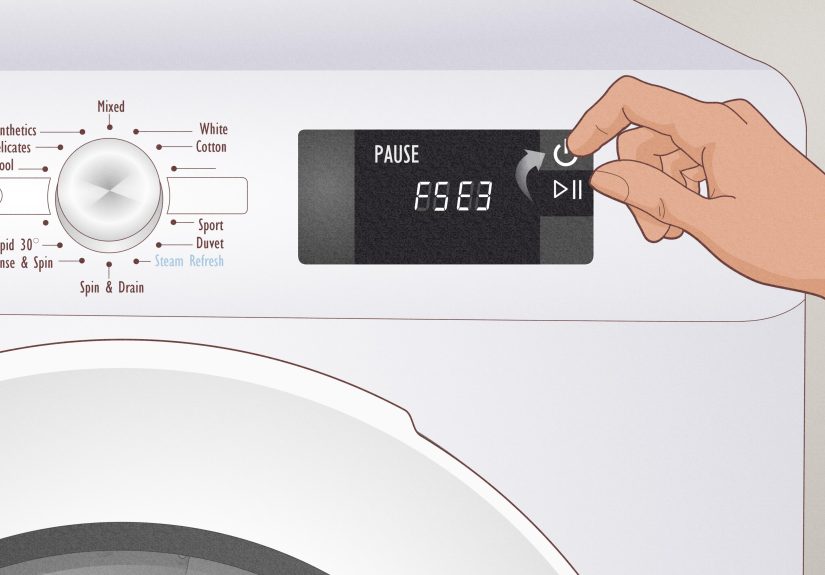
- First, What Does F5 E3 Mean on a Whirlpool Washer?
- Safety Before You Start (A.K.A. Please Don’t Hulk-Smash the Lid)
- Quick Triage: 3 Things to Try in the First 5 Minutes
- Cause #1: Something Is Physically Blocking the Lock or Latch
- Cause #2: The Lid/Door Isn’t Closing Correctly (Overloading, Warped Lid, Hinge Issues)
- Cause #3: Misaligned or Broken Lid/Door Strike (The Little Plastic Piece With Big Responsibilities)
- Cause #4: Failed Lid Lock/Door Lock Assembly
- Cause #5: Loose, Damaged, or Corroded Wiring/Connectors
- Cause #6: Control Board or Software Glitch (A Reset That Actually Matters)
- Cause #7: The Washer Won’t Unlock Because It Thinks It’s Unsafe (Water Still Present or Cycle Not Fully Ended)
- How to Prevent F5 E3 from Coming Back
- When You Should Stop DIY and Call for Service
- of Real-World Experience with F5 E3 (What People Actually Run Into)
- Conclusion
Your Whirlpool washer is basically a very serious safety officer in a shiny appliance costume. When it flashes
F5 E3, it’s saying, “I can’t confirm the lid/door lock is doing what it’s supposed to do, so I’m not
moving another inch.” Annoying? Absolutely. Also: usually fixable without performing an exorcism on your laundry room.
This guide breaks down the seven most common causes behind the F5 E3 code and the best practical
solutionsfrom quick resets and simple cleaning to when it’s time to replace a lid/door lock assembly.
I’ll keep it clear, specific, and mildly entertaining (because if your washer is going to beep at you, we can at least
laugh a little).
First, What Does F5 E3 Mean on a Whirlpool Washer?
On many Whirlpool-family machines, F5 E3 points to a lock problem:
- Top-load washers: typically a lid lock faultoften the lid won’t unlock (or the control
can’t confirm it unlocked). - Front-load washers: commonly a door lock/door not locking properly issue.
Important: the exact definition can vary by model. If you can find your washer’s tech sheet (often tucked
inside the cabinet or behind the console), that’s the “official playbook” for your specific unit.
Safety Before You Start (A.K.A. Please Don’t Hulk-Smash the Lid)
- Do not force the lid/door open. That can break the strike, latch, lock assembly, or even the cabinet alignment.
- Unplug the washer before inspecting wiring or removing panels.
- If there’s water in the tub and the door is locked, focus on safe draining steps firstforcing it can create a flood-and-regret situation.
- Expect sharp metal edges if you remove panels. Gloves are your friend.
Quick Triage: 3 Things to Try in the First 5 Minutes
- Press Cancel/Stop (or Power) to end the cycle, then wait a couple minutes. Some locks won’t release instantly.
- Power-cycle reset: unplug for 1–5 minutes, then plug back in.
- Check for obvious interference: clothing caught in the door/lid area, detergent gunk, a warped strike, or an overstuffed load pushing upward.
If those don’t do it, move on to the seven causes belowstarting with the easiest and most likely.
Cause #1: Something Is Physically Blocking the Lock or Latch
What it looks like
The washer tries to lock/unlock, you may hear clicking, and then it throws F5 E3. Sometimes it’s as simple as a sock
edge, a hoodie drawstring, or a crusty detergent “snowdrift” living in the latch area.
How to fix it
- Inspect the lock area with a flashlight. Look for lint, soap residue, or fabric caught near the strike or latch.
- Clean it gently: a soft cloth and warm water works well. For stubborn grime, a little mild dish soap helps.
- Remove any objects on top of the lid (laundry basket, detergent bottle, your cat’s throne). Extra pressure can keep the lock bolt from moving freely.
Pro tip
If your washer is in a “lid won’t open” mood, a power-cycle reset and a short wait often helps the control reattempt the unlock sequence.
Cause #2: The Lid/Door Isn’t Closing Correctly (Overloading, Warped Lid, Hinge Issues)
What it looks like
The lid/door closes, but it doesn’t close squarely. Bulky bedding, a mountain of jeans, or a load packed like a suitcase can push the lid upward or twist the door alignment just enough to confuse the lock sensors.
How to fix it
- Remove some laundry and redistribute the load (especially bulky items).
- Check the lid/door alignment: does it sit evenly? Does it wobble?
- Inspect hinges and mounting screws. Loose hinges can shift the strike away from the lock.
- If the lid looks slightly bowed, try gently pressing down near the strike while starting a cycle (just to test alignment). Don’t apply excessive force.
Example
A king-size comforter can “tent” the lid on a top-loader. The washer interprets that as an unsafe condition and won’t unlock/lock properly. Reducing the load often makes the code disappear immediately.
Cause #3: Misaligned or Broken Lid/Door Strike (The Little Plastic Piece With Big Responsibilities)
What it looks like
The strike (the small plastic or metal “tab” that enters the lock) is cracked, loose, or not lining up. If it can’t fully engage, the washer can’t confirm the locked/unlocked state.
How to fix it
- Inspect the strike/tab for cracks, bending, or looseness.
- Tighten the mounting screws if the strike is wobbling.
- Replace the strike if it’s broken or worn down.
How to avoid repeat issues
- Close the lid/door firmly, but don’t slam it like you’re mad at your laundry.
- Don’t lean on the lid while the washer is operating.
Cause #4: Failed Lid Lock/Door Lock Assembly
What it looks like
This is one of the most common “real” failures behind F5 E3: the lock solenoid, internal switch, or mechanical bolt
stops working reliably. You may hear repeated clicking, the washer may beep endlessly, or it may refuse to start or unlock.
How to fix it
- Confirm the symptom: does the washer attempt to lock/unlock, then fail?
- Check the lock for visible damage (cracks, burn marks, broken plastic around the mounting points).
- Test the lock switches with a multimeter if you’re comfortable doing basic electrical checks.
(If you’re not, skipping straight to replacement or a service call is perfectly reasonable.) - Replace the lock assembly if it fails testing or looks damaged.
DIY replacement notes (general)
- Unplug the washer, secure the lid (tape works), open the top/console area as required by your model, and disconnect the wire harness.
- Install the new lock, route wires exactly as before, and reassemble.
- Use your model number to order the correct partWhirlpool-family washers have multiple lock designs.
If your washer is still under warranty, the “best” solution may be calling service before you open anything.
Cause #5: Loose, Damaged, or Corroded Wiring/Connectors
What it looks like
The lock itself might be fine, but the control board isn’t getting a clean signal. This can happen with vibration over time,
moisture, or a partially seated connector.
How to fix it
- Unplug the washer.
- Access the lock wiring (usually under the top panel for top-loaders, behind the front/boot area for some front-loaders).
- Reseat connectors: unplug and firmly reconnect the harness at the lock and at the control board (if accessible).
- Inspect the harness for pinched wires, rubbing, or corrosion at terminals.
- If a wire is damaged, replace the harness or repair it properly with the correct connector/technique (not just a twist-and-hope approach).
Why this matters
Lock systems are simple, but they’re picky: one flaky connection can make the washer “uncertain,” and uncertainty equals shutdown.
Cause #6: Control Board or Software Glitch (A Reset That Actually Matters)
What it looks like
You had a power flicker, the washer was paused mid-cycle, the lid was opened at an awkward moment, or the machine just got confused.
The lock may be mechanically fine, but the control logic is stuck.
How to fix it
- Do a proper power reset: unplug for at least 1 minute (many tech guides recommend longer, up to 5 minutes),
then plug back in. - If your model supports it, clear the code by exiting the cycle and restarting a short cycle (like Rinse/Spin) to force a lock/unlock sequence.
- If the error returns immediately after multiple resets and basic checks, the control board (or user interface) can be a suspectespecially if other odd behavior shows up (random beeps, unresponsive buttons).
When to call a pro
Control boards aren’t always “plug-and-play” across models. If you’ve verified the lock and wiring, and F5 E3 is still camping out,
service may be the safest pathparticularly for high-end units.
Cause #7: The Washer Won’t Unlock Because It Thinks It’s Unsafe (Water Still Present or Cycle Not Fully Ended)
What it looks like
Especially on front-loaders, the door may stay locked if the washer senses water in the tub or an incomplete drain condition.
The lock isn’t being “difficult”it’s trying to prevent a surprise waterfall across your floor.
How to fix it
- Check for standing water in the drum/tub.
- Try a Drain/Spin cycle (if the washer will allow it). If it won’t run, move to the next step.
- Inspect the drain path: kinked drain hose, clogged pump filter (common on many front-load designs), or a blocked standpipe.
- Once water is drained, repeat the power reset and attempt to unlock again.
Manual unlocking (only if necessary)
Some front-load washers include a manual door release behind the lower access panel. If you suspect water is still inside,
don’t manually release until you’ve drained or prepared for water. If you’re not sure, a service call can save your floor.
How to Prevent F5 E3 from Coming Back
- Keep the latch area clean: wipe away detergent residue and lint regularly.
- Don’t overload: bulky loads can push lids/doors out of alignment.
- Close gently, not violently: slamming can damage the strike and lock mechanism over time.
- Check pockets and zippers: small items can snag near the lock area and cause interference.
- Run maintenance cycles as recommended for your washer to reduce residue buildup that migrates everywhere (including the lock zone).
When You Should Stop DIY and Call for Service
- Your washer is under warranty (opening it may affect coverage).
- You’ve done cleaning + reset + alignment checks and the error returns immediately.
- You see burn marks, melting, or obvious electrical damage.
- The door/lid is locked with water present and you can’t safely drain it.
- You’re not comfortable working around wiring or sharp panelsno shame in protecting your fingers.
of Real-World Experience with F5 E3 (What People Actually Run Into)
In the real world, F5 E3 rarely shows up at a “convenient” time. It appears when you’re already late, the laundry basket is
giving you judgmental side-eye, and your favorite hoodie is trapped inside the machine like it owes the washer money.
The most common experience goes something like this: the cycle ends, the washer beeps, and the lid/door refuses to open.
After a few dramatic button presses (Power! Cancel! Start! Please!), the display blinks F5 E3 like it’s delivering bad news.
One very typical scenario is the bulky-load mistake. Someone washes a heavy comforter or a bathmat that turns into a
waterlogged brick. The load shifts, the lid doesn’t sit perfectly flat, and the lock struggles to move cleanly. The fix is often
surprisingly simple: remove the item, redistribute the load, wipe the latch area, and run a short cycle. People are always amazed
that the washer wasn’t “broken”it was just physically prevented from confirming the lock state.
Another frequent story is the invisible gunk build-up. Over time, liquid detergent, fabric softener residue, and lint can form a sticky
film around the strike and lock opening. You don’t notice it until the day the lock bolt can’t retract fully and the machine panics.
The practical fix here is boring (clean it) but effective: warm water, a cloth, and a few minutes of attention. Many users report
the code disappears after cleaning plus a power reset.
Then there’s the “I replaced the lock and it still won’t work” experience. This usually comes down to
misalignment (the strike isn’t entering the lock correctly), a connector that wasn’t fully seated, or an incorrect part number.
It’s frustrating, but it’s also why checking the strike position and reseating wiring connectors can be as important as swapping the lock.
A lock assembly is only as smart as the signal it sends back to the control.
On front-load machines, a classic headache is the door staying locked because the washer believes there’s still water inside.
People often assume it’s “just the lock,” but the real culprit can be a clogged drain filter or kinked drain hose.
Once the water drains, the lock behaves like nothing ever happened (which is a very on-brand appliance move).
The consistent lesson from these experiences is that F5 E3 is usually not a mysterious curseit’s a safety system saying,
“I need a clean, aligned, confirmed lock signal.” Start with the simple physical checks and resets, then move toward parts and wiring
only when the easy fixes don’t stick.
Conclusion
The F5 E3 Whirlpool washer error is almost always tied to the lid/door lock system: something is blocking it, the lid/door
isn’t aligning, the strike is damaged, the lock assembly is failing, wiring is loose, the control is glitching, or the washer won’t unlock
because it still senses an unsafe condition (like water present).
Start with the fastest wins: cancel the cycle, wait a moment, power reset, and inspect/clean the latch area. If the code persists,
check alignment and the strike, then move to wiring and lock replacement. And if you’ve verified all the basics and it still throws F5 E3,
a service tech can quickly confirm whether the control board or a deeper electrical issue is involved.