Table of Contents >> Show >> Hide
- Why You’ll Love This Falafel-Spiced Couscous
- What Is Falafel-Spiced Middle Eastern Couscous?
- Ingredients for Falafel-Spiced Couscous
- Step-by-Step Instructions
- Flavor Variations and Easy Substitutions
- How to Serve Falafel-Spiced Couscous
- Nutrition and Health Perks
- Make-Ahead, Storage, and Meal Prep Tips
- Common Questions About Falafel-Spiced Couscous
- Conclusion & Recipe Snapshot
- Cooking Experiences With Falafel-Spiced Couscous
If you love falafel but don’t always feel like frying a batch of crispy chickpea patties, this
falafel-spiced Middle Eastern couscous recipe is your new weeknight crush. Think of it as
everything you adore about falafelwarm spices, chickpeas, fresh herbs, and a punchy
lemon-tahini finishtumbled into a big, colorful bowl of fluffy pearl couscous. It’s fast,
filling, totally meatless, and fancy enough to impress that one friend who “doesn’t eat boring
salads.”
Why You’ll Love This Falafel-Spiced Couscous
- Falafel vibes, zero deep-frying: All the cumin, coriander, garlic, and herbs, without a pot of hot oil on your stove.
- 30–35 minutes, start to finish: Toasted pearl couscous cooks quickly, so dinner won’t drag.
- Balanced meal in one bowl: You get protein from chickpeas, complex carbs from couscous, and healthy fats from olive oil and tahini.
- Meal-prep friendly: The flavors get even better as the couscous sits and absorbs the spices and lemon.
- Easily customizable: Swap veggies, adjust spice level, or make it vegan with one simple tweak.
What Is Falafel-Spiced Middle Eastern Couscous?
Traditional falafel is made from chickpeas (or fava beans) blended with herbs like parsley and
cilantro, plus spices such as ground cumin and coriander, often with garlic, onion, and a
touch of heat from chili or cayenne. Those same bold flavors are what make this couscous
dish so addictive. Instead of forming patties, we season chickpeas and vegetables with a
“falafel-style” spice mix and toss them with pearl couscous (also called Israeli couscous),
which is a small, chewy pasta made from wheat flour.
The result is somewhere between a warm grain salad and a hearty side dish. It works as a
complete vegetarian dinner, a potluck-friendly salad, or a vibrant base for grilled chicken,
fish, or tofu if you want extra protein.
Ingredients for Falafel-Spiced Couscous
For the Couscous and Chickpeas
Makes 4 generous servings
- 2 cups pearl (Israeli) couscous
- 2 1/2 cups vegetable broth or water (plus more as needed)
- 2 tablespoons extra-virgin olive oil, divided
- 1 (15-ounce) can chickpeas, rinsed and drained
- 1 cup cherry tomatoes, halved
- 1 cup cucumber, diced (Persian or English cucumbers work best)
- 1/2 small red onion, very thinly sliced or finely minced
- 1/4 cup chopped fresh parsley
- 1/4 cup chopped fresh cilantro (or more parsley if you prefer)
- 4 ounces feta cheese, crumbled (optional, omit or use vegan feta to keep it dairy-free)
- 1–2 tablespoons toasted sesame seeds (optional but very “falafel”)
- Salt, to taste
Falafel Spice Blend
You can use this for the couscous and keep the extra in a small jar for seasoning roasted veggies, tofu, or even popcorn.
- 1 1/2 teaspoons ground cumin
- 1 teaspoon ground coriander
- 1 teaspoon garlic powder
- 1 teaspoon onion powder
- 1/2 teaspoon smoked paprika or sweet paprika
- 1/4 teaspoon ground cayenne pepper or red pepper flakes (more if you like heat)
- 1/2 teaspoon ground black pepper
- 3/4 teaspoon fine sea salt (plus more to taste)
Lemon-Tahini Drizzle (Optional but Highly Recommended)
- 1/4 cup tahini
- 3 tablespoons fresh lemon juice
- 1 small garlic clove, finely grated or pressed
- 2–4 tablespoons water, to thin
- 1 teaspoon maple syrup or honey (optional, to soften the acidity)
- Pinch of salt
Step-by-Step Instructions
1. Mix the Falafel-Spice Blend
- In a small bowl, stir together the cumin, coriander, garlic powder, onion powder, smoked paprika, cayenne, black pepper, and salt.
- Taste a tiny pinchthis is your chance to decide if you want it spicier or more garlicky.
2. Toast and Cook the Couscous
- In a medium saucepan, heat 1 tablespoon of olive oil over medium heat.
- Add the pearl couscous and cook, stirring frequently, for 2–3 minutes until the pearls turn lightly golden and smell toasty.
- Pour in the vegetable broth (it may sizzle at first), stir, and bring to a gentle boil.
- Reduce the heat to low, cover, and simmer for 10–14 minutes, or until the couscous is tender and the liquid is absorbed. If the pan looks dry but the couscous is still firm, splash in another 2–3 tablespoons of hot water and cook for a minute more.
- Remove from the heat, fluff with a fork, and let it sit uncovered for 5 minutes to steam off excess moisture.
3. Falafel-Spiced Chickpeas and Veggies
- While the couscous cooks, warm the remaining 1 tablespoon of olive oil in a large skillet over medium heat.
- Add the drained chickpeas and cook for 2–3 minutes, shaking the pan occasionally so they don’t stick.
- Sprinkle about half of the falafel spice blend over the chickpeas and stir well so they’re fully coated. Cook for another 2–3 minutes, until the spices smell fragrant and the chickpeas look lightly crisped.
- Turn off the heat and stir in the cherry tomatoes just to warm them slightly while keeping their shape. Set aside.
4. Make the Lemon-Tahini Drizzle
- In a small bowl, whisk together tahini, lemon juice, garlic, and a pinch of salt. The mixture will probably seize up and get thickthat’s normal.
- Add water 1 tablespoon at a time, whisking after each addition, until you reach a smooth, pourable consistency similar to heavy cream.
- Taste and adjust: add a bit more lemon for brightness, maple syrup or honey to balance the acidity, or salt to enhance the flavor.
5. Assemble the Couscous Bowl
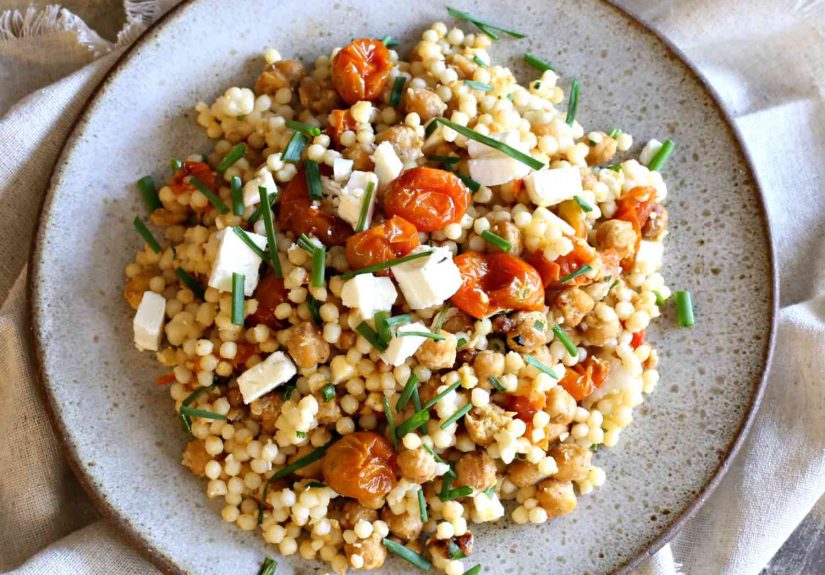
- In a large mixing bowl, combine the warm couscous with the falafel-spiced chickpeas and tomatoes.
- Add the cucumber, red onion, parsley, cilantro, and remaining falafel-spice blend (start with half and add more to taste).
- Crumble in the feta, if using, and toss gently so you don’t mash the cheese.
- Sprinkle with toasted sesame seeds for a subtle nuttiness and extra falafel energy.
- Drizzle with some of the lemon-tahini sauce, tossing lightly. Reserve a portion to serve at the table so people can add more over their own plates.
6. Taste and Adjust
Pause for a quality-control bite (chef’s privilege). Add more salt, lemon, or spice blend as needed.
The couscous should taste bright, savory, and warmly spiced, not bland or one-note.
Flavor Variations and Easy Substitutions
- Make it vegan: Omit the feta or replace it with a good vegan feta. The dish is naturally egg-free and dairy-free otherwise.
- Gluten-free twist: Swap pearl couscous for cooked quinoa, millet, or tiny gluten-free pasta and follow the same flavor approach.
- Roasted veggie upgrade: Roast zucchini, bell peppers, carrots, or sweet potatoes in olive oil and a spoonful of the falafel spice blend, then toss into the couscous for extra depth.
- Herb explosion: Add fresh mint or dill along with the parsley and cilantro for a more complex, garden-fresh flavor.
- Extra crunch: Sprinkle toasted pine nuts, pistachios, or slivered almonds over the finished dish.
- Make it spicier: Stir in more cayenne or a spoonful of harissa paste if you want a serious kick.
How to Serve Falafel-Spiced Couscous
This couscous works in almost any role you give it, which is part of its charm. Some ideas:
- As a main dish: Pile into wide bowls, drizzle generously with lemon-tahini sauce, and top with extra herbs.
- With protein on the side: Serve alongside grilled chicken, fish, shrimp, or marinated tofu or tempeh.
- At a potluck: Serve it at room temperature as a hearty salad. It holds up better than lettuce-based salads.
- As a lunch prep hero: Portion into containers with extra tahini sauce and lemon wedges for easy grab-and-go meals.
- Stuffed into pita: Fill warm pita pockets with this couscous, shredded lettuce, and extra chickpeas for a falafel-inspired pita sandwich.
Nutrition and Health Perks
While exact nutrition will vary depending on your ingredients, this recipe naturally leans
toward the “good for you” side of the spectrum:
- Plant-based protein: Chickpeas provide protein and fiber that help keep you full.
- Healthy fats: Olive oil, tahini, and sesame seeds contribute heart-friendly unsaturated fats.
- Fiber and micronutrients: Herbs, tomatoes, onion, and cucumber add vitamins, antioxidants, and crunch.
- Moderate carbs: Pearl couscous is a satisfying carb source; you can balance your portion based on your needs.
If you’re watching sodium, use low-sodium broth and moderate the feta. If you’re watching carbs,
add more non-starchy veggies and slightly reduce the couscous portion.
Make-Ahead, Storage, and Meal Prep Tips
- Fridge life: Store leftovers in an airtight container in the refrigerator for up to 3–4 days.
- Keep it fresh: If you’re planning for multiple days, store the lemon-tahini drizzle separately and add just before serving.
- Best texture: The couscous tastes great cold or at room temperature; if it clumps, just fluff with a fork and stir in a teaspoon of olive oil or a splash of water.
- Lunch boxes: Pack with extra lemon wedges, a small container of tahini sauce, and maybe a handful of greens.
Common Questions About Falafel-Spiced Couscous
Can I use regular (fine) couscous instead of pearl couscous?
Yes. Prepare regular couscous according to package directions (usually equal parts boiling
water or broth and couscous, then cover and let stand 5 minutes). Fluff it, then toss with the
same falafel-spiced chickpeas, veggies, and tahini drizzle. The texture is lighter and fluffier,
but the flavors are similar.
Is this recipe good for a crowd?
Absolutely. You can easily double the recipe in a larger pot and mixing bowl. It’s a popular option
for parties because it tastes good warm or at room temperature and suits many diets (vegetarian,
egg-free, and easily made vegan).
Can I make the spice blend ahead?
Yes. Mix a bigger batch of the falafel spice blend and store it in a small airtight jar for up to
a few months. Label it so you remember what’s in it, then sprinkle it over roasted potatoes,
cauliflower, or even scrambled eggs when you want a Middle Eastern twist.
Conclusion & Recipe Snapshot
Falafel-spiced Middle Eastern couscous is one of those dishes that feels more special than the
actual effort it requires. You toast a quick-cooking pasta, coat chickpeas in a fragrant spice
blend, toss everything with bright veggies and herbs, and finish with a generous drizzle of
lemon-tahini sauce. In about half an hour, you’ve got a colorful bowl that smells like your
favorite falafel shop but looks right at home on a dinner party table.
meta_title: Falafel-Spiced Middle Eastern Couscous Recipe
meta_description: Make this easy falafel-spiced Middle Eastern couscous with
chickpeas, herbs, and lemon-tahini sauce for a hearty 30-minute meatless meal.
sapo:
Falafel night just got a glow-up. This falafel-spiced Middle Eastern couscous recipe takes
everything you love about classic falafelchickpeas, warm spices, fresh herbs, and lemonand
tosses it into a big, colorful bowl of pearl couscous. Toasted couscous pearls soak up
fragrant cumin and coriander, chickpeas get a quick sauté in a falafel-style spice blend, and
crisp veggies add crunch and freshness. A silky lemon-tahini drizzle ties it all together so
you get bold flavor in every bite. Serve it warm or at room temperature as a satisfying
vegetarian main dish, a generous side, or a potluck-friendly salad that still tastes great the
next day.
keywords:
falafel-spiced couscous, Middle Eastern couscous recipe, pearl couscous with chickpeas,
vegetarian couscous salad, lemon tahini sauce, falafel seasoning, easy Middle Eastern dinner
Cooking Experiences With Falafel-Spiced Couscous
Once you start making this dish, you’ll realize how flexible it isand how often you reach for
it on busy days. Imagine coming home, opening the fridge, and seeing a lonely can of chickpeas,
half a cucumber, and some wilting herbs. On their own, that’s “I guess I’ll snack and complain”
territory. Add pearl couscous, a few basic spices, and tahini, and suddenly you’ve got a bowl
that feels like it came from a cozy café.
One of the first things people notice when they cook this recipe is how toasting the couscous
changes the flavor. If you’ve ever found plain couscous a little boring, this step makes a big
difference. The pearls turn lightly golden and smell nutty, which means they stand up better to
bold falafel spices instead of getting lost underneath them. Many home cooks end up toasting
all their small pastas and grains after they try it once.
Another common “aha” moment comes from the chickpeas. Instead of just stirring them in straight
from the can, you sauté them in oil and spices until they’re lightly crisp at the edges. That
short time in the pan transforms them from background filler into actual flavor bombs. People
often start doubling the chickpeas because they keep snacking on them before they make it to the
bowl. If you’re cooking for kids or picky eaters, this is also a sneaky way to make beans more
appealing.
The lemon-tahini drizzle tends to convert anyone who’s on the fence about tahini. If your first
experience with tahini was a bitter, pasty spoonful straight from the jar, this sauce is your
redemption arc. Whisked with lemon juice, garlic, a bit of water, and just a touch of sweetness,
it turns creamy and bright, more like a salad dressing than a heavy dip. Many cooks end up
making a double batch and using it on everything from roasted vegetables to grain bowls and
leftover chicken.
This couscous also shines in real-life hosting situations. It’s an easy choice when your guest
list includes vegetarians, meat eaters, and that one person who’s “trying to eat more plants.”
You can serve it as the main attraction with simple sides like hummus, olives, and flatbread, or
you can treat it as a hearty base and offer grilled chicken, shrimp, or tofu on the side. The
colors alonegreen herbs, red tomatoes, creamy feta, golden couscousmake the table feel
celebratory without requiring fancy plating.
For meal prep, this dish is surprisingly forgiving. Some grain-based salads dry out or turn
mushy after a day in the fridge, but pearl couscous holds its texture well. If it feels a little
firm or clumpy after chilling, just splash in a bit of water or lemon juice and fluff it with a
fork. The spices actually deepen over time, so leftovers often taste even better on day two. Many
people start making this on Sunday as a “base recipe,” then freshen it up during the week with
different toppingssliced radishes one day, roasted cauliflower the next, maybe a hard-boiled egg
or some smoked salmon if they’re feeling fancy.
Finally, this recipe is a great confidence builder in Middle Eastern–inspired cooking. Once
you’re comfortable with a simple falafel-style spice blend, it’s easy to branch out. You might
use the same mix on roasted potatoes, eggplant, or even a tray of carrots. You might tweak the
tahini sauce with herbs or chili paste. Before long, you’re not just following a recipeyou’re
improvising, tasting as you go, and trusting your senses. And that’s when cooking really starts
to feel like fun, not a chore.