Table of Contents >> Show >> Hide
- Table of Contents
- What happened in the China–Belgium semifinal
- Why fans demanded disqualification
- What the rules say: cards, dangerous play, and shootout consequences
- Could a team actually be disqualified for this?
- Why the moment exploded so fast
- The bigger context: pressure, stakes, and China’s run
- What athletes, coaches, and officials can learn
- Experiences: what moments like this feel like (and why fans react so intensely)
- Conclusion
Field hockey is usually the Olympic sport where the drama is subtle: a perfectly timed tackle, a penalty-corner chess match,
a goalkeeper doing interpretive dance in full pads. So when a women’s Olympic semifinal ended with a ball blasted into an opponent
after the hornand a swarm of players converging in a shove-filled scramblefans did what fans do best:
they turned into part-time referees with full-time confidence.
Within minutes, clips spread and the loudest verdict popped up everywhere: “China had to be disqualified.”
It’s a spicy takelike putting ghost pepper on a postgame handshake line. But was disqualification actually on the table?
Or was this a case of the internet confusing “I hated that” with “the rulebook demands exile”?
Table of Contents
- What happened in the China–Belgium semifinal
- Why fans demanded disqualification
- What the rules say: cards, dangerous play, and shootout consequences
- Could a team actually be disqualified for this?
- Why the moment exploded so fast
- The bigger context: pressure, stakes, and China’s run
- What athletes, coaches, and officials can learn
- Experiences: what moments like this feel like (and why fans react so intensely)
- Conclusion
- SEO Tags (JSON)
What happened in the China–Belgium semifinal
The flashpoint came at the end of a tight women’s field hockey semifinal at the Paris 2024 Olympic Games.
China and Belgium battled to a 1–1 draw in regulation, pushing the match into a penalty shootout.
China ultimately advanced after winning the shootout 3–2.
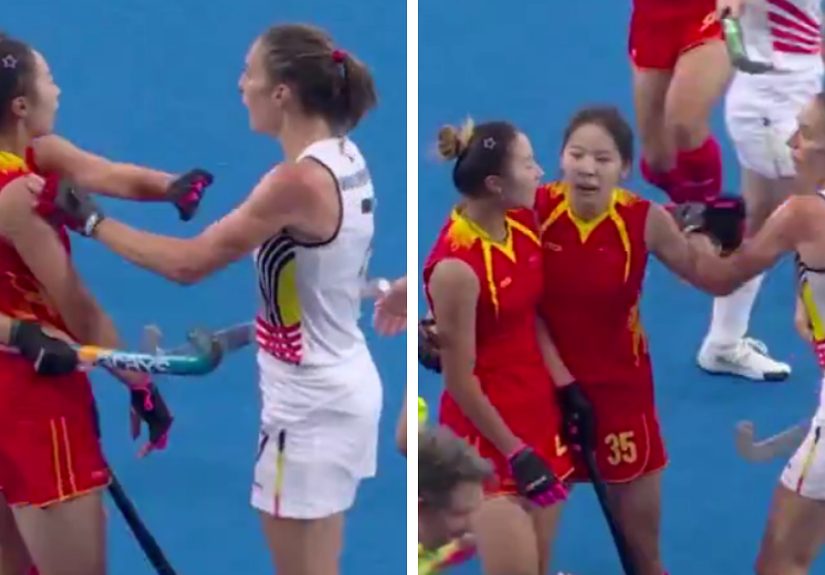
But the match’s most replayed moment happened at the closing horn. As time expired, a Chinese player struck the ball,
and the shot hit a Belgian player at close range. The Belgian went down, players rushed in, words flew, bodies crowded
around the incident, and the “field hockey is peaceful” stereotype got bench-pressed into dust.
Officials issued a yellow card in response to the incident, and the teams eventually moved on to the shootout.
To viewers at home, the sequence felt jarring: a high-stakes semifinal, an emotionally charged final whistle,
then a post-horn hit that lookedat minimumunnecessary. That mix is basically social media kindling.
A quick reality check: “mass brawl” can look bigger on replay
Words like “mass brawl” get used because the clip is chaotic: multiple athletes converge, shoving and separating happen at once,
and the camera can’t tell you who escalated what. In real time, these incidents can be short, messy, and loud without turning
into a prolonged fight. Still, it only takes one reckless moment to put player safetyand the sport’s imageon trial.
Why fans demanded disqualification
Online reactions tend to cluster into three big arguments:
-
“That looked intentional.” Fans often interpret a post-horn strike as a statement, not a playespecially when the ball
travels directly into a nearby opponent. Even if “intent” can’t be proven from a clip, the optics are brutal. -
“Player safety has to be the line.” Field hockey balls are hard, sticks are fast, and the distance can be short.
People don’t need to know the sport deeply to recognize that getting hit unexpectedly is dangerous. -
“The punishment didn’t match the vibe.” A yellow card can feel “small” to casual viewersparticularly those more familiar
with sports where fights trigger ejections. Fans see contact, anger, a player down, and they expect the officiating equivalent
of a mic drop.
Put those together and you get the viral refrain: disqualify the team. It’s simple, emotionally satisfying, and totally aligned
with how the internet rewards hot takes. The only problem? Sport doesn’t run on vibes. It runs on rules, procedures, and
(sometimes frustrating) consistency.
What the rules say: cards, dangerous play, and shootout consequences
In Olympic field hockey, officials have a toolbox for misconduct and dangerous play. The basics:
1) Cards are not just “warnings”they change the game
- Green card: a warning with a short temporary suspension (often used to cool things down).
- Yellow card: a temporary suspension for a minimum amount of playing time. The team plays shorthanded during the suspension.
- Red card: permanent suspension from the match (ejection).
To fans used to soccer, basketball, or ice hockey, this can feel unfamiliar because the “size” of the punishment isn’t only symbolic
it directly alters the number of players on the turf and can swing the tactical balance quickly.
2) “Dangerous play” is about risk, not just injury
Field hockey rules focus heavily on preventing actions that are dangerous or likely to lead to danger.
A ball struck into a nearby opponentespecially if it makes them react defensively or gets them unexpectedlyraises obvious safety concerns.
That’s why the immediate on-field response often starts with personal penalties (cards), not just a free hit or stern finger wag.
3) Shootouts have their own discipline implications
One detail many viewers miss: the shootout phase has specific eligibility rules. Depending on the competition regulations,
a player who receives a suspension at the wrong time may be unable to participate in the shootout.
So even if a punishment looks like “just a yellow,” it can carry a major consequence in a match that’s headed to a one-on-one finish.
4) You can’t “appeal” a card mid-match like it’s a customer service complaint
In many tournaments, personal penalty cards are not something teams can challenge through an in-game video referral process.
That means the decision is often final in the moment, even if fans want an instant replay tribunal with a comment section jury.
Could a team actually be disqualified for this?
Disqualification is the sport’s nuclear option. It’s generally associated with extreme situations:
repeated serious misconduct, violent behavior that goes beyond the normal scope of play, or actions that trigger formal disciplinary
procedures leading to match forfeiture or suspensions.
In most cases, field hockey discipline aims to punish the individuals responsible and restore order quickly:
issue cards, remove a player temporarily or permanently, and keep the competition moving. That approach protects fairness for the rest
of the teambecause a whole roster shouldn’t automatically pay the ultimate price for one player’s loss of judgment.
So why did “DQ the team” trend anyway?
Because disqualification feels like the cleanest moral conclusion: “If that was deliberate, the win is tainted.”
But governing bodies typically apply a higher bar. A yellow card indicates officials judged the act as serious enough to warrant a temporary
suspension, yet not necessarily as the kind of severe offense that demands ejection or match forfeiture on the spot.
Could there be additional discipline later? Potentially. Many sports have post-match review mechanisms for serious incidents.
But the public record around this match emphasized the in-game sanction (the yellow card) and the continuation of play.
That’s why a team-wide disqualification demand didn’t align with what officials actually did.
Why the moment exploded so fast
A post-horn incident is uniquely combustible because it breaks the social contract of sport. Players accept physical risk during play,
but they expect the whistle to mean “we’re done.” When something dangerous happens after that boundary, it feels personal.
Add three accelerants:
- Proximity: At close range, even a non-maxed-out hit can be painful and unexpected.
- Timing: The end of regulation is when adrenaline is already spilling out of its container.
- Stakes: An Olympic semifinal is not the place anyone wants to be tested on their patience.
Once one teammate rushes in to defend a player who’s down, the situation can snowball:
others join to separate, others join to protect, and suddenly you have a crowd of athletes who all believe they’re the responsible one.
Congratulationsyour turf has become a live-action group chat.
The bigger context: pressure, stakes, and China’s run
It’s easy to reduce the story to the viral clip, but the match itself mattered. China’s women were in a tense battle,
and their Olympic campaign was built on structure, defense, and surviving moments. Belgium, meanwhile, was chasing a historic breakthrough
and had fought to the brink of a final.
In games like this, athletes are operating on razor-thin margins: a penalty corner rebound, a late equalizer, a shootout where one touch
becomes legacy. When tension peaks, even small sparks get interpreted as disrespect, revenge, or intimidationespecially by opponents who
are already emotionally maxed out.
None of that excuses reckless behavior. It does explain why a “why would anyone do that?” moment can happen in the most professional arena
on earth. The Olympics don’t remove human impulses; they put them on a global stage with slow-motion replay.
What athletes, coaches, and officials can learn
1) Players: treat the whistle like a seatbelt click
When play ends, your job shifts instantly: protect others, protect yourself, protect your team. Anything extraespecially a hard strike
will be read as escalation. Even if you’re frustrated, the whistle is your cue to stop “playing” and start “de-escalating.”
2) Coaches: rehearse calm the same way you rehearse corners
Teams practice set pieces endlessly, but emotional control is often left to personality. Smart programs build routines:
who steps in to separate, who guides players away, who speaks to officials, and who keeps the bench from turning into a second conflict zone.
3) Officials: clear signals reduce chaos
In a flare-up, athletes look for certainty. Quick separation, clear card signals, and firm direction to the technical table can prevent
“mob energy.” The faster everyone knows “this is being handled,” the less room there is for the brawl to write its own sequel.
4) Fans: hot takes are fun, but rule literacy is power
Want to criticize an incident? Absolutely. But there’s a difference between “I hate this” and “the rules require disqualification.”
The sport’s systems often punish individuals and preserve the match result unless a threshold of severe misconduct is met.
Knowing that doesn’t remove emotionit just makes it smarter.
Experiences: what moments like this feel like (and why fans react so intensely)
If you’ve ever watched a game where something crosses the line, you know the feeling: your brain stops doing “strategy analysis” and starts
doing “justice math.” It’s not even about the scoreboard anymore. It’s about whether the sport is still being played in good faith.
That’s why clips like this ignite such immediate, visceral reactionsespecially in a sport many people only see once every four years.
For viewers who don’t follow field hockey weekly, the Olympics are their crash course. They’re learning the rules in real time, mostly from
commentators, graphics, and what “looks right.” So when the horn sounds and a ball still gets fired into a nearby opponent, it feels like
a universal violationless “technical foul” and more “come on, you can’t do that.” Even without knowing the card system, fans instinctively
reach for the heaviest penalty they can imagine: ejection, forfeiture, disqualification. It’s the emotional equivalent of slamming the
emergency stop button.
Now put yourself in the stadium. The noise is constant, the pace is fast, and you’re watching athletes sprint, tackle, and absorb contact
with barely a pause. When a player goes down after the whistle, the crowd’s reaction changes instantlyfrom cheering to a collective gasp,
then to boos, then to that low rumble of “something’s wrong.” Teammates rush in because they’re wired to protect one another, and the moment
their bodies move, the story changes: it’s no longer one incident; it’s a confrontation. And confrontations feel like they demand a verdict.
If you’ve played any competitive sportyouth, high school, college, adult leaguesyou’ve probably seen the smaller version of this.
Not the Olympic cameras, not the millions of viewers, but the same emotional physics. One person does something that seems disrespectful.
A teammate steps in. Someone else takes it personally. Suddenly, people who were focused on the ball are focused on each other’s faces.
Coaches start shouting “Walk away!” while also sprinting toward the scene because, ironically, walking away sometimes requires supervision.
What fans often underestimate is how narrow the “calm window” can be. An athlete doesn’t need to be a bad person to make a bad decision.
They just need one second of frustration, one second of tunnel vision, one second of “I’m still in the play” after everyone else is already
in “the play is over.” The best competitors are intense; intensity is part of the job. The problem is that intensity without a hard stop
turns into recklessness.
And that’s where the disqualification debate becomes a kind of social ritual. Fans aren’t only talking about one team or one player;
they’re policing a boundary: “Olympics are supposed to be the highest standard.” Calling for a DQ is a way of saying, “Protect the sport.”
Sometimes that instinct aligns with the rules. Sometimes it overshoots. But the emotional motivation is usually the same:
people want to believe the competition is fair, safe, and worthy of the stage.
The healthiest takeaway isn’t “never get mad” (good luck with that). It’s recognizing how quickly sports can tilt from competition to conflict,
and how valuable the boring stuff is: clear officiating, consistent discipline, and athletes choosing restraint when adrenaline begs for chaos.
That’s not just good sportsmanshipit’s how you keep the Olympics from turning into highlight reels for the wrong reasons.
Conclusion
The viral demand“China had to be disqualified”captures how fans felt in the moment: shocked, protective of player safety, and angry at what
looked like a post-whistle escalation. But the way field hockey typically handles these flashpoints is more procedural than poetic:
personal penalties (cards), temporary or permanent removal when warranted, and a focus on finishing the match within the rules.
The bigger story isn’t just a brawl clip. It’s how razor-thin pressure at the Olympics can turn one reckless decision into a global controversy
and how quickly the internet turns “that was unacceptable” into “erase the entire result.” If we want better debates, we need both things at once:
strong standards for safety and sportsmanship, and a clearer understanding of what the rules actually allow officials to do in real time.