Table of Contents >> Show >> Hide
- Why the Spade Chair Ash Matters
- The Design Language: Simple, Strange, and Very Smart
- Form, Proportion, and Presence
- From Collectible Design to Everyday Interiors
- How to Style the Spade Chair Ash
- Why Designers and Collectors Keep Coming Back to It
- Experience Related to “Faye Toogood’s Spade Chair Ash”
- Final Thoughts
In a market crowded with chairs that either whisper too softly or shout like they are auditioning for a museum pedestal, Faye Toogood’s Spade Chair Ash lands in the sweet spot. It is sculptural, yes, but it is also practical. It is rustic, but not in a fake-barn-door way. It is minimal, but not emotionally unavailable. In other words, it has personality without turning your room into a personality test.
The ash version of the Spade Chair is one of those rare designs that feels instantly recognizable even if you have never seen it before. That is partly because Faye Toogood works with archetypes rather than trends. She does not design furniture that begs for attention by doing cartwheels. She takes familiar forms, strips them back, recombines them, and somehow arrives at something that looks both ancient and startlingly new. The Spade Chair Ash is a perfect example of that method.
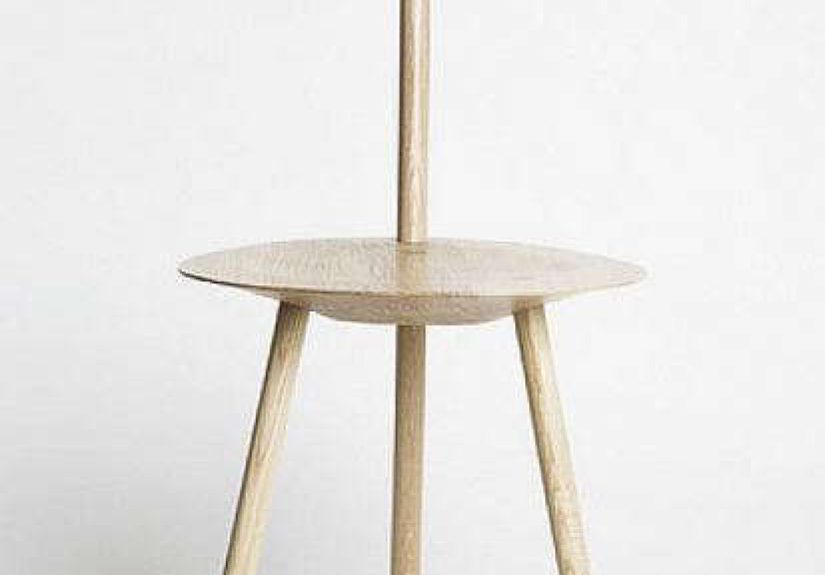
At first glance, the chair seems almost childlike in its clarity. The seat nods to the plain honesty of a traditional milking stool, while the petite backrest recalls the handle of a garden spade. That combination sounds almost too simple on paper. In reality, it is exactly the point. The chair turns rural memory into modern design language, and it does so with an ease that many more complicated pieces never achieve.
Why the Spade Chair Ash Matters
To understand why this chair matters, it helps to understand Faye Toogood. She is not merely a furniture designer making handsome objects for people with very disciplined living rooms. She is an interdisciplinary British artist and designer whose work moves across furniture, interiors, sculpture, fashion, and objects. Her practice has long explored the blurred border between functional design and art, which is a fancy way of saying she likes useful things to have soul.
That mindset is all over the Spade Chair. It is not trying to be just a chair, and yet it absolutely does the job of a chair. It carries the emotional charge of sculpture while still being grounded in everyday use. That is one reason Toogood’s work has earned lasting attention in museums, galleries, and serious design publications. Her pieces do not just decorate a room; they change the atmosphere of it.
The Spade Chair is also important because it belongs to one of the clearest visual ideas in Toogood’s body of work. The original Spade concept dates back to the early 2010s, and over time it has appeared in multiple interpretations, including collectible versions in bronze, aluminum, leather, and rubber. The ash edition gives that concept a particularly appealing kind of accessibility. It still feels distinct and artful, but it does not look as if it should only be approached while wearing white gloves and speaking in hushed tones.
The Design Language: Simple, Strange, and Very Smart
A Milking Stool Meets a Gardening Tool
The genius of the Spade Chair Ash lies in its fusion of two humble references: the three-legged milking stool and the handle of a spade. Those are not glamorous starting points. There is no jet-age fantasy here, no techno-futurist drama, no “inspired by parametric fluidity” speech that makes everyone in the room pretend to nod knowingly. Instead, the chair draws from ordinary working objects associated with the countryside.
That choice says a great deal about Toogood’s sensibility. She has often drawn from rural memory, vernacular forms, and raw material honesty. The Spade Chair Ash feels rooted in that outlook. It honors utility, but it also stylizes it. The result is a chair with a strong silhouette that reads almost like a pictogram. Even from across the room, it is unmistakable.
The backrest is especially clever. Tiny compared with the rest of the chair, it is less an upholstered invitation than a visual signature. It punctuates the piece. It gives the chair a little wink of attitude. You look at it and think, “That is definitely the handle of something,” and that recognition is part of its charm.
The Beauty of Ash Wood
The ash finish is where the chair becomes especially compelling. Ash is a hardwood with a clean, open grain and a light tone that works beautifully in contemporary interiors. It is a material that can read Scandinavian, country, modernist, or quietly artisanal depending on what surrounds it. That flexibility matters because the Spade Chair Ash is not a one-note design. It can move between design languages without losing itself.
Visually, ash gives the chair a warmth that sharper industrial finishes cannot. Bronze has gravitas. Rubber has attitude. Aluminum has edge. But ash has welcome. It allows the sculptural idea of the Spade Chair to feel more domestic, more breathable, and more human. It invites touch. It shows grain. It lets the chair feel less like a statement piece imported from Planet Design and more like an object meant to be lived with.
There is also a practical reason ash suits this design. Ash is well regarded in furniture making for its strength relative to weight, good machining properties, and its ability to take stain and finish nicely. That makes it an excellent material for a chair whose appeal depends on crisp lines, a clear silhouette, and everyday usability. In the Spade Chair Ash, the wood is not merely a surface treatment. It is part of the design argument.
Form, Proportion, and Presence
The current ash version produced by Please Wait to be Seated has an elegantly compact footprint. Its proportions are tidy and efficient, with a height of about 86 centimeters, width around 44.5 centimeters, depth around 43 centimeters, and a seat height of 45 centimeters. It is also relatively lightweight at roughly 3 kilograms. Those numbers may sound plain, but they matter. They explain why the chair feels nimble rather than bulky and why it works so well in dining settings, corner placements, or smaller spaces where visual clutter becomes the enemy.
Because the chair is visually open and materially light, it does not crowd a room. Even when used in multiples, it avoids that heavy “furniture showroom landed in my breakfast nook” effect. Instead, it repeats beautifully. A pair looks considered. A set around a dining table looks rhythmically sculptural. A single chair in an entryway or bedroom corner reads like punctuation.
This is one of the Spade Chair Ash’s biggest strengths: it can behave like a practical seat or a sculptural accent depending on context. Not many chairs manage both without compromise. Some are useful but forgettable. Others are memorable but uncomfortable to live around. The Spade Chair Ash threads the needle by being visually memorable without becoming spatially overbearing.
From Collectible Design to Everyday Interiors
Part of what makes the Spade Chair Ash so interesting is its link to a deeper design story. The original Spade chair entered the design conversation as a more collectible object, and a 2011 bronze version is now held by the Philadelphia Museum of Art. That fact matters because it shows the design was never just a cute wooden chair with a clever shape. It was, from early on, recognized as a serious piece within Toogood’s evolving vocabulary.
Yet the ash edition does not feel watered down or compromised. If anything, it sharpens the idea. When a strong design concept is translated into ash, the chair becomes more direct. You notice the relationship between seat and backrest more clearly. You notice the purity of the outline. You notice how little is actually needed to create presence. It is a good reminder that sophistication is not always about adding more. Often it is about knowing what to leave out.
There is also something delightful about the Spade Chair Ash occupying both the collectible design universe and the real world of dining tables, apartments, studios, and family homes. That dual identity gives it unusual credibility. It has museum pedigree without becoming pompous. It has usability without becoming generic. Frankly, many pieces would kill for that résumé.
How to Style the Spade Chair Ash
In a Dining Room
The most obvious home for the Spade Chair Ash is around a dining table, and for good reason. Its modest size, clear silhouette, and visual lightness make it a strong dining chair. Around a simple wood table, it creates a tone that feels crafted and contemporary. Around stone, glass, or lacquered surfaces, it acts as a warm counterbalance. Because the chair’s profile is unusual without being chaotic, it adds energy to the room without stealing every conversation.
In an Entryway
Used alone in a hallway or entry, the chair becomes more object-like. It can hold a bag, anchor a mirror, or simply sit there looking quietly excellent. This is where its sculptural quality really shines. It does not need a dramatic setting. In fact, it often works best when given a little breathing room and allowed to play the role of understated star.
In a Bedroom or Studio
The chair also works beautifully in bedrooms and creative spaces where furniture needs to be flexible. The ash finish keeps the mood soft and calm, while the shape adds enough visual interest to prevent the room from feeling sleepy. If your interior leans minimal, the chair introduces personality. If your space is layered and eclectic, it brings form and discipline. Either way, it earns its spot.
Why Designers and Collectors Keep Coming Back to It
Designers and collectors tend to return to pieces that do more than photograph well. The Spade Chair Ash certainly photographs well, but its staying power comes from something deeper. It distills a recognizable idea into a form that feels timeless rather than trendy. It is rooted in memory, but not nostalgia. It is contemporary, but not disposable. It is playful, but not silly. That is a difficult combination to pull off.
The chair also reflects something essential about Toogood’s wider practice: she values irregularity, tactility, and the emotional life of objects. Even when a design is reduced to a near-symbol, she avoids sterility. The Spade Chair Ash has enough rawness and warmth to feel lived-in before anyone even sits down. That quality makes it attractive to people who want interiors that feel composed but not stiff.
And let us be honest: the chair has charisma. Not loud charisma. Not “look at me, I’m in a boutique hotel lobby” charisma. More like the kind of charisma that belongs to a person who says three words at dinner and somehow becomes the most interesting one at the table. The Spade Chair Ash knows what it is. Furniture with self-awareness is rare.
Experience Related to “Faye Toogood’s Spade Chair Ash”
Living with a chair like the Spade Chair Ash is a different experience from living with ordinary seating. The first thing you notice is that people comment on it, even people who normally do not care about chairs. Someone walks into the room, glances over, and asks what it is. Not because it is flashy, but because it triggers recognition and curiosity at the same time. It feels familiar, but not predictable. That balance makes the chair memorable in daily life.
There is also a subtle pleasure in seeing how the ash finish changes the mood of a space throughout the day. In morning light, the wood can feel pale, calm, and almost architectural. In the afternoon, it takes on more warmth and grain. In softer evening light, the silhouette becomes more pronounced, and the little spade-like backrest starts to read almost like a drawing in the room. Few objects give you that much visual return while taking up so little space.
Another part of the experience is how the chair alters your awareness of surrounding furniture. Put it next to a standard dining chair and the difference becomes obvious. Most ordinary chairs are designed to disappear. The Spade Chair Ash does not disappear, but it also does not dominate. It sharpens the room around it. Suddenly, the table looks more intentional, the floor lamp looks better chosen, and even the empty space around the chair begins to feel designed rather than leftover.
In practical terms, the chair suits the rituals of everyday life surprisingly well. It works for morning coffee, short meals, tying shoes in a hallway, dropping a sweater over the back, or perching with a notebook for a few minutes while pretending to organize your thoughts. It is not the kind of chair you buy because you want to melt into it for six hours. It is the kind of chair you buy because you want ordinary moments to look and feel a little more intelligent.
There is a deeper emotional experience, too. Because the design comes from rural references and humble working forms, the chair carries a sense of memory even if it is not your memory. It can remind one person of a farmhouse, another of a potting shed, another of a childhood spent around tools and practical objects. That emotional openness is part of what makes the chair richer than a purely formal design. It is not just shape; it is association.
For design lovers, owning or even just spending time around the Spade Chair Ash can feel like a small lesson in restraint. It shows how little is needed to create identity. No excess carving. No fussy joinery on display. No gimmick. Just a clear idea, a strong proportion, and a material with enough honesty to carry the concept. In a culture where products often try too hard, that kind of confidence feels refreshing.
Perhaps the best experience of all is that the chair keeps rewarding attention. The first day you admire the shape. A week later you appreciate how it works with the room. A month later you realize it has quietly become one of the reasons the room feels complete. That is usually the mark of a lasting design. It does not exhaust itself at first glance. It settles in, grows on you, and becomes part of the emotional architecture of daily life. The Spade Chair Ash does exactly that, and it does it without ever acting smug about it. A rare talent, for a chair or anyone else.
Final Thoughts
Faye Toogood’s Spade Chair Ash succeeds because it compresses a surprisingly rich set of ideas into a very clear object. It takes rural visual memory, sculptural discipline, and material honesty and turns them into a chair that feels both expressive and useful. The ash finish gives the design warmth and versatility, while the silhouette keeps it unmistakable. It can live comfortably in a curated modern interior, a softer natural home, or an eclectic room that needs one strong line of order.
Most importantly, the chair avoids the trap that catches so much high-design furniture: it never feels like an empty gesture. It has concept, but also charm. It has pedigree, but also approachability. It has artistic value, but it still knows its job is to sit there and serve. That combination is why the Spade Chair Ash continues to stand out. It is not merely a beautiful chair. It is a clear demonstration that good design can be witty, grounded, and emotionally resonant all at once.