Table of Contents >> Show >> Hide
- The Connected Boxing Boom (And Why FightCamp Stands Out)
- Meet the FightCamp Trainer: Coach, Data Nerd, and Slightly Savage Motivator
- Round 1: Hardware – Stability vs. Showmanship
- Round 2: Coaching – Real Technique vs. Fitness Theater
- Round 3: Data, Motivation, and Community
- Round 4: Value, Versatility, and Long-Term Use
- of Real-World Experience: What It Feels Like When a FightCamp Trainer “Bashes” the Competition
- Final Bell: Should You Step Into FightCamp?
If you’ve ever thrown a few sloppy jabs at the air and thought, “Wow, I’m basically a pro boxer,”
FightCamp is here to gently (and repeatedly) prove you wrongin the best possible way.
This connected boxing system turns your living room into a training camp, complete with punch trackers,
pro-level coaching, and enough sweat to make your yoga mat file a complaint.
Meanwhile, the rest of the at-home fitness world is busy flashing LED lights, playing EDM,
and asking you to pedal into oblivion. Competing platforms promise “immersive experiences,”
“gameified workouts,” and “studio vibes,” but when you stack them up against a focused boxing trainer
who actually teaches you how to punch, a lot of those claims start to wobble like a cheap freestanding bag.
So today, we’re stepping into the ring with a FightCamp boxing trainer’s perspectivebreaking down
how this system really works, where it shines, and why it might (metaphorically) bash its competitors
on everything from coaching quality to data tracking.
The Connected Boxing Boom (And Why FightCamp Stands Out)
Before 2020, home boxing usually meant a tired heavy bag in the garage and a pair of gloves that smelled
like regret. Then connected fitness exploded. Suddenly you had smart bikes, mirrored workout screens,
and boxing platforms with flashy targets, leaderboard battles, and monthly subscriptions the size
of a car payment.
FightCamp slid into this crowded space with a simple pitch:
learn real boxing and kickboxing skills while getting a brutal cardio and strength workout.
Instead of having you tap illuminated dots like a rhythm game, FightCamp focuses on:
- Proper stance, footwork, and defensive moves
- Structured combinations that build actual technique
- Data-backed training using punch and strike tracking
- Progressive programs rather than random “workout of the day” chaos
Reviewers consistently describe FightCamp as a hybrid between a boxing gym and a connected home fitness system
you’re not just “working out,” you’re actually learning a combat sport while torching calories.
Meet the FightCamp Trainer: Coach, Data Nerd, and Slightly Savage Motivator
Fire up a FightCamp session and the first thing you’ll notice is that the trainers don’t babysit you.
They coach you. They correct your technique. They talk combos, balance, guard, and ring IQ.
They also have no problem reminding you that your output just dropped like your Wi-Fi signal.
What a FightCamp Trainer Actually Does
Unlike some competitors who lean heavily on “follow the lights” or “just keep moving” gameplay,
a FightCamp boxing trainer is there to:
- Explain each punch and combo (jab, cross, hook, uppercut, kicks in kickboxing tracks)
- Guide you through structured programsfrom true beginner to advanced striker
- Use data from punch trackers to push your pace, accuracy, and consistency
- Layer technique, conditioning, and mental toughness into every round
The tone is high-energy and friendly, but also honest. You’ll hear lines like,
“Your output dipped that last roundlet’s bring it back,” which hits much harder when your punch stats
are staring at you on screen.
The Tech: Punch Trackers That Don’t Lie
FightCamp’s punch trackers slip into quick wraps or gloves and track metrics like:
- Punch and strike count
- Speed
- Output score per round
- Total rounds completed over time
Those numbers aren’t just for bragging rightsthey’re built into drills, challenges, and leaderboards.
The app stores your stats so you can see long-term progress in punch volume, conditioning, and consistency,
which is something many generic HIIT or dance-style fitness apps never truly quantify.
Round 1: Hardware – Stability vs. Showmanship
If you ask a FightCamp trainer how they feel about some competing systems, the first jab usually lands on the hardware.
Some setups look cool but wobble under real power. Others require wall mounting, drilling, or buying extra pieces
just to get started.
FightCamp’s Free-Standing Bag
Current FightCamp packages typically include:
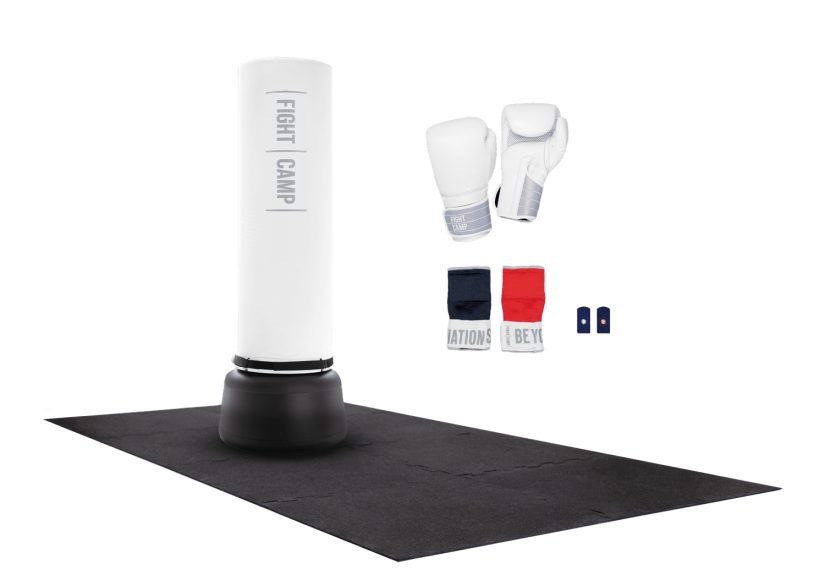
- A tall, free-standing heavy bag
- Base that you fill with sand or similar material
- Gloves, wraps, and punch trackers (depending on bundle)
Independent reviewers note that the FightCamp bag stays impressively stable even during intense sessions
a big deal if you have real power or you’re working on kicks in addition to punches.
How Competitors Compare
When you look at other smart boxing setups, several patterns emerge:
-
Some systems rely on wall-mounted or floor-mounted stations with LED targets, which can feel great for
light to moderate strikes but may not be ideal if you want to kick or hit with full power. -
Others focus more on rhythm and timing games than on simulating the feel of a heavy bag,
which is better for conditioning than for building realistic fight mechanics.
A trainer-style criticism you’ll often hear in the boxing world: “If you never hit a real bag,
you never really learn where your power is.” FightCamp’s setup checks that boxliterally.
Round 2: Coaching – Real Technique vs. Fitness Theater
A lot of connected fitness platforms sell you on vibes: mood lighting, studio playlists, motivational slogans.
FightCamp’s trainers bring that energy, but they’re also obsessed with the fundamentals.
FightCamp’s Coaching Philosophy
Across reviews and user feedback, several themes pop up:
- Trainers emphasize proper stance, rotation, and guard instead of just throwing random punches.
- Programs build over time, so beginners aren’t drowned in complex combinations on day one.
- Coaching includes education on defense, rhythm, and ring awarenessskills you’d actually use in a real gym.
That’s where a FightCamp boxing trainer might “bash” some competitors:
if your platform never corrects your form, you might be sweating, but you’re not really boxing.
What Competitors Sometimes Miss
Other home boxing solutions can be fun and engagingespecially those with light-up targets and arcade-style scoring.
But many of them:
- Spend more time on entertainment than education
- Offer fewer progressive skill paths for long-term development
- Emphasize hand-eye coordination over full-body technique and defense
There’s nothing wrong with “fun first,” but if you’re serious about learning the sport,
FightCamp’s coach-driven approach stands out.
Round 3: Data, Motivation, and Community
A FightCamp trainer’s secret weapon isn’t just mitt work, it’s data.
Punch trackers log your performance over months, turning every workout into part of a larger training story.
Data That Actually Drives Progress
The FightCamp app:
- Records every punch and strike across rounds and workouts
- Displays output scores and punch goals in real time
- Lets you complete challenges, unlock achievements, and chase personal records
- Provides long-term stats so you can see week-over-week progress
For a trainer, that’s gold. Instead of saying “try harder,” they can say,
“You threw 410 punches last sessionlet’s beat that today.”
How Community Factors In
FightCamp also leans on:
- Leaderboards that let you compare output with other members
- Online groups and social communities where people share milestones, gear tips, and progress stories
You’ll see posts from people who came from VR boxing apps or other platforms, only to eventually “give in”
and buy FightCamp because they wanted more serious training and sturdier equipment.
Round 4: Value, Versatility, and Long-Term Use
A FightCamp trainer doesn’t just compare on featuresthey’re thinking about whether you’ll still be using
this system six months from now.
Where FightCamp Wins on Value
Reviewers point out that FightCamp is:
- Highly engaging, thanks to ever-growing libraries of workouts and newly added features like kick tracking.
- A strong mix of strength, conditioning, and real skill developmentnot just cardio for cardio’s sake.
- Designed for multiple fitness levels, so you don’t “outgrow” it as you get better.
Some competitors offer more generalized workouts or more variety across training modes, but they may not
go as deep on boxing technique. Others are primarily entertainment-driven and can lose their novelty once
the “new toy” feeling wears off.
Honest Limitations
A trainer who’s being straight with you will also admit FightCamp isn’t perfect:
- It’s less versatile than a full home gym with weights if you’re looking for heavy barbell work.
- Filling the heavy bag base with sand is not anyone’s idea of a fun Saturday activity.
But if your goal is to get seriously fit while learning a combat sport,
the trade-offs look pretty good compared with more generic systems.
of Real-World Experience: What It Feels Like When a FightCamp Trainer “Bashes” the Competition
Let’s talk about what this actually feels like in real lifeespecially if you’ve tried other home
fitness platforms first.
Picture this: you start with a trendy LED-target boxing system. It’s fun at first. The music bangs,
the lights blink, you feel like the main character in a video game. But after a few weeks, you notice
something: you still don’t really know how to throw a proper punch. You’re fast, sure, but your wrists
ache, your shoulders feel off, and if someone asked you to show a textbook cross, you’d probably panic.
Then you switch to FightCamp.
The trainer on your screen doesn’t just say “hit harder.” Instead, they start with,
“Let’s fix that stance.” They talk about keeping your chin tucked, distributing your weight,
rotating through your hips and core. You throw a jab, and suddenly it feels different
sharper, cleaner, like it’s actually going somewhere meaningful.
By the second week, you notice you’re not just surviving the rounds; you’re structuring them.
You’re thinking, “Okay, this is a 6-rounder with 3-punch combos and a burn-out finisher.”
That’s the kind of mental shift a good trainer brings: your workouts stop being random chaos
and become deliberate practice.
This is where the “bashing competitors” vibe really shows upnot as trash talk, but as contrast.
A FightCamp trainer doesn’t have to say, “Those other platforms aren’t serious.”
All they have to do is ask you to look at your data. On day one you threw 200 punches
and felt like you might pass out. A month later, you’re hitting 500+ strikes with cleaner form,
better balance, and faster recovery between rounds.
If you’ve used a bike or treadmill platform before, you’ll also notice something else:
boxing is strangely addictive. You’re not just chasing calories or distance. You’re chasing sharper combos,
higher output scores, faster hands, and smoother footwork. You start catching yourself slipping and rolling
imaginary punches while you’re waiting for your coffee to brew.
The trainers lean into that. They’ll say things like,
“You’re not just working outyou’re learning to fight smarter,” and you can feel the difference.
In that moment, every generic “just keep moving!” workout you’ve ever done starts to feel a little hollow.
And then there’s the community factor. Once you start comparing stats on the leaderboard
or reading other people’s storieslike the folks who moved over from VR boxing apps or other platforms
because they wanted more serious trainingyou realize you’re not alone.
Plenty of people tried the flashy stuff and then settled into FightCamp because it gives them something
more: skill plus sweat.
Does that mean no other system has value? Of course not. Some people want pure entertainment,
some want cycling, some want yoga with ambient harp music. But if your idea of a great workout
includes throwing crisp combinations, hitting a heavy bag that can actually take it,
and having a trainer who speaks the language of boxing instead of just “burn more calories,”
FightCamp starts to look like the platform that quietly out-punches the rest.
In the end, that’s how a FightCamp boxing trainer really “bashes” competitors:
not with drama, but with results you can see in the mirror, feel in your lungs,
and track in your punch data.
Final Bell: Should You Step Into FightCamp?
If you’re hunting for a connected fitness system that:
- Teaches real boxing and kickboxing technique
- Combines brutal cardio with functional strength
- Uses data and punch tracking to keep you honest
- Gives you pro-level coaching without leaving home
…then FightCamp deserves a serious look. Its trainers approach you like an athlete in training,
not just a subscriber to entertain. The hardware is built to take real power, the app is designed
to track real progress, and the workouts are structured to build real skill.
In a crowded field of flashy competitors, that’s a combination that hits hard.