Table of Contents >> Show >> Hide
- Why Forbes & Lomax Matters in the First Place
- The Signature Appeal: The Invisible Lightswitch
- The Core Control Types
- Finishes That Pull Their Weight
- Why Designers Keep Specifying It
- Modern Performance Behind the Pretty Face
- Smart Home Compatibility Without the Space-Age Drama
- Where Forbes & Lomax Makes the Biggest Difference
- Are They Worth the Splurge?
- Conclusion
- Extended Experience Notes: What Living with Better Light Controls Actually Feels Like
There are two kinds of people in the world: people who notice light switches, and people who think they do not. The funny part is that the second group usually notices them the second they see a really good one. In a room filled with thoughtful trim, tailored cabinetry, handsome hardware, and carefully layered lighting, a cheap plastic wall plate can feel like a sneaker at a black-tie dinner. That is exactly why Forbes & Lomax has become such a favorite among designers, architects, and detail-obsessed homeowners.
Forbes & Lomax light controls live in that rare sweet spot where utility meets genuine beauty. They do not just turn lights on and off. They help finish a room. They soften the visual noise on the wall, add tactile pleasure to daily routines, and make the most ordinary gesture in the housereaching for a switchfeel surprisingly satisfying. In an age of apps, voice commands, and enough glowing touchscreens to launch a spaceship, there is something deeply refreshing about a well-made toggle, a polished dimmer, or an almost invisible plate that lets the wall do the talking.
This is where the brand stands out. Forbes & Lomax is not selling a flashy tech fantasy. It is selling restraint, craft, and controls that feel at home in both historic interiors and sharply modern spaces. The result is a category that sounds practical but behaves like design jewelry: fixtures and fittings with an architectural brain and a decorator’s soul.
Why Forbes & Lomax Matters in the First Place
The reason designers keep coming back to Forbes & Lomax is simple: most electrical controls are designed like afterthoughts, while these are designed like permanent architectural elements. That difference matters more than many homeowners expect. A switch sits at eye level, gets touched every day, and appears in almost every room. Even the prettiest house can lose a little composure when every wall is punctuated by shiny builder-grade plastic.
Forbes & Lomax offers an antidote to that problem. The brand is best known for marrying vintage-inspired forms with modern performance. Think classic toggles, rotary dimmers, and low-profile controls that feel rooted in older European interiors, but updated for contemporary lighting demands and cleaner wall lines. The mood is not fussy. It is controlled. The look is not loud. It is intentional.
And intentionality is the whole point. Good light controls do three things at once: they work reliably, they look appropriate to the room, and they make lighting more flexible. Forbes & Lomax checks all three boxes. The controls are not decorative for decoration’s sake. They are useful in the way all great design is useful: they solve a problem while making the solution look effortless.
The Signature Appeal: The Invisible Lightswitch
If Forbes & Lomax has a superstar, it is the Invisible Lightswitch. This is the product that made many design professionals do a double take and ask, “Wait, why don’t all switches look like this?” The concept is clever but not gimmicky. A transparent acrylic plate sits flush to the wall, allowing paint or wallpaper to visually continue behind it so the switch blends into the surface rather than interrupting it.
That one move changes a lot. On wallpaper, the effect is especially satisfying. Instead of hacking the pattern to pieces with standard plates, the wall can keep its rhythm almost uninterrupted. On painted walls, the switch still reads as quieter and more elegant than a typical cover plate. It does not vanish like a magician in a smoke cloud, but it does dramatically reduce visual clutter. For rooms where every line matterspowder baths, narrow hallways, moody dining rooms, jewel-box librariesthat subtlety is gold.
The Invisible range also solves a surprisingly modern design problem: how to keep technology present but not bossy. Homeowners want layered lighting. They want controls near the entry, by the bed, beside the vanity, near the bar, and close to the reading chair. But they do not necessarily want their walls to look like mission control. Forbes & Lomax makes it easier to have more control points without turning the room into a switch convention.
The Core Control Types
Toggle Switches
The toggle switch is the classic. It has a pleasingly decisive feel, a crisp silhouette, and the kind of old-school charm that designers never seem to tire of. Forbes & Lomax toggles feel slim, refined, and architectural rather than chunky or utilitarian. They work beautifully in traditional homes, but they also look terrific in contemporary interiors where their simplicity reads almost graphic.
They are especially effective when repeated consistently through a home. A handsome toggle in the foyer is nice. Matching toggles throughout the foyer, kitchen, powder room, and primary suite? That is a design language. Suddenly the house feels edited. It feels like somebody cared about the small things. Because somebody did.
Rotary Dimmers
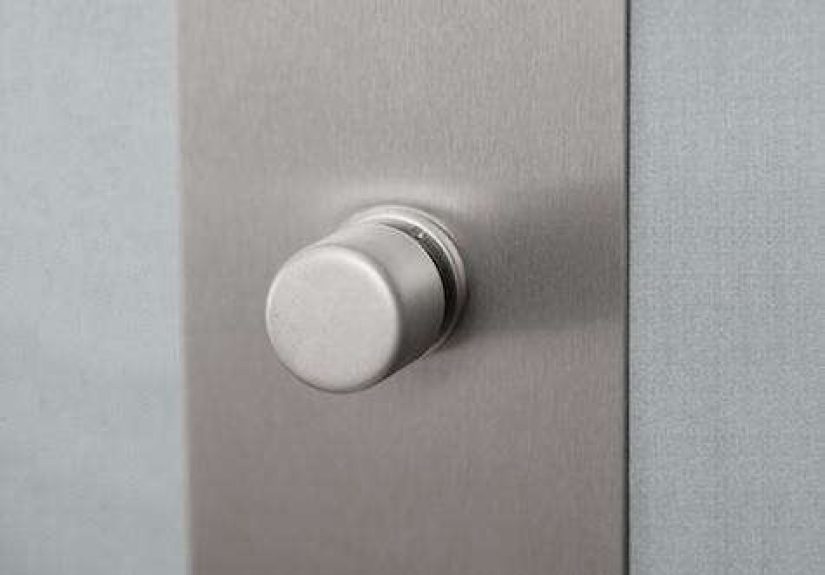
The rotary dimmer is where charm and practicality really start flirting. Push to switch on and off, rotate to brighten or dimthat motion is intuitive, tactile, and oddly calming. There is a reason designers still love rotary controls in an era full of touch-sensitive everything. They offer precision without fuss. You do not stab at a glossy plate and hope for the best. You simply turn the knob until the room feels right.
That matters because good lighting is rarely about maximum brightness. Most rooms want range. Breakfast light is not dinner light. A bathroom at 7 a.m. is not the same bathroom at 11 p.m. A family room during homework hour is not the family room during a movie. Rotary dimmers make that shift feel natural instead of technical. They invite use, and anything that encourages people to actually dim their lights tends to improve both mood and ambiance.
Push Buttons
Push buttons bring another layer of flexibility, especially where low-voltage controls or home automation are involved. They have a neat, pared-back look and can be used where clean, minimal operation is the goal. In the right interior, push buttons feel almost bespoke, like something specified rather than simply bought.
That is a quiet recurring theme with Forbes & Lomax. Nothing looks accidental. Every control appears chosen to match the architecture, the finish palette, and the habits of the people living there.
Finishes That Pull Their Weight
One reason Forbes & Lomax performs so well in high-end interiors is its finish selection. The brand offers a spectrum that lets designers coordinate switch plates with plumbing, cabinet hardware, window hardware, and lighting fixtures instead of forcing every wall into the same generic white-plastic compromise.
Unlacquered brass remains a fan favorite because it ages. That is part of the appeal. Instead of staying frozen and factory-fresh forever, it develops character over time. Aged brass brings a softer, already-settled look for homeowners who want warmth without the shiny “new penny” stage. Antique bronze introduces mood and depth. Brushed brass and matte brass can feel slightly more tailored and contemporary. Nickel silver and stainless steel are excellent where cooler metal palettes dominate. Painted options are useful when the plate should support the wall rather than star in the scene.
This variety makes Forbes & Lomax unusually adaptable. In a Georgian-style townhouse, brass toggles can look like they have always belonged there. In a minimalist apartment, brushed or matte finishes can feel disciplined and modern. In a dark, cocooning den, antique bronze can disappear in the loveliest possible way. These are small details, yesbut the visual payoff is not small at all.
Why Designers Keep Specifying It
Design publications and show houses have helped turn Forbes & Lomax into something of an insider signal. The brand appears again and again in rooms where everything has been considered: the stone, the trim, the drapery hardware, the lamp shades, the finish of the faucet, even the profile of the door latch. That repetition is revealing. Designers are not choosing these controls because they are trendy for five minutes. They are choosing them because they solve a design problem elegantly.
The larger trend behind that popularity is easy to understand. People are growing tired of ugly necessities. They want functional objects to contribute to the room rather than interrupt it. They also want tactile, analog-feeling controls that make daily life easier, not more abstract. A well-made switch offers immediate feedback. It does not require a software update, a password, or a prayer to the Wi-Fi gods. Press. Turn. Done. The room obeys. Civilization survives.
That analog appeal is part of what gives Forbes & Lomax such staying power. Even in highly automated homes, many owners still want a beautiful physical interface on the wall. They want the system behind the scenes to be smart, but the experience at the fingertips to be simple.
Modern Performance Behind the Pretty Face
Beauty would not matter much if the controls only looked good in photographs. Fortunately, Forbes & Lomax is not just a style brand. The company offers real-world versatility for current lighting schemes, including options designed for LED loads and other modern applications. That matters because today’s homes often mix decorative pendants, recessed lighting, sconces, task lights, and accent lighting across multiple control points.
The brand’s rotary dimmers are particularly relevant here. Dimming technology can get fussy fast, especially with LEDs, and thoughtful specification matters. But the appeal of Forbes & Lomax is that it gives the room a classic dimmer experience without making the wall look dated or clumsy. For homeowners who want their lighting to feel warm, layered, and adaptable, that is a meaningful advantage.
The controls can also be combined on multi-gang plates, which is a practical blessing in rooms that need several lighting scenes or switching zones. Instead of a random jumble, the composition stays orderly. That organization is not only visual; it also improves how the room is used. You can group controls in a way that reflects how people actually move through the space.
Smart Home Compatibility Without the Space-Age Drama
Here is another reason the brand has earned loyalty: Forbes & Lomax understands that many luxury homes are technologically sophisticated, but the owners do not always want that sophistication to announce itself from every wall. The company’s push buttons and momentary dry-contact options can work with established home automation and lighting control systems, offering a more elegant faceplate for integrated environments.
That means you can pursue the benefits of a smart homeprogrammed scenes, whole-house control, layered lighting, and system coordinationwithout settling for a clunky keypad aesthetic in every room. This is especially useful in homes where architecture or decoration calls for a softer, more timeless visual language. A handsome switch can still trigger advanced functionality behind the scenes. The wall stays graceful, while the infrastructure does the heavy lifting.
In plain English: your house can be very smart without looking like it majored in robotics.
Where Forbes & Lomax Makes the Biggest Difference
Some upgrades disappear into a renovation budget without making much emotional impact. Forbes & Lomax is not one of them. The best rooms for these controls are the rooms people see and touch often.
Kitchens
Kitchens benefit enormously from better switches because they usually have several layers of lightingpendants, ceiling fixtures, under-cabinet lighting, and accent lighting. A coordinated bank of refined controls makes the room look more custom and less builder-basic.
Dining Rooms
A dining room lives or dies by mood. Rotary dimmers belong here almost by moral law. They make it easy to shift from bright setup mode to flattering dinner-party glow without fuss.
Bedrooms
Bedrooms are deeply tactile spaces, and the quality of what you touch matters. A satisfying bedside dimmer or switch is one of those small luxuries that feels oddly major at the end of a long day.
Powder Rooms and Hallways
These smaller spaces often carry bold wallpaper, richer paint, or decorative lighting. That makes them perfect candidates for Invisible plates or metal finishes that support the room’s character instead of chopping it up.
Are They Worth the Splurge?
For many projects, yes. Not because a switch plate will change your life in the dramatic, slow-motion way marketing departments dream about, but because it changes the consistency of a home. It makes the background elements feel as considered as the headline elements. And in good interiors, background quality is what separates “pretty” from “finished.”
If the budget is tight, homeowners do not necessarily need to swap every control in the house on day one. Start with the spaces where you will see and use them most. The kitchen. The powder room. The dining room. The primary bedroom. Once those upgraded controls go in, the plain plastic ones elsewhere may begin to look suspiciously like they are freeloading.
Conclusion
Forbes & Lomax light controls prove that fixtures and fittings deserve more respect than they usually get. These are not merely functional bits of hardware clinging to the wall for dear life. They are tactile, visual, and architectural details that help a room feel intentional. Whether you love the disappearing act of the Invisible Lightswitch, the crisp authority of a toggle, or the old-soul pleasure of a rotary dimmer, the brand offers a smarter way to think about one of the most handled objects in the home.
In the end, that is the beauty of Forbes & Lomax. It does not ask lighting controls to become entertainment. It asks them to become excellent. And honestly, that is a much better trick.
Extended Experience Notes: What Living with Better Light Controls Actually Feels Like
There is a practical side to all this, but there is also an emotional one, and that is where Forbes & Lomax really earns its reputation. Imagine walking into a house just after dusk. The entry lamp is low and warm. A pair of sconces in the hallway glow softly instead of blasting you like a stadium. In the kitchen, pendants hover above the island at a level bright enough for chopping herbs but gentle enough that nobody feels interrogated by overhead glare. None of that atmosphere happens by accident. It happens because the controls make it easy to choose the right light instead of living forever at one harsh default setting.
That is the everyday experience these fixtures create. You stop thinking in terms of “lights on” and “lights off” and start thinking in terms of scenes, mood, and comfort. Morning can be brighter and brisker. Evening can be lower and calmer. Guests can drift from room to room without every space feeling flattened into the same brightness. Even a rainy afternoon feels more intentional when a rotary dimmer lets you dial a room into a cozy middle ground instead of full cave or full operating room.
There is also a tactile pleasure that is hard to communicate until you use these controls regularly. A good toggle has snap. A good dimmer has resistance. A good plate sits on the wall with confidence. These are tiny sensations, but daily life is made of tiny sensations. The satisfying click at bedtime, the soft turn before dinner, the absence of cheap plastic glare in a carefully papered hallwaythose details quietly add up.
Homeowners often discover that guests notice them too. Not in a showy, “please admire my switch plate collection” kind of way, but in the subtle way people notice when a room feels finished. Someone reaches for a dimmer and pauses. Someone asks where the switch came from. Someone runs a hand along the wall and realizes the wallpaper continues behind the plate. It is the design equivalent of a perfectly tailored cuff: not everyone can name it, but many people can feel that it is right.
And that, perhaps, is the most useful way to think about Forbes & Lomax. These controls are not really about being precious. They are about removing friction between how a home looks and how it behaves. The wall becomes calmer. The lighting becomes more flexible. The materials feel more in tune with the architecture. The technology becomes less obtrusive. You end up with a house that feels more coherent, more comfortable, and frankly more grown-up.
In a renovation, those gains are easy to underestimate because they are not giant headline items like flooring, cabinetry, or appliances. But once installed, they participate in everyday life with surprising force. You touch them when you leave for work, when you come home, when you host friends, when you put children to bed, when you wake in the night, when you set the table, when you read, when you relax. Few design choices get that much contact. Fewer still manage to be both practical and beautiful every single time. Forbes & Lomax comes very close.