Table of Contents >> Show >> Hide
- Why Flight 93 Became a Magnet for Myths
- Myth #1: Flight 93 Was Shot Down by the U.S. Military
- Myth #2: There Was “No Plane” Because the Crash Site Looked Wrong
- Myth #3: The Phone Calls from Flight 93 Were Fake or Impossible
- Myth #4: The Passengers Never Really Fought Back
- Myth #5: Nobody Knows Where Flight 93 Was Headed
- Myth #6: There Was Too Little Evidence to Prove Hijackers Were on Board
- What the Real Story Actually Shows
- Experiences That Keep the Story Grounded
- Final Thoughts
Note: This article is written for historical and educational purposes. It avoids graphic detail and focuses on verified facts, public records, and the human story behind them.
Some events generate history. Others generate history, grief, memorials, and a tidal wave of internet nonsense. United Airlines Flight 93 landed in all four categories. More than two decades after September 11, 2001, the flight remains one of the most emotionally charged parts of the day, which is exactly why myths still cling to it like static on a wool sweater.
That is a problem, because the real story of Flight 93 does not need embellishment, conspiracy frosting, or online detective theater. It is already extraordinary. The best available evidence from investigators, federal records, phone logs, the cockpit voice recorder, the flight data recorder, and the 9/11 Commission points in the same direction: Flight 93 was hijacked by al Qaeda terrorists, passengers and crew learned about the other attacks through calls from the plane, they organized a counterattack, and the hijackers crashed the aircraft in Pennsylvania before those passengers could retake the cockpit.
In other words, the truth is both simpler and stronger than the myths.
Why Flight 93 Became a Magnet for Myths
Flight 93 has always attracted speculation for one obvious reason: it did not reach its intended target. Unlike the attacks on the World Trade Center and the Pentagon, this story ends in interruption. There is an unresolved feeling built into the timeline. People know what was prevented, but they did not see it happen live on television in the same way they saw the other attacks unfold. Into that emotional gap walked conspiracy culture, carrying a flashlight with no batteries.
But the historical record is not empty. It is unusually rich. Investigators recovered evidence from the crash site. The FBI documented physical findings. The National Park Service, which now interprets the story at the Flight 93 National Memorial, has published detailed timelines, explanations of the cockpit voice recorder and flight data recorder, and summaries of the passenger and crew phone calls. The 9/11 Commission reconstructed the final minutes in depth. So while myths continue to circulate, the actual evidence is not hiding in a dark basement. It is sitting in the public record, practically waving.
Myth #1: Flight 93 Was Shot Down by the U.S. Military
This is the big one, the blockbuster rumor, the conspiracy theory that refuses to retire. The claim usually goes like this: the passengers did not stop the hijackers, the government did, and officials covered it up.
The evidence says otherwise. The best reconstructions of the flight show that the passenger assault began before the crash and continued until the last moments. The cockpit voice recorder captured the sounds of that struggle. The 9/11 Commission concluded that the hijackers remained in control only because they deliberately crashed the plane rather than allow the passengers and crew to break through and take it back. That is not the language of a missile strike. That is the language of a hijacking collapsing under pressure from the people on board.
The timing matters too. A shootdown authorization was discussed in Washington that morning, but confusion reigned, and military response timelines did not line up neatly with Flight 93’s final minutes. The plane crashed at 10:03 a.m., and multiple official reconstructions make clear that the government’s situational awareness was lagging badly. Translation: this was not an efficient action movie sequence with jets perfectly positioned at the dramatic moment. It was a national emergency full of delayed information, crossed wires, and scrambling officials.
There was also no verified physical evidence of a missile strike. Instead, investigators recovered debris, black boxes, and other material consistent with a high-speed crash into the Pennsylvania site. That is not glamorous conspiracy fuel, but it is how real investigations work.
The “White Jet” Confusion
Some versions of the shootdown story point to eyewitness reports of a white aircraft near the crash area. That detail helped conspiracy theories grow legs, roller skates, and an entire fan club. But the existence of another aircraft in the vicinity does not prove Flight 93 was shot down. The more grounded explanation is that a separate aircraft was redirected to look for the crash site after the fact. That makes the white jet a witness to the aftermath, not the star of a secret military takedown.
Myth #2: There Was “No Plane” Because the Crash Site Looked Wrong
This myth depends heavily on people staring at a few photos and deciding they have outsmarted aviation physics. The argument usually says that because the impact crater looked compact, or because debris appeared scattered oddly, a Boeing 757 could not have crashed there.
That sounds persuasive only if you skip the parts where professionals investigate airplane crashes for a living. The National Park Service explains that the impact crater was roughly 15 feet deep and 30 feet wide when first responders arrived, and much of the wreckage was found in and around that crater. The surrounding debris field included twisted metal, lightweight paper items, personal effects, and other aircraft remains. The hemlock grove nearby also yielded recovered debris and human remains. In short, there was not “nothing there.” There was a crash site with the distribution patterns investigators would expect from a violent, high-speed impact.
Even the often-repeated claim that an engine was found “miles away” falls apart under scrutiny. Reporting and later review narrowed the distance dramatically. What was recovered away from the main crater was consistent with debris thrown forward in the direction the aircraft was traveling, not proof of a missile strike or midair demolition. This is one of those classic conspiracy moments where “I saw a dramatic sentence on the internet” collides with “the measured distance was much smaller.” Guess which one usually wins on message boards.
Myth #3: The Phone Calls from Flight 93 Were Fake or Impossible
This theory tends to arrive wearing a lab coat it did not earn. The argument says that passengers could not have made calls from that altitude in 2001, so the calls must have been fabricated. It sounds technical, which is always catnip for bad theories.
The answer is straightforward: most of the calls were not from personal cell phones. They were made using Airfones installed on the aircraft. According to the records summarized by the National Park Service, 37 calls were placed from Flight 93 after the hijacking, and 35 of them came from seatback Airfones in the back rows of the plane. That detail matters because it crushes the myth at the root. The question is not, “Could dozens of cell phones magically connect?” The question is, “Did a plane in 2001 have onboard calling equipment?” Yes. It did. Mystery solved. Curtain down. Please return the fake magnifying glass to the gift shop.
Those calls were also not vague folklore handed down through internet smoke signals. Call logs, credit card records, and testimony helped establish who called, when the calls happened, how long they lasted, and what the callers reported. The passengers and crew used those calls to alert loved ones, contact authorities, and learn that other hijacked planes had already struck major targets. That information changed the stakes on board. It helps explain why the people on Flight 93 moved from fear to decision.
Myth #4: The Passengers Never Really Fought Back
This myth is especially corrosive because it tries to erase the agency of the people aboard the plane. The record does not support it.
The passenger and crew calls show that people on Flight 93 were sharing information, assessing the situation, and preparing to act. The 9/11 Commission and National Park Service timeline place the counterattack at about 9:57 a.m. The cockpit voice recorder captured the sounds of the assault, including the hijackers reacting by violently maneuvering the plane in an apparent effort to throw the passengers off balance. The flight data recorder also documented aggressive rolling and pitching in the final minutes, which aligns with the account of a desperate struggle in progress.
That matters because the counterattack was not invented later for patriotic effect. It is supported by separate forms of evidence that reinforce one another: phone calls, voice recordings, flight data, witness observations of erratic flight, and the final crash sequence. When different types of evidence all point the same way, historians tend to pay attention. Conspiracy theorists usually pay attention too, but often only long enough to ignore it.
Myth #5: Nobody Knows Where Flight 93 Was Headed
There has been debate over whether the intended target was the U.S. Capitol or the White House, but that is not the same as having no idea at all. The evidence places the destination in Washington, D.C., not some random point on the map.
The National Park Service notes that the flight data recorder showed the autopilot had been reset for a new destination: Washington. The broader investigative record, including information referenced by the 9/11 Commission, points most strongly to the U.S. Capitol as the likely target, though the White House also appears in historical discussions of the plot. Either way, the main point is clear: Flight 93 was not wandering aimlessly, and it was not heading somewhere harmless. It was redirected toward the symbolic center of American government.
That context is important because it clarifies why the actions on board mattered so much. The passengers and crew were not simply resisting in the abstract. They were trying to prevent one more catastrophic strike on a morning already defined by catastrophe.
Myth #6: There Was Too Little Evidence to Prove Hijackers Were on Board
Another fringe argument claims that the hijackers were never really identified, or that evidence linking them to Flight 93 was planted or too thin to trust. Again, the documented record says otherwise.
FBI accounts of the investigation describe the recovery of significant evidence from the site, including passports, notes, a knife believed to have been used in the hijacking, and the two black boxes. The 9/11 Commission and related federal records identify Ziad Jarrah as the pilot hijacker on Flight 93, along with the other three hijackers assigned to the flight. This was not a case built on one mysterious scrap of paper fluttering in the breeze. It was a multi-source investigation combining physical evidence, intelligence, travel records, audio, flight data, and the larger reconstruction of the 9/11 plot.
What the Real Story Actually Shows
Once the myths are cleared away, the real story of Flight 93 becomes sharper, not duller. The plane departed late from Newark, was hijacked at 9:28 a.m., and passengers and crew began placing calls soon after. Those calls told them that the attacks in New York were not accidents. They understood, with horrifying speed, that their own flight was part of the same plot. By about 9:57 a.m., they were fighting back. Just after 10:03 a.m., the plane crashed in Somerset County, Pennsylvania, before it could reach Washington.
That sequence matters because it shows human decision-making under extreme pressure. These were not superheroes written by Hollywood after the fact. They were ordinary people forced into an impossible situation who nevertheless acted. Their courage is not made more impressive by myths. It is made smaller by them.
And maybe that is the real reason debunking matters. Not because every online rumor deserves a dramatic rebuttal, but because the truth belongs to the people who were actually there: the passengers, the crew, the families, the first responders, and the investigators who spent years documenting what happened.
Experiences That Keep the Story Grounded
One of the strangest things about learning the real story of Flight 93 is how quickly it stops feeling like a headline and starts feeling like a room full of people. The myths are loud, flashy, and weirdly overconfident. The facts are quieter. They come from timelines, phone records, recovered evidence, memorial interpretation, and the final minutes reconstructed piece by piece. But once those facts settle in, the story becomes deeply personal.
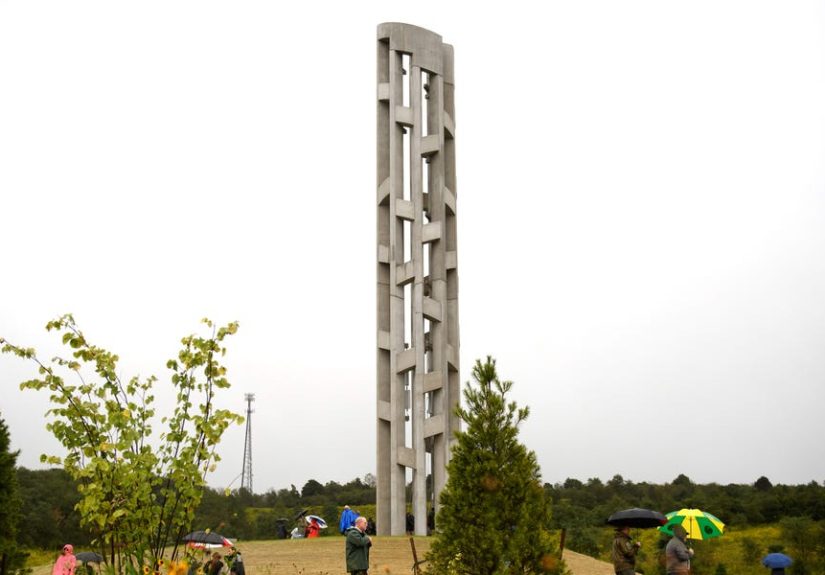
For many people, the first meaningful experience comes not from reading a theory online but from visiting the Flight 93 National Memorial or studying its public materials. The site itself is striking because it is not theatrical. It is open land, sky, distance, and silence. That quiet does something the internet rarely does: it removes the noise. Suddenly the conversation is not about whether someone saw a mysterious plane or whether a photo looks dramatic enough for a message board. It is about 40 passengers and crew members whose lives ended there, and the decisions they made in the space of a few terrifying minutes.
Another powerful experience comes from reading about the phone calls. These are not polished movie speeches. They are practical, emotional, brief, and human. People asked questions. They shared information. They tried to understand what was happening. They called spouses, parents, and authorities. There is something almost unbearable about how ordinary those conversations sound at first. Then the meaning lands. The passengers were piecing together the truth in real time, and that truth led them toward action.
Teachers, students, and younger readers often experience Flight 93 differently from people who remember watching 9/11 unfold live. For them, the challenge is not memory but distance. The day can seem flattened into textbook language or short clips online. That is why myth-debunking matters so much in classrooms and public history. It is not just about correcting falsehoods. It is about restoring scale. A false story turns history into a puzzle game. A real story returns it to human beings.
Families of victims, first responders, and investigators have carried a very different experience for years: the burden of having to defend verified history from recycled fiction. Imagine living with grief and then watching strangers online treat your worst day like a hobby project. That is one reason public records, memorials, and official timelines matter so much. They do not merely preserve information. They protect memory from distortion.
Even for readers approaching the subject now, there is a clear emotional arc. At first, the myths may seem tempting because they promise hidden knowledge. But the documented story is more affecting than any secret-theory script. It shows confusion, courage, cooperation, and sacrifice. It shows that people who had every reason to panic instead shared information and made a choice. In the end, that is the experience most worth carrying forward: not the thrill of “uncovering” a myth, but the sobering recognition that the real story is already profound.
Final Thoughts
Flight 93 myths survive because tragedy attracts speculation, and the internet has never met a gap in public understanding that it did not try to fill with nonsense. But the evidence surrounding Flight 93 is stronger than the rumors. The official record shows a hijacked plane, verified phone calls, a documented passenger revolt, a crash caused by hijackers trying to keep control, and a likely Washington target that was never reached.
So yes, debunk the myths. But do not stop there. Remember what the myths tend to hide: the real story is not about secret missiles, suspicious photos, or keyboard theatrics. It is about a group of ordinary people who understood enough, fast enough, to change the outcome of a day that had already changed the country.