Table of Contents >> Show >> Hide
- What Is the Frigidaire Gallery Range with Stone-Baked Pizza?
- Why the Pizza Feature Is Actually a Big Deal
- Design and Everyday Features Beyond Pizza
- How Well Does It Actually Make Pizza?
- What Reviewers and Owners Seem to Agree On
- The One Important Caveat: Gas Recall Information
- Is It Better Than Buying a Separate Pizza Oven?
- Who Should Buy the Frigidaire Gallery Range with Stone-Baked Pizza?
- My Verdict
- Extended Experience: What Living with This Range Feels Like
- SEO Metadata
If you have ever stared into your kitchen and thought, “You know what this normal-looking range should do? Pretend it’s a tiny neighborhood pizzeria,” Frigidaire apparently heard you. The Frigidaire Gallery Range with Stone-Baked Pizza is one of those appliances that sounds a little gimmicky at first, then makes you stop mid-scroll when you realize it can push past the temperatures that most home ranges never touch. Suddenly, pizza night goes from “pretty good for home” to “wait, did we accidentally become oven people?”
This review takes a close look at what makes the Frigidaire Gallery Range with Stone-Baked Pizza stand out, where it shines, where it still behaves like a mainstream kitchen range instead of a miracle machine, and which kind of buyer will get the most out of it. The short version: this is not just a pizza stunt. It is a serious all-purpose range with one unusually fun trick that also happens to be genuinely useful.
What Is the Frigidaire Gallery Range with Stone-Baked Pizza?
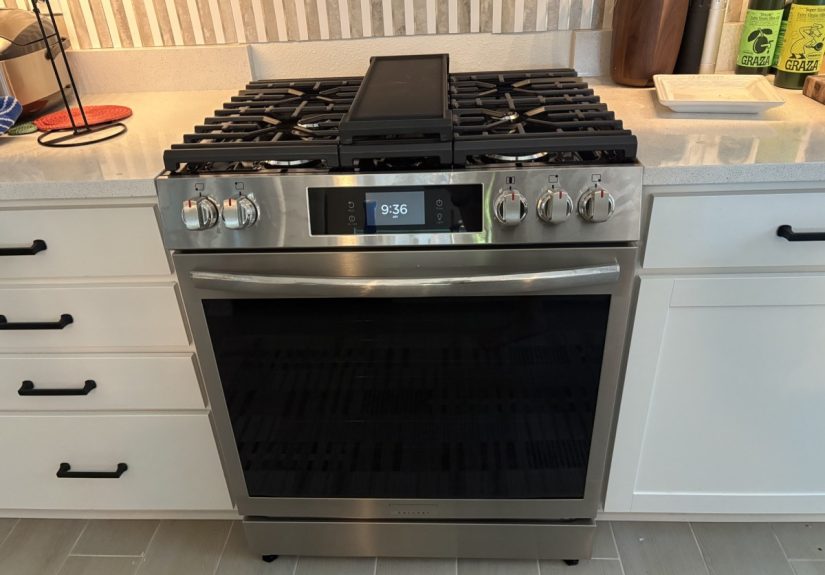
Frigidaire’s Gallery line now includes front-control gas, electric, and induction ranges with a dedicated Stone-Baked Pizza mode. That is the headline feature, and yes, it is a loud headline for good reason. Frigidaire designed these models to hit oven temperatures above 750°F with the included pizza setup, creating the intense heat needed for fast, blistered, restaurant-style pizza at home.
Unlike the usual “just buy a pizza stone and hope for the best” approach, this system is built around a specific mode plus included accessories: a Stone-Baked Pizza Shield, a 15-by-15-inch pizza stone, and a peel. In other words, you are not hacking a standard oven into becoming a pizza oven. Frigidaire is trying to make the range itself do the job on purpose.
That matters more than it sounds. A regular home oven can still make tasty pizza, but getting that crisp-chewy crust with real char is tough when you are capped at typical bake temperatures. High heat, a preheated stone, and top-and-bottom balance are the magic trio. Frigidaire’s pitch is simple: let the range handle the part that usually requires a separate countertop pizza oven.
Why the Pizza Feature Is Actually a Big Deal
Pizza nerds already know the drill. Better pizza is not only about dough or sauce. It is also about heat transfer. A hot stone or steel gives the underside of the pizza a concentrated blast of heat, helping the crust puff, brown, and crisp before the toppings turn into a swampy cheese puddle. That is why serious pizza guides keep pushing stones, steels, long preheats, and very high oven settings.
The Frigidaire Gallery range leans right into that logic. Instead of expecting you to finesse your way around a standard 500°F oven, it gives you a purpose-built pizza mode that can cook fresh pizza in as little as two minutes. That speed changes the result. It can create the kind of quick bake that gives thin crust pizza those lovely dark spots, better oven spring, and a more balanced texture between the top and bottom.
In plain English: the crust has a better chance of tasting like pizza and less chance of tasting like toasted bread wearing tomato sauce as a costume.
Design and Everyday Features Beyond Pizza
The smartest thing Frigidaire did here was avoid building a one-trick pony. If this were only good at making a flashy Margherita every other Friday, it would be a fun demo and an annoying purchase. Instead, the Gallery range packs in more than 15 cooking modes, including Air Fry, No Preheat, Slow Cook, Convection Bake, Steam Bake, Steam Roast, Air Sous Vide, Bread Proof, and Dehydrate.
That gives the range broader appeal than the product name suggests. Pizza may get the spotlight, but the supporting cast is strong enough to matter in daily life. If you bake bread, roast vegetables, crisp frozen snacks, or want a more flexible oven for family dinners, this lineup feels more complete than novelty-driven.
Electric Model Highlights
The electric version offers five elements, including a 3,200-watt EvenTemp element designed for faster cooking and more even heat distribution across the pan. For buyers who want the familiar feel of an electric smooth-top range without jumping to induction, this version may be the sweet spot. It is also one of the more approachable entries in the lineup if your home is already wired for electric and you just want the pizza feature without changing your cooking habits.
Induction Model Highlights
The induction version is the overachiever of the group. It adds a 3,600-watt Power Boil element, a TempLock setting that automatically maintains heat, and a 2-in-1 bridge element for griddles and larger cookware. Induction also keeps the area around the pan cooler, which makes cleanup easier and helps the kitchen feel a little less like a low-budget sauna. If you cook often and care about speed, precision, and easy maintenance, this is the version that looks the most modern.
Gas Model Highlights
The gas version keeps things familiar with five burners, including a powerful 18,000-BTU quick-boil burner and an integrated cast-iron griddle. If you prefer visible flame control and classic gas cooking, it still brings the pizza party. That said, there is an important buyer caution with the gas model right now, and I will get to that in a moment because that information absolutely deserves a seat at the table.
How Well Does It Actually Make Pizza?
This is where the Frigidaire Gallery range earns its attention. Third-party testing has been especially positive about the pizza mode itself. The most encouraging feedback is not just that the oven gets hot. It is that the resulting pizza can actually come out with the charred, crisp, pizzeria-style texture that many home ovens struggle to create.
That said, this is not a magic portal to Naples. The best results seem to come from thinner, lighter pizzas rather than thick, overloaded pies. That tracks with common pizza science. Fast, high-heat baking favors doughs and topping loads that can cook through quickly. If you pile on enough toppings to qualify your pizza for structural engineering review, the center may lag behind the crust.
There is also a learning curve. Launching dough onto a hot stone is still a skill. Even with a peel included, your first attempt may look less like “artisan dinner” and more like “cheese avalanche near heating element.” This is not unique to Frigidaire. It is just part of the home pizza game. A little flour or semolina on the peel, a properly stretched dough, and the classic pre-launch jiggle all help.
Once you get comfortable, though, the appeal becomes obvious. Fast cook times, real crust color, and the ability to make a fresh pizza in a regular kitchen without dedicating more counter space to another appliance? That is a strong value proposition.
What Reviewers and Owners Seem to Agree On
The strongest recurring theme in third-party reviews is that the pizza feature is not a gimmick. That is probably the single most important compliment this range could receive. It would have been easy for the oven to market well and cook like a press release. Instead, the feedback suggests the pizza mode genuinely delivers when you use it properly.
Reviewers also praise the range’s versatility. The cooking modes, step-by-step control prompts, and attractive front-control design make it feel more premium than its mainstream positioning suggests. Owners mention that the induction model especially feels modern and easy to keep clean, while professional testers have pointed out that the oven performs well across a variety of tasks beyond pizza.
But there are some real-world annoyances. The touch control panel can be a little sensitive. The storage drawer, while useful, is not enormous. And pizza mode is not totally foolproof; technique still matters. You will not get elite pizza by throwing a cold, soggy, overloaded pie into the oven and manifesting confidence.
The One Important Caveat: Gas Recall Information
Here is the part where the review takes off the oven mitt and puts on a responsible grown-up blazer. As of March 2026, the gas model in this Stone-Baked Pizza range family, GCFG3070BF, appears in a U.S. Consumer Product Safety Commission recall involving delayed ignition of the oven’s bake burner. That does not mean the entire concept is flawed, and it does not apply to the electric or induction versions in the same way. But it does mean buyers should be cautious.
If you are shopping today and want this pizza feature with the least friction, the electric and induction models are the easier recommendations. If you already own the gas version, checking the recall status and repair guidance should come before your next pizza night. Nobody wants “light leopard charring” to describe both the crust and the kitchen drama.
Is It Better Than Buying a Separate Pizza Oven?
That depends on what kind of cook you are. A dedicated outdoor or countertop pizza oven can go even hotter and may suit someone who makes pizza constantly. But separate pizza ovens take up space, add cost, and often do just one thing really well. The Frigidaire Gallery approach is more practical for households that want excellent pizza without turning the kitchen into an appliance adoption center.
If you already need a new range, this feature makes much more sense. You are not paying only for pizza. You are buying a full-size range with convection, specialty modes, and a pizza capability that meaningfully improves one of the most beloved foods on earth. That is a better story than buying a second appliance that ends up collecting dust next to the blender you swore would change your life.
Who Should Buy the Frigidaire Gallery Range with Stone-Baked Pizza?
It is a great fit if you:
- make homemade pizza regularly and want better crust without a separate pizza oven,
- need a new range anyway and want more than basic bake-and-broil features,
- like the idea of convection, air fry, proofing, and specialty modes in one appliance,
- want a modern front-control look without wandering into luxury-brand pricing.
It is probably not the best fit if you:
- rarely make pizza and would mostly ignore the signature feature,
- prefer entirely analog controls and dislike touch panels,
- want ultra-thick, topping-heavy pizzas more than thin, fast-baked styles,
- are considering the gas version without first checking the current recall remedy.
My Verdict
The Frigidaire Gallery Range with Stone-Baked Pizza is one of the more interesting mainstream kitchen releases in recent memory because it solves a real culinary problem instead of inventing a fake one. It does not promise smart-fridge wizardry or try to impress you with app-based nonsense when all you wanted was dinner. It focuses on heat, cooking flexibility, and a pizza result that most standard ranges simply cannot match.
What makes it compelling is not just the 750-degree bragging rights. It is that the pizza mode sits inside a feature-rich range that can still pull its weight on normal Tuesdays. The electric and induction models are especially appealing right now, with the induction version standing out for speed, precision, and cleanup. The gas version may still attract traditionalists, but the current recall issue makes it harder to recommend without qualification.
Overall, this is a thoughtful appliance for people who actually cook. If you love pizza, bake often, and want a range that feels more exciting than the average slab of stainless steel, the Frigidaire Gallery line deserves a serious look. For the right household, it is not just a range with a pizza mode. It is a range that makes weeknight cooking feel a little more fun and Friday night pizza feel a lot less compromised.
Extended Experience: What Living with This Range Feels Like
After the initial “wow, it makes pizza in about two minutes” reaction wears off, the more interesting question is what this range feels like to live with over time. That is where the Frigidaire Gallery Range with Stone-Baked Pizza becomes more than a flashy showroom story. The daily experience seems to be less about theatrical pizza reveals and more about how often you find yourself using features you did not expect to care about.
Picture a typical week. On Monday, you use No Preheat because you forgot the chicken existed until 6:18 p.m. On Tuesday, the oven handles roasted vegetables without turning them into dry little apology cubes. Wednesday becomes bread-proofing day because now you own a range with a proof setting and suddenly you are the kind of person who says things like “the dough needs a little time.” By Friday, pizza mode enters like a headliner with pyrotechnics.
That rhythm is what makes the appliance feel practical rather than precious. It is not demanding a special occasion every time you touch it. It just happens to be more entertaining than the average range. And yes, the pizza mode is the feature friends will ask about first. They may pretend to care about the finish, the control panel, or whether induction uses magnets. They are lying. They want pizza.
The nice thing is that pizza night actually feels accessible here. You are not hauling out a separate appliance, planning around weather, or sacrificing half your counter space. The stone, peel, and shield are already part of the setup. Once you get into the rhythm of preheating, stretching dough, adding toppings sparingly, and launching the pie cleanly, the process becomes strangely addictive. You start telling yourself you are just “testing another dough hydration,” which is a very elegant way of admitting you now eat pizza a lot.
There is, however, a small learning arc. Your first few launches may be clumsy. Dough sticks. Toppings drift. A once-proud circle becomes an abstract map of a country that does not exist. But that is normal. The included peel helps, and once you learn to keep the dough moving and not overload the center, the results improve fast. This is one of those appliances that rewards repetition. Not in an annoying way, but in a “hey, I am weirdly getting good at this” way.
Cleanup also plays a bigger role in the long-term experience than people expect. A feature-packed range can become irritating very quickly if every spill turns into an archaeological dig. Here, the smoother surfaces and Smudge-Proof finish help the range stay attractive with less fuss. On the induction version especially, the cooler surrounding surface makes wipe-downs easier during and after cooking. That may not sound thrilling, but after three pasta boil-overs and one cheese incident, it becomes thrilling enough.
The control panel seems to be one of those “love it with mild complaints” situations. On the plus side, it is bright, modern, and helpful, especially when guiding you through specialty modes. On the minus side, touch controls can be sensitive, and some cooks still prefer old-school knobs for everything. Still, if you are even moderately comfortable with contemporary appliances, this should feel manageable rather than frustrating.
What stands out most in the lived experience is that the range encourages more ambitious home cooking without becoming intimidating. It does not feel like restaurant equipment dropped into a suburban kitchen to judge your knife skills. It feels like a mainstream appliance that occasionally whispers, “Go on, make the fancy pizza.” That is a pretty charming quality.
And honestly, that may be the best reason to like it. Good appliances do not just cook food; they make you want to cook more often. The Frigidaire Gallery Range with Stone-Baked Pizza seems to do exactly that. It turns ordinary meals into slightly easier wins and pizza night into something that feels less like compromise and more like a minor household event. For a range, that is a very respectable trick.