Table of Contents >> Show >> Hide
- The Change That Sparked the Conversation
- Why This Note Was Actually Smart (Even If It Hurt)
- How the “Rebirth” Strategy Works on Screen
- The Business Context: Why Creative Notes Also Affect Revenue
- What Filmmakers and Content Creators Can Learn
- Extended Experience Section (Approx. ): What This Change Feels Like in Practice
- Conclusion
Let’s start with the dinosaur-sized headline: Gareth Edwards made a Jurassic movie as a tribute to Steven Spielberg, then got notes from Spielberg that basically said, “Less Spielberg, please.” If that sounds like the cinematic version of your favorite chef telling you to stop using salt, welcome to modern franchise filmmaking.
This deep-dive synthesizes reporting and interviews from major U.S. entertainment and news outlets, studio materials, and box office trackers to answer one question: what exactly changed in Jurassic World Rebirth, why it mattered, and what it tells us about storytelling in legacy franchises. The short answer? Edwards wanted affectionate callbacks; Spielberg wanted forward motion. The final movie tries to do bothand that tension is exactly why this conversation is so interesting.
The Change That Sparked the Conversation
Spielberg’s note: pull back the self-references
In interviews, Edwards described showing an early cut and receiving a major creative note: reduce or remove many of the overt callbacks to classic Spielberg films and Jurassic Park nostalgia beats. In plain English: fewer wink-at-the-camera references, fewer “remember this?” moments, less museum-style replay of the 1993 classic.
That note wasn’t minor. It affected tone, pacing, scene emphasis, and even how the movie framed suspense. Edwards has openly said he initially loaded the film with homages because he saw Rebirth as both a fresh chapter and a heartfelt thank-you note to the filmmaker who inspired him. Then came the trim pass.
Edwards’ response: disagree, adjust, then re-balance
Here’s where things get funand honestly, kind of relatable for anyone who’s ever submitted a draft and gotten “great work, now rewrite 40% of it.” Edwards has said he didn’t entirely abandon his instincts. He followed the note, removed plenty, tested the revised cut, and then restored a limited number of references where audience response suggested the movie needed a little more emotional bridge to the original.
The result wasn’t “all homage” or “zero homage.” It was a negotiated middle path: enough DNA from Spielberg’s legacy to satisfy longtime fans, but not so much that the new movie felt trapped in cosplay mode.
Why This Note Was Actually Smart (Even If It Hurt)
Legacy sequels usually overfeed nostalgia
Most modern franchise reboots panic in one of two directions:
- Too much nostalgia: every five minutes is a callback, and the present story loses oxygen.
- Too little continuity: fans feel disconnected and ask why this belongs in the franchise at all.
Spielberg’s reported concern appears to target the first problem. If you quote yourself too loudly, the film can feel like a tribute concert where the band forgot to write new songs.
“The audience has to leave hungry”
Edwards has also shared one piece of Spielberg advice that functions like a masterclass in blockbuster design: audiences should leave wanting more, not feeling overstuffed. That idea clashes with test-screening instincts (which often push for “more of everything”), but it’s a useful rule for suspense cinema. If every scene resolves every craving, you lose mystery, rewatch value, and momentum.
In other words, anticipation is part of satisfaction. You don’t just deliver spectacle; you meter it.
How the “Rebirth” Strategy Works on Screen
1) A cleaner story spine
The film’s core premise leans into a mission structure: a team attempts to retrieve genetic material from massive creatures in isolated equatorial zones where dinosaurs still survive. That gives the movie an objective, a clock, and escalating dangerthree things blockbuster scripts need more than 37 references to famous old shots.
2) New leads with familiar archetype energy
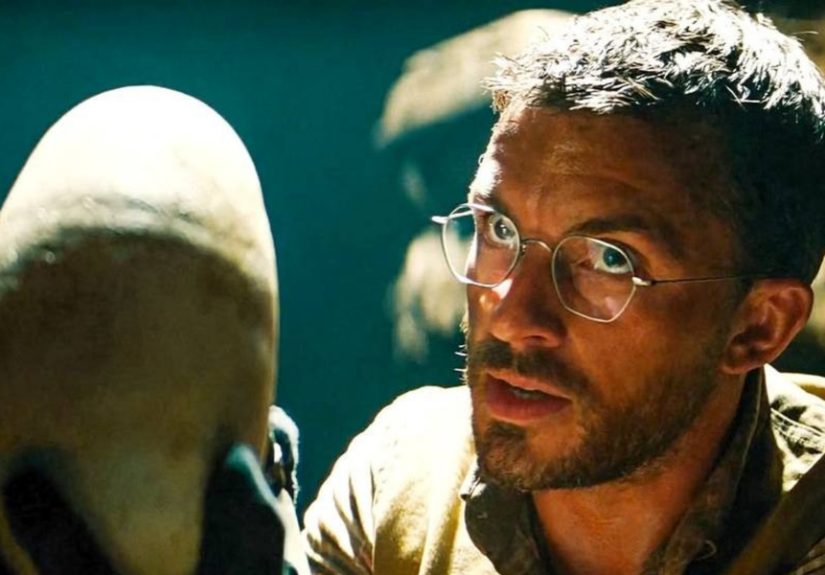
Scarlett Johansson, Mahershala Ali, and Jonathan Bailey anchor the story as a new central trio. The dynamic evokes old-school adventure chemistry without copy-pasting character templates from earlier entries. It’s familiar in rhythm, new in personality.
3) Practical location feel over full digital overload
A recurring theme in coverage is Edwards’ push toward real locations, less synthetic look, and tactile world-building. That choice aligns with his broader filmmaking style and with what many fans miss from earlier franchise installments: danger that feels physically present instead of purely rendered.
4) Controlled homage, not fan-service flood
Edwards still kept selective nods and visual echoes, but the final approach seems designed to avoid turning every sequence into an Easter egg scavenger hunt. The movie wants to be in conversation with Spielberg, not a tribute band covering Spielberg’s greatest hits back-to-back.
The Business Context: Why Creative Notes Also Affect Revenue
People sometimes pretend creative notes and box office are separate planets. They’re not. Pacing, callback density, and tonal clarity all influence audience reception and repeat viewing. Jurassic World Rebirth opened strong globally and posted major commercial numbers, while critical response was more mixed than euphoricexactly the kind of outcome where tone calibration becomes a long-term franchise issue.
That’s why the Spielberg-Edwards exchange matters beyond gossip. It’s an example of a legacy brand trying to thread three needles at once:
- Respect the classic era.
- Stay watchable for newer audiences who weren’t alive for opening weekend in 1993.
- Leave enough runway for future installments.
What Filmmakers and Content Creators Can Learn
For directors
- Nostalgia is seasoning, not the entree.
- Fight for what matters, not everything. Edwards’ process shows strategic compromise can preserve your voice.
- Test screenings are signals, not commandments. Audience feedback helped re-introduce select callbacks after over-correction.
For franchise producers
- Give new leads room to define an era.
- Anchor spectacle in a clear mission premise.
- Maintain brand memory without freezing the brand in amber.
For fans
If a movie feels less quote-heavy than expected, that may be intentionalnot because creators forgot what came before, but because they’re trying to keep the franchise alive rather than embalmed.
Extended Experience Section (Approx. ): What This Change Feels Like in Practice
Imagine two screenings of the same dinosaur movie.
In Screening A, every ten minutes is a throwback. A line echoes 1993. A camera move repeats a famous reveal. A prop appears just long enough for social media to circle it in red and post “did you catch this?” By the end, you’re smiling, surebut maybe also a little numb. You didn’t watch a story; you watched a memory montage with expensive teeth.
In Screening B, you still feel the old spiritadventure, dread, awebut it arrives through tension and character decisions instead of nonstop references. The movie lets you recognize the tone of classic Spielberg without requiring a trivia quiz. You leave thinking about the journey, not just the callbacks. That second screening is closer to what Edwards appears to be describing after the Spielberg note and subsequent re-balancing.
For longtime fans, this shift can feel weird at first. Nostalgia is emotionally efficient: one familiar image and your brain does the rest. But emotional efficiency can become emotional laziness if overused. The harder, better route is to generate new moments that feel worthy of the old ones. That takes more craft than simple imitation. It also takes confidence, because some viewers will always ask for “more references” even when the movie already works.
There’s also a subtle audience psychology angle here. When a franchise says “rebirth,” people secretly expect two opposite things at once: “give me the old magic” and “surprise me with something new.” Those demands conflict. If you satisfy only the first, critics call it derivative. If you satisfy only the second, core fans call it disconnected. The experience Edwards is describingtrim, test, restore selectivelylooks like a practical way to live inside that contradiction.
On a craft level, the most interesting part is how this kind of note affects scene design. A callback-heavy cut tends to emphasize recognition moments. A rebalanced cut tends to emphasize dramatic progression: setup, jeopardy, reversal, consequence. The first is a playlist; the second is a narrative engine. Both can be entertaining, but only one reliably builds franchise longevity.
Then there’s the theater feeling. Big adventure movies work best when tension breathes. If every beat is maximal, the audience’s nervous system levels out and “huge” starts feeling ordinary. Holding backleaving people “hungry”restores contrast. Quiet before chaos. Curiosity before reveal. Fear before release. It’s not less entertainment; it’s better pacing of entertainment.
The most human part of this whole story is that Edwards seems to have embraced a process many creators hate admitting: you can disagree with a note, try it anyway, learn from the outcome, and still protect your voice. That is not surrender; that is professional evolution. Especially in franchise filmmaking, where you inherit both fan expectation and executive pressure, this kind of adaptive decision-making is a survival skill.
So the experience tied to Spielberg’s change is bigger than one edit note. It’s the experience of moving from homage-first thinking to story-first executionwithout cutting the emotional cord to what made the franchise beloved in the first place. For viewers, that can mean fewer obvious winks but a stronger movie memory. For the series, it may be exactly the kind of course correction a “rebirth” needs.
Conclusion
Gareth Edwards’ comments about Spielberg’s Jurassic World Rebirth note reveal something crucial: legacy filmmaking isn’t a battle between old and newit’s a negotiation between reverence and momentum. The most effective franchises don’t erase their roots, and they don’t endlessly replay them either. They translate spirit into fresh storytelling.
In that light, Spielberg’s change request wasn’t anti-nostalgia. It was anti-overload. Edwards’ eventual compromiseless overt self-quotation, selective homage, stronger forward driveoffers a blueprint for anyone trying to extend a major franchise without turning it into a museum exhibit with jump scares.