Table of Contents >> Show >> Hide
- Why Portuguese Bath Mats Stand Out
- What Materials and Construction Styles Are Common?
- How to Choose the Best Handmade Portuguese Bath Mat
- Design and Styling Ideas for Handmade Portuguese Bath Mats
- Care Tips to Keep Portuguese Bath Mats Soft and Absorbent
- Common Buying Mistakes to Avoid
- Are Handmade Portuguese Bath Mats Worth It?
- Experiences With Handmade Portuguese Bath Mats (Extended Reader-Style Notes)
- Conclusion
There are bathroom upgrades that look fancy but do almost nothing (hello, decorative soap that nobody is allowed to touch), and then there are upgrades that genuinely improve your day. A great bath mat falls squarely into the second category. And if you’ve been browsing luxury bath linens lately, you’ve probably noticed a pattern: many of the best bath rugs and mats are made in Portugal.
That’s not an accident. Portugal has a long-standing reputation for high-quality cotton textiles, and that expertise shows up in bath mats that feel plush, absorb water quickly, and actually survive regular washing without turning into sad, flat pancakes. Better yet, there’s a growing interest in handmade Portuguese bath matsthe kind with woven texture, artisan character, and a “this looks way more expensive than it was” vibe.
In this guide, we’ll break down what makes Portuguese bath mats special, how to tell truly handmade options from factory-made luxury rugs, what features matter most, how to style them, and how to care for them so they stay soft and absorbent. If your current bath mat has the personality of a wet sponge, this is your sign.
Why Portuguese Bath Mats Stand Out
Portugal’s textile reputation is the real deal
In the bath-linen world, “Made in Portugal” is often shorthand for quality cotton construction, thoughtful finishing, and elevated design. Many premium bath brands sold in the U.S. source or produce their rugs in Portugal because the country is known for skilled mills, durable cotton weaving, and high-end finishing techniques.
You’ll see this across a wide range of productsfrom plush reversible bath rugs to textured cotton mats to hotel-style collections. In other words, Portuguese bath mats aren’t a one-style category; they’re a quality category.
“Handmade” vs. “Made in Portugal” not always the same thing
Here’s the important distinction shoppers miss: not every Portuguese bath mat is handmade. Some are woven or tufted in advanced mills (still excellent), while others are genuinely handwoven in small workshops using traditional methods. Both can be great. They just serve different goals.
- Handmade Portuguese bath mats often have a more artisanal look, visible texture variation, and a slightly casual, lived-in feel.
- Luxury Portuguese-made bath rugs tend to be more uniform, ultra-plush, and highly color-matched to designer towel collections.
Think of it like bread: one is a beautiful bakery loaf with character, the other is a perfectly engineered brioche from a world-class pastry chef. You win either way.
What Materials and Construction Styles Are Common?
Cotton is the star of the show
Most Portuguese bath mats are cotton-based, and for good reason. Cotton bath mats are absorbent, soft underfoot, and usually easier to wash than novelty materials. In premium collections, you’ll often see terms like combed cotton, long-staple cotton, or even Egyptian Giza cotton. These fibers are prized because they can feel softer, shed less, and hold up better over time when properly cared for.
If you’re shopping for a luxury Portuguese bath mat, the material label is one of the first places to look. A high-quality cotton rug can feel plush without being soggy, which is exactly what you want when stepping out of the shower.
Popular construction types
Portuguese bath mats come in several constructions, and each feels different:
- Tufted cotton rugs: Thick, plush, cozy underfoot. Great for primary bathrooms and cold tile floors.
- Woven cotton mats: Flatter, faster-drying, more artisan-looking. Ideal for minimalist or Mediterranean-style spaces.
- Reversible rugs: One side may be tufted while the other is looped or textured, giving you two feels in one.
- Cushioned or memory-foam systems: Some designs combine a cotton cover with a removable insert for extra comfort.
If your household includes kids, guests, or someone who treats the bathroom floor like a splash park, a reversible or machine-washable cotton option is usually the safest bet.
How to Choose the Best Handmade Portuguese Bath Mat
1) Start with the feel you want
Ask yourself what matters most: plush comfort, quick drying, or artisan style. If you want spa luxury, choose a denser pile or thicker cotton rug. If you want something that dries faster and layers nicely in a small bathroom, a flatter handwoven cotton mat may be the smarter pick.
A lot of shoppers accidentally buy for aesthetics only, then get annoyed when a super-thick rug stays damp too long in a busy bathroom. Beautiful? Yes. Practical for a family of four and one teenager who takes 40-minute showers? Depends.
2) Check for backing and slip resistance
Some Portuguese bath rugs include non-slip silicone backing or another anti-slip finish; others do not. This is a huge detail, especially on slick tile or stone floors. Plush rugs without backing can shift, which is less “luxury retreat” and more “surprise skating lesson.”
If your preferred mat doesn’t have a built-in non-slip backing, consider placing a separate rug pad underneath. This can improve stability and help preserve the rug’s shape.
3) Choose a size that matches your bathroom layout
Many premium bath mats come in classic sizes like 20" x 31" or 24" x 40", plus larger and square options. Before you order, measure your space with the door open. (Yes, really. This tiny step prevents the very common “my beautiful rug blocks the door” problem.)
Here’s a quick size guide:
- Small bathrooms: One compact mat in front of the sink or shower
- Double vanity: Two matching mats or a longer runner-style bath rug
- Primary bath: One plush mat by the shower + one by the vanity
- Guest bath: A smaller, easy-care cotton mat with quick-dry performance
4) Match your maintenance tolerance
Be honest with yourself: are you the kind of person who follows wash labels, or the kind who shoves everything in one load and hopes for the best? (No judgment. Mild judgment.)
If you prefer low-maintenance, prioritize a machine washable bath rug, cotton construction, and simple colors that won’t stress you out between washes. If you love a premium statement piece, make sure you’re willing to follow care instructions carefullyespecially regarding heat and fabric softener.
Design and Styling Ideas for Handmade Portuguese Bath Mats
Lean into texture, not just color
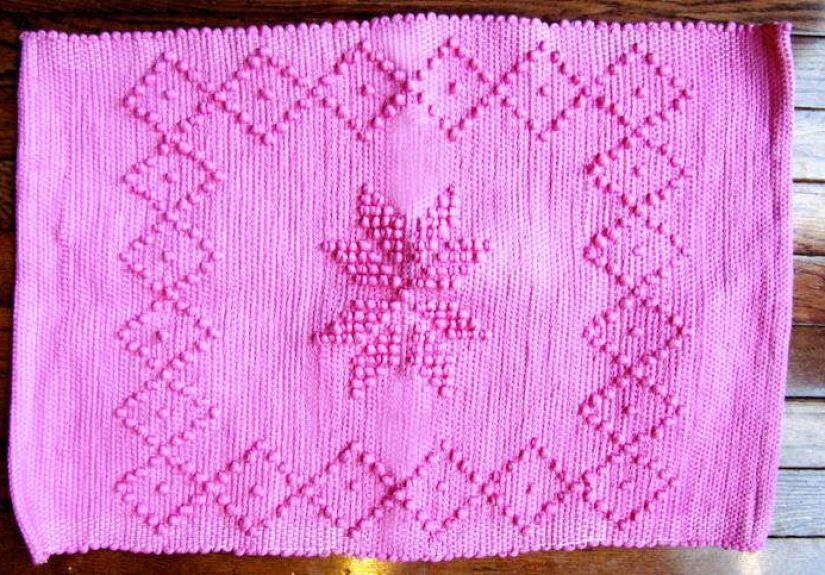
One of the biggest advantages of a handmade or Portuguese-made bath mat is texture. Even in a neutral palette, a woven diamond pattern, looped cotton surface, or sculpted pile can add visual interest without making the bathroom feel busy.
This is especially helpful in all-white bathrooms, where texture does the heavy lifting. A textured Portuguese cotton bath rug can make a plain bathroom feel intentional instead of “the rental came like this.”
Color strategies that actually work
- White or ivory: Crisp, hotel-inspired, timeless. Best if you’re committed to washing regularly.
- Soft neutrals (linen, sand, gray): Hide everyday wear a little better while staying calm and upscale.
- Blue tones: A natural fit for coastal, Mediterranean, and classic bathrooms.
- Deep colors: Great for dramatic powder rooms, but check care instructions to preserve dye quality.
Pro tip: If your towels are patterned or colorful, choose a bath mat with a subtle texture in a grounding tone. Let the towels be the drama. The mat can be the adult in the room.
Care Tips to Keep Portuguese Bath Mats Soft and Absorbent
Even the best bath mat will underperform if it’s cared for badly. The good news: most cotton Portuguese bath mats are not fussy. The key is consistency and avoiding a few common laundry mistakes.
How often should you wash a bath mat?
In a high-use bathroom, washing every 1–2 weeks is a smart baseline. If the mat stays damp, smells musty, or sees heavy traffic, wash it sooner. A guest bathroom mat can usually go longer, but don’t wait until it looks suspicious.
Best washing habits for cotton bath mats
- Wash according to the label (always the boss of the conversation).
- Wash cotton bath mats separately or with towels to reduce lint transfer and improve cleaning.
- Use a reasonable amount of detergentmore soap does not equal more clean.
- Avoid fabric softener and dryer sheets, which can coat fibers and reduce absorbency.
- Use low to moderate heat when drying to help protect cotton fibers and reduce shrinkage risk.
If your bath mat has rubber or non-slip backing, be extra careful with heat. High dryer temperatures can damage backing materials over time. Some mats are better air-dried, or at least finished with a low-heat cycle.
How to keep them looking new longer
- Hang the mat to dry between uses instead of leaving it in a damp heap.
- Rotate between two bath mats if possible (your future self will feel very organized).
- Shake out debris and lint regularly.
- Address mildew smells early instead of pretending they’ll “air out eventually.”
Common Buying Mistakes to Avoid
- Confusing “handmade” with “luxury.” Handmade is a style and process choice; luxury is a quality and finish choice. Some mats are both, but not all.
- Ignoring the backing. A gorgeous rug that slides around is not a bargain.
- Buying oversized without measuring. Your bath mat should not become a doorstop unless that was your aesthetic plan.
- Using fabric softener. It can reduce absorbency and leave residue on cotton fibers.
- Only buying one mat for a busy bathroom. Rotating two mats extends life and improves hygiene.
Are Handmade Portuguese Bath Mats Worth It?
If you care about comfort, craftsmanship, and a bathroom that feels polished without looking overdesigned, yeshandmade Portuguese bath mats (and high-quality Portuguese-made bath rugs) are absolutely worth considering.
They tend to offer a better combination of softness, absorbency, and longevity than bargain-bin alternatives, especially when you choose cotton-forward construction and care for them properly. You’re not just paying for a label; you’re paying for textile expertise, finishing quality, and daily comfort in one of the most-used rooms in your home.
And honestly, there’s something deeply satisfying about stepping onto a well-made bath mat first thing in the morning. It’s a tiny luxury, but tiny luxuries are how we survive Tuesday.
Experiences With Handmade Portuguese Bath Mats (Extended Reader-Style Notes)
After working with home textiles and talking to people who upgrade their bathrooms piece by piece, one pattern shows up again and again: a good bath mat changes how the whole room feels, even if nothing else changes. Several homeowners who switched from basic synthetic mats to Portuguese cotton rugs described the difference in the same way“the bathroom suddenly feels finished.” That’s not marketing fluff. It’s usually the combination of texture, weight, and better drape on the floor. A handmade-style woven Portuguese bath mat can make a standard vanity and plain tile look more intentional because the mat adds character without shouting.
In one small apartment bathroom, a flatwoven Portuguese cotton mat worked better than a plush pile rug simply because it dried faster and didn’t crowd the space. The owner originally wanted a thick spa-style bath rug but switched after realizing the room had poor ventilation. The woven mat ended up being the smarter pick: still soft enough, easier to wash, and much less likely to stay damp. This is a great example of choosing based on your bathroom’s habits, not just the catalog photo.
In a family bathroom, the “two-mat rotation” strategy made the biggest difference. One mat was always in use, and the other was either drying or being washed. This helped maintain the fluffy feel and reduced that musty smell that can creep in when a single mat gets overworked. Parents especially liked Portuguese cotton options because they were absorbent but still machine washable. The consensus was simple: the mat doesn’t have to be precious, but it should feel good and clean up well.
Guest bathrooms are another place where Portuguese bath mats seem to shine. People often choose a neutral, textured rugwhite, ivory, sand, or pale grayto create a hotel-style look. The mat becomes part of the “welcome” moment, especially when paired with neatly folded towels. It’s one of those details guests may not mention out loud, but they notice. And yes, someone will eventually ask where you got it while washing their hands and pretending they’re not redecorating your bathroom in their head.
Finally, shoppers who bought handmade Portuguese bath mats as gifts (especially for housewarmings and weddings) reported that they were unusually well-received. Why? Because they feel personal and practical at the same time. A handwoven cotton bath mat has that crafted, thoughtful quality, but it’s still something the recipient will use every single day. In a world full of random gift baskets and scented candles with aggressive names, that’s a win.
Conclusion
Whether you choose a truly handwoven piece or a premium Portuguese-made cotton bath rug from a luxury linen brand, the best option is the one that fits your bathroom’s traffic, drying conditions, and design style. Focus on cotton quality, construction, slip resistance, and care requirementsand you’ll end up with a bath mat that feels good today and still performs months from now.
In short: buy for real life, not just showroom life. Then enjoy your upgraded bathroom floor like the champion of sensible luxury that you are.