Table of Contents >> Show >> Hide
- What Hello Barbie Actually Was
- Why Hello Barbie Felt Revolutionary at First
- The Privacy Incision: Where the Trouble Started
- Then the Security Researchers Showed Up
- Hello Barbie as a COPPA Stress Test
- Why Hello Barbie Still Matters Today
- Experience Report: What Living With Hello Barbie Probably Felt Like
- Final Diagnosis
Some toys ask for batteries. Some ask for imagination. Hello Barbie asked for Wi-Fi, a companion app, a parent account, cloud processing, and a surprising amount of trust. That alone made her one of the most fascinating toys of the 2010s. She was pitched as the next step in play: a Barbie who could chat, remember details, tell stories, and make the doll aisle feel like Silicon Valley had wandered into the toy store wearing pink heels.
But the minute Hello Barbie stepped onto the operating table of public opinion, the scalpels came out. Privacy advocates worried she was turning childhood play into data collection. Security researchers worried the technology behind the doll could expose families to risks no plush bear or plastic tea set had ever posed. Parents were split between curiosity and a hard no. Kids, meanwhile, saw what they usually see first: a doll that talked back. And that was exactly the problem.
This is why Hello Barbie still matters. The doll was not just a toy. It was an early stress test for smart products aimed at children. Long before every speaker, watch, fridge, and toothbrush wanted to connect to the cloud, Hello Barbie raised a blunt question: what happens when a toy stops being only a toy and starts acting like a data-powered device? Spoiler alert: the answer was not all glitter and giggles.
What Hello Barbie Actually Was
A doll with a cloud backend in a pink blazer
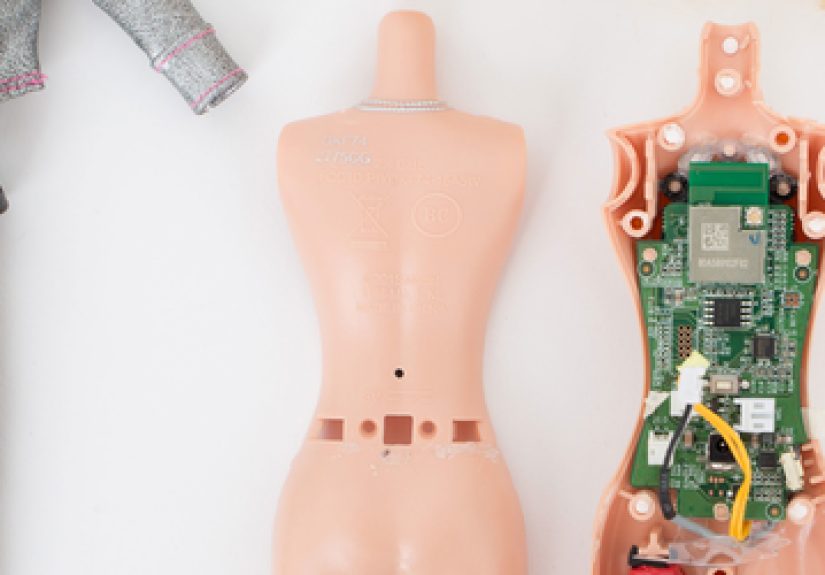
Hello Barbie launched as a connected doll designed for kids ages 6 and up. Mattel described her as a two-way conversational toy powered by Wi-Fi and speech recognition. The setup involved downloading a companion app, creating a parent account through ToyTalk, and connecting the doll to home internet. Once configured, a child could press the belt buckle to talk, release it, and hear Barbie respond. In other words, Barbie did not become sentient. She became networked.
That distinction matters. Hello Barbie was not continuously chatting on her own like a movie robot with opinions about your curtains. Mattel’s own privacy materials emphasized that she was not always on and that speech recognition activated only when the talk button was held down. The company also said recorded conversations could be deleted by parents, and that the toy did not include advertising content. From a corporate messaging standpoint, Hello Barbie was presented as careful, managed, and family friendly. From a cultural standpoint, she still sounded like a microphone wearing lip gloss.
The sales pitch was easy to understand
The appeal was obvious. Mattel promoted more than 8,000 lines of recorded dialogue, with Barbie able to ask follow-up questions, tell jokes, play games, and remember likes and dislikes. That gave the doll a friend-like personality, which was exactly the magic trick. Traditional dolls are projection machines. Kids supply the voices, the conflicts, the adventures, and the weirdly dramatic arguments between dolls over imaginary cupcakes. Hello Barbie flipped that formula by supplying some of the personality herself.
It was also a premium product. Reports at the time put the doll around $75, far above the cost of a standard Barbie. That higher price did not just buy a toy. It bought a service relationship. Parents were not merely purchasing plastic and fabric. They were buying into a miniature connected ecosystem that relied on software, servers, and continued support. That business model, as later events showed, would become just as important as the doll’s face mold.
Why Hello Barbie Felt Revolutionary at First
Because she made toy tech feel personal
Lots of gadgets can answer questions. Hello Barbie was designed to do something slightly sneakier and much more emotionally powerful: make responses feel relational. A child was not just asking a device for the weather. A child was talking to Barbie. That brand familiarity changed everything. A smart speaker on the kitchen counter is a tool. A doll in a child’s bedroom is a companion, even when grown-ups know perfectly well there is a server farm somewhere behind the curtain.
That blend of toy logic and tech logic was what made Hello Barbie culturally explosive. She sat at the intersection of play, branding, artificial intelligence, and child development. To enthusiasts, she looked like the future of storytelling. To critics, she looked like the future of surveillance wrapped in blonde hair. Both reactions made sense.
And because Mattel needed a hit
Hello Barbie did not appear in a vacuum. Barbie was facing market pressure, changing tastes, and stronger competition in the girls’ toy aisle. A talking, adaptive doll offered Mattel a chance to make its most famous product feel fresh again. That context helps explain the ambition behind the launch. This was not a tiny experimental gadget from an obscure startup. It was one of the world’s biggest toy brands trying to prove it could still define the next era of play.
The Privacy Incision: Where the Trouble Started
Critics were not worried about chatter alone
Privacy advocates did not object merely because Barbie talked. They objected because the conversation traveled. When a child spoke to Hello Barbie, audio was sent over the internet to ToyTalk’s cloud-based systems for processing. That transformed a bedroom conversation into a data event. Groups like the Campaign for a Commercial-Free Childhood, now Fairplay, argued that this blurred the line between private play and corporate collection. Their critique had moral force because childhood has long been treated as a protected zone, not a convenient onboarding funnel for connected services.
The public language around the toy became sharp very quickly. Critics called her creepy, eavesdropping, and invasive. That may sound dramatic until you remember what the product promised: the doll could remember personal details and adapt over time. Suddenly, play looked less like make-believe and more like profile building. Even if the company said the data would not be used for advertising, the core anxiety remained. Once a child’s voice leaves the room, families are being asked to trust the company’s storage, policies, and future decisions.
Mattel’s reassurances were real, but not sufficient for everyone
To be fair, Mattel and ToyTalk did not simply shrug and say, “Good luck, parents.” The company stated that parental consent was required, that the microphone was not always active, and that parents could manage or delete recorded conversations. Those are not trivial protections. In fact, later research on smart toys noted that Hello Barbie had comparatively robust permissions for parents. But a permission flow is not the same thing as genuine comprehension, especially when children themselves may not understand what is happening.
That was the heart of the issue. Hello Barbie’s privacy model centered heavily on adult control. Yet the social bond was aimed at the child. The child did the talking. The child built the trust. The child was likely to view Barbie as a friend, not a cloud-connected endpoint with terms of service somewhere behind the curtain. That mismatch was always going to be a problem.
Then the Security Researchers Showed Up
And the story got much worse
If the privacy debate made Hello Barbie controversial, the security findings made her look fragile. In late 2015 and early 2016, researchers reported multiple vulnerabilities tied to the doll’s surrounding systems. Coverage in major outlets summarized the risks in plain English: weaknesses in the app, setup flow, and cloud-related infrastructure could have exposed families to eavesdropping, credential theft, or unauthorized access.
One widely reported issue involved a hardcoded password in digital certificates used by the app. Another report said that during setup, a phone could connect to an unsecured Wi-Fi network that simply included the word “Barbie” in its name. That is the sort of detail that makes security professionals reach for aspirin. You do not need to be a hacker movie villain to see why a child’s connected toy should not be that trusting.
The vulnerability lists were not cute
A later technical analysis identified 14 vulnerabilities, including weak passwords, lack of brute-force protections, unencrypted communication over HTTP in some situations, audio files accessible without authentication, and configuration weaknesses during pairing mode. That list reads less like “minor bug fixes” and more like a syllabus for how not to build confidence in a connected child-facing product. Even where some issues were reportedly fixed, the broader impression stuck: Hello Barbie was part of an industry moving faster than its security habits.
This matters because children’s products carry a different ethical weight than ordinary gadgets. When a smart lightbulb acts silly, you roll your eyes and reboot it. When a child’s toy raises the possibility of exposed audio, weak authentication, or unsecured setup behavior, the reaction is very different. Parents are not just thinking about convenience. They are thinking about intimacy, vulnerability, and home life.
Hello Barbie as a COPPA Stress Test
Why the law kept hovering in the background
The Children’s Online Privacy Protection Act, or COPPA, exists to give parents control over what information is collected from children under 13. Hello Barbie did not create that legal framework, but she became an unusually vivid example of why it matters. The doll made voice recording, parental consent, storage, deletion, and transparency feel immediate rather than abstract. It is one thing to discuss data collection in a browser. It is another to picture a child whispering to a toy.
That legal relevance did not fade with the doll. The FTC later issued additional guidance on how COPPA applies to voice recordings, and the agency has since updated the rule to respond to newer technologies and online practices. In that sense, Hello Barbie now reads like an early chapter in a much longer story. The product was ahead of the social comfort level, and not quite ahead enough of the security and governance demands that came with it.
The biggest lesson was not anti-tech
The lesson of Hello Barbie is not that smart toys are inherently evil, or that children should only play with wooden blocks carved under a full moon. The real lesson is that when a toy behaves like software, it must be held to software standards plus toy standards. It has to be fun, safe, durable, transparent, and secure. That is a brutally high bar. Hello Barbie helped show just how hard that bar is to clear.
Why Hello Barbie Still Matters Today
Because the smart toy problem did not disappear
Hello Barbie may be discontinued, but the central problem never left. Kids still interact with voice systems, AI assistants, connected learning products, and app-linked devices. The question is no longer whether toys will become computational. They already have. The real question is whether the adults building them understand that children experience these systems differently than adults do.
A grown-up can usually separate interface from intention. A child may not. A child may hear friendliness and assume trustworthiness. A child may see a doll and forget the database. That gap between emotional design and technical reality is where many of the hardest problems live. Hello Barbie did not invent that tension, but she put it in a pink box and sold it at retail.
Experience Report: What Living With Hello Barbie Probably Felt Like
The experience of Hello Barbie was likely divided into three acts: amazement, awkwardness, and unease. First came the wow factor. A doll answered back. Not with a single canned phrase pulled from the old-school talking-toy playbook, but with something that seemed conversational. For a child, that could feel magical. Barbie did not just exist as a character anymore. She acknowledged you. She asked questions. She remembered details. She had the rhythm of a friend, even if the actual machinery behind that feeling was servers, scripts, and recorded lines.
Then came the awkward part, which is where the future often reveals itself as slightly annoying. Before the magic started, a parent had to do the setup dance: app download, account creation, internet connection, permissions, and battery management. That is not exactly the classic doll experience. There is something hilariously modern about giving a child a toy and first needing to negotiate with Wi-Fi like you are onboarding a tiny conference-room speaker. The fantasy said “best friend.” The setup said “consumer electronics.”
Once the doll was running, the social experience got more complicated. Hello Barbie invited the sort of disclosure kids naturally offer to familiar characters. Children often tell dolls about school, favorite foods, pets, fears, and daily dramas because dolls have always been safe containers for imagination. But Hello Barbie changed the stakes. Suddenly, those little confessions were not just floating in pretend space. They were part of a recorded interaction. Later research on smart toys found that many children did not fully realize such toys were recording them. That detail is crucial. The emotional experience of talking to the doll was not matched by a child’s understanding of where the conversation went.
For parents, that likely produced a split-screen reaction. On one side was delight: look, the toy works, she is chatting, this is impressive, and maybe it even feels educational or engaging. On the other side was a low hum of discomfort. What exactly is being stored? How long is it kept? Who can access it? What happens if another child comes over and starts talking? What happens if the company changes its practices later? Those are heavy questions to drag into a playroom, but Hello Barbie dragged them in anyway.
There was also an odd emotional asymmetry built into the product. The doll was designed to feel intimate, but the control tools lived mostly with adults. Parents could consent, review, manage, and delete. Children, however, were the ones forming the relationship. That can create a strange household dynamic in which the grown-up becomes both IT department and privacy officer while the child just wants Barbie to stop asking questions about hobbies and start participating in a highly urgent imaginary pool party.
And finally came the unease that follows many “smart” products once the novelty fades. A normal doll gets more charming with wear because imagination fills in the blanks. A connected doll gets more complicated with time because support, security, updates, and trust become part of the ownership experience. When Mattel later posted that Hello Barbie had been discontinued and the service would no longer work, it underscored the biggest experience lesson of all: families had not simply bought a doll. They had rented a relationship between plastic, software, and the cloud. That is a very different kind of toy box.
Final Diagnosis
Hello Barbie was bold, clever, and deeply revealing. She showed how easily a beloved toy can become a platform, how quickly delight can collide with doubt, and how badly the connected product world needs stronger design discipline when children are involved. The doll was not a failure because talking toys are a bad idea. She was a warning because the technology required more than sparkle, branding, and novelty to deserve the intimacy it asked for.
Under the knife, Hello Barbie looks less like a futuristic triumph and more like a cultural biopsy. Slice through the marketing, and you find the modern dilemma in miniature: people love responsive technology, but they hate feeling watched by it. Adults may tolerate that tension for themselves. They are much less willing to tolerate it for their kids. That is why Hello Barbie remains memorable. She was not just a doll that talked. She was the moment many people realized that the toy aisle had quietly entered the age of data.