Table of Contents >> Show >> Hide
- The bagel truth nobody wants to hear (but everybody needs)
- Joanna Gaines’ “unfussy” blueprint for fluffy, chewy bagels
- Want “extra fluffy”? Here’s what’s really doing the heavy lifting
- Toppings: where Joanna turns bagels into a personality
- Bonus: the Magnolia-style “everything bagel” moves (for extra bakery vibes)
- Common bagel problems (and the fixes that actually work)
- How to turn Joanna’s method into a repeatable weekend ritual
- Real-life bagel-making notes from the “Joanna-style” method (extra experience section)
- The dough will look tightand that’s a good sign
- Overnight rest is the “set it and forget it” confidence boost
- Shaping gets easier the second you stop overthinking it
- The boil is the weird part… until you see the shine
- Toppings are best applied with urgency
- The bake smells like a bakery and a reward system
Bagels have a reputation. They’re the high-maintenance brunch diva of baked goods: part bread, part craft project, part “why is my kitchen covered in flour and feelings?” But Joanna Gaines’ approach to bagels is refreshingly… normal. Not “I own a professional steam-injected deck oven” normalmore like “I have a mixer, a pot of water, and a plan” normal.
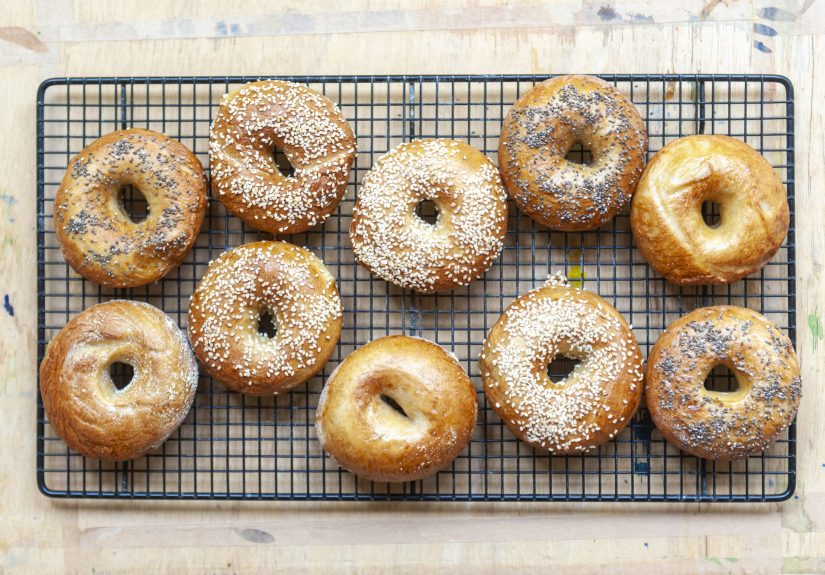
Her bagels are fluffy on the inside, glossy on the outside, and just chewy enough to remind you that yes, this is a bagelnot a round dinner roll in costume. The best part? The method isn’t loaded with fussy steps or obscure ingredients. It’s built on a few smart moves that stack the odds in your favor every single time.
The bagel truth nobody wants to hear (but everybody needs)
Fluffy bagels aren’t an accident. They’re the result of three things working together:
- Structure (strong flour + gluten development)
- Fermentation (time builds flavor and lift)
- The boil (the iconic crust-maker that locks in moisture)
Joanna’s method nails all threewithout turning your weekend into a science fair.
Joanna Gaines’ “unfussy” blueprint for fluffy, chewy bagels
Joanna has shared a super-straightforward sourdough bagel formula that uses just five ingredients. In plain English: you mix a stiff-ish dough, let it rest overnight, shape it in the morning, give it a quick honey bath, then bake until golden. That’s it. No dramatic pauses. No bagel therapy required.
Step 1: Start the night before (because time is the secret ingredient)
Overnight fermentation is where “pretty good” becomes “why are these better than the café?” When dough rests for a long stretch, two magical things happen:
- Flavor deepens (fermentation creates complexity you can’t fake with extra salt)
- Crumb gets softer (a well-rested dough tends to bake up more tender and plush)
Joanna’s sourdough version is famously simple: water, active starter, bread flour, salt, and honey. If you like baking by weight (and bagels do), her approach is especially friendly. The dough is mixed until smooth, then covered and left at room temperature overnightbasically letting tomorrow’s breakfast do the work while you sleep.
Step 2: Use bread flour (yes, it matters)
If fluffy bagels had a foundation, it would be high-protein flour. Bread flour has more protein than all-purpose flour, which helps build a stronger gluten network. That gluten gives bagels their signature chew and helps them rise with a rounded, airy interior instead of spreading into flat little bagel pancakes.
Think of bread flour as the bagel’s spine. Without it, your dough can still workbut it’s more likely to slump, tear during shaping, or bake up soft in a “hamburger bun” way rather than a “proper bagel” way.
Step 3: Shape gently (don’t bully the dough)
The way you shape bagels decides whether they bake up tall and fluffy or dense and tight. Joanna’s shaping style is wonderfully low-drama: divide the dough, form smooth balls, let them rest, then open the center by hand. No aggressive rolling required.
Here’s the trick: after you form the dough balls, let them rest. Resting relaxes the gluten, which makes shaping easier and helps prevent tearing. Then, instead of twisting the dough into a ring like you’re wringing out a towel, you create the hole with your fingers and gently stretch it. The dough should feel cooperative, not combative.
Pro tip: Make the hole slightly larger than you think you need. Bagels love to “heal” in the ovenmeaning the hole shrinks as they puff.
Step 4: The honey bath (aka the gloss-and-chew upgrade)
Boiling is what separates bagels from other breads. It gelatinizes the outside of the dough, creating a thin “skin” that bakes into a shiny, chewy crust. Joanna sweetens the boiling water with honey, which helps with browning and gives the crust that bakery-style sheen.
Timing matters. Too short and your crust won’t develop properly. Too long and the exterior can get overly thick and tough. Joanna’s method lands in a sweet spot: long enough to set the crust, short enough to keep the interior pillowy.
Right after the boil, while the bagels are still warm and slightly pliable, you can do a tiny “reshape” nudgebasically a gentle tuck to keep them nicely rounded. This is a small move that pays off big in looks (and confidence).
Step 5: Bake hot for a tall rise and golden finish
High heat finishes the job. A hot oven gives you strong oven spring (that final lift) and sets the crust quickly so the bagels don’t spread. Joanna’s sourdough bagels bake at a classic bagel-friendly temperature until glossy and deeply golden.
If your bagels look pale, you likely need either:
- a slightly hotter oven (or more accurate oven temperature),
- a bit more sugar/honey/malt in the boil, or
- a longer bake time.
Want “extra fluffy”? Here’s what’s really doing the heavy lifting
Joanna’s method is simple, but it’s not random. It works because it quietly checks all the boxes that bagel experts swear by:
1) Stiff-ish dough = better shape + better chew
Bagel dough is typically lower hydration than sandwich bread. That firmer texture helps the bagels hold their shape during boiling and baking. It also encourages that dense-but-not-heavy bitethe one that makes cream cheese feel like a life decision.
2) Long fermentation = softer crumb and deeper flavor
Whether it’s sourdough resting overnight at room temp or shaped bagels chilling in the fridge, long fermentation gives you more than flavor. It also helps the dough relax and expand in a controlled way, which supports a more open, fluffy interior.
3) The boil locks in moisture
The boil is the bagel’s secret handshake. It sets the exterior, which means the inside steams while baking. That steam contributes to a softer, fluffier crumbespecially when the dough has fermented well.
Toppings: where Joanna turns bagels into a personality
Classic toppingssesame, poppy, everything seasoningare always a win. But Joanna also leans into a sweet option: a brown sugar cinnamon-style topping that bakes up crisp and caramelized. It’s the kind of topping that makes you “accidentally” skip toasting because you don’t want to mess up the crunch.
How to make toppings actually stick: Top your bagels immediately after boiling while the surface is still tacky. If you wait too long, the exterior dries and your seeds will slide off like they’re late for an appointment.
Bonus: the Magnolia-style “everything bagel” moves (for extra bakery vibes)
Joanna’s world also includes a more traditional, bakery-inspired approach to everything bagels seen in Magnolia recipes: a sponge (pre-ferment) for flavor, malt syrup in the dough, and a boil that can include baking soda and malt for a bold crust and deep color.
If you want to take the Gaines-style vibe and go full bagel nerd (in the best way), borrow these ideas:
- Use a sponge/pre-ferment to build flavor before the final dough even starts.
- Add malt syrup for classic bagel aroma and color.
- Cold-proof shaped bagels overnight (or even up to a day or two) for extra depth.
- Do a float test: a properly proofed bagel should float in water before boiling.
These are the small upgrades that make homemade bagels taste like they came from a place with a line out the door.
Common bagel problems (and the fixes that actually work)
My bagels came out flat
- Likely cause: over-proofed dough, weak flour, or an oven that’s not hot enough.
- Fix: use bread flour, don’t let shaped bagels get too puffy, and verify your oven temp with an oven thermometer.
My bagels are tough (like jaw workout tough)
- Likely cause: boiled too long or dough too dry.
- Fix: shorten the boil and weigh your flour for accuracy. Bagel dough should be firm, not crumbly.
My bagels didn’t brown
- Likely cause: boil water not sweetened, oven temp low, or bake time too short.
- Fix: add honey (or malt) to the boil and bake until truly golden, not “lightly tan.”
My toppings fell off
- Likely cause: you topped too late.
- Fix: top right after boiling, or lightly brush with egg white for extra grip if you’re going for heavy toppings.
How to turn Joanna’s method into a repeatable weekend ritual
If you want fluffy bagels on autopilot, here’s a simple timeline you can actually live with:
- Night: mix dough, cover, let rest overnight.
- Morning: divide, shape into balls, rest, form holes.
- Mid-morning: boil in honey water, top immediately, bake hot.
- After: cool a bit (if you can), then slice and celebrate.
Bagels freeze beautifully, too. Slice them first, freeze, then toast from frozen. Future-you will feel like a genius with excellent taste.
Real-life bagel-making notes from the “Joanna-style” method (extra experience section)
The first time you try this, you’ll learn something important: bagel making is less “hard” and more “oddly specific.” You’re going to boil bread on purpose. You’re going to wonder if you’ve lost your mind. And then you’ll pull a tray of glossy, golden bagels out of the oven and immediately understand why people do this voluntarily.
Here’s what the experience usually feels like when you follow Joanna’s simple, fluffy-bagel playbookespecially if you’re new to bagels but not new to wanting good breakfast:
The dough will look tightand that’s a good sign
If you’re used to soft sandwich-bread dough, bagel dough can feel like it’s refusing to be your friend. It’s firmer, smoother, and less sticky. That firmness is what helps the bagels keep their shape during boiling. When you’re mixing, you might be tempted to add extra water just to make it “easier.” Resist the urge. Bagel dough is supposed to have structure. The payoff is a taller bagel with that fluffy, chewy interior instead of a wide, soft round.
Overnight rest is the “set it and forget it” confidence boost
There’s something deeply satisfying about mixing dough at night and waking up to a kitchen that smells like possibility. The dough often looks more relaxed and alive in the morningslightly puffed, smoother, and easier to handle than it was the night before. If you’ve ever had bread dough that felt chaotic, this is the opposite: it’s calm. Like it went to bed early and drank water.
Shaping gets easier the second you stop overthinking it
Most bagel anxiety happens right here. You’ll stare at those dough balls and think, “If I mess up the hole, will it still be a bagel?” (Answer: yes. The bagel police are not coming.) The gentle hand-shaped hole method is forgiving. If the hole looks too small, stretch it a bit. If it looks too big, it’ll probably shrink in the oven anyway. The big win is keeping the dough intactno tearingso the bagel bakes with a smooth exterior.
The boil is the weird part… until you see the shine
Boiling dough feels like a culinary prank the first time you do it. But the moment a bagel floats and its surface turns slightly taut and glossy, you’ll get it. The honey-sweetened water adds a subtle browning boost, and the boil sets the crust so your bagel bakes up with that classic chew. The key experience note here: don’t overcrowd the pot. Give the bagels space. They puff a little, and you want to flip them without wrestling a bagel traffic jam.
Toppings are best applied with urgency
Right after boiling, your bagels are sticky in the best possible waylike nature’s glue. This is when everything seasoning, sesame seeds, or cinnamon-sugar goodness wants to move in and pay rent. If you wait, the surface dries and toppings slide off. The “Joanna-style” rhythm is basically: boil → drain briefly → top immediately → bake. It’s fast, but it’s also the moment you feel like you actually know what you’re doing.
The bake smells like a bakery and a reward system
When the bagels hit the oven, the transformation is quick: they rise, they bronze, they get shiny, and suddenly your kitchen smells like you deserve compliments. The hardest part is letting them cool long enough to slice without squishing the crumb. If you slice too early, the steam can compress the interior and make it gummy. If you wait just a bit, you’ll get that perfect fluffy interiorsoft, but not wetready for cream cheese, butter, or a dangerously thick swipe of strawberry jam.
After you make these once, the experience changes. The next time, you’ll move with more confidence: you’ll recognize properly proofed dough, you’ll shape faster, and the boil won’t feel like a fever dream. And then it becomes a ritualone that starts as a weekend project and ends as “we don’t buy bagels anymore because ours are better.”