Table of Contents >> Show >> Hide
- What a Low-Dose CT Scan Is (and What It’s Not)
- What “Accuracy” Really Means in Lung Cancer Screening
- What the Biggest Studies Say About LDCT Accuracy
- So… How Accurate Is LDCT in the Real World?
- False Positives: Why They Happen (and Why They’re Not Automatically a Disaster)
- False Negatives: Can LDCT Miss Lung Cancer?
- Radiation: Does “Low Dose” Really Mean Low?
- What to Ask Your Clinician If You’re Considering Screening
- The Bottom Line on LDCT Accuracy
- Experiences With LDCT Screening: What People Commonly Report (and What It Feels Like)
- SEO Tags
Low-dose CT (LDCT) lung cancer screening is a bit like a smoke alarm: it’s designed to catch trouble
early, but sometimes it beeps because you made toast. The key question isn’t just “Does it find lung
cancer?”it’s “How often is it right, how often is it wrong, and what happens next?”
In this guide, we’ll break down LDCT accuracy in plain American English: sensitivity, specificity, false
positives, false negatives, and what the biggest studies (and today’s real-world screening programs)
tell us. We’ll also talk about why “accuracy” depends a lot on who gets screened and
how the results are managed.
What a Low-Dose CT Scan Is (and What It’s Not)
A low-dose CT scan is a quick CT imaging test of the chest that uses less radiation than a standard
diagnostic chest CT. It creates detailed cross-sectional images that can spot small lung nodulestiny
“spots” that may be benign scars, old infections, inflammation… or (sometimes) early cancer.
Important: LDCT screening is intended for people at higher risk (mostly based on age and smoking
history). It’s not a general “just to be safe” scan for everyone. If you’re low risk, the odds of a false
alarm go up, and the potential benefit goes down.
What “Accuracy” Really Means in Lung Cancer Screening
When people ask, “How accurate is LDCT?” they usually mean, “Can it reliably find lung cancer early?”
Clinicians and researchers measure that with a few stats:
Sensitivity: How often the scan catches cancer when it’s actually there
High sensitivity means fewer missed cancers (fewer false negatives). In major trial data,
LDCT sensitivity has been reported in the low-to-mid 90% range under trial definitions of a “positive
screen,” meaning LDCT caught most cancers present at screening time.
Specificity: How often the scan stays negative when cancer is not there
Higher specificity means fewer false positives (fewer “uh-oh” results that turn out to be
nothing). In screening, specificity matters because most people screened do not have lung cancer,
even if they’re high risk.
PPV and NPV: The “So what does my result mean?” numbers
- Positive Predictive Value (PPV): among “positive” screens, how many are truly cancer?
(This is where screening can feel like it cries wolf.) - Negative Predictive Value (NPV): among “negative” screens, how many truly do not have cancer?
(NPV is typically extremely high in LDCT screening.)
What the Biggest Studies Say About LDCT Accuracy
Two large randomized trials provide the backbone of what the U.S. uses to recommend screening:
the National Lung Screening Trial (NLST) and the NELSON trial. These trials weren’t just about
“finding nodules.” They looked at what really matters: deaths from lung cancer.
NLST: High sensitivity, lower specificityand a meaningful reduction in lung-cancer deaths
In NLST-era definitions (where a relatively small nodule could count as “positive”), LDCT had very
strong sensitivityaround 93–94% across screening rounds in published analyseswhile specificity
varied and could be much lower than chest X-ray. That tradeoff is the classic screening bargain:
catch more early cancers, but accept more false alarms.
Here’s the headline that made LDCT famous: in NLST, annual LDCT screening was associated with about a
20% reduction in lung cancer–specific mortality compared with chest X-ray in a high-risk population.
That’s why LDCT screening exists in the first place.
False positives: common, but usually resolved without surgery
In NLST, many screenings were called “positive,” yet the vast majority did not turn out to be cancer.
In other words, false positives were frequent under the trial’s original “positive screen” rules.
This is where people sometimes feel like screening is a drama series with too many cliffhangers.
The good news: most false-positive results are worked up with additional imaging (repeat CT scans at
specific intervals) rather than immediate invasive procedures. Complication rates from follow-up were
low in published analyses, with most complications occurring in people who actually had lung cancer
and underwent diagnostic or treatment procedures.
NELSON: Different approach, still shows benefit
The NELSON trial (which used volume-based nodule assessment and different screening intervals)
also found a reduction in lung cancer mortality among high-risk participants. While the exact numbers
and methods differ from NLST, the overall message is consistent: LDCT screening can save lives
when targeted to the right population and managed well.
So… How Accurate Is LDCT in the Real World?
Real-world accuracy depends on three big factors:
(1) who gets screened, (2) how radiologists define a “positive” result, and
(3) how follow-up is handled.
1) Who gets screened: eligibility dramatically changes “accuracy”
If you screen people at higher risk, the chance that a concerning finding is truly cancer goes up, and
the overall benefit improves. That’s why U.S. recommendations focus on age and smoking history.
- USPSTF (widely used for insurance coverage decisions):
annual LDCT for adults ages 50–80 with a 20 pack-year smoking history who currently smoke or quit within the past 15 years,
stopping once someone has been smoke-free for 15 years or can’t/won’t undergo curative surgery. - American Cancer Society (2023 update):
yearly LDCT for people ages 50–80 who smoke or used to smoke and have at least a 20 pack-year history,
emphasizing shared decision-making and overall health status. - Medicare coverage (Centers for Medicare & Medicaid Services):
coverage criteria include age 50–77, being asymptomatic, smoking history, and a counseling/shared decision-making visit and order for screening.
2) How “positive” is defined: modern systems reduce false positives
After NLST, medicine learned a crucial lesson: if you label very small nodules as “positive,” you catch
more potential cancersbut you also trigger a lot more follow-up for benign findings.
Many U.S. screening programs use standardized reporting systems such as Lung-RADS (from the American College of Radiology).
In retrospective NLST analyses, applying Lung-RADS substantially lowered false-positive rates compared to the original NLST
criteriaespecially after the baseline scan.
There’s a tradeoff: reducing false positives can also reduce sensitivity. In other words, fewer false alarms,
but potentially more “missed” cancers that might be very small or slow-growing. That’s why consistent yearly screening
and careful follow-up matter: screening is a process, not a single test.
3) Follow-up management: the “accuracy” story continues after the scan
A screening CT is often the beginning of a decision tree:
- Small, low-risk nodules: repeat LDCT in a set timeframe (often months), watching for growth.
- Intermediate risk: shorter-interval CT, and sometimes PET/CT depending on size and features.
- Higher risk findings: additional imaging and, if appropriate, biopsy or referral to a specialist.
This stepwise approach is part of why LDCT screening can be both effective and reasonably safe:
most people do not go straight from “spot found” to “surgery tomorrow.” (Medicine generally prefers fewer surprise sequels.)
False Positives: Why They Happen (and Why They’re Not Automatically a Disaster)
False positives happen because lungs are messy. They record your life: old infections, inflammation, tiny scars,
exposures, even normal anatomical quirks. CT is very sensitiveso it sees a lot.
In large studies, a “positive” screening result frequently did not mean cancer. The practical takeaway:
a positive LDCT is often a request for more information, not a diagnosis.
If you want the most realistic framing, try this:
LDCT is very good at finding nodules; it’s less specific at telling which nodules are cancer right away.
That’s why structured follow-up exists.
False Negatives: Can LDCT Miss Lung Cancer?
Yesno screening test is perfect. LDCT can miss cancers that:
- are extremely small or hidden by normal structures,
- grow quickly in the interval between scans,
- appear as subtle “ground-glass” changes that don’t meet a “positive” threshold,
- or are outside the area that’s well-visualized (rare, but imaging quality can vary).
This is also why guidelines emphasize annual screening for eligible people, not a one-and-done scan.
A single negative scan is reassuring, but it’s not a lifetime membership in the “Nothing Can Ever Happen” club.
Radiation: Does “Low Dose” Really Mean Low?
Compared with a standard diagnostic chest CT, LDCT uses less radiation. A commonly cited estimate for lung cancer screening LDCT
is about 1.5 mSvoften compared to roughly 6 months of natural background radiation.
For context, a standard chest CT can be several times higher, and a chest X-ray is far lower.
Radiation risk is one reason screening is focused on people with higher lung cancer riskbecause the potential benefit
(preventing death from lung cancer) is more likely to outweigh harms in that group.
What to Ask Your Clinician If You’re Considering Screening
If you’re eligible (or think you might be), shared decision-making is not just bureaucratic paperworkit’s where you align the test
with your values. Helpful questions include:
- Am I eligible under current recommendations and my insurance coverage?
- How does this center report results (e.g., Lung-RADS) and handle follow-up?
- What’s the typical timeline to get results?
- How often do people here need extra imaging after a scan?
- If something is found, what are the next stepsand who coordinates them?
- What support is available for quitting smoking? (Screening helps, but quitting helps more.)
The Bottom Line on LDCT Accuracy
Low-dose CT screening is highly sensitive for detecting lung abnormalities and can find many lung cancers earlier
than they would otherwise be found. That sensitivity comes with a known downside: false positives are commonespecially
when thresholds for a “positive screen” are broad. Modern standardized systems can reduce false positives, sometimes with a modest
sensitivity tradeoff.
The most important “accuracy” fact is bigger than a single percentage:
in the right high-risk population, annual LDCT screening has been shown to reduce deaths from lung cancer.
That’s the point of screeningcatching cancer early enough to change outcomes.
Experiences With LDCT Screening: What People Commonly Report (and What It Feels Like)
Numbers matterbut so do nerves. If you’ve ever waited for medical test results, you already know the emotional math:
one scan + one portal login can equal ten thousand refresh clicks.
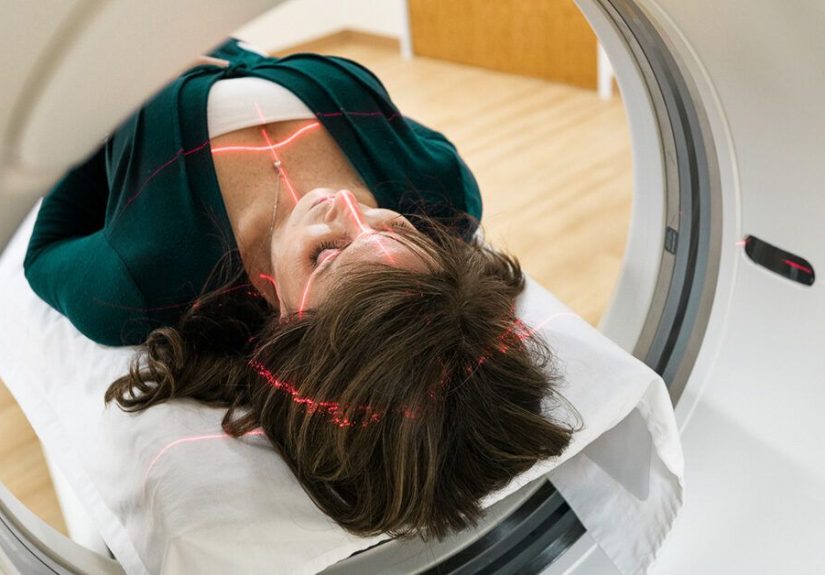
Many people describe their first LDCT as surprisingly uneventful. The appointment is often quick, and there’s no needle, no contrast
dye in typical screening, and no big recovery time. You show up, lie still, hold your breath for a few seconds, and you’re done.
The “hard part” is usually not the scanit’s the waiting.
A very common experience is getting a result that sounds alarming but is medically routine: “small nodule” or “spot noted.”
People often hear “nodule” and think “cancer,” but clinicians often think “common findinglet’s follow the playbook.”
In screening programs, a large share of participants have nodules that are ultimately benign. The follow-up plan might be:
“Repeat LDCT in 6 or 12 months” (or sometimes sooner). For patients, that can feel like being asked to watch a pot that may never boil.
For clinicians, it’s a measured strategy to catch growth early without jumping to invasive tests.
Another common experience is learning how much the quality of communication matters. People feel calmer when they get:
(1) a clear risk category, (2) a plain-language explanation of what was seen, and (3) a specific next step with a timeline.
People feel more anxious when results are vagueespecially if they have to interpret radiology wording on their own.
It’s normal for patients to call and ask, “Can someone explain what this means in human language?” (That’s a fair request.
Radiology reports are written for clinicians, not for your group chat.)
Some people report feeling motivated after screeningespecially if the visit includes smoking cessation counseling.
Screening can be a reality check that turns “I’ll quit someday” into “I’ll quit now.” Others report mixed feelings:
relief from a negative scan, paired with the awareness that screening is ongoing. It can be comforting to know you’re being watched
carefully, and it can also be tiring to live in yearly check-in mode.
For those who do end up needing more testing, experiences vary widely. Many follow-ups are just more imaging. A smaller group may go
on to PET scans, specialist visits, or biopsies. People often describe the stress of “in-between” stateswhen nothing is confirmed,
but extra steps are needed. Having a coordinated program (where someone schedules the next scan, explains timing, and closes the loop)
is frequently described as a huge difference-maker.
If you take one practical lesson from others’ experiences, it’s this: ask upfront how results are delivered and who explains them.
A screening program that pairs high-quality scanning with high-quality communication tends to feel less scaryand, importantly,
helps ensure the medical follow-through that makes screening actually work.