Table of Contents >> Show >> Hide
- Why Harvest Timing Makes (or Breaks) Flavor
- When to Harvest Carrots: The Best Clues (and the Ones That Lie)
- The Best Season to Harvest (and Why Frost Can Make Carrots Sweeter)
- Best Time of Day to Harvest Carrots
- How to Harvest Carrots Without Breaking Them
- Right After Harvest: What to Do for Peak Crunch and Flavor
- How to Store Carrots So They Stay Crisp (Not Floppy)
- Common Harvest Problems (and How to Fix Them)
- A Simple Harvest Game Plan for Bigger, Sweeter Roots
- Gardeners’ Real-World Harvest Experiences (500+ Words of Lessons Learned)
- 1) The “I Harvested Too Early and Regretted Everything” Moment
- 2) The “Snap! (…Where Did the Rest Go?)” Breakage Saga
- 3) The “Frost-Sweetened Carrots Changed My Standards Forever” Experience
- 4) The “Storage Fail” That Creates a Better System Next Time
- 5) The “My Carrots Are Weird Shapes but Still Delicious” Acceptance Arc
If carrots had a dating profile, their bio would be: “Low-maintenance, sweet after a little chill, and I prefer long walks in loose soil.” And honestly? Accurate. Carrots are one of the most rewarding garden cropsuntil harvest day, when you pull… and snap off the top like you’re starting a carrot-themed magic trick. (Spoiler: the audience is just you, and you’re not impressed.)
The good news: harvesting carrots isn’t hardit’s just timing + technique. Get those right, and you’ll pull up roots that are bigger, crunchier, and noticeably sweeter. This guide covers exactly when to harvest carrots, how to tell they’re ready, the best way to pull them without breakage, and how to store them so they stay crisp instead of turning limp and sad in the fridge.
Why Harvest Timing Makes (or Breaks) Flavor
Carrots are at their best when they’re fully formed, actively growing, and harvested before they get stressed. Stress can come from heat, drought, overcrowding, or simply leaving roots in the ground too long. The “too long” part is tricky, because carrots don’t rot on a schedulethey just quietly shift from tender and sweet to woody and less flavorful.
Timing matters because carrots store sugars differently depending on conditions. When the weather cools, carrots often taste sweeter. That’s why fall and winter carrots can have that “wait, did my garden just make candy?” vibe.
When to Harvest Carrots: The Best Clues (and the Ones That Lie)
Clue #1: The “Shoulders” at Soil Level
The most reliable way to judge carrot harvest time is the top of the root (the “shoulders”) where it meets the soil. Gently brush away soil and look at diameter and color. In many varieties, you’ll see strong orange shoulders once they’re sizing up.
- Baby carrots: harvest when shoulders are roughly ½ inch wide (tender, sweet, snackable).
- Classic eating size: harvest around ¾ to 1 inch wide for a satisfying crunch and full flavor.
- Storage carrots: harvest once roots are fully shaped and “filled out” (more on that below), but before hard-freeze conditions make digging difficult.
Clue #2: Days to Maturity (Helpful… Not Holy)
Seed packets and catalogs give a “days to maturity” estimate, but carrots are famously independent thinkers. In real gardens, they may take longerespecially in cooler fall weather or shorter daylight conditions. Use the date as a reminder to start checking, not as a harvest commandment.
Clue #3: “Tip Fill” (The Secret to Big, Tasty Carrots)
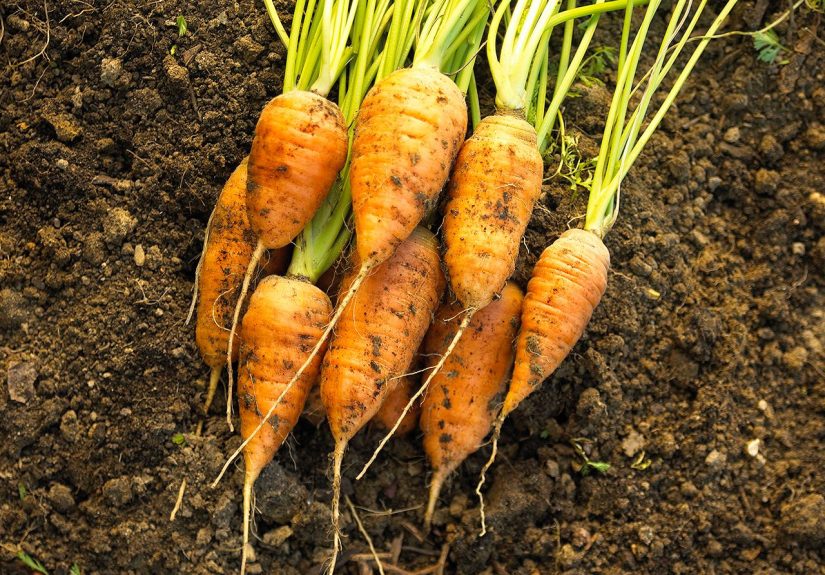
If you want the biggest and tastiest roots, don’t just judge by shoulder sizepull a test carrot and check the tip. Many carrots are at peak eating quality when the tapered end becomes a little more blunt and “filled in” rather than skinny and sharp. That’s often a sign the root has finished bulking up, and flavor is more developed.
Clue #4: Leaf Size (The One That Lies a Little)
Big leafy tops can be a good sign of growth, but tops can also look impressive while roots are still smallespecially if nitrogen is high or plants are crowded. Leaf size is a supporting actor, not the star.
The Best Season to Harvest (and Why Frost Can Make Carrots Sweeter)
Carrots are cool-season champs. In many regions, the sweetest carrots come from fall plantings harvested after a few light frosts. When carrots get cold, they increase sugars in their cells, which helps protect them from freezingconveniently for the carrot, deliciously for you.
Light Frost vs. Hard Freeze: Your Harvest Window
A few light frosts can improve flavor. But once you hit hard-freeze conditions, harvesting can become a race against frozen ground. If your soil freezes solid, carrots may still be fine under insulation, but you may not be able to dig them out without a pickaxe and a dramatic soundtrack.
Best Time of Day to Harvest Carrots
If you can, harvest in the cool part of the daymorning or late afternoonespecially during warm seasons. Cooler harvest temperatures help carrots hold onto moisture and crunch. Heat speeds up moisture loss, and nothing ruins a victory harvest like limp roots an hour later.
How to Harvest Carrots Without Breaking Them
Step 1: Prep the Bed (Yes, Even If You’re Impatient)
- Water lightly the day before if soil is dry. Slightly moist soil is easier to loosen and reduces breakage.
- Clear debris and weeds so you can get tools in cleanly.
- If carrots are crowded, harvest every other one first to give the rest room (and to reduce tug-of-war vibes).
Step 2: Loosen Soil Before You Pull
For most gardens, the best tool is a garden fork (or a digging fork). Slide it into the soil a few inches away from the row and gently lift to loosen. The goal is to break the soil’s grip, not to spear your crop like you’re auditioning for a medieval cooking show.
Step 3: Pull Like You Mean ItBut Not Like You’re Angry
Grab the carrot at the base of the greens (right above the soil line), then pull steadily while wiggling slightly. If the carrot doesn’t budge, stop and loosen more soil. Carrots snap when we treat them like a stubborn jar lid.
Optional Trick: The “Push-Pull” Loosening Move
In softer soils, some gardeners swear by a gentle “push down” first to loosen fine roots and soil contact, then pull up. If your soil is heavy clay, stick to loosening with a toolclay does not negotiate.
Heavy Clay or Rocky Soil? Do This Instead
- Loosen deeper with a fork from the side of the row.
- Harvest after rain or watering (not muddyjust workable).
- Accept that some carrots will be “short kings” in dense soil. Still tasty, just less photogenic.
Right After Harvest: What to Do for Peak Crunch and Flavor
Remove Tops Quickly (Your Carrots Are Thirsty)
Carrot greens pull moisture from the root after harvest. To keep roots crisp, trim tops soon. Leave a short stub (about ½ inch to 1 inch) so you don’t damage the crown. Bonus: wash and use the greens like herbs in pesto, chimichurri, or soups if you like their bold flavor.
Brush Off Soil (Don’t Wash for Long Storage)
If you’re eating within a few days, wash away. If you’re storing longer, gently brush off soil and avoid washing until you’re ready to use them. Extra surface moisture encourages decay and mold in storage.
Cool Them Down
Carrots keep best when they’re cooled quickly after harvest. Even a short “shade break” helpsbring them inside, out of sun, and into cooler air.
How to Store Carrots So They Stay Crisp (Not Floppy)
Carrots like it cold and humid. The sweet spot for long storage is around 32–40°F with very high humidity. Most homes can approximate this with smart fridge strategies or simple “DIY root cellar” methods.
Option 1: Refrigerator Storage (Best for Most Home Gardeners)
- Trim tops.
- Store unwashed carrots in a bag that holds humidity (a perforated bag or loosely closed bag works well).
- Keep them in the crisper drawer.
- Check occasionally and remove any root that’s soft or showing spoilage.
Pro tip: Store carrots away from ethylene-producing fruits (like apples, pears, melons, and tomatoes) when possible, because ethylene can shorten storage life and affect quality.
Option 2: “Sand Box” Storage (Root-Cellar Style)
If you want to store carrots for months, pack unwashed roots in slightly damp sand (or similar medium) in a cool place. This helps maintain humidity around the roots and reduces shriveling. The key is cool temperature plus steady moisturenot wetness.
Option 3: Leave Carrots in the Ground (Overwintering)
In many climates, you can treat your garden bed like a living refrigerator. If fall carrots are mature and you want ultra-sweet winter harvests:
- Mulch heavily with straw or leaves to insulate soil.
- Harvest as needed through late fall and into winter, before the ground becomes impossible to dig.
- In very cold regions, add extra protection (like row cover) and be aware of rodentswinter can make carrots a popular underground snack bar.
This method can produce exceptionally sweet carrots, but it works best when soil doesn’t freeze solid for long periodsor when mulch/cover keeps the digging zone workable.
Common Harvest Problems (and How to Fix Them)
“My Carrots Are Skinny”
Usually: overcrowding, inconsistent moisture, or harvesting too early. Thin seedlings properly, water evenly, and give roots time to bulk up.
“They Broke When I Pulled Them”
Usually: soil too dry or too compact. Water beforehand and loosen with a fork. Pulling harder is rarely the answer (unless you enjoy surprise carrot tops with no carrot attached).
“They Taste Bitter or Off”
Heat stress and drought can reduce quality. Carrots generally taste best when they grow steadily in cooler conditions. Fall crops often shine here.
“Some Shoulders Are Green”
Green shoulders happen when the top of the root is exposed to sunlight. Hill a little soil or mulch around the tops as they grow to keep shoulders covered.
A Simple Harvest Game Plan for Bigger, Sweeter Roots
- Start checking near the variety’s listed maturity date, but trust what you see and taste.
- Brush soil back and measure shoulders. Pull a test carrot for tip fill and flavor.
- Harvest baby carrots at ~½ inch diameter; harvest main crop around ¾–1 inch or when the root is fully formed.
- For fall crops, wait for a couple light frosts for better sweetnessthen harvest before hard-freeze digging becomes a problem.
- Loosen soil first. Pull gently. Trim tops quickly. Store cold and humid.
Gardeners’ Real-World Harvest Experiences (500+ Words of Lessons Learned)
Ask ten gardeners about harvesting carrots, and you’ll get eleven opinionsplus one person who will show you a photo of a carrot shaped like a tiny human doing yoga. Still, the “experience wisdom” tends to repeat in very useful patterns. Here are some of the most common real-life harvest stories (and what they teach) so you can skip the frustration and go straight to the crunchy victory.
1) The “I Harvested Too Early and Regretted Everything” Moment
Many gardeners pull their first carrot the second they see orange at the soil line. Understandable. Carrots are exciting. But the classic experience is this: you harvest early, get thin roots, and wonder what went wronguntil you pull another carrot two weeks later and suddenly it’s twice the size and noticeably sweeter. The lesson: use the first pull as a test carrot, not a full harvest. Take notes on shoulder diameter and taste. Then check again in a week. Carrots reward patience in a very measurable way.
2) The “Snap! (…Where Did the Rest Go?)” Breakage Saga
Gardeners in heavier soils often learn the hard way that carrots don’t like being yanked. The familiar story: you grab the greens, pull confidently, and the top comes off in your hand like a prank. Then you dig and find the carrot still down there, perfectly intact, silently judging you. After doing this once or twice, most people become “fork converts.” The lesson: loosen soil first, especially when beds are dry or compacted. And if your soil is stubborn, water lightly the day before harvesting. That one small step can turn harvest from a wrestling match into a smooth pull.
3) The “Frost-Sweetened Carrots Changed My Standards Forever” Experience
A lot of gardeners report a surprising jump in flavor after cool weather arrives. They’ll describe early-season carrots as “good,” then fall carrots as “why do these taste like they came from a fancy restaurant?” The lesson: if your climate allows it, aim for a fall crop and harvest after a couple light frosts. It’s not just folklorecool temps can increase sweetness and deepen flavor. Even if you don’t overwinter carrots, simply timing harvest for cooler weeks can noticeably improve taste.
4) The “Storage Fail” That Creates a Better System Next Time
One of the most common experiences is storing carrots with tops still on, or storing them washed and wetthen finding limp carrots or early spoilage. Most gardeners only need to learn this once. The lesson: trim tops quickly, store carrots cold, and keep humidity high without leaving water on the roots. The “successful storage” stories usually involve a crisper drawer plus a bag strategy (perforated or loosely closed), or packing carrots in a slightly damp medium for longer storage. Once gardeners dial in storage, they often say carrots become one of the most reliable winter vegetables in their home kitchen.
5) The “My Carrots Are Weird Shapes but Still Delicious” Acceptance Arc
Gardeners also share a lot of “forked carrot” storiesroots split, twist, or grow short and chunky. The first reaction is disappointment; the second is laughter; the third is roasting them anyway because they taste great. The lesson: shape is mostly a soil story. Rocky beds, clods, and compacted zones change the root’s path. If you want picture-perfect carrots, improve soil tilth and remove rocks before planting. But if you want tasty carrots, don’t panic over odd shapes. Many experienced gardeners proudly claim their ugliest carrots are still the sweetestbecause flavor comes from good growing conditions and smart harvest timing, not runway-model symmetry.
Bottom line from the field: the best carrot harvesters aren’t strongerthey’re better observers. They test-pull, they loosen soil, they harvest after cool nights, and they store carrots like the crisp, sweet treasures they are. Steal these habits, and you’ll get the biggest and tastiest crop your garden can deliver.