Table of Contents >> Show >> Hide
The world of cryptocurrency, led by the infamous Bitcoin, is something that has both baffled and intrigued people around the world. It’s a technological marvel, a financial revolution, and a societal disruptor all rolled into one. But how does something like Bitcoin happen? How did a decentralized digital currency come to life, and why is it suddenly shaking up traditional finance? Let’s break down the journey, the mechanics, and the phenomenon that is Bitcoin, from its creation to its place in the world today.
The Genesis of Bitcoin
To understand Bitcoin, we must first look at its origins. In 2008, during the global financial crisis, a mysterious figure (or group) named Satoshi Nakamoto introduced the concept of Bitcoin via a whitepaper titled “Bitcoin: A Peer-to-Peer Electronic Cash System.” This was a bold move in the wake of a financial system that was, at the time, seemingly on the brink of collapse. Nakamoto’s vision was clear: create a decentralized form of currency that doesn’t rely on banks or any central authority to validate transactions. This was the beginning of Bitcoin’s existence, but it would take much more to turn this idea into a global force.
Bitcoin’s creation was a response to multiple problems: trust in financial institutions was low, digital payments were slow and costly, and governments had a significant control over money and its flow. Nakamoto designed Bitcoin as a peer-to-peer network that allows users to send money without an intermediary. Through the use of blockchain technologyan immutable ledger that records every transactionBitcoin promised transparency and decentralization. It was a new kind of money that no one controlled.
Blockchain Technology: The Backbone of Bitcoin
At the heart of Bitcoin lies blockchain technology. The blockchain is essentially a public ledger that records all Bitcoin transactions. Every time someone sends or receives Bitcoin, that transaction is verified by the network and added to the blockchain. This is done through a process known as mining, where powerful computers solve complex mathematical puzzles to verify transactions. This decentralized process ensures that there is no central authority, like a bank, involved in the transaction process. The blockchain’s design makes it incredibly difficult to tamper with or hack, which gives it an inherent level of security.
But why is blockchain so important? Because it solves one of the fundamental issues with digital currency: trust. Traditional money relies on institutions like banks to guarantee that transactions are valid. But Bitcoin and other cryptocurrencies don’t require any central authority. Instead, blockchain technology ensures that every participant on the network agrees on the state of the currency, maintaining security, trust, and transparency in the system.
The Economic Principles Behind Bitcoin
So, why would people want to use Bitcoin instead of traditional money? First, let’s discuss its inherent scarcity. One of the key features of Bitcoin is that it has a capped supply of 21 million coins. This is in stark contrast to traditional currencies, which can be printed endlessly by central banks. The scarcity of Bitcoin is often likened to gold, which has historically been used as a store of value due to its limited supply. Bitcoin’s scarcity, combined with its growing adoption, has made it an attractive investment asset for many.
Bitcoin also has the potential to act as a hedge against inflation. In countries with unstable currencies or hyperinflation, Bitcoin can be a safer store of value. For example, in nations like Venezuela or Zimbabwe, Bitcoin has become a way for people to protect their wealth when their local currencies lose value. Bitcoin’s appeal lies in its ability to be used globally, bypassing local currency crises and providing a more stable alternative.
The Rise and Fall of Bitcoin’s Price
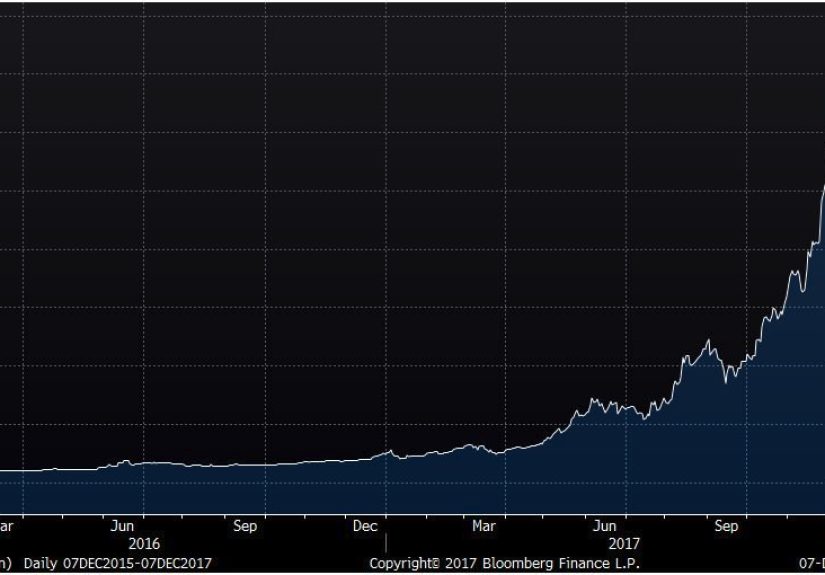
One of the most fascinating and volatile aspects of Bitcoin is its price. Since its creation, the price of Bitcoin has seen meteoric rises and dramatic crashes. In 2017, Bitcoin reached an all-time high of nearly $20,000, only to plummet to around $3,000 the following year. These wild price swings have made Bitcoin both a risky investment and an exciting opportunity for speculators. But despite the volatility, Bitcoin’s long-term trajectory has been one of growth, with its price continually trending upwards over the past decade.
What causes Bitcoin’s price to fluctuate so dramatically? There are several factors at play, including investor sentiment, government regulations, and technological developments. Bitcoin’s price is heavily influenced by demand and supply, like any other commodity. When demand increases, the price rises. The limited supply of Bitcoin means that as more people try to buy it, the price naturally increases. Additionally, events such as government crackdowns or the introduction of new regulations can lead to price crashes, as seen in China’s ban on cryptocurrency trading in 2021.
Bitcoin’s Role in the Global Economy
Despite the price fluctuations, Bitcoin has grown in popularity and is now considered by many to be a legitimate asset class. Major companies like Tesla, Square, and PayPal have embraced Bitcoin, allowing users to buy, sell, and trade it on their platforms. Countries like El Salvador have even adopted Bitcoin as legal tender, signaling a shift toward greater acceptance of cryptocurrency in the global economy.
However, Bitcoin’s impact on the global economy is still in its early stages. While it has made great strides in terms of adoption, it remains far from being a mainstream currency. Bitcoin’s price volatility, scalability issues, and regulatory challenges are all factors that prevent it from becoming a widely-used form of payment. But even with these challenges, Bitcoin has already had a profound effect on the financial industry, forcing traditional banks to reconsider their approach to digital currency and blockchain technology.
The Future of Bitcoin
As we look to the future, the question remains: where does Bitcoin go from here? Its potential is vast, but its path is uncertain. Some believe that Bitcoin could eventually become a global reserve currency, replacing the dollar or gold as the world’s primary store of value. Others see it as a speculative asset that will continue to be used for trading and investment rather than everyday transactions.
One thing is certain: Bitcoin has changed the way we think about money. It has introduced a new form of currency that is not controlled by any government or financial institution, and it has sparked a global conversation about the future of money. Whether Bitcoin becomes a mainstream currency or remains a niche investment remains to be seen, but its impact on the financial world will be felt for years to come.
Experiences and Insights on Bitcoin
In my personal experience with Bitcoin, the most intriguing aspect has been its unpredictability. As someone who has dabbled in cryptocurrency for a few years, I’ve seen the highs and lows firsthand. Watching Bitcoin’s meteoric rise to $60,000 and its subsequent drops has been a rollercoaster of emotions. Yet, despite the volatility, Bitcoin’s long-term potential cannot be ignored. The technology behind it, namely blockchain, has the potential to revolutionize everything from finance to healthcare, supply chains, and beyond.
One of the biggest takeaways I’ve had from my journey with Bitcoin is the importance of understanding the technology and its underlying principles. Bitcoin isn’t just a “get-rich-quick” scheme, but a new way of thinking about money, transactions, and decentralization. As with any investment, it’s crucial to do thorough research, understand the risks, and approach Bitcoin with a long-term perspective. As I continue to learn about this fascinating space, I’m excited to see how Bitcoin and blockchain technology evolve in the coming years.
Conclusion
Bitcoin is not just a digital currency, but a symbol of a broader shift in the financial world. It challenges traditional financial systems and presents a vision of a decentralized, borderless economy. While the road to mass adoption is still long, Bitcoin’s impact on the world is undeniable. Whether you see it as a speculative investment, a hedge against inflation, or a new form of money altogether, Bitcoin is here to stay and will continue to shape the future of finance.
sapo: From its origins in 2008 to its current place in the global financial system, this article explores how Bitcoin happened and its profound impact on the world.