Table of Contents >> Show >> Hide
- The Quick Answer: A Simple Egg Boiling Time Chart
- What “Boiled” Really Means (And Why Your Eggs Might Be Lying to You)
- Step-by-Step: The Most Reliable Way to Boil Eggs
- Steaming vs. Boiling: A Secret Weapon for Easy Peeling
- What Changes Egg Boiling Time?
- How to Know When an Egg Is Done (Without Psychic Powers)
- Common Egg Problems (And How to Fix Them)
- Food Safety and Storage: Don’t Let Your Eggs Go Rogue
- Specific Examples: Pick the Time Based on How You’ll Eat the Egg
- Conclusion: Your Egg Timer Era Starts Now
- Real-Life Egg-Boiling Experiences (The “I’ve Been There” Section)
Boiling an egg sounds like the kind of task you could do in your sleepuntil you cut one open and discover a yolk that’s either
suspiciously runny or aggressively chalky. The truth is: eggs are tiny, delicious science experiments. The “right” time depends on
the texture you want, how you start (cold water vs. boiling water vs. steaming), and a few sneaky variables like altitude and egg size.
This guide gives you a reliable egg boiling timeline (soft, jammy, medium, hard), explains why different methods produce different results,
and helps you troubleshoot the classic problems: cracked shells, green rings, and eggs that peel like they’re glued to your soul.
The Quick Answer: A Simple Egg Boiling Time Chart
If you want the most consistent results, start with large eggs straight from the fridge and gently lower them into
already boiling water, then keep it at a gentle simmer (not a volcano).
Boiling times (starting in boiling water, large eggs)
- 4 minutes: very soft (runny yolk, tender white)
- 6 minutes: soft-boiled (set white, liquid-to-gooey yolk)
- 8 minutes: jammy (custardy yolk, fully set white)
- 10–12 minutes: hard-boiled (fully set yolk)
Pro tip: Think of these times as “training wheels.” Your stove, pot, and egg mood will vary. Once you find your perfect time,
write it down like it’s your Wi-Fi password.
What “Boiled” Really Means (And Why Your Eggs Might Be Lying to You)
Most people say “boil,” but the best eggs are rarely cooked at a raging boil the whole time. A hard boil can bounce eggs around,
crack shells, and make whites rubbery. What you usually want is this sequence:
- Water reaches a boil.
- You add eggs carefully.
- You maintain a gentle simmer while the timer runs.
- You cool the eggs quickly (usually with an ice bath) to stop carryover cooking.
That last step matters more than people think. Eggs keep cooking from residual heat, which can turn “jammy” into “dry” while you’re
busy congratulating yourself.
Step-by-Step: The Most Reliable Way to Boil Eggs
Method 1: Start in boiling water (consistent texture, great for timing)
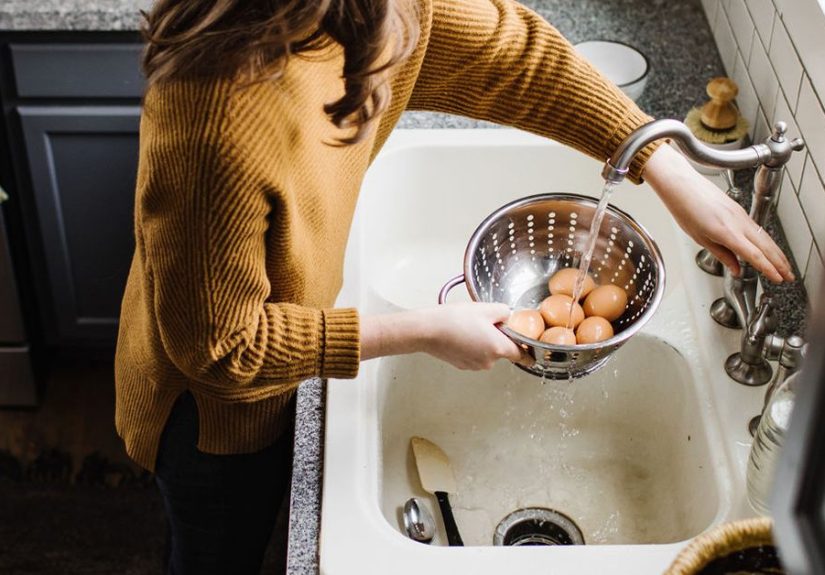
- Bring water to a boil: Use enough water to cover the eggs by about an inch.
- Lower eggs gently: Use a slotted spoon so you don’t crack shells (or your confidence).
- Reduce to a gentle simmer: Keep the water barely bubbling.
- Set a timer: Use the chart above for your preferred doneness.
- Ice bath: Transfer eggs to ice water for 10–15 minutes for easy peeling and to stop cooking.
- Peel: Tap, roll, and peel under cool running water for fewer shell tantrums.
Why this method works: timing starts when the egg hits hot water, so the doneness is easier to repeat. It’s like measuring ingredients
instead of “free-pouring” salt and hoping for the best.
Method 2: Start in cold water (gentler, convenient, slightly less precise)
This classic approach works wellespecially when you’re cooking a batch and don’t want to lower cold eggs into boiling water.
The trade-off is that “timing” gets fuzzy because different stoves bring water to a boil at different speeds.
- Place eggs in a single layer in a saucepan.
- Add cold water to cover by about an inch.
- Bring to a boil, then reduce heat and simmer briefly or turn off heat and cover (depending on your preferred technique).
- Use a timer once the water reaches a boil or once you coverwhichever your method requires.
- Cool in an ice bath, then peel.
If you use this method often, keep notes: “My stove + my pot + my eggs = X minutes.” That’s how home cooks become quietly unstoppable.
Steaming vs. Boiling: A Secret Weapon for Easy Peeling
If peeling hard-boiled eggs makes you feel like you’re negotiating with a stubborn toddler, try steaming.
Many cooks swear steaming produces eggs that peel more cleanly, possibly because the hot steam penetrates quickly and changes how the membrane behaves.
Whatever the reason, it’s a strong optionespecially if you’re meal-prepping.
How to steam eggs
- Add about 1 inch of water to a pot and bring to a boil.
- Place eggs in a steamer basket/insert.
- Cover and steam.
- Transfer to an ice bath.
Steaming times (large eggs)
- 6 minutes: soft-boiled
- 10 minutes: jammy to medium (depending on your setup)
- 12 minutes: hard-boiled
Steaming is also great when you don’t want to fuss with a huge pot of water. Less water, less waiting, fewer “why am I like this?”
moments.
What Changes Egg Boiling Time?
1) Egg size
Most timing charts assume large eggs. If you use medium eggs, they’ll cook a bit faster. Extra-large eggs can take
longer. When in doubt, test one egg first and adjust by 30–60 seconds.
2) Starting temperature (fridge vs. room temp)
Cold eggs take longer to heat through than room-temperature eggs. Many “perfect egg” methods assume eggs come straight from the fridge
(which is also safer for storage). If your eggs have been sitting out, expect slightly shorter cook times.
3) Altitude
At higher altitudes, water boils at a lower temperature, so eggs cook more slowly. Translation: your normal “10-minute hard-boiled egg”
can turn into a “not quite there yet” egg. If you live well above sea level, plan to add extra time.
4) Your pot and your simmer
A tiny saucepan and a rolling boil cook differently than a wide pot at a gentle simmer. Even how quickly the water returns to a simmer
after adding eggs can shift results. That’s why repeating the same pot and burner helps.
How to Know When an Egg Is Done (Without Psychic Powers)
Timers are king, but if you want extra confidence:
- Spin test (for hard-boiled): A fully cooked egg spins smoothly. A soft egg wobbles.
- Peel-and-peek (for batches): Sacrifice one egg, slice it open, and adjust the next batch by 30–60 seconds.
- Texture goal: For hard-boiled eggs, both white and yolk should be set and firm (no grey-green ring if you cooled properly).
Common Egg Problems (And How to Fix Them)
Problem: Green ring around the yolk
That greenish ring is usually a sign of overcooking or slow cooling. It’s not dangerous; it’s just a cosmetic “I left it too long” badge.
Fix it by using the right time and cooling eggs fast in an ice bath.
Problem: Eggs crack in the pot
- Lower eggs in gently with a spoon (don’t drop them like coins in a fountain).
- Use a gentle simmer instead of a hard boil.
- Don’t overcrowd the poteggs need personal space too.
Problem: Eggs won’t peel
Fresh eggs are notoriously difficult to peel. Slightly older eggs (a week-ish) often peel more easily.
Other peeling helpers:
- Cool completely in ice water before peeling.
- Crack all over, then peel under running water.
- Start peeling from the wide end (often where an air pocket lives).
- If you’re making a big batch, consider steaming.
Food Safety and Storage: Don’t Let Your Eggs Go Rogue
Hard-boiled eggs are convenient, but they’re still perishable. Treat them like the protein they are:
- Refrigerate within 2 hours of cooking (sooner is better).
- If it’s very hot out (think summer picnic weather), limit time at room temp even more.
- Use within about a week when stored properly in the fridge.
- If an egg smells off or feels slimy, it’s not “aged,” it’s “goodbye.”
Specific Examples: Pick the Time Based on How You’ll Eat the Egg
Soft-boiled (4–6 minutes): breakfast perfection
If you love dunking toast soldiers into a yolk that behaves like delicious paint, aim for 4–6 minutes.
Great for breakfast bowls and fancy-feeling mornings that take exactly one timer.
Jammy (7–8 minutes): ramen egg energy
Want that custardy, creamy center that looks like it belongs in a food magazine? Try 7–8 minutes.
Slice it over ramen, rice bowls, or a salad and suddenly you’re “a person who has it together.”
Hard-boiled (10–12 minutes): meal prep hero
For deviled eggs, egg salad, and grab-and-go snacks, 10–12 minutes is the sweet spot.
Cool them well to avoid the green ring and to make peeling easier.
Conclusion: Your Egg Timer Era Starts Now
So how long does it take to boil an egg? If you want a reliable rule of thumb:
6 minutes for soft, 8 minutes for jammy, and 10–12 minutes for hardwhen starting
large eggs in boiling water at a gentle simmer, followed by an ice bath.
Once you account for size, starting temperature, altitude, and method (boil vs. steam), you’ll stop guessing and start nailing the same
texture every time. And that’s a small daily win worth celebratingpreferably with salt, pepper, and a dramatic egg peel.
Real-Life Egg-Boiling Experiences (The “I’ve Been There” Section)
If you’ve ever stood over the sink peeling an egg that’s determined to take half its white with it, welcome to the club.
Most people don’t “master” boiled eggs because they’re complicatedthey miss because eggs punish inconsistency.
One day you do 10 minutes and it’s perfect; the next day you do the same 10 minutes and the yolk is dry enough to qualify as sidewalk chalk.
That’s not you losing your touch. It’s variables piling up: your eggs were smaller, your water boiled harder, or you got distracted and
let them sit in hot water while you checked “one quick thing” on your phone (we all know that lie).
A common first-time breakthrough is realizing that the ice bath isn’t optional. People skip it because they’re hungry, or because they think
it’s a fussy chef thing. But the first time you plunge eggs into ice water and peel one cleanlylike the shell politely excuses itselfyou
understand. Cooling quickly stops carryover cooking, helps prevent that green ring, and makes the egg easier to handle. It’s basically a
reset button for your entire egg situation.
Another universal experience: the “too vigorous boil.” Many home cooks start with a rolling boil because it looks productive.
Then the eggs start clacking around like dice in a cup, and one cracks, and suddenly you’re poaching an egg by accident.
Dialing it back to a gentle simmer feels almost too calmlike nothing is happeningbut your eggs come out smoother and more consistent.
It’s one of those cooking lessons that applies everywhere: calm heat often wins.
Then there’s the “jammy egg obsession.” Once you hit that 7–8 minute sweet spot, it’s hard to go back.
People who never cared about eggs suddenly care a lot, because a custardy yolk upgrades everything it touches:
ramen, avocado toast, grain bowls, even a plain salad that needed a little emotional support. The practical experience here is that you
may find yourself boiling eggs more oftenbut in smaller batchesbecause jammy eggs are best fresh, and your future self will absolutely
forget how long you cooked them unless you write it down.
Finally, there’s the “peeling strategy era,” where you develop a personal routine. Some people crack and roll the egg all over the counter.
Some peel under running water. Some start from the wide end like it’s a sacred tradition. The point isn’t that one trick is magical;
it’s that you pick a method, repeat it, and get consistent results. When you stop treating egg boiling like a guessing game and start treating
it like a tiny controlled experimentsame pot, same simmer, same timeryou get eggs you can count on. And honestly, in a world this chaotic,
a perfectly cooked egg is a surprisingly satisfying form of peace.