Table of Contents >> Show >> Hide
- The Best Timing for the First Text (Yes, Timing Actually Matters)
- So… How Often Should You Text After That?
- Clarity Beats “Playing It Cool” (And Data Backs That Up)
- What to Text After a First Date (With Specific Examples)
- How Many Texts Is “Too Many” After a First Date?
- What Not to Do (Unless You’re Auditioning for a Dating Horror Story)
- If They Don’t Text Back: How Long to Wait (And What to Do)
- How to Talk About Texting Expectations (Without Making It Weird)
- Texting Etiquette That Keeps You Out of Trouble
- Quick Scenarios: What “Good” Looks Like
- Conclusion: A Simple Rule That Works
- Real-Life Texting Experiences: What People Learn the Hard Way (About )
The first date ended. You got home. You kicked off your shoes. And now your phone is sitting there like a tiny,
glowing jury deciding your fate. Text too soon? “Desperate.” Text too late? “Disinterested.” Text the perfect amount?
Congratulations, you’ve achieved Level 12 in the world’s most unnecessary video game: Modern Dating.
Here’s the good news: you don’t need a “three-day rule,” a stopwatch, or a committee meeting with your group chat.
You need a simple, human planone that shows interest without becoming a 47-message documentary series.
This guide breaks down what relationship experts and recent research suggest about timing, frequency, and what to say,
plus real-world examples and common texting “oops” moments.
The Best Timing for the First Text (Yes, Timing Actually Matters)
If you’re wondering when to send that first follow-up text, the most consistent expert guidance is:
don’t disappear. A message within 24 hours is widely recommended, and newer research
suggests a surprisingly specific sweet spot: the next morning.
The “Next Morning” Sweet Spot
A large study summarized by Psychology Today compared three common strategiestexting immediately after the date,
texting the next morning, or waiting about two days. The “next morning” message produced the strongest romantic
outcomes overall, while “immediate” and “two days later” both performed worse (for different reasons). In other words,
there’s a Goldilocks zoneand it’s wearing pajamas and holding coffee. The same research summary notes that women, on
average, reacted more strongly to timing differences than men. (So if timing feels loaded, you’re not imagining it.)
What About a “Get Home Safe” Text?
Sending a short “Get home safe” message soon after the date can be thoughtful and totally fineespecially if the date
ended late, the weather was bad, or travel was involved. The key is to keep it light and not turn it into an instant
emotional autobiography. If you do a quick safety check-in at night, the next-morning text can be your “I enjoyed
meeting you” follow-up.
Quick rule of thumb
- If you want a second date: send a brief message within 24 hours (next morning is a strong default).
- If the date ended late: a short “home safe” text is fine, then follow up the next day.
- If you’re unsure: give yourself the night to think, then send a polite, honest message the next day.
So… How Often Should You Text After That?
After the first follow-up, “how often” depends less on a universal number and more on a simple principle:
match the pace you’re building together.
The Match-and-Mirror Method (Without Becoming a Copycat)
Many experts emphasize that texting works best when you’re not forcing a rhythm the other person isn’t signing up for.
If they reply with energy, questions, and follow-up, you can keep a steady back-and-forth. If they respond more slowly,
keep your messages warm but spaced out. Think of it like walking side-by-side: if you sprint ahead, you’ll spend the
rest of the stroll awkwardly waiting and pretending you “meant to do that.”
A Practical “First Week” Texting Cadence
If you want an easy framework that doesn’t feel like you’re scheduling a rocket launch, try this:
- Day 1 (next morning): one thoughtful follow-up text.
- Day 1–2: a short exchange (a few messages) to see if the vibe continues.
- Day 2–4: if interest is mutual, propose a second date (clear, simple, low-pressure).
- Between dates: a small touchpoint every day or two is plenty for many peopleunless you both naturally text more.
Notice what’s not on that list: “text all day to prove you’re interesting.” You prove that by being interesting
in real lifethen texting just enough to keep momentum and make plans.
Clarity Beats “Playing It Cool” (And Data Backs That Up)
If you’ve ever hesitated because you didn’t want to “come on too strong,” you’re in extremely crowded company.
Hinge reported that about half of daters have held back from sending a post-date message because they worried it would
seem too eager. Their guidance is blunt in the best way: clarity is more attractive than ambiguity.
Hinge’s Follow-Through Formula: Timing + Enthusiasm + Intent
Hinge’s research-backed approach boils down to three ingredients:
- Timing: many daters expect a follow-up the same day or the next day.
- Enthusiasm: show genuine interest (no need for fireworksjust warmth).
- Intent: express that you’d like to see them again (details can come after).
Translation: you don’t need a perfect line. You need a real one.
What to Text After a First Date (With Specific Examples)
Experts tend to agree that the best follow-up texts do three things:
they’re appreciative, specific, and easy to respond to.
Referencing a moment from the date makes your text feel personal instead of copy-pasted from the Notes app.
Option 1: Warm + Simple
- “I had a really great time with you last night. Hope your day’s going well.”
- “Thanks again for meeting upI enjoyed getting to know you.”
Option 2: Specific Callback (The “Proof You Were There” Text)
- “Still laughing about the trivia debate. I’m pretty sure we invented a new rule.”
- “That ramen recommendation was elite. I’m officially converted.”
- “You were right about that playlistnow I’m obsessed.”
Option 3: Second-Date Bridge (Clear, Low Pressure)
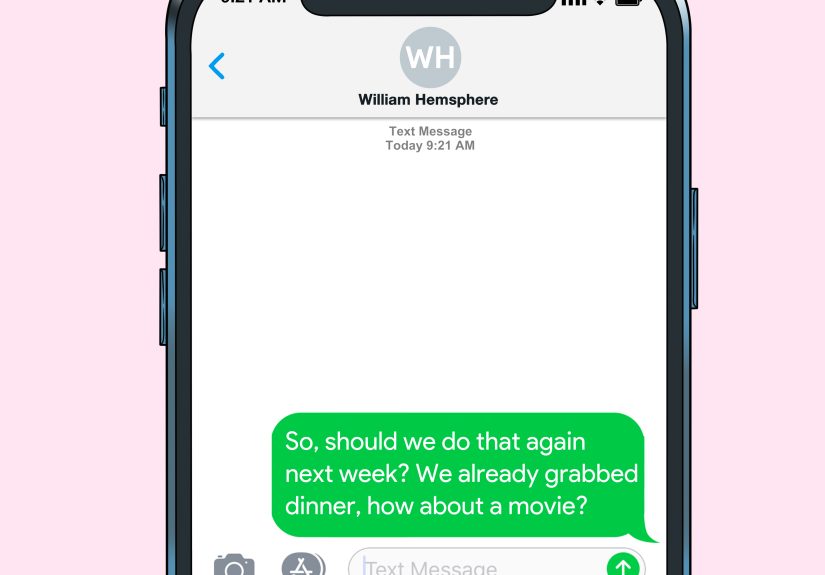
- “I had a great time. Want to do that mini-golf rematch this weekend?”
- “I enjoyed meeting youwould love to see you again if you’re feeling the same.”
- “I’m free Thursday or Saturday. Want to grab coffee or check out that market we mentioned?”
Keep it short. If your message requires a table of contents, it’s probably not a textit’s a newsletter.
How Many Texts Is “Too Many” After a First Date?
There’s no magic number, but there are clear warning signs. You’re probably texting too much if:
- You’re sending multiple messages before they’ve replied (and it’s not an emergency).
- You’re “live blogging” your entire day to a person who hasn’t met your houseplants yet.
- You feel anxious if you don’t get a response quicklyand you start trying to fix that anxiety by texting more.
And you might be texting too little if:
- You genuinely want to see them again but you’ve gone silent for days.
- You’re forcing them to do all the initiating.
- You’re delaying messages to seem “hard to get” (when you’re actually easy to like).
The healthiest middle
One strong follow-up text + a light exchange + a clear second-date suggestion is usually plenty.
If the interest is mutual, you won’t need to perform interpretive dance with your texting schedule.
What Not to Do (Unless You’re Auditioning for a Dating Horror Story)
1) The “Essay Text”
You don’t need to recap every emotion you felt between appetizer and goodbye. Early dating works best with warmth and
simplicitysave the deeper conversation for in-person time.
2) Rapid-Fire Messages
If you send five texts in a row, you’re not “showing interest.” You’re creating homework.
3) Interrogations
A couple of thoughtful questions are great. A 12-question intake form is not. (That’s what doctors do. And even they
give you a clipboard.)
4) Texting Under the Influence
Many experts warn that impulsive, late-night messages can come across as messy or overly intense. If you’re not sure
a message is a good idea, write it, don’t send it, and reread it tomorrow like a responsible adult with Wi-Fi.
If They Don’t Text Back: How Long to Wait (And What to Do)
First: breathe. Not everyone texts constantly, and delays can mean anything from “busy day” to “I fell asleep holding
my phone like a Victorian heroine.” Etiquette experts also point out that you can’t always know when someone will read
or be able to respond to a message.
A respectful follow-up plan
- After your first text: give it time (at least a day).
- If you heard nothing after 24–48 hours: one short follow-up is okay.
- If there’s still no response: take it as your answer and move on gracefully.
Example follow-up text
“Heyhope your week’s going well. I had a nice time the other night. If you’re up for it, I’d be down to meet again.”
If they’re interested, this makes it easy to respond. If they’re not, you’ve offered a clean exit without chasing.
How to Talk About Texting Expectations (Without Making It Weird)
One of the most common problems in modern dating is not the texting itselfit’s the silent assumptions attached to it.
Some people expect quick replies. Others check messages twice a day. Both can be perfectly reasonable, and both can
misread the other as “rude” or “clingy” if nobody says anything.
A simple, normal way to ask
- “By the way, are you more of a quick texter or a slow responder?”
- “I’m not on my phone nonstop, but I like staying in touch. What’s your style?”
This isn’t needyit’s grown-up communication. And it prevents you from spiraling because someone took two hours to
reply while you were mentally writing your resignation letter from dating.
Texting Etiquette That Keeps You Out of Trouble
Good manners still matter, even when delivered in tiny message bubbles. A few guidelines that consistently show up in
etiquette and relationship advice:
- Keep it brief: if it’s long, consider a call or save it for the next date.
- Identify yourself if needed: especially if they may not have your number saved yet.
- Don’t demand instant replies: expectations vary, and you can’t always know someone’s context.
- Be mindful with tone: texts can be misunderstoodclarity beats sarcasm with strangers.
- Safety basics: don’t text and drive. Ever.
Also, if you’re building a connection, don’t make texting your entire relationship. Use it to support real plans and
real conversations.
Quick Scenarios: What “Good” Looks Like
Scenario A: Great date, strong chemistry
You can send a short “home safe” text that night, then a warm follow-up the next morning, and suggest a second date
within a few days. Keep the in-between texting light.
Scenario B: Good date, but you’re unsure
Sleep on it. The next day, send a kind message that’s honest but not dramatic. If you want to see them again, say so.
If you don’t, close the loop politely.
Scenario C: You want a second date, they respond slowly
Mirror their pace. Send fewer, more meaningful texts. Offer a clear plan once, then let them choose.
Conclusion: A Simple Rule That Works
If you take nothing else from this: text with clarity, not strategy.
The healthiest post-date texting isn’t about “winning.” It’s about making it easy for the right person to say yes.
A thoughtful message the next morning (or within 24 hours) is a strong default. After that, keep texting human:
match the rhythm you’re both creating, don’t over-message to soothe anxiety, and move toward an actual second date
instead of becoming professional pen pals.
Real-Life Texting Experiences: What People Learn the Hard Way (About )
If dating came with a user manual, the “after the first date” chapter would be the most highlighted, coffee-stained,
and aggressively bookmarked section. That’s because people tend to learn texting lessons the same way they learn not to
touch a hot pan: by touching the hot pan.
The Overnight Thinker
A super common experience is the person who waits until the next morningnot as a “game,” but because the date ended
late and they wanted to think clearly. This often lands well because it feels both intentional and calm. The message
is simple: “I enjoyed last night,” without the intensity of an instant emotional download. Many people report that
next-morning texts feel respectful and reassuringlike the other person is interested, but not frantic.
The “Meme Cannon”
Some folks try to keep momentum by sending joke after joke after joke. One meme? Fun. Two memes? Cute. Seven memes?
Congratulations, you’ve become a one-person comedy newsletter. A lot of people learn that humor works best when it’s
paired with purpose: a quick callback plus a real question, or a meme plus “How’s your day going?” Otherwise it can
feel like noise, especially early on when the connection isn’t established yet.
The Double-Text Spiral
Another classic experience: you send a nice follow-up, they don’t respond for a while, and your brain begins writing
a screenplay called They Hate Me. The spiral usually ends with a second text sent too soon, then a third text
that tries to explain the second text, then a fourth text that says “LOL ignore me.” People often realize later that
the anxiety wasn’t really about the other personit was about uncertainty. The healthier pattern is to give space,
send one polite follow-up if you want, and let the silence answer for you if it continues.
The Planner (Who Wins Quietly)
Plenty of people report the best outcomes when they keep texting brief and move toward a plan. They do a warm follow-up,
trade a few messages, then say something like, “Want to do that again this weekend?” It’s not flashy, but it’s effective.
It also filters out mismatches quickly: if someone is excited, planning feels easy; if they’re lukewarm, the conversation
drifts. Either way, you get clarity without burning a week staring at three typing dots that never arrive.
The Biggest “Aha” Moment
The most repeated lesson is this: the right pace is the one that feels natural to both people. When someone is truly
interested, you won’t have to decode them like an ancient scroll. You’ll see effort, warmth, and consistency. So aim
for a texting style that reflects who you are on a datekind, clear, and presentand let that be the standard you
build from.