Table of Contents >> Show >> Hide
- Why Snake Plant Watering Is So Easy to Get Wrong
- How Often to Water a Snake Plant
- What Changes the Watering Schedule?
- How to Water a Snake Plant the Right Way
- Signs Your Snake Plant Needs Water
- Signs You Are Watering Too Often
- Best Soil and Pot Setup for Healthy Watering
- How Often to Water a Snake Plant in Different Situations
- Can You Bottom Water a Snake Plant?
- Common Snake Plant Watering Mistakes
- Do Snake Plants Need Special Water?
- Are Snake Plants Safe Around Pets?
- The Bottom Line on How Often to Water a Snake Plant
- Real-Life Watering Experiences With Snake Plants
- SEO Tags
Snake plants have a reputation for being nearly indestructible. That reputation is a little dramatic, but not by much. These tough, architectural houseplants can handle forgetful owners, dim corners, dry indoor air, and the occasional “Oops, I haven’t watered you since that last holiday” moment. Still, if you want a snake plant that does more than merely surviveone that stays firm, upright, healthy, and gloriously smug in its potyou need to get the watering routine right.
So, how often should you water a snake plant? The best answer is not “every Saturday” or “whenever you remember.” A thriving snake plant is watered only after the soil has dried out. In many homes, that means about every 2 to 4 weeks during spring and summer and every 4 to 8 weeks in fall and winter. But the real secret is this: a calendar helps, but the soil tells the truth.
This guide breaks down exactly how often to water a snake plant, what changes the schedule, the warning signs of too much or too little water, and the small care habits that make a big difference. If you have ever loved a houseplant to death with a watering can, this article is for you.
Why Snake Plant Watering Is So Easy to Get Wrong
Snake plants, also called Dracaena trifasciata or by their older botanical name Sansevieria, are drought-tolerant plants with thick leaves that store moisture. In other words, they are built to coast between drinks. That is great news for busy plant owners. It is less great news for people who treat every houseplant like a thirsty fern.
The biggest mistake with snake plant care is overwatering. Not underwatering. Not forgetting fertilizer. Not failing to whisper kind words. Overwatering. When the potting mix stays wet for too long, the roots can rot, the base can soften, and the plant can go from stylish to sad surprisingly fast.
That is why the right answer to “How often should I water my snake plant?” is really: water deeply, then wait longer than you think.
How Often to Water a Snake Plant
The short answer
For most indoor snake plants, watering works like this:
- Spring and summer: about every 2 to 4 weeks
- Fall and winter: about every 4 to 8 weeks
That said, these are starting points, not laws of nature carved into a terracotta tablet. Your snake plant may need water sooner or later depending on where it lives and how it is potted.
The better answer
Water your snake plant when the soil is dry several inches down, or fully dry in the pot. If the potting mix still feels cool or damp, hold off. Snake plants prefer a dry-down period between waterings, and that pause is what keeps the roots healthy.
If you like a more practical test, stick your finger into the soil. For a small pot, check at least the top 1 to 2 inches. For a larger pot, go deeper. A moisture meter can help, but your finger works just fine and does not need batteries.
What Changes the Watering Schedule?
Snake plant watering frequency depends on conditions, not just the plant itself. Think of your plant like a tiny roommate with preferences. It may be low-maintenance, but it still reacts to its environment.
1. Light exposure
A snake plant in bright, indirect light usually uses water faster than one in a low-light corner. Brighter light encourages more active growth, which means the plant dries the soil more quickly. In very low light, growth slows down, so watering should too.
This is where many people get tripped up. They place the plant in low light because snake plants can tolerate it, then keep watering as if it were sitting by a sunny window. Cue mushy roots and regret.
2. Season
Snake plants usually need more water in spring and summer, when days are longer and growth is more active. In fall and winter, growth slows, indoor evaporation changes, and the soil stays wet longer. That is why winter watering often drops to once a month or even less.
3. Pot size
A small pot dries out faster than a large one. If your snake plant is packed into a snug container, it may need water more often. A roomy pot full of extra soil holds moisture longer, which can be risky if drainage is poor.
4. Pot material
Terracotta pots lose moisture faster because the material is porous. Plastic and glazed ceramic hold moisture longer. If your plant is in terracotta, expect slightly more frequent watering. If it is in plastic, pump the brakes.
5. Soil type
Snake plants do best in fast-draining soil, such as a cactus or succulent mix. Heavy potting soil that stays wet for ages can turn a simple watering routine into a root-rot waiting room. Adding perlite, pumice, or coarse sand can improve drainage.
6. Temperature and humidity
Warm rooms and dry indoor air make soil dry faster. Cool rooms slow everything down. A snake plant near a heater may need water sooner than one living in a cool guest room that sees little traffic and even less excitement.
How to Water a Snake Plant the Right Way
The goal is not tiny sips on a strict schedule. The goal is a full watering followed by a real drying period.
Step 1: Check the soil first
Always confirm that the soil is dry before watering. This one habit will save you from most snake plant problems.
Step 2: Water thoroughly
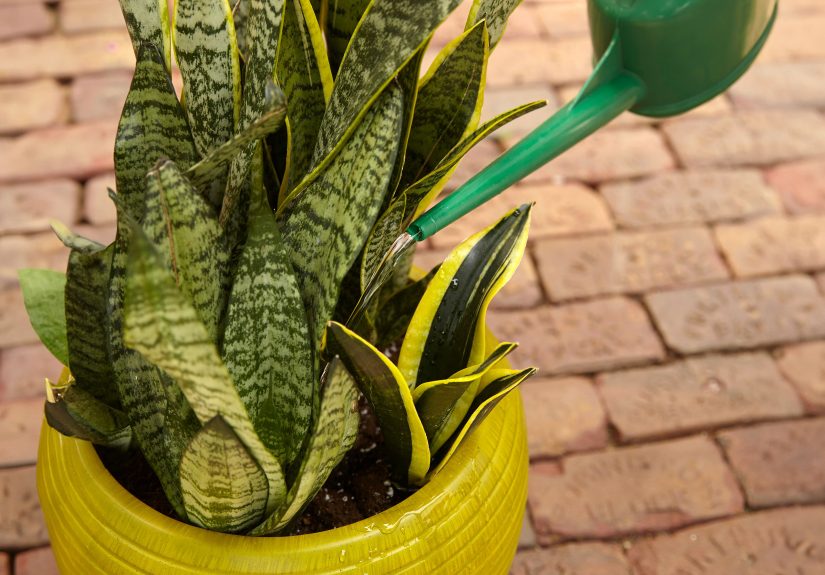
When it is time, water the soil until excess drains from the bottom of the pot. This encourages roots to grow evenly and prevents shallow watering. If your pot has no drainage hole, the margin for error gets very small, very fast. A pot with drainage is strongly preferred.
Step 3: Empty the saucer
Do not let the pot sit in standing water. Snake plants do not enjoy wet feet. Very few plants do, honestly, but snake plants especially hold a grudge.
Step 4: Avoid soaking the crown
Try to water the potting mix rather than pouring water directly into the center of the leaf rosette. Water trapped at the base can contribute to rot.
Signs Your Snake Plant Needs Water
Although snake plants are drought-tolerant, they are not decorative statues. They still need water eventually. Here are a few signs it may be time:
- Soil feels dry well below the surface
- Pot feels noticeably lighter than usual
- Leaves look slightly wrinkled or less plump
- Leaf tips develop some browning from prolonged dryness
- Growth seems stalled during active growing months
Underwatering is usually easier to fix than overwatering. A thirsty snake plant often perks up after a proper drink. A rotting one is a much bigger drama.
Signs You Are Watering Too Often
If snake plants had a catchphrase, it would probably be, “Please stop helping.” Watch for these signs of overwatering:
- Yellowing leaves
- Soft, mushy, or collapsing leaves
- A foul smell from the soil
- Blackened or rotting roots
- Soil that stays wet for many days
- Leaves falling over at the base
If you notice these symptoms, stop watering immediately. Remove the plant from the pot, trim away any black or mushy roots, and repot in fresh, fast-draining soil. This is the plant equivalent of an emergency room visit, but snake plants can recover if you catch the problem early.
Best Soil and Pot Setup for Healthy Watering
If you want to make snake plant care easier, set the plant up so overwatering is harder to do. That starts with the container and soil.
Use a pot with drainage holes
This is not just a nice bonus. It is your safety net. Drainage holes allow excess water to escape, which helps protect the roots.
Choose a loose, fast-draining mix
A cactus or succulent mix is usually a smart choice. If you use regular potting mix, amend it with perlite or pumice to improve airflow and drainage.
Do not oversize the pot
Choose a container only slightly larger than the root ball. Too much extra soil can stay wet for too long, especially indoors.
How Often to Water a Snake Plant in Different Situations
In bright, indirect light
Expect to water roughly every 2 to 3 weeks during the growing season, then less often in winter.
In low light
Water less frequently. The plant will use moisture slowly, so it may need water only every 4 weeks or longer.
In winter
Many snake plants only need water every 4 to 8 weeks. If your home is cool and the plant is not getting much light, even longer gaps are possible.
In a small terracotta pot
The soil may dry faster, so you may end up watering a bit more often than average.
After repotting
Water lightly after repotting if the roots are healthy, then allow the soil to dry again. If you had to trim damaged roots, be extra cautious and avoid keeping the mix wet.
Can You Bottom Water a Snake Plant?
Yes, bottom watering can work well if the potting mix has become very dry and is repelling water from the top. Set the pot in a shallow tray of water for a short period, allow the soil to absorb moisture, then remove it and let it drain. Still, do not make constant soaking a habit. Snake plants like hydration, not spa weekends.
Common Snake Plant Watering Mistakes
- Watering on autopilot: A fixed schedule without checking the soil is risky.
- Using decorative cachepots without care: Water can collect at the bottom and keep roots soggy.
- Keeping the plant in very low light but watering often: This is a classic recipe for rot.
- Using dense soil: Even perfect watering habits struggle in a potting mix that drains poorly.
- Misting instead of watering: Snake plants want the roots watered properly, not a vague atmospheric gesture.
Do Snake Plants Need Special Water?
In most homes, regular tap water is fine. If your water is very hard or heavily treated and you notice brown tips or mineral buildup, filtered water or letting tap water sit out briefly may help. This is not usually the first problem to solve, though. Start with watering frequency, drainage, and soil.
Are Snake Plants Safe Around Pets?
Snake plants are popular houseplants, but they are not pet-safe if chewed. They can be toxic to cats and dogs. If you have curious pets, place the plant well out of reach or choose a safer houseplant instead. A thriving plant is wonderful; a thriving plant that your dog thinks is a snack is less ideal.
The Bottom Line on How Often to Water a Snake Plant
If you remember one thing, make it this: water a snake plant only after the soil dries out. In many homes, that works out to every 2 to 4 weeks in spring and summer and every 4 to 8 weeks in winter. But instead of following the calendar blindly, check the soil, consider the light, and adjust to the season.
Snake plants thrive on a little restraint. They are not needy, dramatic, or interested in daily attention. They want bright to moderate light, a fast-draining mix, a pot with drainage, and an owner who knows when to leave them alone. Honestly, that is a pretty respectable personality.
Real-Life Watering Experiences With Snake Plants
One of the most common experiences people have with snake plants is buying one because everyone says it is “impossible to kill,” then nearly killing it with kindness. That usually starts with a good intention. The plant looks so crisp and upright that people assume it must want regular care like any other houseplant. So they water every week, sometimes every few days, and before long the leaves begin to soften at the bottom. The lesson many owners learn the hard way is that a snake plant does not reward constant attention. It rewards patience.
Another very real experience is the opposite: forgetting to water for far longer than planned and discovering the plant is somehow still standing like a green sword rack in the corner. This is why beginners love snake plants. You can go on vacation, get distracted by life, or simply fail to become the organized plant parent you imagined, and the plant will often forgive you. Maybe the leaves get a little less plump. Maybe the soil is bone dry. But after a thorough watering and a return to a better routine, many snake plants recover beautifully.
People also notice that location changes everything. A snake plant near a bright window tends to dry faster and grow more quickly, which makes the owner feel like a genius. Move that same plant to a darker hallway and suddenly the exact same watering routine becomes too much. This often confuses new plant owners, but it is actually one of the best lessons in indoor gardening: the room is part of the care plan. Light, temperature, airflow, and pot size all affect how often the plant should be watered.
Many longtime houseplant owners eventually settle into a simple habit. Instead of watering on a schedule, they check the soil when they happen to walk by. They lift the pot, touch the mix, look at the leaves, and only water when the plant truly needs it. That habit usually leads to healthier roots and a stronger-looking plant. It also removes the anxiety of wondering whether today is “watering day.”
There is also a satisfying moment that comes with experience: learning to trust dryness. At first, dry soil can make people nervous. Later, it becomes reassuring. With snake plants, dry soil often means the plant is exactly where it wants to be between waterings. That mindset shiftfrom feeding a schedule to reading the plantis usually what turns a struggling snake plant owner into a successful one.