Table of Contents >> Show >> Hide
- Yellowstone’s Grasslands: The Park’s Unsung Superpower
- A Quick Reality Check: Bison Didn’t Totally DisappearTheir Ecological Role Did
- How Bison Revitalize Grasslands (By Being Themselves, Loudly)
- 1) They create a patchwork buffethealthy grasslands love variety
- 2) They run a nutrient-recycling program (that nobody asked for, but everybody needs)
- 3) Wallowing turns “dust baths” into micro-habitats
- 4) Hooves matter: trails, trampling, and seed movement
- 5) They push back woody encroachmentsometimes too well
- What “Revitalized Grasslands” Looks Like in Real Life
- Conservation and Controversy: Letting Bison Be Bison Isn’t Simple
- The Big Takeaway: Bison Don’t Just Live on GrasslandsThey Build Them
- FAQ: Quick Answers for Curious Readers
- Conclusion
- Extra: of On-the-Ground Experience (Because Nature Hits Different in Person)
Yellowstone’s grasslands don’t get the same fan mail as Old Faithful, but they should. These wide-open meadows and sagebrush
flats are where the park quietly does its best workstoring carbon, feeding wildlife, soaking up snowmelt, and basically holding
the whole place together like the world’s most photogenic duct tape.
And if there’s one animal that helps keep those grasslands alive (while looking like it’s late for a very important meeting),
it’s the American bison. Their comeback in Yellowstone isn’t just a conservation win. It’s an ecological rebootone hoofprint,
one mouthful of grass, and one dust-bath “wallow spa day” at a time.
Yellowstone’s Grasslands: The Park’s Unsung Superpower
When people say “Yellowstone,” they often mean geysers, grizzlies, or that one parking lot where traffic stops because a bison
has decided the road is now its personal runway. But the park is also packed with grasslands and meadow systemsespecially in
places like Lamar Valley, Hayden Valley, and broad river corridors.
These grasslands do a lot with a short growing season. They green up fast in spring, dry out in late summer, and spend the rest
of the year under snow, wind, and the sort of cold that makes your eyelashes consider early retirement. To thrive under those
conditions, grasses need disturbance and recyclingexactly the kind of “messy” work large grazers provide.
A Quick Reality Check: Bison Didn’t Totally DisappearTheir Ecological Role Did
If you’ve heard that bison “returned” to Yellowstone, here’s the nuance: Yellowstone is famous because it’s the only place in the
United States where wild bison have persisted continuously since prehistoric times. But that doesn’t mean things stayed stable.
In the late 1800s and early 1900s, bison across North America were slaughtered to the edge of extinction. Yellowstone’s herd
survived, but at very low numbers for a time. Over the decadesthanks to protection, shifting management approaches, and ongoing
sciencethe population rebounded into the thousands. Recent National Park Service estimates put the Yellowstone population in the
several-thousand range, with two primary breeding herds (often referred to as the northern and central herds).
That “return,” then, is really a return of influence: bison once again shape where grass grows, how nutrients move, and what kinds
of plants win the constant tug-of-war for sunlight.
How Bison Revitalize Grasslands (By Being Themselves, Loudly)
1) They create a patchwork buffethealthy grasslands love variety
Bison don’t graze like a tidy lawn service. They’re more like roaming editors who keep revising the landscape: nibble here, move
there, come back later, and leave a mosaic behind.
That patchiness matters. When grazing is moderate and mobile, it can improve forage quality by encouraging fresh, nutrient-rich
regrowth. In Yellowstone, research has shown bison migrations can even “reset” spring green-upgrazing intensively in spots so the
grass responds with new growth, effectively turning back the clock on the season in those patches. The result is a landscape with
different heights and stages of plant growth, which supports more insects, birds, and small mammals than a uniform field ever could.
2) They run a nutrient-recycling program (that nobody asked for, but everybody needs)
Grasslands are powered by nutrients cycling through soil, plants, and animals. Bison accelerate that cycling in a very direct way:
they eat plants, digest them, and return nutrients back to the ground in forms that plants and microbes can use.
You can think of a bison herd as a moving set of fertilizer “hotspots” (romantic, I know). Manure and urine enrich soil patches,
stimulate microbial activity, and help drive nitrogen cycling. Studies in grassland systems show large grazers can measurably
influence nutrient availability and soil processesone reason grazed prairies often look surprisingly productive and alive.
3) Wallowing turns “dust baths” into micro-habitats
Wallowing is when bison roll and rub in dirt (to shed fur, deter insects, and during rut because… well, bison have vibes).
Ecologically, wallows are tiny disturbances that punch above their weight.
A wallow creates a shallow depression with compacted soil and exposed ground. When rain comes, some wallows hold water briefly,
acting like miniature wetlands. Seeds can hitchhike in bison fur or get carried along trails, and the disturbed soil can become a
germination spot for different plants than you’d see in surrounding intact turf.
Over time, this produces “micro-mosaics” within meadowssmall places where plant composition, moisture, and insect activity differ.
In grassland ecology, that diversity-from-disturbance effect is a big deal.
4) Hooves matter: trails, trampling, and seed movement
Bison are heavyoften well over half a tonand they travel in ways that leave marks. Their hoof action breaks up crusted soils in
places, presses seeds into the ground in others, and creates trails that subtly redirect water flow during snowmelt.
Trampling can sound destructive, but in grasslands it often functions like a natural form of “aeration” and thatch management. It
can open space for wildflowers (forbs) and keep meadows from becoming overly dense with old, dead plant material that shades out new
growth.
5) They push back woody encroachmentsometimes too well
One reason grasslands can shrink over time is shrubs and trees creeping in. Bison can counter this by browsing young shoots,
breaking stems, and repeatedly using open areas in ways that favor grasses.
But ecosystems are rarely a simple “good or bad” story. Research in northern Yellowstone has documented that a historically large
bison presence can also stress woody plants like young aspen by breaking saplings and increasing pressure in areas where elk use
has declined. In other words: bison can help maintain grasslands, but their growing influence can complicate forest and shrub
recovery in certain places.
What “Revitalized Grasslands” Looks Like in Real Life
If you’re expecting a single dramatic before-and-after photo, grasslands won’t cooperate. Their changes are more like a movie in
slow motion. But you can still spot bison-driven revitalization if you know what to look for:
- Grazed “lawns” beside taller patchesa quilted look rather than a uniform field.
- Fresh green regrowth in places that were grazed earlier (especially in spring and early summer).
- Wallow depressions that collect water after storms and host different plants than surrounding turf.
- Manure-enriched hotspots where plant growth can be noticeably lush.
- Busy edgesbirds foraging, insects buzzing, and small mammals using cover created by patchy vegetation.
In other words, revitalization often means “more texture.” More structure. More variety. Grasslands that look a little uneven are
frequently grasslands that are functioning well.
Conservation and Controversy: Letting Bison Be Bison Isn’t Simple
Bison are wildlife, but they don’t recognize park boundariesespecially in winter and early spring when deep snow pushes them
toward lower elevations and accessible forage. That’s where management becomes complicated.
A core tension around Yellowstone bison has long been the risk of brucellosis transmission to domestic cattle outside the park.
Federal and state agencies have coordinated for decades under interagency plans designed to maintain a wild, free-ranging bison
population while managing disease risk and conflicts near boundaries.
This has led to a toolbox of actions over the yearsranging from hazing and temporary tolerance zones to quarantine, transfer
programs, and (controversially) removal operations in certain seasons. Meanwhile, more recent planning has emphasized balancing
ecology, cultural values, and Tribal interests, including increasing opportunities for bison to move into suitable habitat and
expanding conservation transfer pathways to Native Nations and other conservation landscapes.
Here’s the key point for grasslands: management decisions influence where bison can roam and when. And where they roamand how
seasonally mobile they areis tightly linked to how much ecological “engineering” they can do across Yellowstone’s meadows.
The Big Takeaway: Bison Don’t Just Live on GrasslandsThey Build Them
Yellowstone’s grasslands are resilient, but they’re not invincible. Drought, changing snowpack, shifting fire regimes, invasive
plants, and human pressures all tug at the system. Bison are not a magic wand, but they are one of the strongest natural forces
the park has for keeping grasslands dynamic and diverse.
Their comeback has restored missing processes: patchy grazing, nutrient pulses, small-scale disturbance, and wide-ranging movement.
The result isn’t a manicured postcard meadow. It’s something betteran ecosystem that acts alive.
FAQ: Quick Answers for Curious Readers
Did Yellowstone “reintroduce” bison?
Not in the usual sense. Yellowstone is known for having wild bison continuously present for a very long time. The “return” most
people refer to is the rebound of population size, distribution, and ecological influence after historic near-extirpation and
changing management.
Where are Yellowstone’s best grassland areas to see bison?
Bison are commonly seen in major valleys and meadow systemsespecially in places like Lamar Valley and Hayden Valley, with seasonal
shifts in where large groups concentrate.
Do bison always improve vegetation?
They improve grassland function by adding diversity and recycling nutrients, but high concentrations in specific areas can
stress some plants (especially woody species) and create localized heavy use. The effect depends on density, season, moisture, and
how freely the herd can move.
How should visitors stay safe around bison?
Give them a wide berth, use binoculars or a zoom lens, and remember: bison can move fast and can injure people who get too close.
Respecting distance protects you and keeps wildlife wild.
Conclusion
The story of bison in Yellowstone isn’t only about saving an iconic speciesit’s about restoring what that species does.
Bison are living disturbance, mobile nutrient cycling, and grassland architecture all in one shaggy package. Their resurgence has
helped Yellowstone’s grasslands regain complexity, productivity, and biodiversityproving that sometimes the best way to heal a
landscape is to let the right animal make a little mess.
Extra: of On-the-Ground Experience (Because Nature Hits Different in Person)
If you want to understand how bison revitalize Yellowstone’s grasslands, don’t start with a textbookstart with a sunrise drive.
Pick a morning when the air is cold enough to feel “crisp” but not so cold your nose hairs file a complaint. As the light creeps
into Lamar or Hayden Valley, the meadows look almost unreal: steam lifts off the river, frost clings to sagebrush, and the grass
turns that pale gold that makes photographers whisper “this is it” like they’re in a heist movie.
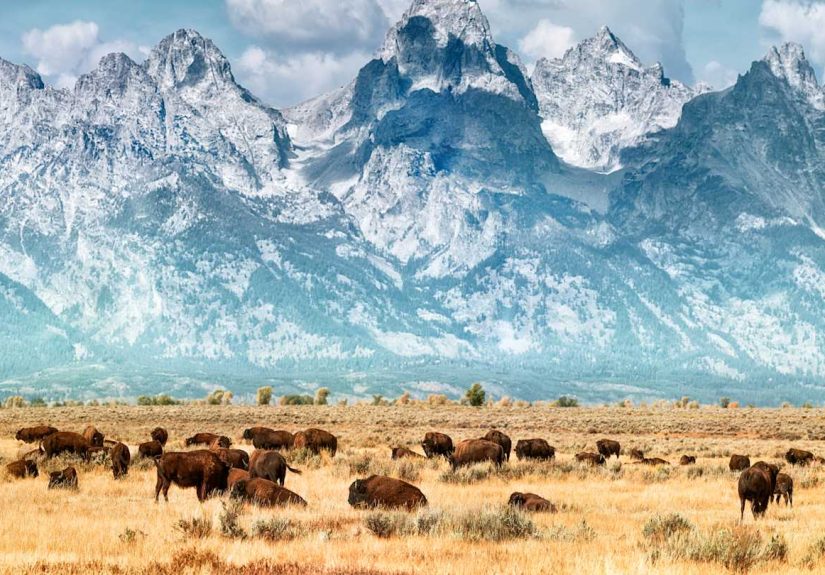
Then you see them. At first, bison are just dark shapes scattered across the valley floor, like somebody dropped boulders in a
hurry. But as the sun rises, the shapes move. Heads swing side to side. A calf tries to keep up with a cow that clearly did not
sign up for childcare chaos today. And suddenly the grassland isn’t a static backdropit’s a working system with bison as the
moving parts.
Watch closely and you’ll notice how they graze: not evenly, not politely, and definitely not according to any human landscaping
plan. A group will focus on one patch, mowing it down with determined efficiency, then drift away as if they’ve “completed the
level.” Weeks later (or sometimes sooner), that spot often pops back greener than the surrounding meadowfresh regrowth that looks
like the grass version of a second wind. Nearby, taller vegetation remains, creating cover and variety. That contrastshort here,
tall thereis the grassland telling you it’s being shaped, not merely existing.
You might spot a wallow, too: a dusty oval where the ground looks scuffed and compacted, sometimes ringed by slightly different
plants. After a rain, it can hold water just long enough to attract insects, then birds, then the kind of quiet attention you
don’t realize you’ve been missing. It’s easy to think of wallows as “just bison being gross,” but standing there, you can sense
how a small disturbance creates opportunity for life to organize differently.
The most memorable moments are often the simplest: a bull bison shaking off dust like a living thundercloud, the soft ripping
sound of grass being pulled, the way a herd’s movement leaves faint paths through the meadow. And yessometimes the experience
includes a wildlife jam where everyone in line learns patience while a bison decides the road is the perfect place for a slow
walk. Even that is part of the lesson: this is not a zoo exhibit. The grasslands are their home, and we’re visitors passing
through.
Leave the valley with your windows down (when it’s safe and appropriate), and you’ll carry the smell of sage and sun-warmed grass
plus a new understanding: Yellowstone’s grasslands aren’t revitalized by accident. They’re revitalized by thousands of daily
bison choiceswhere to graze, where to move, where to wallowstacking up into an ecosystem that feels, unmistakably, alive.