Table of Contents >> Show >> Hide
- Why boiling sweet potatoes works (and when it doesn’t)
- Pick the right sweet potatoes (so they cook evenly)
- What you’ll need
- Method 1: How to boil sweet potatoes whole
- Method 2: How to boil sweet potatoes cubed (fastest route to dinner)
- How long to boil sweet potatoes
- The doneness test (aka how to avoid “almost cooked”)
- Small upgrades that make a big difference
- Common mistakes (and how to fix them)
- How to use boiled sweet potatoes
- Storage and food safety
- FAQ: Boiling sweet potatoes
- of real-life “boiling sweet potatoes” experiences (the kind you actually relate to)
- Final takeaway
Boiling sweet potatoes sounds like the culinary equivalent of watching paint dry… until you realize it’s one of the fastest ways to get reliably tender, meal-prep-friendly sweet potatoes without turning on your oven or committing to an hour-long roast. Done right, boiled sweet potatoes come out creamy (not waterlogged), evenly cooked (no “raw core surprise”), and ready for everything from mash to salads to baby food to “I’m eating this straight from the bowl with butter and nobody can stop me.”
This guide covers exactly how to boil sweet potatoes whole or cubed, how long it takes, how to test doneness like a pro, and the tiny tweaks that make the difference between “silky” and “sad sponge.”
Why boiling sweet potatoes works (and when it doesn’t)
Boiling is moist heat cooking: the starches soften, the flesh turns fork-tender, and the potato becomes easy to mash. It’s also a neutral methodmeaning your sweet potatoes won’t pick up roasted caramel notes the way baking does. That’s a feature, not a bug, when you want sweet potatoes for:
- Mashed sweet potatoes (especially for casseroles or weeknight sides)
- Sweet potato purée for soups, baking, or baby food
- Meal prep for grain bowls, tacos, salads, and wraps
- Quick weeknight cooking without heating up the kitchen
When boiling isn’t your best move: if you want deeply sweet, caramelized flavor or crispy edges, you’ll be happier roasting or air-frying. Boiling is about texture and speed.
Pick the right sweet potatoes (so they cook evenly)
Any common U.S. grocery-store sweet potato works here (including the orange-fleshed varieties often labeled “yams”). The real secret is size consistency.
Quick shopping checklist
- Firm potatoes with smooth-ish skin (minor scuffs are fine; soft spots are not).
- Similar size if boiling wholethis keeps cook times predictable.
- If you need speed, choose smaller potatoes or cut them into cubes.
A note on peeling: it’s optional. Boiling with the skin on can help the potato hold together, and peeling after boiling can be easier (the skin often slips off once cooled slightly). If you’re making a silky purée, peeling before boiling is also totally finejust don’t cut the pieces into wildly different sizes unless you enjoy fishing out undercooked chunks like a culinary claw machine.
What you’ll need
- Sweet potatoes (as many as your pot can comfortably handle)
- Large pot with lid
- Water
- Salt (optional but recommended)
- Colander
- Fork or small knife (for doneness testing)
Optional flavor add-ins (use sparingly if you want versatile potatoes): garlic cloves, a bay leaf, rosemary sprigs, or a pinch of cinnamon. Think “gentle background music,” not “full concert.”
Method 1: How to boil sweet potatoes whole
Whole sweet potatoes are perfect when you want minimal prep and less mess. This method also reduces the chance of waterlogged pieces because the skin acts like a little raincoat.
Step-by-step
- Scrub and rinse. Wash the sweet potatoes well under running water. Drying is optional, but scrubbing is not.
- Start in cold water. Place sweet potatoes in a pot and cover with cold water by about 1 inch. (This helps them heat gradually so the outside doesn’t get mushy before the center softens.)
- Salt the water (optional). Add a generous pinch (or more). Salt seasons the potato from the inside outquietly, politely, and effectively.
- Bring to a boil, then simmer. Bring the pot to a boil over high heat. Reduce heat to maintain a steady simmer (gentle bubbles), and partially cover.
- Cook until fork-tender. Test by inserting a fork or knife into the thickest part. It should slide in with little resistance.
- Drain and steam-dry. Drain in a colander, then return the potatoes to the hot (empty) pot for 1–2 minutes to let excess moisture evaporate. This is the “no watery mash” move.
- Peel (if you want). Let them cool a few minutes. The skin often peels off easily using your fingers or a paring knife.
Method 2: How to boil sweet potatoes cubed (fastest route to dinner)
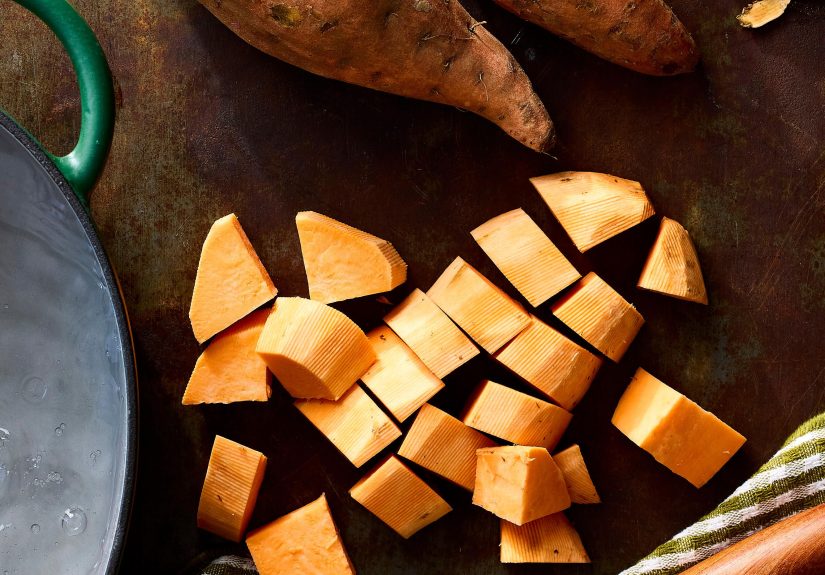
Cubes cook quicker and are ideal for mash, soups, and meal prep. The key is uniform sizeaim for 1-inch cubes for the best balance of speed and control.
Step-by-step
- Peel (optional) and cut evenly. Cut into 1-inch cubes (or 2-inch chunks if you want them to hold shape more).
- Cover with cold water. Put cubes in a pot and cover with cold water by about 1 inch.
- Add salt. Optional, but it improves flavor the way a good soundtrack improves a road trip.
- Boil, then simmer. Bring to a boil, reduce to a steady simmer.
- Cook until fork-tender. Test a couple of piecesespecially the biggest one (the boss cube).
- Drain and steam-dry. Drain, then return to the warm pot for a minute to evaporate moisture.
Want cubes that stay intact for salads? Pull them when they’re tender but not collapsingyour fork should pierce easily, but the cube should still hold its edges when lifted.
How long to boil sweet potatoes
Timing depends on size, cut, and how aggressively you boil. Use this as a reliable starting point, then rely on the doneness testbecause sweet potatoes don’t care about your schedule.
| Cut / Size | Typical Time | Best For | Doneness Cue |
|---|---|---|---|
| Whole (medium) | 35–50 minutes | Easy peeling, meal prep, stuffing | Knife slides into center easily |
| Whole (small) | 25–35 minutes | Quick sides | Fork pierces thickest part |
| Whole (large) | 50–60+ minutes | Batch cooking | No resistance at the core |
| 1-inch cubes | 12–18 minutes | Mash, bowls, soups | Fork-tender, not falling apart |
| 2-inch chunks | 20–25 minutes | Salads, casseroles | Tender with structure |
| Slices (½-inch) | 8–12 minutes | Quick mashes, purées | Very soft, easy to blend |
High altitude note: If you’re cooking at higher elevations, boiling happens at a lower temperature, so foods often take longer to soften. Expect to add time and test doneness more often.
The doneness test (aka how to avoid “almost cooked”)
Sweet potatoes can look done on the outside but still be firm in the centerespecially when boiled whole. The fix is simple: test the thickest part.
Use the right tool
- Knife test: A paring knife sliding into the center with little resistance is the most reliable for whole potatoes.
- Fork test: Great for cubes/chunkspierce and lift. If it breaks or bends, it’s very tender. If it clings stubbornly, keep simmering.
Cook to your end goal
- For mash/purée: cook until very soft. Your fork should glide through like it’s on vacation.
- For salads/bowls: cook until tender but still holding shapeno crumbling edges.
Small upgrades that make a big difference
1) Start in cold water for even cooking
Starting in cold water allows the sweet potato to heat gradually, helping the center and exterior cook more evenly. (Dropping a cold potato into boiling water can overcook the outside before the inside catches up.)
2) Simmerdon’t violently boil
A roaring boil can knock pieces around, breaking them up and turning the water cloudy. A steady simmer gives you tenderness without chaos.
3) Steam-dry after draining
Drain, then return the potatoes to the hot pot for a minute or two. This evaporates surface water and helps prevent watery mash. It’s the “quiet professional” step.
4) Season smart
If your sweet potatoes are headed to a savory dish, salt the water. If they’re going into dessert, keep the water lightly salted or plain. You can always add butter, maple, cinnamon, chili-lime, or garlic latersweet potatoes are flexible like that.
Common mistakes (and how to fix them)
Mistake: The outside is mushy but the inside is firm
This usually happens with very large whole sweet potatoes or when starting them in already-boiling water. Fix: start in cold water next time and simmer gently. For today, keep simmering and test the center.
Mistake: Watery mashed sweet potatoes
Fix it fast: drain well, steam-dry in the hot pot, then mash. If it’s still loose, simmer the mash on low heat for a minute while stirring to evaporate excess moisture. (Think “reduce,” not “incinerate.”)
Mistake: Unevenly cooked cubes
That’s a size problem. Cut pieces evenly and don’t overload the pot. If you already have uneven cubes, scoop out the tender ones and keep the firm ones simmering for a few more minutes.
Mistake: Bland sweet potatoes
Salt the water next time. For now, finish with butter, olive oil, a squeeze of lemon, a pinch of flaky salt, or a spice blend. Sweet potatoes love a good accessory.
How to use boiled sweet potatoes
Fast serving ideas
- Simple side: Butter + salt + black pepper (add cinnamon if you’re feeling cozy).
- Savory bowl: Toss cubes with olive oil, cumin, and a little chili powder; add black beans and avocado.
- Sweet option: Mash with a splash of milk, maple syrup, and a pinch of salt.
- Soup shortcut: Blend boiled sweet potatoes with broth and sautéed onions for instant creamy texture.
Storage and food safety
Let boiled sweet potatoes cool, store them in an airtight container, and refrigerate promptly. For best quality, use within a few days. You can also freeze cooked sweet potatoes for longer storage (great for meal prep and smoothies).
Quick storage rules
- Refrigerator: typically good for about 3–4 days.
- Freezer: freeze cooked sweet potatoes for months; for best quality, label and use within a practical window.
- Raw sweet potatoes: store in a cool, dry, well-ventilated place; the fridge can negatively affect texture/flavor for raw whole sweet potatoes.
FAQ: Boiling sweet potatoes
Do I have to peel sweet potatoes before boiling?
Nope. Boil with skins on for less mess and easier handling, then peel after if desired. Peel before boiling if you’re making an ultra-smooth purée or want cubes ready to toss into a recipe immediately.
Should I cut sweet potatoes before boiling?
If you want speed, yescubes cook much faster than whole. If you want easier peeling and fewer broken pieces, boil whole.
Can I boil sweet potatoes ahead of time?
Absolutely. Boiled sweet potatoes are meal-prep gold. Cool, store airtight, then reheat gently in the microwave or on the stove with a splash of water or butter.
Can I boil sweet potatoes from frozen?
If they’re already cut and frozen, you can simmer them straight from frozen. Add a few minutes and test doneness. (Whole frozen sweet potatoes are harder to cook evenlythawing helps.)
of real-life “boiling sweet potatoes” experiences (the kind you actually relate to)
There’s a special kind of optimism that hits right before you boil sweet potatoes. You look at three giant sweet potatoes and think, “This will be a quick side dish.” Then you put them in a pot whole, and 20 minutes later you’re poking them like a suspicious scientist: the outside feels soft, but the center is still doing CrossFit.
This is usually the moment people learn two universal truths: (1) sweet potatoes are not all the same size, and (2) “fork-tender” is not a vibeit’s a specific, testable condition. A knife sliding into the center is the clearest sign you’re done. If you’re only testing the tip of the potato, you’re basically judging a book by the first page and then acting shocked when the plot changes.
Another common scene: you’re making mashed sweet potatoes for a weeknight dinner, and you cut them into “roughly even” chunks. One chunk is the size of a marble, another is the size of a small rental car. Ten minutes into simmering, the tiny pieces are dissolving into the water like they owe it money, while the big pieces are still firm. The fix is easyfish out the tender pieces and keep cooking the stubborn onesbut it’s a lot easier to cut evenly in the first place. If you want a mindless rule: 1-inch cubes are the sweet spot.
Then there’s the watery mash panic. You drain, you mash, and suddenly your “creamy side dish” looks like it needs a straw. This is where the steam-dry step earns its reputation. Returning drained potatoes to the warm pot for a minute or two lets excess moisture evaporate. It’s not flashy, but neither is flossing, and we all know how that story ends. If the mash is already loose, you can gently heat it while stirring to evaporate extra water. (Low heat, patience, and zero doom-scrolling while the stove is on.)
Meal-prep people have their own sweet potato saga: you boil a big batch, cool it, and suddenly you have a week of easy breakfasts and lunches. Cubes go into grain bowls. Whole sweet potatoes get split and topped like baked potatoes: savory with beans and salsa, or sweet with yogurt and cinnamon. The funny part is how quickly “I’m preparing healthy food” turns into “I’m standing at the fridge eating cold sweet potato like it’s a leftover brownie.” And honestly? Respect.
The best experience, though, is when you nail it: tender but not mushy, seasoned just enough, and versatile enough to become dinner three different ways. Boiling sweet potatoes isn’t glamorousbut it’s dependable, and dependable is underrated. (So are colanders that don’t wobble, but that’s a separate issue.)