Table of Contents >> Show >> Hide
- Why Bathroom Floors Get Dirty So Fast
- Step Zero: Know What Kind of Floor You’re Cleaning
- What You’ll Need (Keep It Simple)
- The Weekly Clean: A 15–20 Minute Bathroom Floor Reset
- Deep Cleaning: How to Clean a Bathroom Tile Floor (and Grout) the Right Way
- How to Disinfect a Bathroom Floor (When It Actually Makes Sense)
- Floor-Type Cheat Sheet: What to Use (and What to Avoid)
- Problem Solver: Common Bathroom Floor “Why Is This Happening?” Moments
- Maintenance Habits That Keep Your Bathroom Floor Clean Longer
- Mistakes That Make Bathroom Floors Dirtier (Even When You’re Trying)
- Real-World Experiences: What People Learn After Cleaning a Bathroom Floor (About )
- Experience #1: “My tile looks clean, but the grout still looks… haunted.”
- Experience #2: “I cleaned my vinyl floor and now it’s streakyand somehow slippery.”
- Experience #3: “I tried a ‘natural’ hack and now my stone floor looks dull.”
- Experience #4: “I cleaned everything, but the bathroom still smells off.”
- Conclusion: A Clean Bathroom Floor Is Mostly a System
Bathroom floors are basically the group chat of your home: everyone shows up, no one cleans up after themselves,
and somehow there’s always drama (hair, toothpaste, mystery splashes, and that “why is it sticky?” moment).
The good news: you don’t need a chemistry degree or a weekend-long “deep clean era” to get your bathroom floor
looking (and smelling) normal again.
This guide walks you through a smart, safe, and actually doable routine for how to clean a bathroom floorwhether
you’ve got tile and grout, vinyl, linoleum, or natural stone. We’ll cover quick weekly cleaning, deep cleaning for grime,
and the right way to disinfect when it matters. No fluff, no weird hacks that ruin finishes, and no “just replace the floor”
energy.
Why Bathroom Floors Get Dirty So Fast
Compared to other rooms, bathrooms are a perfect storm: moisture + skin oils + product residue + warm air.
That combo makes dirt stick and helps mildew and odor hang around longer than an awkward goodbye.
- Soap scum and shampoo overspray dry into a dull film.
- Hard-water minerals leave chalky spots near tubs and showers.
- Hair + dust form those little tumbleweeds behind the door.
- Grout lines trap grime like they’re saving it for later.
Step Zero: Know What Kind of Floor You’re Cleaning
The safest bathroom floor cleaner depends on the material. If you’re not sure, start gentle (warm water + a few drops of
dish soap) and avoid acids and abrasives until you confirm the surface.
Quick ID Tips (No, You Don’t Need a Lab)
- Ceramic/porcelain tile: Hard, usually has visible grout lines, often glossy or matte.
- Vinyl sheet or vinyl tile/LVP: Slightly softer underfoot, seams may be subtle, often has a printed pattern.
- Linoleum: Older homes may have it; feels resilient and “warm,” often in solid colors or vintage patterns.
- Natural stone: Marble/travertine/slate looks varied and organic; it hates acidic cleaners.
What You’ll Need (Keep It Simple)
You can clean most bathroom floors with a small kit. Think: fewer products, better results, less clutter under the sink.
- Broom, dry mop, or vacuum designed for hard floors
- Microfiber mop or flat mop (better than a sponge mop for grout)
- Bucket (or a spray mop + refillable bottle)
- Mild dish soap
- pH-neutral floor cleaner (especially for tile and stone)
- Baking soda (gentle scrub power)
- Hydrogen peroxide (great for whitening dingy groutuse carefully and spot-test)
- Soft nylon scrub brush or grout brush / old toothbrush
- Clean microfiber cloths or old towels for drying
- Optional: disinfectant (only when neededsee the disinfecting section)
- Gloves and ventilation (open a window or run the fan)
The Weekly Clean: A 15–20 Minute Bathroom Floor Reset
If you do nothing else, do this once a week. It prevents the “why is my grout turning gray?” situation and makes deep
cleaning way easier.
1) Clear the floor (yes, even the tiny trash can)
Move bath mats, bins, and anything that lives on the floor. Shake mats outside or toss them in the wash (check the label).
This also keeps you from mopping around objects like you’re playing a very boring video game.
2) Dry clean first: sweep or vacuum
Start dry. If you mop over dust and hair, you’ll create wet gritbasically sandpaper paste.
Get corners, behind the toilet, and along the baseboards.
3) Mix a gentle cleaning solution
For most floors: warm water + a few drops of dish soap works well. If the floor is especially grimy, use a pH-neutral floor
cleaner according to the label. More soap does not mean more cleanit usually means more sticky residue.
4) Mop in sections (and keep your water honest)
Mop a small area at a time. Rinse the mop frequently, and change the water if it starts looking like weak iced coffee.
Dirty water is how you get that “cleaned but somehow worse” haze.
5) Rinse (if needed) and dry
If you used soap or cleaner, a quick pass with clean water helps prevent filmespecially on tile. Then dry with a towel or
microfiber cloth. Drying is the underrated secret to preventing slips, water spots, and mildew.
Deep Cleaning: How to Clean a Bathroom Tile Floor (and Grout) the Right Way
Tile is tough, but grout is porous and loves to hold onto stains. Deep cleaning is for when the grout looks darker than you
remember, the floor feels sticky, or you’re dealing with mildew or buildup.
1) Pre-treat grout with a paste
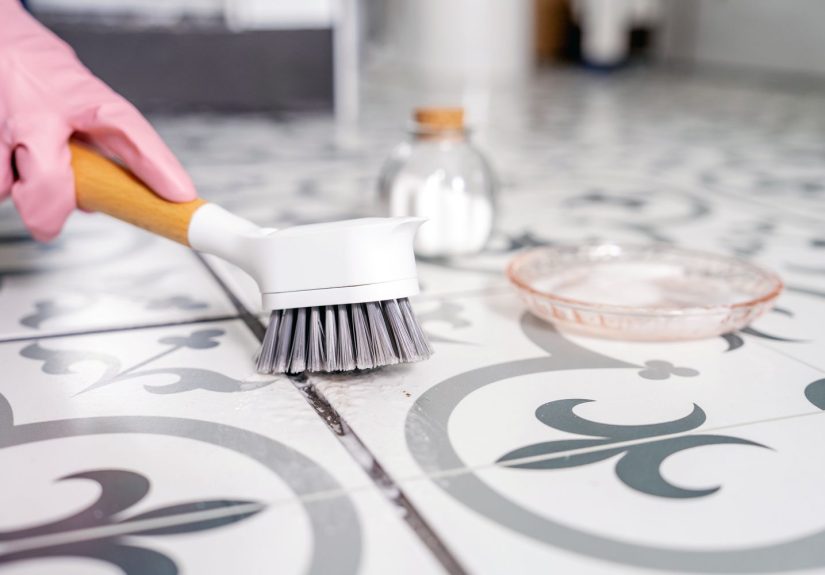
Make a paste with baking soda and a little water (think: toothpaste consistency). Spread it along grout lines.
Let it sit for 10–15 minutes.
2) Scrub with a nylon brush
Use a grout brush or an old toothbrush for edges. Scrub in short strokes. Avoid metal brushesthey can damage grout and
scratch tile.
3) For stubborn grout stains: baking soda + hydrogen peroxide
If grout is still dingy, mix baking soda with hydrogen peroxide into a paste. Apply, let it sit a few minutes, then scrub.
Spot-test first, especially if you have colored groutyou don’t want accidental “tie-dye grout.”
4) Rinse thoroughly and dry
Wipe up the paste with clean water and a cloth, then dry the area. Any leftover cleaner can attract dirt later.
5) Consider resealing grout
If your grout stains easily or stays damp, it may need resealing. A good sealer helps resist moisture and grime, and it can
make routine cleaning faster.
How to Disinfect a Bathroom Floor (When It Actually Makes Sense)
Cleaning removes dirt; disinfecting reduces germs. Most weeks, cleaning is enough. Disinfect when someone in
the home is sick, after a stomach-bug situation, or if there’s been contamination (like a pet accident or toilet overflow).
Disinfecting rules that keep you safe (and your floor intact)
- Never mix chemicals (especially bleach with ammonia or acids). That can create dangerous fumes.
- Ventilate: run the fan and/or open a window.
- Follow the label for dilution and contact time (the surface must stay visibly wet for the stated time).
- Keep products away from kids and pets; wash hands after.
A practical disinfecting approach
- Clean first. Disinfectants work better on a dirt-free surface.
- Apply disinfectant as directed (spray or wipe). Ensure the floor stays wet for the required contact time.
- Rinse if the label says to, especially on floors that bare feet touch.
- Dry the floor to reduce slipping and prevent water spots.
If you use diluted bleach, follow official guidance and the product label. Use regular household bleach (not splashless),
mix only what you need, and label the bottle. When in doubt, choose an EPA-registered disinfectant and use it exactly as
the label describes.
Floor-Type Cheat Sheet: What to Use (and What to Avoid)
Ceramic or Porcelain Tile
- Best routine cleaner: warm water + mild dish soap or a pH-neutral tile cleaner
- For grout: baking soda paste; hydrogen peroxide paste for tougher stains (spot-test)
- Avoid: abrasive powders on glossy tile; metal brushes; leaving dirty water sitting in grout lines
Vinyl (Sheet Vinyl, Vinyl Tile, LVP)
- Best routine cleaner: warm water + a small amount of gentle cleaner (or manufacturer-approved product)
- Technique tip: use a dampnot soakingmop; rinse well to prevent film
- Avoid: abrasive scrubbers, harsh solvents, and anything that leaves the floor slick
Linoleum
- Best routine cleaner: mild soap in warm water; wring your mop well
- Extra care: linoleum can dull if you use harsh chemicals repeatedly
- Avoid: overly alkaline or harsh cleaners; too much water sitting on seams
Natural Stone (Marble, Travertine, Slate)
- Best routine cleaner: pH-neutral stone cleaner
- Spot-test everything: even “natural” cleaners can etch stone
- Avoid: vinegar, lemon, bleach splashes, and abrasive powders (they can etch or scratch)
Problem Solver: Common Bathroom Floor “Why Is This Happening?” Moments
Sticky floor film
Usually it’s leftover cleaner or product overspray. Fix it by mopping once with warm water only (no soap), then drying.
Next time, use less cleaner and change your water more often.
Pinkish/orange grime near the shower
Bathrooms can develop biofilm in damp areas. Clean regularly, improve airflow, and dry the floor after showers.
If discoloration persists, use a bathroom-appropriate cleaner and follow directions carefully.
Mildew smell that won’t quit
The smell often comes from constant moisture: wet bath mats, poor ventilation, or tiny leaks. Wash mats weekly,
run the fan for 20–30 minutes after showers, and check the toilet base and supply line for slow drips.
Dark grout lines
Deep-clean grout, then consider resealing. Also, skip sponge mops that push dirty water into grout like it’s their job
(because it kind of is).
Maintenance Habits That Keep Your Bathroom Floor Clean Longer
- Use washable bath mats and launder them often (they trap oils and moisture).
- Dry the floor near the shower after bathing30 seconds now beats scrubbing later.
- Ventilation matters: run the fan, crack a door, or open a window.
- Address leaks fast (toilet base, tub edge, sink trap). Water damage is expensive “dirt.”
- Keep a small brush handy for quick grout touch-ups before they become a project.
Mistakes That Make Bathroom Floors Dirtier (Even When You’re Trying)
- Using too much cleaner: residue attracts dirt and makes floors dull and sticky.
- Not dry-cleaning first: hair + dust + water = grime paste.
- Cleaning with dirty water: you’re basically “seasoning” the floor.
- Using the wrong tool: sponge mops can push grime into grout; abrasive pads can scratch finishes.
- Ignoring contact time: disinfectants need time to workquick swipe, quick disappointment.
Real-World Experiences: What People Learn After Cleaning a Bathroom Floor (About )
Cleaning advice is greatuntil you’re standing in socks on a floor that feels oddly tacky, wondering if you invented a new
kind of glue. Here are a few common “real life” bathroom floor cleaning experiences people run into, and the lessons that
usually fix them.
Experience #1: “My tile looks clean, but the grout still looks… haunted.”
This happens a lot in bathrooms with light grout. The tile surface wipes clean fast, but grout is porous and holds onto
soap scum and dirt. A common turning point is switching from random scrubbing to a two-step plan: (1) apply a baking soda
paste and let it sit long enough to loosen grime, then (2) scrub with a nylon brush and rinse thoroughly. People are often
surprised that the “sit time” matters as much as the scrubbing. The other big lesson: a sponge mop can keep re-darkening
grout because it pushes dirty water into the lines. Switching to a microfiber flat mop (and changing water often) usually
keeps grout brighter between deep cleans.
Experience #2: “I cleaned my vinyl floor and now it’s streakyand somehow slippery.”
Vinyl is forgiving, but it’s also a magnet for residue. A very typical story: someone uses too much all-purpose cleaner (or
a product that’s not meant for vinyl), and the floor dries with streaks or a slightly slick feel. The fix is usually simple:
mop once with warm water only to rinse away film, then dry with a towel. Going forward, less product is the movethink a
small amount of gentle cleaner, a well-wrung mop, and a quick rinse if needed. Another “aha” moment is realizing that
floors can look dirty because of leftover cleaner, not because they’re actually dirty.
Experience #3: “I tried a ‘natural’ hack and now my stone floor looks dull.”
Natural stone bathrooms (marble, travertine) are where good intentions go to get humbled. Many people learn the hard way
that vinegar and lemonpopular “natural cleaning” favoritescan etch stone and leave dull spots. The course correction is
adopting pH-neutral stone cleaner and treating the floor like a nice countertop: gentle products, soft tools, no abrasives,
and no acidic sprays. Another lesson: standing water is a troublemaker. Drying the floor after cleaning (and after showers)
helps prevent mineral spots and keeps the surface looking polished longer.
Experience #4: “I cleaned everything, but the bathroom still smells off.”
This is usually not a “floor cleaner” problemit’s a moisture problem. People often discover the odor source is a damp bath
mat, a slow leak near the toilet base, or humidity that never gets vented out. Once mats are washed regularly, the fan is
used consistently, and tiny leaks are addressed, the room smells fresher even without heavy fragrance products. The big
takeaway: the cleanest bathroom floor is the one that actually gets to dry.
The overall pattern in these experiences is reassuring: most bathroom floor problems aren’t “permanent stains” or “bad
flooring.” They’re usually residue, tool choice, or moisture habits. When you match the method to the material and keep a
simple routine, your floor stops acting like a science project.
Conclusion: A Clean Bathroom Floor Is Mostly a System
If you want the fastest path to a consistently clean bathroom floor: dry clean first, mop with a gentle solution, rinse
when needed, and dry the floor so moisture doesn’t invite grime back in. Deep-clean grout occasionally, disinfect only when
it matters, and avoid harsh products that damage finishes. Do that, and your bathroom floor will look less “public restroom”
and more “yes, a functioning adult lives here.”