Table of Contents >> Show >> Hide
- Why Natural Sofa Cleaning Works
- Before You Clean: Check the Upholstery Tag First
- What You Need for Natural Upholstery Cleaning
- DIY Upholstery Cleaning Solutions That Actually Make Sense
- How to Clean a Fabric Sofa Naturally: Step by Step
- How to Remove Common Sofa Stains Naturally
- Common Mistakes to Avoid
- How Often Should You Clean a Fabric Sofa?
- When to Call a Professional Upholstery Cleaner
- Real-World Experiences With Natural Fabric Sofa Cleaning
- Final Thoughts
Your fabric sofa does a lot of unpaid labor. It hosts movie nights, surprise naps, snack crumbs, pet hair, coffee spills, and the occasional mystery stain that appears with the confidence of someone who pays rent. The good news is that you do not need a cabinet full of harsh chemicals to get it clean. In many cases, a smarter, gentler approach works better anyway.
If you want to clean a fabric sofa naturally, the secret is not some magical viral hack. It is a practical method: know your upholstery code, vacuum first, use simple DIY upholstery cleaning solutions carefully, blot instead of scrub, and dry the fabric quickly. That combination can freshen a dingy couch, cut odors, lift many everyday stains, and help your furniture last longer.
This guide breaks down exactly how to clean a fabric sofa naturally, what homemade upholstery cleaners actually make sense, which ingredients to avoid, and how to deal with real-life problems like grease spots, coffee drips, pet smells, and those suspicious armrest shadows that say, “Yes, people do live here.”
Why Natural Sofa Cleaning Works
Natural fabric sofa cleaning works best when you focus on the basics: removing dry debris, absorbing odors, loosening grime with mild soap, and using as little moisture as possible. A fabric couch usually gets dirty in layers. First comes dust and lint. Then body oils, skin cells, airborne grime, food residue, and spot stains settle in. If you jump straight to spraying everything, you often turn light dirt into muddy streaks.
That is why the best natural upholstery cleaning routine starts dry. Vacuuming, brushing, and using baking soda for odor control often make a bigger difference than people expect. After that, a mild water-based cleaner can handle many common stains on fabrics marked safe for water-based care.
Natural does not mean reckless, though. Vinegar, baking soda, and hydrogen peroxide all have their place, but they are not universal couch potions. Some fabrics hate moisture. Some react badly to acids. Some dark or delicate fibers can fade, shrink, or pill if you get too enthusiastic. Translation: your sofa has boundaries, and it would appreciate you respecting them.
Before You Clean: Check the Upholstery Tag First
Before you mix a single DIY cleaning solution, look for the manufacturer’s cleaning code tag. It is usually under a cushion or attached beneath the sofa frame. This little label is basically the sofa’s instruction manual, except smaller and easier to ignore.
- W: Safe for water-based cleaners.
- WS or W/S: Safe for either water-based or solvent-based cleaners.
- S: Use solvent-based cleaners only. Skip homemade water-based solutions.
- X: Vacuum only or professional cleaning only.
If your sofa is marked W or WS, you can usually use the natural DIY methods in this article after spot-testing. If it is marked S or X, do not treat it like a science fair project. Stick to vacuuming, dry methods approved by the manufacturer, or call a professional upholstery cleaner.
Also be extra careful with velvet, silk, wool, leather trim, antique upholstery, or dark richly dyed fabrics. Even natural ingredients can cause water marks, fading, or texture changes.
What You Need for Natural Upholstery Cleaning
You do not need a fancy kit. You need the right small group of tools used in the right order.
- Vacuum with upholstery brush attachment
- White microfiber cloths or lint-free cloths
- Soft-bristled brush
- Spray bottle
- Small bowls
- Warm distilled water
- Mild dish soap
- White vinegar
- Baking soda
- Cornstarch for oily stains
- Hydrogen peroxide for light, colorfast fabrics only
- Fan or open windows for fast drying
Distilled water is a smart choice if your tap water is hard or tends to leave mineral marks. It is a small detail, but small details are often the difference between “freshly cleaned” and “why does my couch now have a water halo?”
DIY Upholstery Cleaning Solutions That Actually Make Sense
1. Everyday Natural Fabric Sofa Cleaner
This is the best all-purpose DIY upholstery cleaning solution for most W and WS sofas:
Mix: 1 cup warm distilled water + 1 teaspoon mild dish soap + 1 tablespoon white vinegar
This solution is gentle enough for routine spot cleaning on many water-safe fabrics. The dish soap helps lift oily grime, while the vinegar can help cut light odor and residue. Use it lightly. A sofa should be dampened, not marinated.
2. Natural Deodorizing Powder
Use: Plain baking soda
Sprinkle a light, even layer over dry upholstery, let it sit for at least 30 minutes and up to several hours, then vacuum thoroughly. This works well for stale smells, light moisture, and the general “lived-in” aroma that develops when a couch becomes the emotional support furniture of the household.
3. Grease and Oil Absorber
Use: Baking soda or cornstarch
For food grease, body oil, or lotion marks, sprinkle the dry powder on the stain first. Let it sit 15 to 30 minutes, or longer for heavier spots, then vacuum. This step often removes a surprising amount before any wet cleaning is needed.
4. Light-Fabric Stain Lifter
Mix: 2 to 3 tablespoons hydrogen peroxide + 1 tablespoon baking soda
Use this only on light-colored, colorfast fabric and only after spot-testing. It may help with stubborn organic stains, but it can bleach or lighten darker textiles. If your couch is charcoal, navy, emerald, or anything dramatic, keep this mixture far away unless you are hoping for an abstract art effect.
How to Clean a Fabric Sofa Naturally: Step by Step
Step 1: Vacuum Like You Mean It
Remove cushions if possible and vacuum the entire sofa, including seams, crevices, under cushions, and the platform beneath them. Use the upholstery brush attachment and go slowly. Dry debris left behind turns into muddy residue once liquid is added, so this step matters more than people think.
Step 2: Spot-Test Your Cleaner
Apply a tiny amount of your chosen solution to a hidden area. Blot it with a white cloth and let it dry completely. If you see color transfer, texture changes, or ring marks, stop right there and switch methods.
Step 3: Deodorize First if Needed
If the sofa smells stale, sprinkle baking soda over the dry fabric before stain treatment. Let it sit, then vacuum it up. This is especially useful for cushions that trap odors from pets, popcorn, sweat, or that one takeout order that smelled amazing at the time and questionable three days later.
Step 4: Treat Stains by Blotting, Not Scrubbing
Lightly spray your cloth, not the stain itself, or apply a small amount of solution to the cloth first. Blot from the outside of the stain inward so it does not spread. Use a clean part of the cloth as the stain lifts. Avoid aggressive scrubbing, which can damage fibers and make the affected area look worn or fuzzy.
Step 5: Clean the Full Surface in Sections
If the whole sofa looks dull or grimy, work one small section at a time. Lightly mist the cloth with your DIY solution and wipe gently in overlapping passes. Follow with a second cloth dampened with plain distilled water to remove leftover soap residue. Then blot dry with a towel.
Step 6: Dry the Sofa Fast
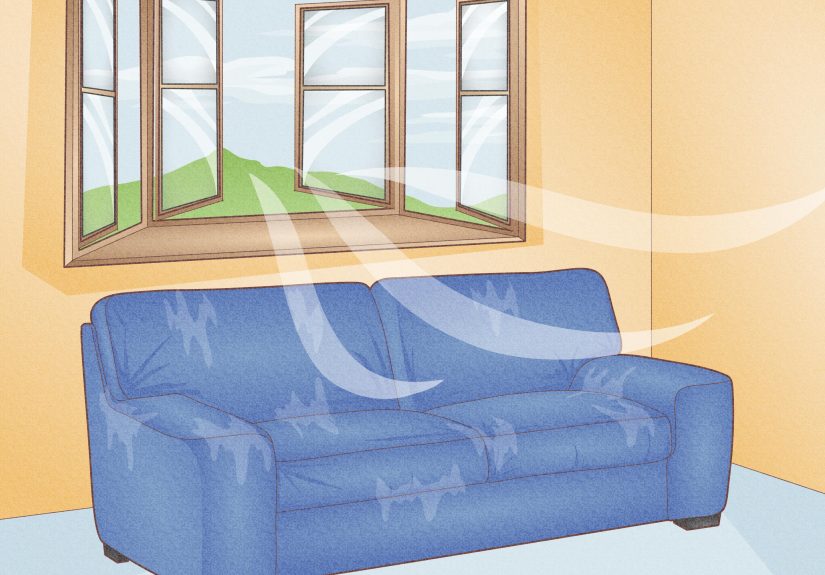
Use fans, open windows, or turn on a dehumidifier if the room is humid. Do not let upholstery stay wet any longer than necessary. Fast drying helps reduce the risk of mildew, lingering odors, and water marks. As a rule, the sofa should feel only slightly damp while cleaning, never soaked.
Step 7: Fluff and Reset the Fabric
Once dry, vacuum again or brush the fibers gently with a soft dry brush. This helps restore texture, especially on microfiber or brushed upholstery.
How to Remove Common Sofa Stains Naturally
Coffee or Tea
Blot immediately with a dry cloth. Then use the mild dish soap and vinegar solution on a cloth and dab gently. Rinse by blotting with a cloth dampened in plain water, then dry thoroughly.
Grease or Pizza Evidence
Apply baking soda or cornstarch first and let it absorb the oil. Vacuum, then use a small amount of the mild cleaner if residue remains. Never start with water on an oily stain unless you enjoy helping it settle in permanently.
Pet Odors or Fresh Organic Messes
Blot first. Use baking soda to absorb odor after the area is mostly dry. For deep pet urine smells, a bio-enzymatic cleaner is often more effective than homemade solutions because it breaks down the odor-causing material instead of simply masking it. Natural cleaning is great, but this is one category where honesty beats ideology.
Water Rings
Ironically, water stains often need careful re-wetting of the surrounding area to even them out. Use a lightly damp cloth with distilled water only, blend outward gently, blot, and dry fast with airflow. The key is using very little moisture and drying evenly.
Food Smudges and General Grime
The everyday cleaner works well here. Use a cloth, not a soaking spray, and clean the entire panel or cushion face if one spot looks noticeably cleaner than the rest. Nothing says “I tried” like one bright rectangle in the middle of a dingy sofa.
Common Mistakes to Avoid
- Skipping the care tag: The fastest route to couch regret.
- Over-wetting the fabric: Too much moisture can cause mold, odor, and water rings.
- Scrubbing hard: This can rough up fibers and spread stains.
- Using dark towels: Dye transfer is not the free bonus you want.
- Leaving soap behind: Residue attracts dirt, so always blot with plain water afterward.
- Using baking soda on delicate fibers aggressively: It can be too abrasive for some materials.
- Trying vinegar on every fabric under the sun: Natural does not mean universally safe.
How Often Should You Clean a Fabric Sofa?
A good routine looks like this:
- Weekly or at least regularly: Quick vacuuming, especially if you have pets, kids, or a snack-based lifestyle.
- As needed: Treat spills immediately.
- Monthly: More thorough vacuuming under cushions and along seams.
- Seasonally or 1 to 2 times a year: Deeper overall cleaning for the full sofa.
If your home is humid, keep airflow moving and indoor humidity under control. A clean sofa that never dries properly can still end up smelling like a damp basement with opinions.
When to Call a Professional Upholstery Cleaner
DIY natural sofa cleaning is excellent for routine maintenance and many light-to-moderate stains. But sometimes the smart move is calling in a pro. Do that if:
- The sofa is marked S or X
- The stain is old, set-in, or spreading
- The piece is vintage, delicate, silk, velvet, or wool
- There is deep pet urine contamination
- The sofa was heavily soaked and may develop mold
- You tried a small area and the fabric reacted badly
There is no shame in outsourcing. Some stains are less “weekend project” and more “specialist with equipment and emotional distance.”
Real-World Experiences With Natural Fabric Sofa Cleaning
One of the most common experiences people have when learning how to clean a fabric sofa naturally is realizing that the sofa was dirtier than it looked. A beige or gray couch can fool you for months. It seems “basically fine” until you vacuum thoroughly, lift the cushions, and discover an archaeological record of pretzel dust, pet hair, and enough lint to knit a scarf. The first lesson is almost always the same: vacuuming is not optional. It is the whole foundation.
Another very common experience is the panic response to a fresh stain. Someone spills coffee, juice, or pasta sauce, and the natural instinct is to grab the nearest towel and scrub like the couch insulted your family. That usually makes things worse. People who get better results tend to be the ones who slow down, blot the spill, check the care tag, and use less product than they think they need. In upholstery cleaning, patience often beats force. The couch is not a frying pan.
Pet owners usually have the most dramatic before-and-after stories. A sofa can look clean but still hold onto odor, especially in the cushions and arms where pets nap, lean, or commit low-level acts of biological sabotage. Baking soda often becomes the surprise hero here. It is not glamorous, and it is definitely not exciting enough for social media, but letting it sit for a few hours and then vacuuming thoroughly can noticeably improve the smell of a sofa. The catch is that deeper urine odors may need an enzymatic cleaner or professional help. Many people learn this only after trying three homemade sprays, opening every window in the house, and still wondering why the couch smells faintly like a wet golden retriever with secrets.
There is also the experience of overdoing it the first time. This happens a lot with water-safe sofas. Someone thinks, “If a little cleaner works, more cleaner will work better,” and suddenly the cushion is far wetter than it should be. Then come the damp smell, the drying anxiety, and the fan pointed at the couch like it is a celebrity on a windy photo shoot. Most experienced homeowners eventually learn the golden rule: the cloth should be damp, the sofa should be lightly treated, and airflow should start immediately.
People also discover that natural cleaning is more about maintenance than miracles. If you vacuum regularly, rotate cushions, treat spills quickly, and deodorize once in a while, the sofa stays manageable. If you ignore it for two years, then attack it with homemade spray during spring cleaning, the results may be a little humbling. Still, even then, natural methods can dramatically improve the look and smell of a couch. A slightly dingy, tired sofa often becomes fresher, brighter, and more presentable with nothing more than careful vacuuming, mild soap, baking soda, and time.
In the end, the best experience people report is not perfection. It is relief. Relief that the stain faded. Relief that the room smells better. Relief that the expensive sofa does not need replacing just because life happened on it. Natural fabric sofa cleaning works best when you treat it less like a dramatic rescue mission and more like regular care. That is usually what brings the best results, and far fewer cleaning-related plot twists.
Final Thoughts
If you want to clean a fabric sofa naturally, keep the formula simple: know the cleaning code, start with vacuuming, use gentle DIY upholstery cleaning solutions, blot carefully, and dry fast. That combination is safer for many fabrics, kinder to the indoor environment, and usually more effective than randomly spraying half the cleaning aisle at your couch.
The best natural method is not the flashiest one. It is the one that matches your fabric, solves the actual problem, and does not create three new problems in the process. Your sofa may never become a museum piece, but it can absolutely stop looking like it has survived a snack-based apocalypse.