Table of Contents >> Show >> Hide
- What the “Little Dipper” Actually Is (So You Know You’re Not Chasing a Spoon)
- Quick Prep: Set Yourself Up to Win
- How to Find the Little Dipper in 11 Steps
- Step 1: Start with “north” (don’t guessaim)
- Step 2: Give your eyes time to adapt
- Step 3: Find the Big Dipper first (your celestial signpost)
- Step 4: Identify the two “pointer stars” on the Big Dipper’s bowl
- Step 5: Draw an imaginary line to Polaris
- Step 6: Confirm you’ve got Polaris (the “not super bright” North Star)
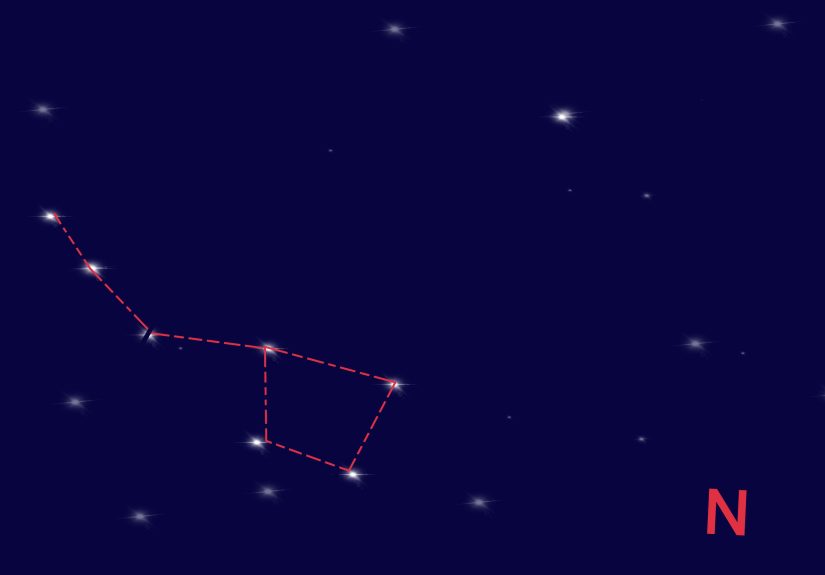
- Step 7: Know what you’re building: Polaris is the end of the Little Dipper’s handle
- Step 8: Trace the handle away from Polaris (use “averted vision”)
- Step 9: Spot the “bowl anchors”: Kochab and Pherkad (the easiest bowl stars)
- Step 10: Connect the dots to complete the dipper shape
- Step 11: Use a backup method: Cassiopeia can also point to Polaris
- Troubleshooting: Why the Little Dipper Is “Missing” (and How to Fix It)
- When Is the Best Time to Look in the U.S.?
- Why Learning the Little Dipper Is Worth It
- Extra: A Simple “Practice Plan” (Because One Night Isn’t Always Enough)
- Experiences in the Real World: of “Yep, That Happens” Moments
- Conclusion
The Little Dipper is the “shy friend” of the night sky: it shows up to the party, but it stands in the corner and refuses to wear a bright outfit. If you’ve ever stared north thinking, “Okay… where is it?”you’re not alone. In many U.S. neighborhoods, light pollution makes the Little Dipper look less like a dipper and more like seven stars playing hide-and-seek with your patience.
The good news: there’s a reliable path to it, and you don’t need a telescope, a PhD, or a dramatic cape. You just need the right strategy, a little (literal) darkness, and a willingness to connect the dots like it’s a cosmic paint-by-number.
What the “Little Dipper” Actually Is (So You Know You’re Not Chasing a Spoon)
The Little Dipper is an asterisma recognizable star patterninside the constellation Ursa Minor (the Little Bear). Its most famous star is Polaris, also called the North Star, which sits at the end of the Little Dipper’s handle. Polaris matters because it appears almost fixed in the sky while other stars seem to rotate around it, making it a classic navigation reference point.
Here’s the catch: most of the Little Dipper’s stars are relatively faint. In typical city or suburban skies, you may clearly see only Polarisand maybe one or two more starsunless you’re in a darker location or using binoculars.
Quick Prep: Set Yourself Up to Win
Choose the right conditions
- Pick a clear night with minimal haze or thin clouds (those can erase faint stars).
- Find a safe spot with a view of the northern horizonaway from streetlights if possible.
- Time it well: the Little Dipper is up year-round in most of the U.S., but it’s easier when the sky is truly dark.
Let your eyes “switch to night mode”
If you step outside from a bright room and immediately try to find faint stars, you’re basically asking your eyes to run a marathon in flip-flops. Give yourself at least 20 minutes to dark-adapt. Use a dim red light if you need illuminationwhite light resets your progress.
Optional helper tools (not required, but very helpful)
- Binoculars (even basic ones) to pull faint stars out of the background.
- A stargazing app in night mode to confirm you’re looking at the right area.
- A compass (or your phone’s compass) to face true-ish north.
How to Find the Little Dipper in 11 Steps
Step 1: Start with “north” (don’t guessaim)
Face north using a compass or your phone. If your northern view is blocked by buildings or trees, movePolaris sits above the north direction, and you’ll want a clean sightline. This is especially important in the southern U.S., where Polaris appears lower in the sky.
Step 2: Give your eyes time to adapt
Wait at least 20 minutes in low light. Avoid looking at car headlights, porch lights, or your phone at full brightness. If you’re with friends, declare a “no flashlights in anyone’s face” policy (this is also good for keeping friends).
Step 3: Find the Big Dipper first (your celestial signpost)
The Big Dipper (part of Ursa Major) is brighter and easier to recognize than the Little Dipper. Look for a pattern that resembles a ladle: four stars forming a bowl and three forming a curved handle. If you can spot this, you’re already holding the map’s “You Are Here” sticker.
Step 4: Identify the two “pointer stars” on the Big Dipper’s bowl
Locate the two stars on the outer edge of the Big Dipper’s bowl (the side farthest from the handle). These are commonly called the pointer stars because they point toward Polaris. Their names are Dubhe and Merak.
Step 5: Draw an imaginary line to Polaris
Imagine a line starting at Merak and going through Dubhe, then extend it outward away from the bowl. Keep going until you hit a moderately bright star: Polaris. A common rule of thumb is that Polaris sits about five times the distance between those two pointer stars.
Step 6: Confirm you’ve got Polaris (the “not super bright” North Star)
Polaris is famous, but it’s not the brightest star in the sky. What makes it special is location: it sits near the north celestial pole, so it doesn’t appear to wander far while the night sky rotates.
Quick sanity checks:
- It’s in the north (not overhead in most of the continental U.S.).
- It looks fairly isolated compared to dense star fields.
- It behaves like a “pivot point”: other stars seem to arc around that area over time.
Step 7: Know what you’re building: Polaris is the end of the Little Dipper’s handle
Once you’ve found Polaris, you’ve found a key anchor point. Polaris marks the end of the Little Dipper’s handle (or the tip of the Little Bear’s tail). The rest of the Little Dipper “hangs” away from Polaris as a gentle curve leading into a small bowl.
Step 8: Trace the handle away from Polaris (use “averted vision”)
From Polaris, look for a faint, slightly curved chain of stars extending away from it. These handle stars can be difficult in light-polluted skies. Use averted vision: look slightly to the side of where you expect a faint star to beyour peripheral vision can detect dim light better.
Step 9: Spot the “bowl anchors”: Kochab and Pherkad (the easiest bowl stars)
If you can’t see the whole dipper, aim for the bowl’s most noticeable corner stars: Kochab and Pherkad, sometimes nicknamed the “Guardians of the Pole.” They sit on the outer part of the bowl (the end farthest from Polaris).
In many U.S. suburban skies, you might see Polaris plus Kochab (and sometimes Pherkad) even when the other Little Dipper stars refuse to cooperate. If you find these, you can often “sketch in” the dipper’s bowl with binocular help.
Step 10: Connect the dots to complete the dipper shape
Now combine what you have:
- Polaris = end of the handle.
- Two faint handle stars curve toward the bowl.
- Kochab & Pherkad help define the bowl’s far edge.
- The remaining bowl stars are dimmerbinoculars and darker skies make them much easier.
If you’re using an app, this is the moment to confirm the pattern and lock the shape into memory. The goal isn’t perfectionit’s recognition.
Step 11: Use a backup method: Cassiopeia can also point to Polaris
On nights when the Big Dipper is low or partially blocked, use Cassiopeia, the “W”-shaped constellation on the opposite side of Polaris. Cassiopeia and the Big Dipper act like two giant signposts on either side of the north sky, both helping guide you back to Polaris.
Once Polaris is confirmed, return to the earlier steps to trace out the Little Dipper from its handle end.
Troubleshooting: Why the Little Dipper Is “Missing” (and How to Fix It)
Problem: “I found Polaris… and nothing else.”
This is extremely common. The Little Dipper’s stars are faint, and urban sky glow can blot them out. Try these fixes:
- Move away from direct lights (a streetlight in your side vision can erase faint stars).
- Give your eyes more time30 minutes can be noticeably better than 10.
- Use binoculars to reveal the handle and bowl stars, then try to see them with naked eyes after you know exactly where they are.
- Go darker: even a short drive can dramatically improve visibility.
Problem: “I think I found it, but it looks tiny and clustered.”
Many beginners accidentally pick the Pleiades (a tight star cluster) and call it the Little Dipper. The real Little Dipper is more spread out, with Polaris clearly separated from the rest of the pattern.
Problem: “I’m in the southern U.S.is it still visible?”
Yes, generally. Polaris appears lower as you go south, but it’s still above the horizon throughout the continental United States. A practical navigation bonus: the height of Polaris above the horizon is approximately your latitude. For example:
- Seattle (~47° N): Polaris sits about 47° above the northern horizonnoticeably high.
- Dallas (~33° N): Polaris sits about 33° upmid-height in the north.
- Miami (~25° N): Polaris sits about 25° uplower, and easier to lose behind buildings/trees.
When Is the Best Time to Look in the U.S.?
Because the Little Dipper is close to the north celestial pole, it’s visible for much of the year across most of the U.S. But “visible” doesn’t always mean “easy.” A few practical notes:
- Spring evenings: the Big Dipper tends to be higher and more obvious, making the pointer-star method feel effortless.
- Summer and fall: the Big Dipper shifts position; still usable, but you may need to scan more.
- Winter: the Big Dipper can sit lower in some locations at certain times, so Cassiopeia can be a better helper.
Why Learning the Little Dipper Is Worth It
Beyond the simple joy of finding a faint pattern that once felt impossible, the Little Dipper is a gateway skill. When you can reliably locate it, you can:
- Find true north outdoors without a compass (Polaris points the way).
- Build star-hopping confidenceusing bright patterns to locate dimmer ones.
- Understand the sky’s motion: watching stars rotate around the pole makes the night feel alive.
Extra: A Simple “Practice Plan” (Because One Night Isn’t Always Enough)
If you want this to become a skill you can do on demand (camping trips love a capable “human planetarium”), try this:
- Night 1: Find the Big Dipper and Polaris only. Stop there. Celebrate anyway.
- Night 2: Find Polaris, then hunt Kochab and Pherkad. Use binoculars if needed.
- Night 3: Attempt the full Little Dipper outline. Sketch it in your notes or phone (in night mode).
- Night 4+: Repeat in a different location or season so your brain learns the pattern in multiple orientations.
Experiences in the Real World: of “Yep, That Happens” Moments
Here’s what many people experience when they first try to find the Little Dipperbecause astronomy guides are great, but real life includes porch lights, impatient friends, and that one neighbor who chooses this exact moment to back a car into the driveway with headlights set to “surface of the sun.”
The most common first win is Polaris. People expect it to be dazzlinglike Sirius-level brightand then feel oddly betrayed when it’s “just a normal-looking star.” The breakthrough usually comes when you stop judging Polaris by brightness and start judging it by geometry. Once the Big Dipper’s pointer stars lead you to a single, steady-looking star in the north, your confidence jumps. You’re no longer randomly staring at space; you’re navigating.
The next phase is the “Now what?” momentbecause in many neighborhoods you can’t immediately see the rest of the Little Dipper. This is where people learn the not-so-romantic truth: the Little Dipper isn’t hard because it’s complicated; it’s hard because it’s faint. A lot of beginners discover that moving ten steps to the other side of the yardso a streetlight isn’t in their peripheral visionsuddenly reveals one more star. Then another. It feels like cheating, but it’s actually how vision works at night.
Binoculars create the biggest “Whoa!” moment. Someone will insist binoculars are unnecessary… right up until the instant they look through them and the missing stars appear like they were there the whole time (because they were). After that, the experience flips: binoculars show you where to look, and then you can often spot the same stars with your naked eye using averted vision. That’s when the Little Dipper becomes a pattern instead of a rumor.
People also tend to remember the night they first saw Kochab and Pherkad. Those two stars make the bowl feel real, like you’re finally outlining an object instead of chasing a concept. In darker skiesduring a camping trip or a drive outside the citythe whole dipper can pop out so clearly that you wonder how it ever seemed hard. That contrast teaches a valuable lesson: your eyes aren’t failing; your sky conditions are.
Finally, there’s the “season shuffle” surprise. The Big Dipper isn’t always in the same place at the same time of night, so the pointer-star line can feel less obvious on certain evenings. Beginners often think they forgot how to do it. They didn’t. The sky simply rotated. The fix is to trust the method: find the dipper, find the pointers, find Polaris, rebuild the Little Dipper from the handle. Do it a few times across different months, and it becomes second naturelike finding the light switch in a dark room without thinking about it.
Conclusion
Finding the Little Dipper is less about luck and more about process: set up good conditions, use the Big Dipper to locate Polaris, then build the rest of the pattern step-by-step. If you only see Polaris at first, congratulationsyou’ve found the anchor point. With darker skies, better dark adaptation, and a little practice, the “shy dipper” turns into a reliable friend you can spot whenever the northern sky is clear.