Table of Contents >> Show >> Hide
- Why hand washing works (and why delicates love it)
- Before you start: a 3-minute prep that saves a $300 sweater
- The step-by-step method: how to hand wash clothes the right way
- Step 1: Pre-treat stains (but don’t bully the fabric)
- Step 2: Fill the basin with the right water temperature
- Step 3: Add detergent to the water (not directly to the garment)
- Step 4: Submerge and soakbriefly and gently
- Step 5: Clean with a gentle swish (no scrubbing, no twisting)
- Step 6: Drain and rinse until the water runs clear
- Step 7: Remove water the safe way (the towel burrito method)
- Step 8: Dry properlyflat, shaped, and out of harsh sunlight
- Fabric-specific hand washing tips (because not all “delicate” is the same)
- Common mistakes that ruin delicates (and how to avoid them)
- Quick examples: what “gentle” looks like in real life
- How often should you hand wash delicates?
- Make hand washing easier (tiny upgrades that feel like cheating)
- Experience: what hand washing delicates is really like (and what I learned the hard way)
- Conclusion
Some clothes are basically the emotional-support animals of your wardrobe: your silk blouse, your lace bra,
your cashmere sweater that costs the same as a small used car. These pieces don’t want “aggressive tumbling”
or “high heat drama.” They want a gentle spa dayaka hand washing.
The good news: learning how to hand wash clothes is not complicated. It’s mostly about
reading the care label, using the right water temperature, choosing a
gentle detergent, and resisting your natural urge to wring the life out of your garments
like a cartoon villain. Do that, and you’ll preserve shape, softness, elasticity, color, and all the little
details that make delicates worth keeping in the first place.
Why hand washing works (and why delicates love it)
Delicate fabrics and detailsthink silk, lace, fine knits, rayon/viscose, and embellished trimscan be damaged by
friction, heat, and heavy agitation. Hand washing reduces all three. You control the motion (gentle swishing, not
wrestling), the soak time, and the rinse. In other words: you are the spin cycle now, but with better judgment.
What counts as “delicate”?
- Silk (especially lightweight weaves)
- Wool and cashmere (knits that can stretch or felt)
- Lace lingerie, bras, and anything with elastic you’d like to keep… elastic
- Rayon/viscose (can weaken and shrink when wet)
- Embellished items (beads, sequins, embroidery, appliqué)
- Structured pieces with linings, pleats, or padding (handle carefully)
Before you start: a 3-minute prep that saves a $300 sweater
1) Read the care label like it’s a plot twist
The care label tells you whether water is safe, what temperature to use, and whether the garment can tolerate any
agitation at all. “Hand wash” usually means water is okaybut the method matters. If it says “dry clean only,”
it’s safest to follow that instruction, especially for structured garments, special finishes, or tricky linings.
2) Do a quick color-check
If the piece is new, intensely dyed, or patterned, test for color bleeding:
dab an inside seam with a damp white cloth. If dye transfers, wash separately in cold water and keep soak time short.
(Bright colors can be dramatic; don’t give them a stage.)
3) Gather your supplies (nothing fancy, just smart)
- A clean sink, basin, or tub (cleaner than your last group project, ideally)
- Cool to lukewarm water (based on the label)
- Gentle liquid detergent made for delicates (or a free-and-clear detergent)
- Two clean towels (one for rolling, one for drying support)
- A drying rack or flat surface
- Optional: mesh bag for small items, sweater comb for pills, white vinegar for occasional rinse freshness
The step-by-step method: how to hand wash clothes the right way
Step 1: Pre-treat stains (but don’t bully the fabric)
Stains should be handled before the soak. Use a tiny amount of gentle detergent on the spot and lightly tap
or press it in. Avoid aggressive rubbingespecially on silk, lace, and knitsbecause friction can roughen fibers,
distort the weave, or snag threads.
Step 2: Fill the basin with the right water temperature
In general, delicates do best in cool to lukewarm water. Cold water helps prevent shrinkage and color
bleeding; lukewarm can help lift light body oils. Hot water is a common culprit for shrinking, fading, and warping
delicate fibersso keep it comfortably cool/tepid unless the label says otherwise.
Step 3: Add detergent to the water (not directly to the garment)
Use a small amountmore detergent doesn’t mean “more clean,” it often means “harder to rinse” and
“mystery residue.” Swish the water to dissolve the detergent before adding the garment so concentrated soap doesn’t
sit on one area and cause fading or unevenness.
Step 4: Submerge and soakbriefly and gently
Turn the garment inside out (especially knits and dark colors). Lower it into the water and press it down so it’s fully
saturated. For most delicates, 5–10 minutes is plenty. For very fragile pieces, keep it closer to 3–5.
Long soaks can encourage dye bleeding and fiber stressyes, even in water that looks innocent.
Step 5: Clean with a gentle swish (no scrubbing, no twisting)
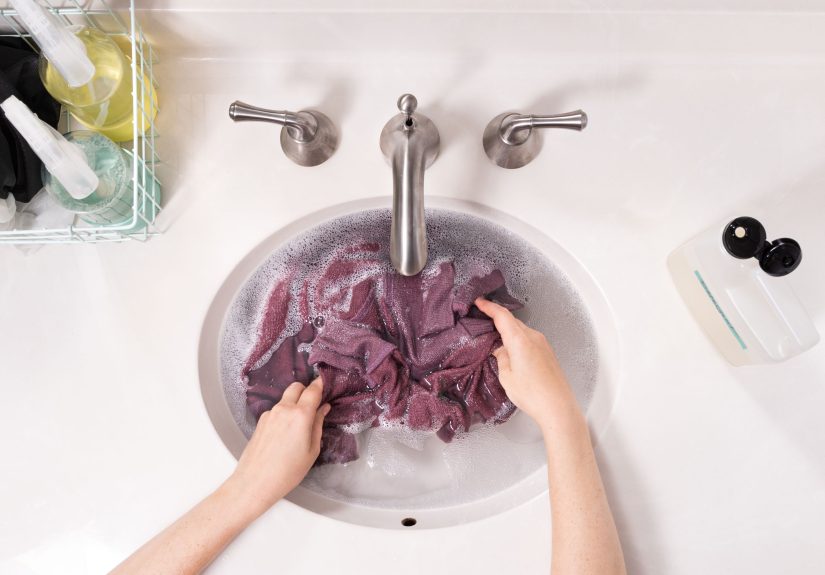
Think “tea bag,” not “washing machine reenactment.” Gently swish and lightly squeeze the fabric through the suds.
Focus on high-contact areas (underarms, collars, waistbands), but keep movements minimal.
Step 6: Drain and rinse until the water runs clear
Drain the soapy water. Refill with cool clean water and swish the garment gently. Repeat as needed until there are
no suds. Residual detergent can make delicates feel stiff, attract soil faster, and irritate sensitive skin.
Step 7: Remove water the safe way (the towel burrito method)
Here’s the biggest rule for preserving delicate pieces:
Never wring or twist. Instead, lift the garment out with both hands and press it against the side of the
basin to remove some water. Then lay it flat on a clean towel, roll the towel up like a burrito (or jelly roll),
and press gently along the roll. The towel absorbs moisture without stretching or distorting the fabric.
Step 8: Dry properlyflat, shaped, and out of harsh sunlight
Many delicatesespecially knitsshould be dried flat to prevent stretching. Reshape the garment
(align seams, smooth edges, restore the original silhouette) and lay it on a dry towel or mesh rack.
Keep it away from direct sun and heat sources that can fade dyes and weaken elastic.
Fabric-specific hand washing tips (because not all “delicate” is the same)
Silk
- Use cold water or cool-lukewarm water; keep soak time short.
- Choose a gentle detergent; avoid harsh stain removers unless the label approves.
- Rinse thoroughly and dry away from direct sunlight to prevent fading.
Wool and cashmere
- Cold water is your best friend; heat + agitation can cause shrinkage and felting.
- Minimal motion: brief soak, gentle squeeze, thorough rinse.
- Dry flat and reshape carefully; never hang wet knits (gravity is not a stylist).
Lace lingerie and bras
- Fasten hooks to prevent snagging; consider a mesh bag even when hand washing.
- Soak briefly and swish gentlyelastic doesn’t love long water vacations.
- Press in a towel; air-dry flat or hang by the center gore (not the straps).
Rayon/viscose
- Handle very gently; the fiber can weaken when wet and may shrink.
- Keep water cool and avoid heavy squeezing.
- Lay flat to dry and reshape; consider professional cleaning for structured rayon pieces.
Embellished items
- Turn inside out, minimize soak time, and avoid rubbing embellishments.
- If beads/sequins feel loosely attached, spot-clean instead of full soaking.
- Dry flat on a towel; don’t let heavy wet embellishments pull the fabric out of shape.
Common mistakes that ruin delicates (and how to avoid them)
Mistake 1: Using too much detergent
Excess detergent is hard to rinse and can leave residue that attracts dirt and dulls fabric. Use a small dose and rinse well.
Mistake 2: Hot water “because it feels cleaner”
Hot water can shrink, fade, and weaken delicate fibers. Unless the care label explicitly allows it, keep water cool to lukewarm.
Mistake 3: Wringing like you’re trying to win a strength contest
Wringing stretches knits, warps silk, and stresses seams. Use the towel roll method instead.
Mistake 4: Hanging wet sweaters
Wet knits + gravity = long, sad sweater. Dry flat and preserve the original shape.
Quick examples: what “gentle” looks like in real life
Example 1: Hand washing a silk blouse after dinner
You wore a silk blouse for a nice meal and picked up a faint perfume + restaurant aroma (the souvenir nobody asked for).
You fill a clean basin with cool water, dissolve a small amount of gentle detergent, soak 5 minutes, swish lightly,
rinse twice, roll in a towel, then dry flat away from sunlight. Result: clean blouse, no crunchy texture, no weird watermarks.
Example 2: Hand washing a cashmere sweater once mid-season
Cashmere doesn’t need constant washing. When it does, you use cold water, a delicate detergent, minimal agitation,
a careful rinse, and flat drying with reshaping. You avoid hanging it wet (because you like your sweaters to fit your torso,
not your knees).
Example 3: Hand washing a lace bra to protect elastic
You fasten the hooks, soak briefly in cool water with gentle detergent, swish lightly, rinse well, press in a towel,
and air-dry. Elastic stays springy, lace stays intact, and you don’t have to play “where did the strap go?” after a rough cycle.
How often should you hand wash delicates?
Frequency depends on fabric and use. Lingerie and base layers usually need washing after wear. Sweaters and fine knits can often
be worn multiple times if aired out between wears and kept clean with spot treatment. Over-washing shortens garment life, so aim
for “clean enough” rather than “washed into retirement.”
Make hand washing easier (tiny upgrades that feel like cheating)
- Use a dedicated basin (especially if your sink sees a lot of cooking action).
- Keep a microfiber towel handy for quick water removal.
- Try a mesh drying rack for airflow when drying flat.
- Set a timer for soaking so you don’t “accidentally” soak for 45 minutes.
Experience: what hand washing delicates is really like (and what I learned the hard way)
Hand washing has a reputation for being fussylike it requires classical music, a marble sink, and a person named “Basil”
whispering encouragement. In reality, it’s just a calm routine that gets faster the more you do it. The first time, you’ll
probably hover like a nervous parent at a school dance: “Are you okay? Is the water too cold? Are you… shrinking?”
By the fifth time, you’ll be casually swishing a silk cami like it’s no big deal, because it is no big dealif you
respect the basics.
My biggest early lesson was that “gentle” is a whole mindset, not a single step. The temptation is to scrub the problem away:
deodorant marks, makeup smudges, mystery sleeve stains that appear after you’ve had fun (rude). But delicates don’t respond well
to force. What works better is patience and precision: a small dab of detergent on the stain, a light press with your fingertips,
and a short soak. It feels too easy, like you’re not doing enough. Then you rinse and realize the stain lifted anyway, and you
wonder why you ever acted like a washing machine in human form.
The second lesson: water temperature matters more than people think. I used to assume “warm equals cleaner,” because my brain
learned laundry logic from dishwashing. But delicates have different goals. They’re not trying to survive a muddy soccer game;
they’re trying to keep shape, color, and texture. Cool to lukewarm water is the sweet spot for most hand-wash loads, and cold
water is a lifesaver for wool, cashmere, silk, and bright dyes. The funny part is that once you switch to cooler water, you also
stop panicking about “did I just cook my sweater?” You’ll sleep better. Your knitwear will too.
The third lesson is the one everyone tells you and almost nobody follows at first: don’t wring. Wringing feels productive.
It’s dramatic. It’s the “I did laundry!” victory pose. It is also the fastest way to stretch a knit, warp a delicate weave, and
stress seams. The towel roll method fixed that instantly. Rolling a garment in a towel feels almost sillylike you’re making a
tiny laundry burritobut the results are unbeatable. Clothes dry faster, keep their shape, and you don’t end up with strap
outlines or weird stretched corners. Once you try it, you’ll become the person who tells everyone: “No, seriously, towel burrito.”
I also learned to think in categories, not chaos. Instead of hand washing “whenever I remember,” I keep a small rotation:
lingerie and thin delicates get washed frequently, silk tops get washed when they need it, and knits get aired out and washed
sparingly. That change alone made hand washing feel less like a chore and more like maintenancelike brushing your teeth, but for
your wardrobe. (Okay, maybe not as often as brushing your teeth. Please don’t wash your cashmere twice a day.)
Finally, there’s an underrated benefit: hand washing forces you to notice your clothes. You spot a loose thread before it becomes
a rip. You see pilling early and handle it gently. You catch a dye transfer risk before it turns your favorite camisole into a
sad tie-dye experiment. It’s a small habit that makes your delicates last longerand makes you feel weirdly competent, like you
could also fix a leaky faucet or fold a fitted sheet without crying. (One miracle at a time.)
Conclusion
If you want delicate pieces to look good longer, hand washing is the simplest high-impact habit you can build.
Keep water cool to lukewarm, use a gentle detergent, soak briefly, swish softly, rinse thoroughly, and skip the wringing.
Finish with towel rolling and proper air-drying, and your silk, lace, and knits will stay soft, shaped, and wearable for seasons
(instead of becoming expensive “I’ll deal with that later” pile items).