Table of Contents >> Show >> Hide
- Before You Start: The Three Big Rules
- What You’ll Need (Simple Starter Setup)
- Step 1: Make Sure It’s Legal (and Ethical)
- Step 2: Choose a “Beginner-Friendly” Caterpillar
- Step 3: Identify the Caterpillar and Its Host Plant
- Step 4: Collect Safely (No Bare-Handed “YOLO”)
- Step 5: Set Up a Ventilated “Caterpillar Condo”
- Step 6: Serve the Correct Food (Fresh Host Plant Only)
- Step 7: Keep It Comfortable (Light, Temperature, and Location)
- Step 8: Clean Daily (Yes, Even Though It’s “Just a Bug”)
- Step 9: Handle Like a Pro (Which Mostly Means: Don’t)
- Step 10: Understand Molting (The “It Stopped EatingIs It Dying?” Phase)
- Step 11: Provide a Pupation Spot (Where the Magic Happens)
- Step 12: Watch for Emergence (And Don’t Rush the Wings)
- Step 13: Release Responsibly (Or Observe Outdoors Instead)
- Common Mistakes (So You Can Avoid the “Leaf Soup” Era)
- FAQ: Quick Answers for Curious Keepers
- Experiences From the Caterpillar-Keeping Trenches (Extra )
- SEO Tags
Caterpillars are basically tiny, hungry noodles with a big dream: to become a butterfly or moth and casually flex on everyone.
Keeping a wild caterpillar as a “pet” can be a fun, low-cost way to learn about nature up closeas long as you do it safely, legally, and kindly.
This guide walks you through 13 practical steps (plus real-world “yep, that happened” experiences at the end) so you can raise a caterpillar without turning your kitchen into a leaf graveyard.
Quick promise: We’ll keep it simple, specific, and humane. No lab coat required. Just curiosity, clean hands, and a steady supply of the correct snack leaf.
Before You Start: The Three Big Rules
- Rule #1: Don’t touch mystery fuzz. Some caterpillars sting or irritate skin. If it’s spiny, bristly, or “looks like it bites,” treat it like a cactus in a sweater.
- Rule #2: Food is the whole game. Most caterpillars only eat specific “host plants.” No host plant = no caterpillar success.
- Rule #3: Respect nature and local rules. Only collect where you’re allowed, and don’t take rare/protected species. When in doubt: observe outdoors instead.
What You’ll Need (Simple Starter Setup)
- A ventilated container: a mesh pop-up habitat, aquarium with a screened top, or a wide-mouth jar with screen/holes
- Paper towels (for lining and cleaning)
- Fresh host plant leaves and stems (from a pesticide-free spot)
- A small cup or jar for plant stems (plus a barrier so caterpillars can’t fall in)
- A soft paintbrush (optional, for gently moving tiny caterpillars)
- Notebook/phone for photos and “science detective” notes
Step 1: Make Sure It’s Legal (and Ethical)
Start with the not-boring part: permission. Collecting wildlife is regulated in many places, and public lands (like national parks) often prohibit collecting unless you have a permit.
So keep it simple: collect on your own property, or get explicit permission from the landowner.
Ethically, take one caterpillar (or a couple at most) from a healthy population. Your goal is learningnot running a caterpillar apartment complex.
Step 2: Choose a “Beginner-Friendly” Caterpillar
The best first caterpillar is: common, local, and already eating a plant you can access daily. Great “starter” candidates often include swallowtails, painted ladies, and woolly bearsdepending on your region.
Skip caterpillars that are:
- Brightly colored with spines/bristles
- Unknown species you can’t identify
- Found in areas sprayed with pesticides (roadsides, treated lawns, some farm edges)
Step 3: Identify the Caterpillar and Its Host Plant
Identification matters because caterpillars can be picky eaters. A black swallowtail caterpillar, for example, commonly eats plants like parsley, dill, or fennel. Monarch caterpillars need milkweed.
Many species won’t switch foods, even if you offer a five-star salad.
Easy ID trick: don’t just photograph the caterpillarphotograph the plant it’s eating. That host plant is your biggest clue.
Step 4: Collect Safely (No Bare-Handed “YOLO”)
Use a leaf or twig to coax the caterpillar onto it. If it’s tiny, a soft paintbrush can help move it gently.
If you’re not sure whether a species stings, wear gloves and avoid pressing it against your skin.
Transport it home in a breathable container with a few host plant leaves. Avoid sealed plastic in the sunoverheating happens fast.
Step 5: Set Up a Ventilated “Caterpillar Condo”
Ventilation prevents mold and keeps your caterpillar healthier. A mesh habitat is ideal, but a jar or aquarium can work if airflow is good.
The goal is: fresh air in, escape-proof sides, easy cleaning.
Line the bottom with paper towels. This makes daily clean-up dramatically less tragic.
Step 6: Serve the Correct Food (Fresh Host Plant Only)
Caterpillars eat a lot. Like “teenager raiding the fridge” a lot. Offer fresh host plant leaves daily (or more often if they wilt).
Whenever possible, collect food from the same type of plant the caterpillar was already eating.
How to Keep Leaves Fresh Without Drowning Anyone
- Place stems in a small cup/jar of water.
- Cover the opening with foil or plastic wrap and poke the stems through, or pack with paper towelso the caterpillar can’t fall into water.
- Replace leaves as soon as they droop or get crunchy.
Step 7: Keep It Comfortable (Light, Temperature, and Location)
Put the enclosure in bright, indirect lightnear a window is fine, but avoid direct sun that can turn a habitat into a sauna.
Room temperature works for many common species, but keep the setup away from heaters, drafty doors, and curious pets.
Step 8: Clean Daily (Yes, Even Though It’s “Just a Bug”)
Caterpillars produce a lot of frass (that’s the polite word for poop). Leaving frass and old leaves around can encourage mold and disease.
Each day:
- Remove old leaves and any wet/moldy material.
- Swap the paper towel lining if it’s messy.
- Wipe up condensationtoo much moisture is trouble.
Pro tip: cleaning is easier if you move the caterpillar onto a fresh leaf first, then tidy the habitat around it.
Step 9: Handle Like a Pro (Which Mostly Means: Don’t)
Caterpillars are not plushies. They’re soft-bodied animals that can be injured by squeezing, dropping, or too much poking.
Handle only when necessary, and never rub your eyes after touching a caterpillar or its enclosure.
If you (or someone in your home) gets a rash after contact, wash with soap and water and seek medical advice if symptoms are severe or spreading.
Step 10: Understand Molting (The “It Stopped EatingIs It Dying?” Phase)
Caterpillars molt several times. Before a molt, many stop eating and get sluggish. Some look a little dull. This is normal.
Your job is simple: don’t disturb it. Keep food available and the habitat clean, and let it do its weird, amazing insect business.
Step 11: Provide a Pupation Spot (Where the Magic Happens)
When it’s ready to pupate, your caterpillar may wandersometimes a lotlike it’s searching for the perfect “final roommate.”
Add:
- A few clean sticks or twigs for climbing
- A piece of paper towel or a textured surface to grip
- Enough vertical space for the adult to emerge and hang
Butterflies often form a chrysalis; many moths spin a cocoon. Either way, once it’s attached and starting to pupate, don’t move it unless you absolutely have to.
Step 12: Watch for Emergence (And Don’t Rush the Wings)
When the adult emerges, it needs time to expand and dry its wings. It will hang and pump fluid into the wingsthis is normal.
Do not touch it during this stage. Also: keep the enclosure calm (no shaking, no “look everyone!” tapping).
If the adult can’t fully expand its wings, it may not be releasable. This can happen even with perfect care, and it’s part of real naturenot a personal failure.
Step 13: Release Responsibly (Or Observe Outdoors Instead)
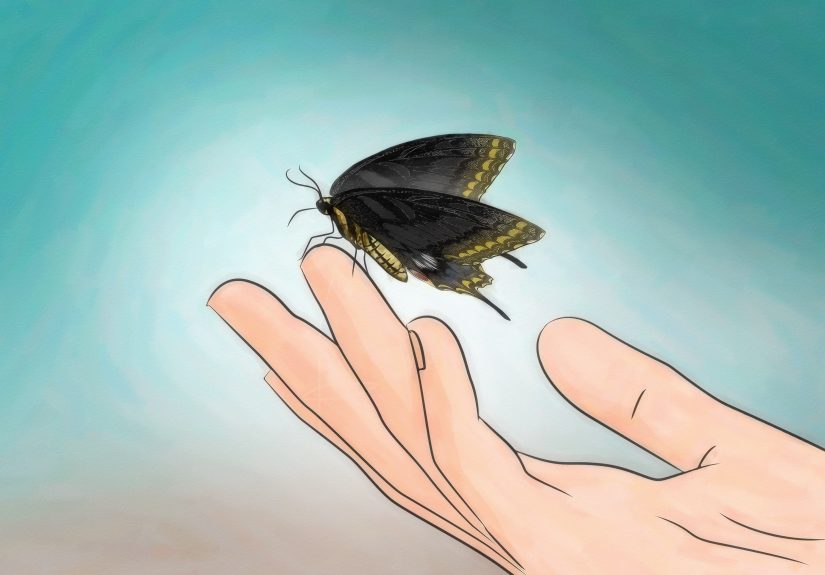
If your caterpillar becomes a healthy adult butterfly or moth, release it outdoors near where you found the caterpillar (or near the host plant), on a warm, dry day.
Avoid releasing any insect that appears sick, weak, or unusually deformedespecially for species known to carry parasites that could spread.
Important note about monarchs: there are ongoing conservation concerns about captive rearing and disease spread. If you’re raising monarchs, keep your rearing small-scale, super clean, and localand check current guidance in your area before collecting or releasing.
Common Mistakes (So You Can Avoid the “Leaf Soup” Era)
- Wrong plant: the caterpillar ignores it, slowly starves, and you feel betrayed by nature.
- Too much moisture: condensation + old leaves = mold party.
- Pesticide exposure: “clean-looking” leaves from treated plants can be dangerous. Choose pesticide-free host plants.
- Overcrowding: too many caterpillars in one container increases mess and disease risk.
- Handling too much: stress and injury are real, even for tiny creatures.
FAQ: Quick Answers for Curious Keepers
Do caterpillars need water?
Most caterpillars get moisture from fresh leaves. You generally don’t need a water dish (and it can be a drowning risk).
If your enclosure is extremely dry, a light misting of the plant (not the caterpillar) can helpbut avoid turning the habitat into a rainforest.
How long does the whole process take?
It depends on the species and season. Some go from caterpillar to adult in a few weeks. Others overwinter in a cocoon/chrysalis and emerge months later.
If your pupa “does nothing” for a long time, it may be in diapause (a seasonal pause). Research that species before assuming something went wrong.
Can I keep more than one caterpillar together?
Sometimes, but it’s safer and cleaner to raise them separatelyespecially if you’re new. Less crowding means fewer problems.
What if my caterpillar looks fuzzy and cute?
Cute is not a safety label. Some fuzzy caterpillars can irritate skin. When you’re not 100% sure, use gloves and avoid direct contact.
Experiences From the Caterpillar-Keeping Trenches (Extra )
Keeping a wild caterpillar as a pet is one of those hobbies that starts with, “Aw, look at the tiny guy,” and quickly becomes,
“Why is my entire countertop covered in parsley stems and tiny pellets?” If you’re wondering what it’s actually like day-to-day, here are a few real-feeling moments
many first-time caterpillar keepers run intoplus what they usually learn from them.
1) The Great Host Plant Panic
A very common experience: you bring your caterpillar inside, offer it “a nice variety” of leaves, and it responds by… doing nothing.
No nibbling. No enthusiasm. Just silent judgment.
The lesson shows up fast: caterpillars aren’t trying to be difficult; they’re specialists. Once you match the correct host plant,
the mood changes immediately. Suddenly it’s eating like it has a deadlineand you realize you’ve accidentally adopted a tiny composting machine.
2) The “Is It Sick or Just Molting?” Spiral
Another classic: your caterpillar stops eating and gets still. You Google. You worry. You hover. You consider making it a motivational playlist.
Thenafter a day or soit molts and continues life like nothing happened.
People often describe this as the moment they learned to respect insect timing. Nature doesn’t respond well to micromanagement.
The best move is usually to keep things clean and calm, then step back.
3) The Surprise Mess (Frass Is a Lifestyle)
If you’ve never raised a caterpillar, it’s hard to believe how much frass a small creature can produce.
The first time you see a neat line of pellets under a leaf, you may think, “Oh, that’s manageable.”
Two days later you’re swapping paper towels like you work in a tiny housekeeping department.
The upside? Many people say this becomes oddly satisfyingbecause clean habitats tend to mean healthier caterpillars,
and you start noticing patterns: bigger caterpillar, bigger appetite, bigger cleanup.
4) The Wandering Phase (AKA: “Where Are You Going?”)
When a caterpillar is ready to pupate, it may go on an exploratory walk around the enclosure like it’s searching for a condo with better amenities.
First-timers often interpret this as escape behavior or distress. But usually it’s the opposite: it’s preparing for the next stage.
Adding a few sturdy twigs and giving it space often turns wandering into a calm setupthen, suddenly, a chrysalis or cocoon appears like an overnight renovation.
5) The Emergence Moment (Quiet, Weird, and Kind of Wonderful)
People expect “hatching” to look dramatic. In reality, emergence is quiet and focused. The adult comes out, hangs, and slowly expands its wings.
The first time you see this, it can feel like a nature documentary happening on your bookshelf.
Many keepers describe this as the moment they stop seeing the caterpillar as “just a bug” and start appreciating it as a living animal with needs:
space, safety, time, and a surprisingly delicate process that works best when humans don’t interfere.
If there’s one overall takeaway from these experiences, it’s this: caterpillar-keeping is less about “owning” a wild creature and more about
temporarily hosting a tiny life stage with respect. When you do it thoughtfully, you get a front-row seat to metamorphosis
and a new appreciation for every leaf-chewed corner of the natural world.