Table of Contents >> Show >> Hide
- Start With a Plan Before You Buy a Single Plant
- Use Landscaping to Visually Anchor the Deck
- Create Garden Beds That Make Sense
- Fix Drainage Before It Wrecks Your Yard
- Add Privacy Without Making the Backyard Feel Like a Fortress
- Make the Deck Feel Connected to the Rest of the Yard
- Choose Plants That Work Hard and Look Good
- Do Not Forget Lighting, Furniture, and Finishing Details
- Common Mistakes to Avoid When Landscaping Around a Deck
- Sample Deck Landscaping Ideas for Different Backyard Styles
- Experience: What Homeowners Learn After Landscaping Around a Deck
- Conclusion
A deck is supposed to feel like an invitation, not a floating wooden island awkwardly parked in the middle of your yard. Yet that is exactly what happens when the space around it is left bare, patchy, or full of random lawn that nobody actually enjoys mowing. The good news is that landscaping around a deck does not require a reality TV crew, a six-figure budget, or a sudden passion for Latin plant names.
With the right mix of plants, pathways, privacy features, and hardscaping, you can turn a plain deck into a true outdoor living space. The secret is to think beyond decoration. Great deck landscaping should soften the structure, solve practical issues like drainage and foot traffic, and make the entire backyard feel intentional. In other words, your deck should look like it belongs there instead of like it crash-landed on a Tuesday.
This guide walks through how to landscape around a deck in a way that is attractive, functional, and realistic for everyday homeowners. Whether your style leans lush and cottage-like, clean and modern, or somewhere in the happy middle, these ideas will help you create a backyard that looks finished and feels far more inviting.
Start With a Plan Before You Buy a Single Plant
The most common landscaping mistake is shopping first and thinking later. A cart full of pretty plants can be fun for about twelve minutes, right up until you realize one needs full sun, another hates wet soil, and a third grows large enough to swallow a grill.
Study the deck from inside and outside
Stand on the deck and look out. Then stand in the yard and look back at the deck. Notice where the space feels exposed, too flat, or disconnected from the rest of the backyard. Good landscaping around a deck should improve the view from both directions.
Pay attention to sun, shade, and wind
Some decks bake in full afternoon sun, while others sit in dappled shade under mature trees. Track how light moves through the yard for a day or two before choosing plants. That simple step will save you from turning a hydrangea into a crispy cautionary tale.
Think about how you actually use the space
Do you entertain? Need a play zone nearby? Want more privacy from neighbors? Prefer low-maintenance landscaping because weekends are already busy enough? Your answers should shape the layout. A backyard designed for real life always works better than one designed only for photos.
Use Landscaping to Visually Anchor the Deck
A deck often looks tall, boxy, and abrupt against a lawn. Landscaping softens those edges and helps the structure feel connected to the yard.
Layer plant heights around the perimeter
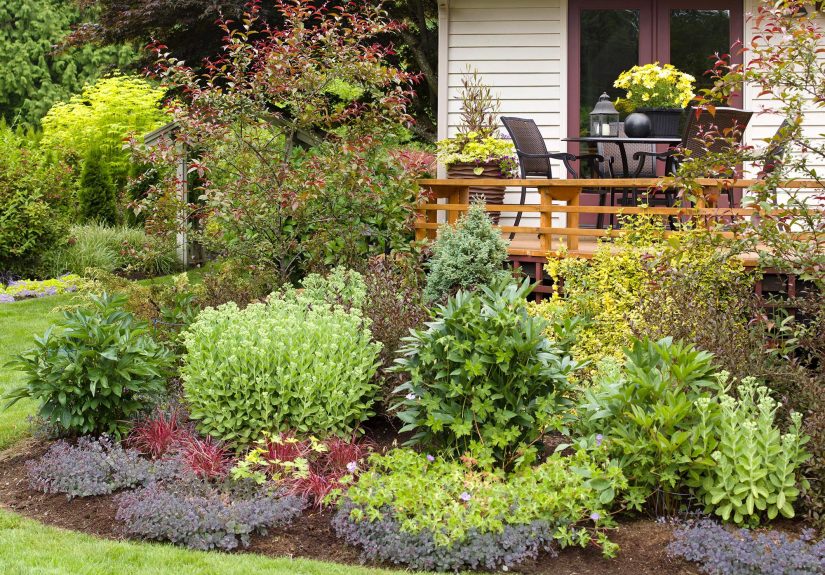
One of the easiest ways to landscape around a deck is to create layers. Place taller shrubs or ornamental grasses farthest from the deck, medium perennials in front of them, and low edging plants or ground covers at the front. This creates depth and helps the deck transition into the landscape instead of ending with a harsh line.
For example, a basic layered bed might include evergreen shrubs for structure, flowering perennials for color, and a border of creeping thyme, sedum, or low grasses. Even a simple three-layer planting scheme can make a plain deck look intentional and polished.
Soften corners and stairs
Deck corners and stair landings tend to look especially sharp. Planting mounded shrubs, containers, or drifts of perennials near those spots helps the design feel more relaxed. Near stairs, avoid anything floppy or thorny. Nobody wants to descend into a rosebush while carrying lemonade.
Create Garden Beds That Make Sense
If you want your deck landscaping ideas to look professional, pay attention to the shape of the beds. This is where many backyards go from “nice try” to “wow, that actually looks designed.”
Choose wide, curved, or purposeful bed lines
Skinny beds hugging the deck like a nervous apology rarely look good. Wider beds give plants space to mature and create more visual impact. Curves can soften a rectangular deck, while crisp geometric lines work well with modern homes. The main point is to make the bed shape look deliberate.
Add edging for a cleaner finish
Edging separates lawn from planting beds and keeps the whole area from looking messy. Stone, metal, brick, or composite edging can all work, depending on your style and budget. The best option is usually the one that matches your home and other hardscape materials rather than trying to steal the spotlight.
Mulch for looks and maintenance
Mulch is not just cosmetic. It helps conserve moisture, suppress weeds, regulate soil temperature, and give the bed a finished appearance. Organic mulch such as shredded bark or wood chips is often the best choice around shrubs and perennials. Keep mulch pulled back from stems, trunks, and deck posts so you do not trap excess moisture where it does not belong.
Fix Drainage Before It Wrecks Your Yard
Beautiful plants cannot compensate for soggy soil, muddy splash zones, or water running toward the house. If you are landscaping around a deck, drainage needs to be part of the design from the beginning.
Make sure water moves away from structures
The ground around the deck and home should slope away rather than funnel water toward the foundation. If you notice puddles, erosion, or chronically wet planting areas, correct grading first. It is much easier to solve drainage before you install beds, pathways, and decorative features.
Use gravel or permeable materials where appropriate
Under deck stairs, beside walkways, or in utility zones, gravel can help reduce mud and improve drainage. Permeable pavers, gravel paths, and stepping stones are also smart choices in backyards where runoff is a problem. These materials help water soak into the ground rather than rushing across the surface like it is late for a meeting.
Consider a rain garden or dry creek bed
If part of the yard stays wet, turn the problem into a feature. A rain garden planted with moisture-tolerant species can manage runoff while adding beauty. A dry creek bed lined with stone can also guide water and create visual interest, especially near the edge of a deck landscape bed.
Add Privacy Without Making the Backyard Feel Like a Fortress
One of the biggest reasons people landscape around a deck is privacy. A few smart choices can make the space feel more secluded without boxing it in.
Use plants as living screens
Evergreens, upright shrubs, small ornamental trees, and tall grasses can all provide privacy. The trick is to choose plants that suit your climate, available light, and maintenance tolerance. A living screen often feels friendlier and more natural than a solid wall.
Good options may include arborvitae, boxwood, cleyera, podocarpus, hydrangea, camellia, or fountain grass, depending on your region. For a softer look, mix plant forms rather than planting a single endless row of identical shrubs that makes your yard feel like it joined a hedge cult.
Try trellises, pergolas, or screens
Hardscape privacy elements can work beautifully near a deck, especially when paired with vines or container plantings. A trellis with climbing jasmine or hydrangea can block a view without cutting off light. Decorative metal or wood screens can define the deck area and make it feel like an outdoor room.
Make the Deck Feel Connected to the Rest of the Yard
A deck should not feel like a separate kingdom floating above the backyard. The landscaping around it should guide movement and visually link it to other areas.
Install a path that leads somewhere useful
A simple gravel path, stepping-stone walkway, or paver route from the deck to the lawn, garden, shed, or fire pit adds structure and improves flow. Paths also protect planting beds from getting trampled when guests inevitably decide the shortest route is directly through your carefully planted hostas.
Create garden rooms
One of the best backyard landscaping strategies is to divide the yard into zones. The deck can serve as the dining or lounging area, while nearby beds, a path, a reading bench, or a small lawn panel create separate but related spaces. This makes the whole yard feel bigger and more thoughtfully designed.
Choose Plants That Work Hard and Look Good
The best plants for landscaping around a deck do more than bloom for a month and disappear into mediocrity. Look for combinations that offer structure, long-season interest, texture, and manageable care.
Use a simple plant recipe
A reliable deck planting plan often includes these categories:
- Anchor plants: evergreen shrubs, dwarf conifers, or small ornamental trees
- Flowering plants: hydrangeas, coneflowers, salvias, black-eyed Susans, daylilies, or catmint
- Texture plants: grasses, heuchera, ferns, or coleus
- Ground-level fillers: sedum, creeping thyme, sweet alyssum, or low native grasses
Mix native and low-maintenance plants
Native plants can support pollinators, adapt well to local conditions, and reduce the need for constant fussing. Low-maintenance landscaping around a deck often relies on plants that tolerate local rainfall patterns and do not need dramatic interventions every time summer gets hot.
Use containers for flexibility
Containers are excellent around decks because they add color, height, and seasonal personality without permanent commitment. Group pots in odd numbers, vary heights and textures, and repeat a few plant types for cohesion. Containers are especially useful near stairs, on deck corners, and in spots where in-ground planting is difficult.
Do Not Forget Lighting, Furniture, and Finishing Details
Landscaping is not just about plants. The finishing touches around a deck can make the backyard feel dramatically more usable.
Layer outdoor lighting
Path lights, stair lights, uplighting on small trees, and soft string lighting can make the area safer and more inviting. Well-placed lighting also highlights your landscaping at night instead of letting it disappear into darkness after sunset.
Add a focal point
This could be a large planter, a specimen shrub, a bench, a birdbath, or a small water feature. A focal point gives the eye a place to land and can help organize the planting design around the deck.
Repeat materials and colors
If your deck is warm-toned wood, consider natural stone, bronze planters, or mulch that complements it. If the deck has a sleek modern finish, use cleaner lines, repeating grasses, dark containers, and restrained color palettes. Repetition creates harmony, and harmony makes the whole backyard feel more expensive than it probably was.
Common Mistakes to Avoid When Landscaping Around a Deck
- Planting shrubs too close to the deck so they outgrow the space in two seasons
- Ignoring drainage and grading problems until mud takes over
- Using tiny beds that make the deck look even larger and clunkier
- Overloading the area with too many plant varieties and no visual rhythm
- Blocking stairs, railings, or views with poorly placed containers
- Forgetting year-round structure, especially in winter
- Choosing high-maintenance plants for a low-maintenance lifestyle
Sample Deck Landscaping Ideas for Different Backyard Styles
Cottage-style backyard
Use curved beds, hydrangeas, salvias, coneflowers, catmint, and ornamental grasses. Add a gravel path and oversized terracotta pots for an inviting, layered feel.
Modern backyard
Choose clean-lined beds, steel or stone edging, repeated grasses, evergreen shrubs, and large minimalist containers. Stick to a restrained palette with texture doing most of the work.
Small backyard deck
Rely on vertical privacy screens, grouped containers, narrow planting beds with strong repetition, and a compact path connecting the deck to another focal area. In small spaces, fewer better choices almost always win.
Low-maintenance backyard
Use mulch-heavy beds, drought-tolerant perennials, evergreen structure, and hardy native plants. Add gravel or stepping stones in high-traffic areas to reduce muddy wear and tear.
Experience: What Homeowners Learn After Landscaping Around a Deck
One of the most interesting things about landscaping around a deck is how often people start with looks and end up caring even more about comfort. Homeowners usually begin with a simple goal: make the deck prettier. But once the project is finished, what they talk about most is how differently the backyard feels. The deck becomes cooler because nearby planting softens reflected heat. The view gets better because the eye now lands on layered beds instead of bare lawn. The space feels more private, even when the fence did not move an inch.
Many people also discover that traffic flow matters more than expected. Before landscaping, family members may cut random routes through the yard, track dirt onto the deck, or avoid the space entirely because it feels exposed. After adding a path, a few wider beds, and a visual destination such as a bench, planter, or fire pit, the yard starts to behave differently. People naturally move where the design suggests they should move. It is one of those satisfying moments when landscaping stops being decoration and starts acting like architecture.
Another common lesson is that scale changes everything. Small pots and skinny flower beds tend to disappear next to a deck. Homeowners often say the area did not look finished until they went bigger with bed depth, larger containers, or bolder shrubs. This does not necessarily mean spending more money. It means choosing fewer elements with stronger impact. A pair of substantial planters can do more for a deck entrance than six tiny pots trying their best.
There is also a practical side that experience teaches quickly. If drainage is poor, you will know after the first hard rain. If plants are too close to stairs, you will know the first time someone brushes past them with a plate of burgers. If mulch is piled against deck posts, you may not notice right away, but moisture definitely will. Real-life use exposes weak design decisions fast, which is why the best deck landscaping plans combine beauty with maintenance awareness from the start.
Seasonality is another eye-opener. In spring and summer, almost any planting can look promising. But experienced homeowners learn to ask what the area will look like in October, January, and early March too. Evergreen shrubs, ornamental grasses, sturdy seed heads, and hardscape features keep the space attractive long after the flowers clock out. That year-round structure is often what separates a decent backyard from one that still looks intentional in the off-season.
Perhaps the biggest surprise is emotional. A well-landscaped deck does not just improve property appearance. It changes how often people step outside. Morning coffee happens there more often. Kids linger longer. Even short evening conversations feel more relaxing when the surroundings feel sheltered and finished. Once the deck is framed with plants, paths, and texture, the backyard starts to pull people outdoors instead of being something they only notice when the grass gets too tall.
That is why the best advice is to treat the area around your deck as part of a complete backyard experience. Not a leftover strip. Not a dumping ground for whatever shrubs were on sale. A real outdoor room deserves a real setting. And when you get that setting right, the deck stops being just a platform. It becomes a place people actually want to use.
Conclusion
If you want to know how to landscape around a deck to enhance your backyard, focus on three things: connection, function, and personality. Connect the deck to the yard with beds, paths, and visual transitions. Build in function with drainage, privacy, and durable materials. Then add personality through plant choices, containers, lighting, and focal points that reflect how you want to live outside.
You do not need to transform every square foot at once. Even a few thoughtful upgrades can make a deck look more integrated and make the entire backyard more enjoyable. Start with the bones of the design, choose plants that fit your conditions, and give the space a reason to be used. Your deck will look better, your yard will work harder, and your backyard might finally become the place where everyone wants to hang out.