Table of Contents >> Show >> Hide
- Step 1: Find (or Make) a Village Worth Committing To
- Step 2: Claim a House (Then Upgrade It Like You Actually Live There)
- Step 3: Learn How Villages “Work” (Beds, Job Sites, and the Bell That Runs Everything)
- Step 4: Build Village Essentials: Food, Light, Paths, and a Real Perimeter
- Step 5: Set Up Your Village Economy (Trading Without Losing Your Mind)
- Step 6: Defend the Village Like It’s Your Spawn Point (Because It Kind of Is)
- Step 7: Grow the Population and Make the Village Truly Yours
- Common “Village Life” Problems (and Quick Fixes)
- Conclusion: Village Living Is the Best Kind of Organized Chaos
- Village Life Stories: of “I Actually Tried This” Energy
Moving into a Minecraft village is like relocating to a town where everyone communicates exclusively in “hrrm,” the local police are made of iron, and the
mayor is… a bell. It’s cozy, chaotic, and oddly addictive.
“Living in a village” can mean two things: (1) you set up your base inside/next to an existing village and become its unofficial night watch + economy
manager, or (2) you create a village from scratch by placing beds and job sites so villagers recognize the area as home. Either way, the goal is the same:
safety, sustainable resources, and villager trades that turn you into the most powerful person in a 200-block radius (without having to enchant a single book
the old-fashioned way).
Step 1: Find (or Make) a Village Worth Committing To
Before you unpack your shulker boxes, pick a village that fits your playstyle. Plains villages are roomy and easy to navigate. Taiga villages feel like a log-cabin
getaway. Desert villages are great if you love clean lines and hate… rain. The “best” village is the one that’s close to resources you’ll use constantly:
wood, food, a cave system, and ideally a nearby ocean for easy travel.
Fast ways to locate a village
- Explore smart: climb hills, use a boat on rivers/oceans, and sleep often so you’re not speedrunning your own funeral.
- Cartographer maps: in many worlds, cartographers can sell maps to structures (useful as your world matures).
- Commands (if cheats are on): use the locate command for villages/structures to save time in test worlds.
- Seed tools: if you know your seed, map tools can help you plan routes (especially on big survival servers where wandering is a lifestyle).
Pro tip: don’t judge a village by its first impression. Half the houses are usually missing roofs like the villagers just discovered modern architecture and
went too hard.
Step 2: Claim a House (Then Upgrade It Like You Actually Live There)
You can move into an existing villager house, but you’ll want to make it player-proof. Villager homes are charming, but they’re also built with the
confidence of someone who has never met a creeper.
Your “I live here now” starter checklist
- Bed + spawn point (obviously)
- Chests and barrels for storage (because your inventory is not a filing cabinet)
- Furnace + smoker/blast furnace so cooking and smelting don’t feel like waiting for dial-up internet
- Crafting table + anvil once you’re established
- Lighting inside and around your homevillages attract nighttime drama
If you’re living inside the village, keep your home near the center so you can respond quickly to raids and zombie attacks. If you prefer peace and quiet,
build your base on the edge with a clear sightline to the village. Think “suburbs,” but with more arrows and fewer property taxes.
Step 3: Learn How Villages “Work” (Beds, Job Sites, and the Bell That Runs Everything)
Villages aren’t defined by cute housesthey’re defined by villager-linked points of interest. The short version: villagers care about beds
(home), workstations (jobs), and gathering points (often a bell). If you want to truly “live” in a villagemeaning you can
expand it, protect it, and turn it into an emerald-printing machineyou need to respect those mechanics.
What to do right away
- Make sure every villager has a reachable bed. Villagers try to pathfind to beds at night, and a village’s stability depends on those
links actually working. - Place workstations intentionally. If you drop job blocks randomly, villagers will swap jobs like they’re trying to find their passion on
LinkedIn. - Keep (or place) a bell. Bells are useful for rallying villagers during danger and helping you “check attendance” when something feels off.
The humor of village life is that you’re basically the invisible city planner. The villagers won’t thank you, but they will sell you ridiculous gear for
emeralds once you organize their workday.
Step 4: Build Village Essentials: Food, Light, Paths, and a Real Perimeter
If you want a village that survives longer than a single thunderstorm night, you need four things: food, lighting, navigation, and boundaries.
This is where your village stops being “a place you found” and becomes “a place you run.”
Food that basically runs the town
Start with a simple crop farm near water (wheat, carrots, potatoes, beetroot). Farmers can help harvest and share food, which matters because villager
“willingness” is tied to having enough food in their inventories. A well-fed village is a growing villageand also a less-annoying village.
Lighting: your cheapest security system
Light up streets, rooftops, and any shadowy corners near doors. Even if some special events can spawn mobs regardless of light, good lighting still reduces
the everyday mob spawns that cause most villager deaths. Translation: fewer panic sprints at midnight.
Paths and fences: make it livable
- Paths: add clear routes between homes, farms, and your base. You’ll thank yourself during raids.
- Walls/fences: build a perimeter. Even a simple fence line with gates is a massive upgrade from “hope.”
- Safe doors: consider reinforcing entrances so zombies can’t wander in like they own the place.
Bonus: once the perimeter is up, you can terraform, add lantern streets, and turn the village into a real hub. Function first, aesthetics secondunless you
enjoy rebuilding after every disaster.
Step 5: Set Up Your Village Economy (Trading Without Losing Your Mind)
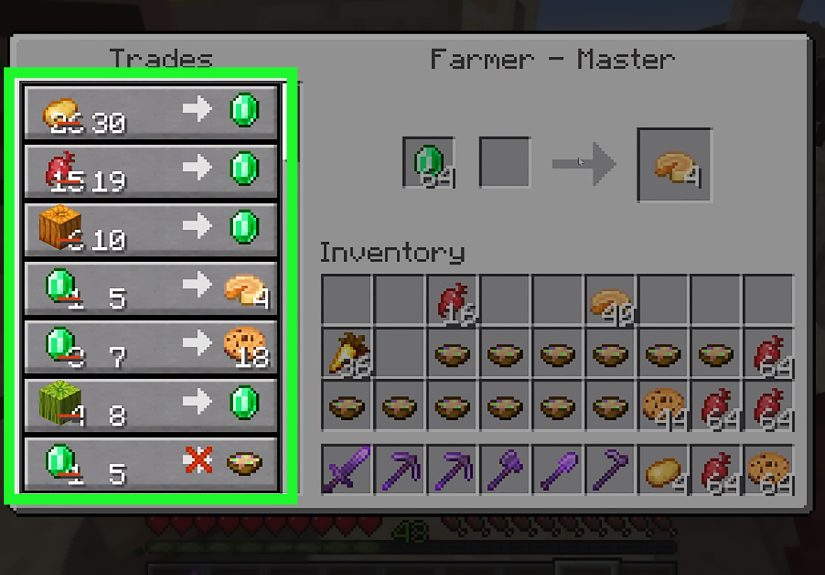
Villager trading is the main reason players “move in” at all. A good village economy turns common items into emeralds, and emeralds into tools, armor,
enchanted books, and endgame convenience. It’s capitalism, but with more lecterns.
Choose a few high-impact professions
- Librarian (Lectern): enchantment books can change your whole world trajectory.
- Farmer (Composter): consistent emerald income via crop trades.
- Armorer/Toolsmith/Weaponsmith: gear access that scales as you level trades.
- Cleric (Brewing Stand): helpful items and a reason to build a proper brewing setup.
How to “reroll” trades (without a meltdown)
If you haven’t traded with a villager yet, you can often change their profession by breaking and replacing their workstation, which refreshes their offers.
Once you trade, their profession and trades lock inso do your rerolls first, then commit.
Restocking and layout matters
Villagers typically restock by using their job site. If you bury the workstation behind walls they can’t reach, you’ll get the worst kind of village:
one that’s alive, but unhelpful. Give each working villager clear access to their workstation and some breathing room.
Discounts: the village remembers kindness (and also medical malpractice)
You can reduce prices temporarily by earning “Hero of the Village” after defeating a raid. You can also get powerful, longer-term discounts by curing zombie
villagers. Yes, the ethics are complicated. No, the emerald savings are not.
Practical tip: build a compact trading area (not necessarily a full “trading hall” unless you love redstone and commitment). Keep it simple: a row of
villagers, each with their workstation and bed access nearby, plus good lighting and a safe perimeter.
Step 6: Defend the Village Like It’s Your Spawn Point (Because It Kind of Is)
Village life comes with threats: zombies, pillagers, raids, and the occasional “why is my villager standing outside at night like he’s waiting for an Uber?”
Defense is not optional if you want stable trades and population growth.
Everyday defense that works
- Wall the perimeter and place gates where you want controlled access.
- Light everythingroads, rooftops, farms, and your trading area.
- Protect beds so villagers can sleep safely and consistently.
- Keep iron golems around (natural or created) as heavy-duty protection.
Raids and the “don’t bring trouble home” rule
Raids are triggered when you carry the right ominous effect into village territory. In newer versions, Bad Omen and raid-related effects were redesigned so
raids can be more opt-in (often involving ominous bottles and a short window before the raid starts). In plain English: be careful about fighting raid captains
or drinking anything labeled “ominous” right before strolling into town like you’re delivering pizza.
Raid survival tips
- Fight outside the village if possible. Keep the chaos away from villagers and workstations.
- Use high ground (rooftops, towers) to control ranged mobs.
- Ring the bell to help villagers run indoors, then block entrances if needed.
- Milk is your reset button if you need to clear an ominous effect before it becomes a full problem.
Village defense is less about being a hero and more about being the responsible adult at a party. You’re not here to fight everything; you’re here to make
sure nobody breaks the furniture (or the villagers).
Step 7: Grow the Population and Make the Village Truly Yours
A “live-in” village feels alive when it grows: more villagers, more trades, more protection, and more reasons to keep coming back. Growth usually means
villager breeding and planned expansion.
Breeding basics (the safe, non-weird way)
- Have at least two villagers.
- Provide extra beds (you generally want at least one more bed than the current number of villagers).
- Feed them enough food to make them willing (common staples include bread, carrots, potatoes, and beetrootbread is the “fast pass”).
- Ensure beds are reachable via pathfinding; if villagers can’t reach an unclaimed bed, breeding fails.
- Keep it safe (enclosed area, lighting, and minimal mob access).
When you see hearts, you’re doing it right. When you see angry particles, something’s offusually beds, pathing, or food. Treat it like debugging:
check the simplest requirement first.
Plan expansions like a village architect
Add housing in clusters, create dedicated work zones (farms, trading, storage), and keep roads clear. If you want a more advanced setup later, you can evolve
into a full trading hall, breeder, and iron golem-based defense systembut you don’t have to start there. Most villages thrive with good basics and consistent
maintenance.
Common “Village Life” Problems (and Quick Fixes)
“My villagers won’t breed.”
Usually: not enough accessible beds, not enough food, or the villagers can’t path to where they need to go. Add beds (with clear space above),
toss more food, and make sure the area is enclosed and safe.
“My villagers keep losing jobs or swapping professions.”
Break-and-place workstation chaos is real. Place job blocks deliberately, keep each villager close to their workstation, and remember: once you trade, their
profession locksso lock in your favorites on purpose.
“Raids keep happening and I’m tired.”
Stop bringing ominous effects into the village area. Handle captains away from town, watch your status effects before entering, and keep milk handy if you
need to clear an effect quickly.
Conclusion: Village Living Is the Best Kind of Organized Chaos
Living in a Minecraft village is equal parts wholesome and strategic. You get a home base with built-in “neighbors,” a trading system that can replace hours
of grinding, and a long-term project that grows with you. Find the right village, claim a home, learn the bed-and-job rhythm, build essentials, create a smart
economy, defend it like it matters, and grow it on purpose. Do that, and your village stops being a random structure you lootedit becomes your world’s
beating heart (that occasionally screams when a raid horn sounds).
Village Life Stories: of “I Actually Tried This” Energy
The first time I decided to “live in a village,” I thought it meant one thing: pick a cute house, drop a bed, and enjoy my new life as a peaceful local who
occasionally farms wheat and waves at the neighbors. Two sunsets later, I realized village life is less “cozy cottagecore” and more “community manager with a
sword.”
It started innocently. I moved into a plains village because it had a blacksmith (hello, free starter loot) and a farm that looked like it was planted by
someone who had heard of agriculture once, briefly, in a dream. I added torches, expanded the wheat field, and felt like I was really contributing.
The villagers seemed impressedby which I mean they stared at me silently and made judgmental throat noises.
Night one was a wake-up call. A zombie wandered in, bonked a villager, and suddenly my “quiet town” became a crime scene. I spent the rest of the night
sprinting between houses, blocking doors, and discovering that villagers have a talent for standing outside at the worst possible momentlike they’re trying
to audition for a horror movie. By morning, I had a new rule: no shadows near doors, ever. I lit up the entire perimeter until the village glowed like a
runway.
Then I discovered trading. At first I did it casuallysome wheat here, a few emeralds there. But once I realized how much power a well-managed librarian can
offer, I spiraled into full “town planner mode.” I placed a lectern, watched a villager claim it, checked the trade, didn’t like it, broke the lectern, placed
it again, and repeated until I felt like I was speedrunning bureaucracy. When I finally got a trade I wanted, I made one tiny trade immediately, not because
I needed the item, but because I wanted the villager to commit. Congratulations, siryou’re employed forever.
The funniest part is that once your village is stable, it becomes a place you return to constantly. Need arrows? Fletcher. Need food? Farmer. Need gear?
Smiths. Need enchantments? Librarian, my beloved. My village turned into a living supply chain, and I stopped seeing it as “NPC housing” and started seeing it
as my actual headquarters.
The big lesson: village living works when you treat it like a system. Food keeps villagers willing. Beds keep the village anchored. Workstations shape your
economy. Light and walls keep it alive. And you? You’re the weird outsider who moved in, renovated the town, and somehow became essential. It’s not just a
baseit’s a long-term relationship with a community that communicates in one syllable and still expects you to handle all the emergencies. Honestly? Worth it.