Table of Contents >> Show >> Hide
- What “Better Than Bakery” Actually Means
- Upgrade #1: Build a “Plush Dough” (The Bakery Trick You Can Steal)
- Upgrade #2: Stop Measuring Flour Like It’s 1897
- Upgrade #3: Pick the Right Flour (And Actually Develop Gluten)
- Upgrade #4: Treat Temperature Like a Main Character
- Upgrade #5: Make a Filling That’s Loud, But Doesn’t Leak
- Upgrade #6: Roll Evenly, Cut Cleanly, Bake Like a Control Freak
- Upgrade #7: Master the Overnight Rise (So Morning You Isn’t Furious)
- Upgrade #8: Bake for a Soft Center (Not Just a Brown Top)
- Upgrade #9: Frost Like a Bakery (Tangy, Glossy, Not Tooth-Aching)
- Optional “Unfair Advantage” Moves (Use Responsibly)
- A “Better Than Bakery” Blueprint You Can Follow
- Troubleshooting: Fix the Most Common Cinnamon Roll Disasters
- Conclusion: Yes, You Can Out-Bakery the Bakery
- Experience Notes (Extra ): What I Learned After Chasing ‘Perfect’ Cinnamon Rolls
Your local bakery has two unfair advantages: (1) they bake cinnamon rolls all day, every day, and (2) their building smells like buttered happiness. The good news? You can absolutely beat them at homewithout buying a $900 mixer or forming a sourdough starter named “Doughlene.”
The secret isn’t some mystical “grandma gene.” It’s a short list of pro moves: build a dough that stays soft for days, manage temperature like a calm adult, make a filling that tastes bold but doesn’t leak into sad puddles, and finish with frosting that’s tangy, salty, and perfectly glossy.
What “Better Than Bakery” Actually Means
Most bakery cinnamon rolls nail the look (big spirals!) and the aroma (cinnamon fireworks!). But they can miss on:
- Texture: fluffy on the outside, but dry by noon
- Flavor balance: sweet-on-sweet with no tang, salt, or depth
- Freshness window: magical at 8:15 a.m., mediocre by 2:00 p.m.
Your home version should be pillowy (soft, stretchy layers), bold (real cinnamon flavor and a buttery, caramel-like swirl), and balanced (a frosting that doesn’t scream “straight powdered sugar”).
Upgrade #1: Build a “Plush Dough” (The Bakery Trick You Can Steal)
If you want cinnamon rolls that stay soft and tendernot just warm-and-okayuse a simple technique: cook a small portion of flour with milk (or water) into a paste before you mix the dough. Many bakers call it a tangzhong. It sounds like a move from a kung fu movie, but it’s basically “bread pudding paste” that helps dough hold onto moisture.
How it helps
- Softer crumb: more moisture stays trapped in the bread structure
- Better rise: enriched dough can be lofty without getting dry
- Longer freshness: rolls stay plush the next day (and the next)
If you’ve ever made cinnamon rolls that were perfect… until they cooled, this is your redemption arc. Use any proven tangzhong-style cinnamon roll base (or adapt your favorite recipe by cooking a small portion of the flour with milk until thick).
Upgrade #2: Stop Measuring Flour Like It’s 1897
“Just add flour until it feels right” is how you end up with cinnamon rolls that could double as patio pavers. For bakery-level consistency, weigh your ingredients. Flour compacts. Cups lie. A kitchen scale tells the truth.
What your dough should feel like: soft and slightly tacky. Not soupy, not stiff. If it’s sticky, pause before you add more flourkneading and rest time often fix stickiness better than dumping in extra flour.
Upgrade #3: Pick the Right Flour (And Actually Develop Gluten)
For cinnamon rolls, you want structure and tenderness. Bread flour (or a blend of bread flour + all-purpose) helps create those beautiful, pull-apart layers. If you only have all-purpose flour, you can still winjust knead well.
The “windowpane-ish” checkpoint
Enriched dough (with butter, eggs, milk, sugar) needs enough mixing to build strength. You’re aiming for dough that can stretch thin without tearing immediately. You don’t need a perfect windowpane like a baguette dough, but you do need elasticity so the rolls rise tall and don’t collapse into cinnamon sadness.
Upgrade #4: Treat Temperature Like a Main Character
Yeast dough is basically a tiny, delicious science project. Your job is to keep it cozynot hot, not cold, not “left in the car on a summer day.”
Practical temperature rules
- Warm liquids: comfortably warm, not steaming (think “nice bath,” not “hot tub regret”).
- Proofing environment: warm-ish and steady. Drafts slow everything down.
- Don’t time it by the clock: rise until puffy and doubled, then move on.
If your kitchen runs cold, use the oven-light trick: turn the oven off, switch on the oven light, and proof the covered dough inside. Stable warmth is the goal.
Upgrade #5: Make a Filling That’s Loud, But Doesn’t Leak
Great cinnamon rolls taste like cinnamon, butter, and brown sugar got invited to the same party and nobody left early. But too much loose sugar can liquefy in the oven and leak out, leaving dry spirals and a burnt-sugar moat.
Filling upgrades that taste “bakery”
- Use dark brown sugar for deeper caramel notes.
- Add a pinch of salt to the filling. Yes, even if you’re “not a salty-sweet person.” You are now.
- Add warmth: a tiny pinch of nutmeg or espresso powder can amplify cinnamon without shouting over it.
- Thicken smartly (optional): a teaspoon or two of starch (like cornstarch) can help keep the swirl gooey, not runny.
Brown butter: the unfair flavor cheat
Browning the butter for your filling adds a nutty, toasty depth that screams “professional.” It takes 3–6 minutes and makes your kitchen smell like a fancy dessert restaurant that charges for water.
Upgrade #6: Roll Evenly, Cut Cleanly, Bake Like a Control Freak
Bakeries look consistent because they are consistent. Even thickness means even baking. A tightly rolled log means pretty spirals. Clean cuts mean the rolls rise straight instead of squishing into cinnamon ovals.
How to roll evenly (without rage)
- Rest the dough for 5–10 minutes if it fights you while rolling.
- Use minimal flour on the counter; too much flour prevents a tight roll.
- Roll to a rectangle with relatively uniform thickness, then spread filling edge-to-edge (leave a small border on one long side to seal).
How to cut perfect spirals
Use unflavored dental floss or clean kitchen thread. Slide it under the log, cross over the top, and pull. You’ll get neat slices without compressing the doughaka “bakery spirals, at home.”
Upgrade #7: Master the Overnight Rise (So Morning You Isn’t Furious)
Want fresh cinnamon rolls without waking up at “I hate everyone o’clock”? Make them ahead. You have two excellent strategies:
Option A: Refrigerate after shaping
Shape the rolls, place in the pan, cover well, and refrigerate overnight. In the morning, bake when they look puffy (often after a short rest while the oven preheats). This method also builds flavor because fermentation happens slowly.
Option B: Make dough the day before
Let the dough rise, chill it, then roll/fill/shape later. This can make the dough easier to handle and helps you schedule your life like a person who owns a planner.
Upgrade #8: Bake for a Soft Center (Not Just a Brown Top)
Many home bakers overbake cinnamon rolls because the tops look pale and “not done.” But cinnamon rolls continue to set as they cool, and enriched dough dries out quickly if you push too far.
How to bake for tenderness
- Use the right pan: metal browns faster; glass/ceramic can bake more gently but may need time adjustments.
- Pack them wisely: rolls that touch slightly create soft sides. Space them too far apart and you get crusty edges.
- Tent with foil: if tops brown before centers feel set, loosely cover near the end.
If you own an instant-read thermometer, you’ve unlocked “calm baker” mode. The center should be cooked through but still soft, not dry and bready.
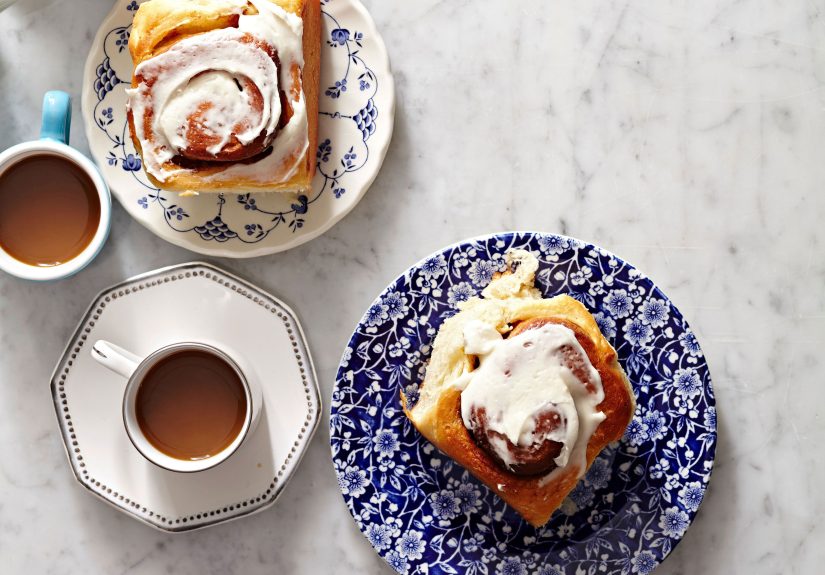
Upgrade #9: Frost Like a Bakery (Tangy, Glossy, Not Tooth-Aching)
Store-bought icing is often just sugar with vibes. A bakery-style topping has tang (cream cheese), salt (yes), and enough fat to feel silky instead of gritty.
Frosting timing: the goldilocks moment
- Too hot: frosting melts into a thin, greasy glaze.
- Too cool: frosting sits on top like drywall paste.
- Just right: rolls are warm, frosting melts slightly, and you get swoops plus a little drip.
Bakery flavor boosters
- Vanilla: real extract or vanilla bean paste for depth.
- Citrus zest: lemon or orange to brighten sweetness.
- Brown butter: add a spoonful to the frosting for a nutty finish.
- Salt: a tiny pinch makes everything taste more “expensive.”
Optional “Unfair Advantage” Moves (Use Responsibly)
The heavy cream pour
Some bakers pour a little heavy cream around (and sometimes over) the rolls before baking for extra gooeyness. It can create a rich, almost custardy vibeespecially helpful if you’re baking in a drier oven or using store-bought dough. If you try it, start small so you don’t turn your pan into cinnamon soup.
Gooey filling insurance
Want a swirl that stays glossy longer? A small amount of starch in the filling can help it set into a gooey ribbon instead of leaking out. This is especially helpful for giant rolls or extra-thick spirals.
A “Better Than Bakery” Blueprint You Can Follow
- Choose a plush dough: use a tangzhong-style base or a proven enriched dough recipe.
- Weigh ingredients: especially flour. Aim for soft, slightly tacky dough.
- Knead properly: build elasticity so the rolls rise tall.
- Rise until puffy: go by look and feel, not just time.
- Upgrade the filling: dark brown sugar, good cinnamon, pinch of salt, optional brown butter.
- Roll evenly and cut cleanly: floss/thread for perfect spirals.
- Proof smart: same-day warm proof or overnight fridge method.
- Bake tender: don’t overbake; tent if needed.
- Frost at the right moment: warm rolls, tangy frosting, tiny pinch of salt.
Troubleshooting: Fix the Most Common Cinnamon Roll Disasters
“Mine are dense.”
- Likely cause: too much flour or under-proofing.
- Fix: weigh flour; let dough rise until truly puffy; keep proofing area warm and steady.
“My filling leaks out.”
- Likely cause: too much loose sugar or butter, or an uneven roll.
- Fix: spread soft butter evenly (not pooled); consider a touch of starch; roll evenly and seal the seam.
“They’re dry the next day.”
- Likely cause: overbaking or a dough that doesn’t retain moisture well.
- Fix: bake less; try a tangzhong-style dough; store airtight; rewarm gently before serving.
“The tops brown too fast.”
- Likely cause: oven hot spots or a dark pan.
- Fix: rotate the pan; tent with foil; consider lowering oven temp slightly next time.
Conclusion: Yes, You Can Out-Bakery the Bakery
The bakery isn’t unbeatablethey’re just consistent. Once you nail plush dough, temperature control, bold filling, clean cuts, and frosting balance, you’ll make cinnamon rolls that are softer, gooier, and more flavorful than the ones behind glass.
And if anyone asks why yours are better, you can say, “I used science,” and then take another bite like the legend you are.
Experience Notes (Extra ): What I Learned After Chasing ‘Perfect’ Cinnamon Rolls
The first time I tried to “beat the bakery,” I did what many confident beginners do: I improvised. I eyeballed the flour, got impatient during the rise, and treated kneading like an optional side quest. The rolls looked fine in the pan, but once baked, they had the texture of polite disappointmentdry at the edges, tight in the center, and somehow both sweet and bland. The bakery remained undefeated, and my kitchen smelled like hubris.
Batch two taught me the truth about flour: it’s not that cinnamon roll dough hates youit just hates randomness. I finally used a scale, and the dough immediately behaved like it had been waiting for me to become serious. It felt softer, less stiff, and easier to roll without springing back. The finished rolls had that pull-apart look I thought only professionals could achieve. That was my first “oh, this is why bakeries win” moment: they remove guesswork on purpose.
Batch three was the temperature lesson. My kitchen runs cool, and I proofed the dough on the counter like it was July. It rose, but slowly, and I baked too early because I wanted progress. The result was densenot catastrophic, but not triumphant. The next time, I proofed in the turned-off oven with the light on, and everything changed: the dough inflated like it suddenly believed in itself. The rolls baked taller and softer, and the spirals looked more dramatic because the dough had enough gas to expand. I stopped treating “rise time” as a fixed number and started treating it as a visual cue: puffy, jiggly, and clearly larger than before.
Batch four was the filling fiasco. I went heavy on butter because I assumed “more butter” automatically equals “better.” In the oven, the butter melted, the sugar liquefied, and the filling slid out like it was trying to escape the consequences of my decisions. The rolls still tasted good, but the swirl wasn’t gooeyit was gone. After that, I used softened butter (spreadable, not drippy), added a pinch of salt, and kept the filling even rather than thick in patches. Suddenly the cinnamon flavor stayed where it belonged: inside the roll, not pooled around it.
The final boss was frosting. I used to dump powdered sugar into cream cheese and call it a day. It was sweet, surebut flat. Once I started adding a pinch of salt and a little vanilla, the flavor snapped into focus. The frosting tasted “round,” like something you’d happily lick off a spoon when nobody’s watching. Timing mattered too: spreading it on warm rolls gave me the best of both worldsmelty edges plus thick swoops on top. That’s when I realized the bakery advantage isn’t magic. It’s a dozen small choices that add up. Make those choices at home, and the bakery becomes… just another option.