Table of Contents >> Show >> Hide
- Before You Start: Know Your Backpack’s “Zones”
- Step-by-Step: How to Organize Your Backpack in 14 Simple Steps
- Step 1: Completely Empty Your Backpack
- Step 2: Shake, Vacuum, and Wipe It Out
- Step 3: Sort Everything into Categories
- Step 4: Declutter Ruthlessly
- Step 5: Choose the Right Pouches and Cases
- Step 6: Prioritize by How Often You Use Things
- Step 7: Load Heavy Items Close to Your Back
- Step 8: Use the Middle Zone for Notebooks and Folders
- Step 9: Reserve the Front Pocket for Quick-Grab Essentials
- Step 10: Use Side Pockets Wisely
- Step 11: Create a Safe Spot for Valuables
- Step 12: Contain Food and Drinks
- Step 13: Compress and Fill Gaps
- Step 14: Do a Final “Daily Use” Check
- How to Keep Your Backpack Organized Long-Term
- Extra Tips for Specific Situations
- 500-Word Experience Section: Real-Life Lessons on Backpack Organization
Ever reach into your backpack and pull out a crumpled handout, a leaky pen, and a mystery snack from last semester?
Yeah… we’ve all been there. The good news is that organizing your backpack isn’t rocket science. With a clear plan,
a few simple tools, and some smart habits, your backpack can go from “black hole of doom” to a streamlined command
center for school, work, or travel.
In this guide, we’ll walk through 14 practical steps to organize your backpack, with tips based on real-world advice
from teachers, travelers, and gear experts. Imagine each step as if you’re looking at a picture: where things go,
how they’re grouped, and why it matters. By the end, you’ll know exactly what belongs where, how to keep everything
accessible, and how to maintain that glorious order longer than one day.
Before You Start: Know Your Backpack’s “Zones”
Think of your backpack as a tiny apartment with different rooms:
- Main compartment: for large, heavy items like textbooks, laptop sleeves, or clothing.
- Secondary compartment: for notebooks, folders, and medium-size gear.
- Front pocket(s): for quick-grab items like pens, earbuds, keys, and hand sanitizer.
- Side pockets: for water bottles, umbrellas, or snacks.
- Hidden/anti-theft pocket (if you have one): for wallet, passport, or important cards.
Organization experts often talk about three big principles when packing any bag:
Accessibility, Balance, and Compression. Keep what you use most within easy reach, put heavy items
close to your back so the weight feels lighter, and compress bulky stuff so you’re not wasting space. When you follow
these rules, the backpack feels like it works with you instead of against you.
Step-by-Step: How to Organize Your Backpack in 14 Simple Steps
Step 1: Completely Empty Your Backpack
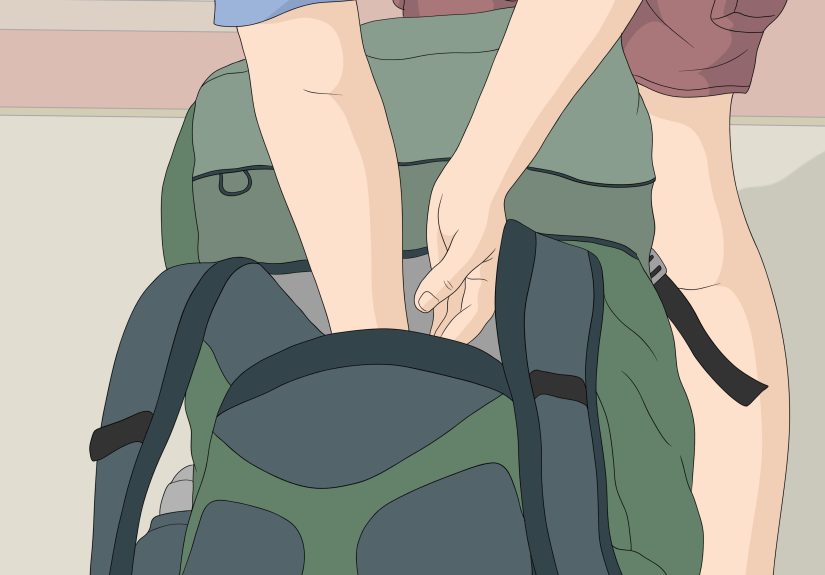
Start by dumping everything out onto a table or the floor. Yes, everything papers, crumbs, coins, and that pen cap
from 2022. This “backpack reset” gives you a clean slate and helps you see what you actually have instead of what you
think is in there.

Step 2: Shake, Vacuum, and Wipe It Out
Turn the backpack upside down and gently shake out crumbs and debris. If you’re feeling extra, use a handheld
vacuum or the hose attachment on your vacuum cleaner. Then, wipe the interior with a slightly damp cloth. If
your backpack’s care label allows, spot-clean stains with a mild soap solution.
A clean bag isn’t just satisfying; it also helps protect your stuff especially laptops, notes, and white T-shirts
that don’t need a new ink stain.
Step 3: Sort Everything into Categories
Next, sort your pile into groups. For a school or work backpack, try:
- Books & notebooks
- Tech: laptop, tablet, chargers, power bank, earbuds
- Writing tools & office supplies: pens, pencils, highlighters, sticky notes
- Personal items: wallet, keys, ID, lip balm, medication
- Food & drink: snacks, lunch, water bottle
- Random stuff: receipts, wrappers, old assignments, coins
By grouping everything now, you’re basically drawing the “map” for how your backpack will look when it’s organized.
Step 4: Declutter Ruthlessly
Be honest: do you really need three dried-out highlighters, last year’s math packet, and a broken hair tie?
Probably not. Toss anything that’s trash, recycle old papers you don’t need, and move nonessential items to a drawer
at home. Keep only what you actually use during a typical day or trip.
A simple rule: if you haven’t used it in the last week (for everyday carry) or it has no clear purpose, it doesn’t
need to live in your backpack.
Step 5: Choose the Right Pouches and Cases
Loose items are what turn backpacks into chaos. Fix that with small organizers:
- Pencil case: for pens, pencils, erasers, markers, and a small ruler.
- Tech pouch: for charging cables, adapters, USB drives, and a power bank.
- Toiletry or “comfort” pouch: for tissues, sanitizer, lip balm, pain relievers, etc.
- Snack bag: reusable silicone bag or small pouch for granola bars and other snacks.
Many travelers and students also use packing cubes or mini organizers to keep clothing or gym gear
neat. These small cubes or pouches can significantly improve how efficiently you use the space in your backpack and
keep things from turning into a messy pile.

Step 6: Prioritize by How Often You Use Things
A pro strategy many organizers recommend: place items based on how often you use them.
- Every hour: phone, pens, small notebook, earbuds, lip balm.
- Every day: main notebooks, planner, laptop, water bottle.
- Occasionally: extra chargers, backup pens, emergency snacks.
The more often you use something, the closer to the top or outer pockets it should be. This cuts down on digging and
keeps your backpack from exploding open every time you need one tiny thing.
Step 7: Load Heavy Items Close to Your Back
When organizing your backpack, where you place weight really matters. Put the heaviest items like textbooks,
laptop, or big binders in the main compartment, centered and as close to your back as possible. This keeps the
weight balanced and reduces strain on your shoulders.
If your backpack has a padded laptop sleeve, slide your laptop in first. Then stack heavier books or folders right
next to it. Lighter items can sit toward the front of the compartment.
Step 8: Use the Middle Zone for Notebooks and Folders
After the heavy core is in place, slide in your notebooks, folders, and planner. Keep anything that needs to stay
flat (like important documents or art portfolios) in a folder or document sleeve to prevent bending.
If you’re traveling, this “middle” zone might be where rolled clothing, a light sweater, or a tablet goes. The idea
is to fill the space without making the front of the backpack too bulky.
Step 9: Reserve the Front Pocket for Quick-Grab Essentials
The front pocket is your “quick access” zone. Ideal items for this area:
- Phone (if not in your pocket)
- Pencil case
- Earbuds or headphones
- Small notepad
- Hand sanitizer and tissues
- Student ID, bus pass, or building access card

Step 10: Use Side Pockets Wisely
Side pockets were basically invented for water bottles, but they’re also great for umbrellas or small snack containers.
Try to carry only one or two bulky items on the outside so your bag doesn’t get lopsided or knock into doorframes.
If your side pocket zips or has a flap, you can also use it for things like sunglasses or a small pack of wipes
just be sure they’re secure and won’t fall out when you take the backpack off.
Step 11: Create a Safe Spot for Valuables
Many modern backpacks include a hidden or internal zippered pocket. Use that space for important items:
- Wallet
- Keys
- Passport (if traveling)
- Emergency cash
Don’t leave these floating loose in the main compartment that’s how things fall out, get lost, or turn into a
“panic-search” moment at the bus stop.
Step 12: Contain Food and Drinks
Food and school papers are natural enemies. Put snacks in a sealed container or dedicated pouch, and keep them away
from notebooks and electronics. If you carry lunch, use a separate lunch bag that can sit on top of books or in a
different compartment.
Always make sure water bottles are fully closed and stored upright. If your backpack has an external bottle pocket,
use it that one design choice has saved more laptops than we’ll ever know.
Step 13: Compress and Fill Gaps
Once the big items are in, look for empty spaces you can fill with soft, flexible things:
- A light jacket or hoodie
- Gym T-shirt or small towel
- Soft pencil pouch or glasses case
Rolling soft items instead of folding them can help save space and reduce wrinkles a trick many travel experts
recommend. The idea is to reduce empty air pockets so things don’t shift around every time you walk.
Step 14: Do a Final “Daily Use” Check
Before zipping up, imagine your day from morning to night. Will you need your laptop in first period? A calculator
in math? Headphones on the bus? Make sure those items are easy to grab without unpacking half your bag.
Try putting the backpack on and walking around your room. If it feels too heavy, remove non-essential items. If
something digs into your back, rearrange until the weight feels smooth and balanced.
How to Keep Your Backpack Organized Long-Term
Set a 2-Minute Daily Reset
At the end of each day, take two minutes to:
- Remove trash and food wrappers.
- Return loose pens to the pencil case.
- Take out anything you don’t need tomorrow.
This tiny habit is the difference between “always organized” and “back to chaos in three days.”
Do a Weekly Deep Clean
Once a week, do a mini-version of the full reset: empty the backpack, sort quickly, and weed out extras.
It only takes a few minutes once you’re in the habit, and you’ll catch things like crumpled handouts or random
receipts before they pile up.
Match Your Backpack Setup to Your Life
Your backpack for school, work, hiking, or travel may look different, and that’s okay. The system stays the same:
- Group similar items together.
- Keep essentials accessible.
- Balance the weight.
- Use pouches or cubes to control clutter.
You can always tweak your layout as your schedule changes new classes, a new job, or a different commute.
Extra Tips for Specific Situations
For School or College
- Keep one folder labeled “To File” for papers you’ll store at home later.
- Use color-coded notebooks or tabs so you’re not constantly flipping pages.
- Carry only the textbooks you need for that day if your schedule allows.
For Work or Commuting
- Use a slim laptop sleeve even if your backpack has padding, for extra protection.
- Keep a dedicated pocket or pouch for business cards, ID badges, and small documents.
- Have a tiny “emergency kit” with bandages, pain reliever, and a spare charging cable.
For Travel or Day Trips
- Use packing cubes or small roll-up organizers for clothes and undergarments.
- Keep travel documents (passport, tickets) in a secure internal pocket.
- Store snacks and a reusable water bottle easy to reach for long days out.
500-Word Experience Section: Real-Life Lessons on Backpack Organization
Let’s talk real life because theories are nice, but your backpack has survived bus rides, rainy sidewalks, and
at least one emergency sprint to class. Here are some lived-in lessons that show how these organizing ideas actually
play out day-to-day.
First, there’s the “everything everywhere” backpack. Maybe you’ve had one: loose papers, headphones tied in a knot
with your charger, a calculator at the very bottom. One student decided to fix this after realizing they were losing
points for not turning in assignments that were literally in their bag just impossible to find. After doing a full
empty-and-sort session, they set up three main systems: one folder for each subject, a pencil case, and a “front
pocket kit” with earbuds, ID, and a mini pack of tissues. Within a week, they weren’t hunting for papers anymore, and
their stress level dropped just because they could find things when they needed them.
Commuters and travelers see similar wins. One office worker who switched from a shoulder bag to a backpack realized
their back pain wasn’t just about the weight it was how that weight was distributed. Their old habit was to toss
the laptop wherever it fit and let lunch and notebooks slide around. After reorganizing so the laptop and work files
sat upright in the back panel and everything else layered in front, the load suddenly felt lighter. They added a small
tech pouch for chargers and a separate pouch for personal items. Now, instead of digging in the bottom of the bag on
the train, they can reach down and grab exactly what they want.
Travelers often talk about “backpack regret” packing too much and then regretting every step in the airport.
People who’ve dialed in their system tend to do one smart thing: they make a checklist before they pack and stick to
it. That list forces you to think about what you actually use: one hoodie, not three; a compact umbrella instead of a
bulky rain jacket for a quick city trip; a small number of versatile clothing pieces instead of packing for every
possible weather mood. Their backpacks end up lighter, and because everything is grouped (clothes in one cube,
toiletries in another, electronics in a pouch), unpacking and repacking at hotels becomes a three-minute job instead
of a floor-covering explosion.
Another common experience is realizing that “tiny daily habits” matter more than the big organizing day. People who
consistently have tidy backpacks don’t spend hours organizing they spend a minute or two. They toss wrappers at the
end of the day. They put pens back into the pencil case instead of dropping them loose. They pull out old handouts
every Friday and either file them or recycle them. None of these habits is dramatic on its own, but together, they
prevent the slow slide back into chaos.
Finally, the best systems are personal. Some people love lots of small pockets; others prefer one big space and a
couple of pouches. Some want every item in a labeled cube; others just need one or two organizers to keep the chaos
in check. The key is to try a layout, live with it for a week, and notice what still feels annoying. Do you always
need your earbuds but they’re buried? Move them to the front pocket. Do you carry textbooks you never open at school?
Leave them at home unless you actually need them. Over time, your backpack becomes custom-tuned to your life not
just neat, but genuinely useful.
When you put all of this together the 14-step process, the zoning, the pouches, the daily reset, and the tweaks
based on your real routine you get more than just a clean backpack. You get a smoother day, fewer “I swear it was
in here” moments, and a little extra mental energy for the things that really matter.