Table of Contents >> Show >> Hide
- What Is Candy Crush Saga?
- How the Basic Rules Work
- Understanding Candy Crush Level Goals
- The Best Beginner Strategy for Candy Crush Saga
- Common Blockers and How to Handle Them
- Lives, Progress, and Playing Smarter
- Biggest Beginner Mistakes to Avoid
- The Real Candy Crush Experience: What Playing Actually Feels Like
- Final Thoughts
- SEO Tags
If you have ever opened Candy Crush Saga “just for a minute” and then looked up 45 minutes later like you had been abducted by a very colorful sugar wizard, welcome. You are among friends. Candy Crush Saga looks simple at first glance: match candies, clear the board, collect rewards, repeat until your phone battery starts sending passive-aggressive signals. But once the game starts throwing blockers, layered jelly, tricky objectives, and those brutally tempting near-wins at you, it becomes clear that this is not just a cute mobile puzzle. It is a strategy game wearing a candy costume.
If you are brand new to the game or you have played casually without ever really understanding why some levels feel easy and others feel like they were designed by a mischievous jellybean with a grudge, this guide will help. Below, you will learn how to play Candy Crush Saga, how the main mechanics work, what the different level goals mean, which special candies matter most, and what smart players do to improve without turning every level into a dramatic soap opera.
What Is Candy Crush Saga?
Candy Crush Saga is a match-3 puzzle game from King. The basic idea is wonderfully simple: you swap adjacent candies to make a line of at least three matching pieces. When they match, they disappear, new candies drop in, and you work toward the level’s objective. Sounds easy, right? That is exactly how Candy Crush gets you. It opens the door with a smile, hands you a striped candy, and then several levels later asks you to clear stubborn blockers in a limited number of moves while chocolate spreads across the board like it owns the place.
The reason the game has stayed popular is that it constantly adds variety. Some levels ask you to clear jelly. Others ask you to collect special orders, drop ingredients, spread jam, or guide Gummi Dragons to the bottom. There are thousands of levels, frequent events, daily rewards, and a steady stream of boosters that can help when a puzzle starts acting like it took your last nerve personally.
How the Basic Rules Work
Match Three to Start
At its core, Candy Crush Saga works like this: swap two adjacent candies so they create a horizontal or vertical line of three or more of the same color. That match clears the candies and makes room for new ones to fall into place. If those falling candies create new matches automatically, you trigger a cascade. Cascades are glorious. They save moves, clear more space, and make you feel like a genius even when gravity did half the work.
Every level has a specific goal and a limited number of moves. That means random swiping is a fast path to heartbreak. Before making your first move, glance at the goal. Are you clearing jelly? Collecting orders? Dropping dragons? The objective matters more than raw points in most levels. A flashy move that does nothing for the goal is basically candy theater.
How to Make Special Candies
Special candies are where Candy Crush stops being a casual matching game and starts becoming a real strategy puzzle. If you learn how to make them consistently, you will play smarter, waste fewer moves, and clear tough boards much faster.
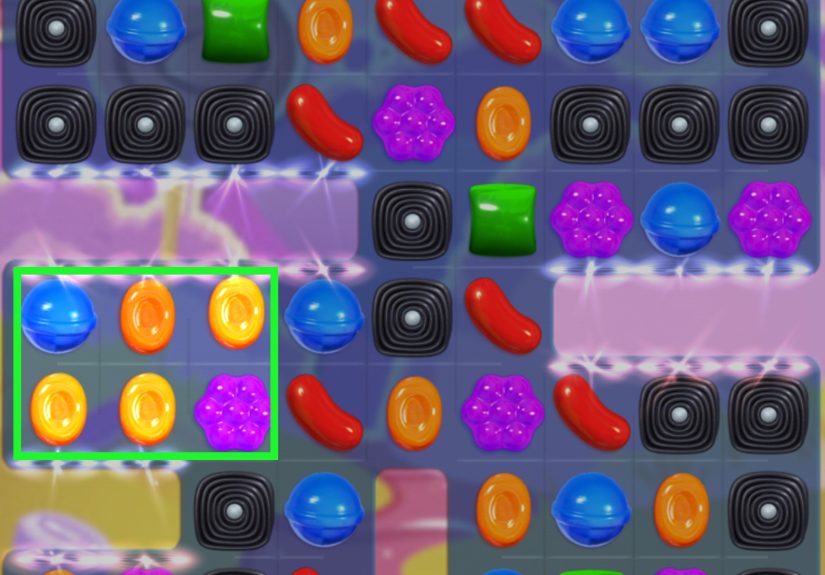
- Striped Candy: Match four candies in a straight line. When activated, it clears an entire row or column depending on its stripe direction.
- Wrapped Candy: Match five candies in an L or T shape. It explodes and clears the surrounding area, which makes it especially useful in cramped boards and blocker-heavy levels.
- Color Bomb: Match five candies in a straight line. Switch it with a regular candy and it clears every candy of that color from the board. This is the rock star of Candy Crush. Treat it accordingly.
If you only remember one thing from this section, remember this: special candies win levels. Ordinary three-candy matches keep the board moving, but special candies are what break open difficult puzzles.
Why Combining Special Candies Matters
A special candy is powerful. Two special candies together are where the magic turns into mayhem.
Some of the most effective combinations include a striped candy with a wrapped candy, a color bomb with a striped candy, and the legendary color bomb plus color bomb combo. That last one wipes out nearly everything in sight and feels like setting off a fireworks show in a candy factory. These combinations are often the difference between “almost had it” and “never doubted myself for a second,” even if you absolutely doubted yourself five seconds earlier.
Understanding Candy Crush Level Goals
One of the biggest mistakes beginners make is assuming every level should be played the same way. It should not. Candy Crush level types change how you think.
Clear the Jelly
In jelly levels, your job is to remove all jelly from the board. Some jelly has multiple layers, so you may need to hit the same tile more than once. These levels often hide jelly in awkward corners or under blockers, which means you need to pay attention to the hard-to-reach spaces instead of just making the biggest match in the center.
Collect the Orders
Order levels require you to collect specific candies, blockers, or special combinations. This is where players often waste moves because they focus on clearing whatever is nearest rather than making the exact items the game is asking for. If the level wants striped candies or color bombs, you need to build those on purpose. Candy Crush is not being vague here. It wants what it wants.
Release the Gummi Dragons
These levels ask you to guide Gummi Dragons down to the bottom of the board. The strategy here is usually less about clearing everything and more about opening a path. Think less “demolish the whole room” and more “clear the hallway so the guests can leave.”
Other Modes and Mixed Levels
As you progress, Candy Crush introduces more variety, including mixed levels and special board mechanics. Some levels blend objectives, which is the game’s way of saying, “You have learned one thing. Here are two things at once. Good luck.” In these levels, planning becomes even more important because every move needs to pull double duty.
The Best Beginner Strategy for Candy Crush Saga
1. Start Looking at the Bottom of the Board
One of the most useful Candy Crush tips is to look for matches near the bottom first. Why? Because moves at the bottom tend to create chain reactions as candies fall from above. Those extra drops can form bonus matches, create special candies, and open up the board without spending extra moves. It is the puzzle-game version of getting more fries than you ordered.
2. Read the Objective Before Your First Move
This sounds obvious, yet many players skip it in the excitement of crushing something immediately. Resist the urge. If your target is jelly in the corners, then center-board matches are not the priority. If your target is an order, then build the pieces you need. The level goal should guide every decision.
3. Create Special Candies Deliberately
Do not wait for special candies to appear by accident. Train your eyes to spot four-in-a-row and five-candy patterns. Once you get comfortable seeing them, the whole game changes. Levels that once felt unfair suddenly start looking manageable because you are no longer playing one move at a time. You are building outcomes.
4. Clear Blockers Early When They Restrict the Board
Blockers are designed to slow you down, clog the board, and force awkward moves. Frosting, licorice, chocolate, candy cane fences, and other obstacles can cut off useful sections of the board or hide important tiles. If a blocker is limiting your space or preventing ingredients, jelly, or orders from being reached, deal with it early. A locked-up board is a stingy board.
5. Save Boosters for the Right Moment
Boosters can be earned or bought, and they are wonderful helpers when used wisely. But blowing through them the second a level looks slightly rude is not a long-term plan. Try a level a few times first. Learn its layout. Figure out where the real trouble spots are. Then use a booster if it truly gives you an advantage.
Some common boosters include Jelly Fish, Coconut Wheel, Lollipop Hammer, Free Switch, Extra Moves, and pre-game combinations like Striped and Wrapped. The Lollipop Hammer is especially helpful when one stubborn tile is standing between you and victory like a tiny candy villain.
Common Blockers and How to Handle Them
Blockers are a huge part of learning how to play Candy Crush Saga well. Most do not move, and many have layers, meaning you have to hit them more than once. The faster you understand what a blocker is doing to your board, the faster you stop wasting moves.
Chocolate
Chocolate is one of the most annoying obstacles because it can spread if you leave it alone. If chocolate is active on your board, it usually deserves quick attention. Ignoring it for several turns can turn a manageable level into a sticky disaster.
Licorice and Layered Blockers
Licorice, frosting, and similar blockers are there to absorb hits and slow your progress. Wrapped candies and strong combos are especially useful here because they damage multiple spaces at once. When you see layers, think area damage.
Candy Cane Fences
These are indestructible barriers that block candies from matching or falling across them. Since you cannot remove them, the trick is to work around them and use special candies to affect tiles on the other side. This is one of those moments where Candy Crush politely reminds you that brute force is not always the answer.
Lives, Progress, and Playing Smarter
Candy Crush uses a lives system. If you fail a level, you lose a life. When you run out, new lives refill over time, typically one every 30 minutes. You can also receive lives from friends, use unlimited-lives rewards when available, or buy more if you want to keep going immediately.
The game also includes daily rewards, timed events, leaderboards, and rotating challenges. These features are not just decorative confetti. They can help you collect boosters, extra lives, and other rewards that make progression easier. If you are playing regularly, it is smart to check events before diving into a long session. A level you were going to play anyway might count toward a bonus.
Another useful mindset: not every failed level means you played badly. Sometimes a board is simply awkward. Sometimes the candy drops do you no favors. Good players do not panic. They adjust. They study the layout. They try again with a better plan. Or they take a break before they start negotiating emotionally with a cartoon jelly fish.
Biggest Beginner Mistakes to Avoid
- Playing for points instead of the objective: High scores do not matter if the jelly is still sitting smugly in the corner.
- Ignoring special-candy opportunities: Small matches feel productive, but bigger setups usually win levels.
- Wasting boosters too early: A booster should solve a real problem, not a temporary annoyance.
- Focusing only on the center: Edges, corners, and blocked sections often hold the actual challenge.
- Panicking near the end: Endgame moves matter most. Slow down and look for the move that helps the goal, not just the move that looks flashy.
The Real Candy Crush Experience: What Playing Actually Feels Like
Now for the fun part: the experience of playing Candy Crush Saga is half strategy, half emotional weather report. On paper, it is a match-3 game. In real life, it is a roller coaster made of sugar, tiny victories, and moments where one last move would have solved everything if the universe were a kinder place.
At first, Candy Crush feels friendly. The early levels are bright, generous, and eager to make you feel smart. You match a few candies, create a striped candy by accident, and suddenly the board explodes in your favor. You think, “Wow, I am naturally gifted at this.” The game lets you believe that for a while. Then, somewhere down the line, it politely removes the training wheels and hands you a level full of blockers, layered jelly, and a move count that feels disrespectfully low.
That is when the real Candy Crush experience begins.
One of the most relatable parts of playing is the near-win. You get a level down to one last jelly tile or one final order item, and the game ends. You stare at the screen like it personally betrayed you. Then comes the classic internal debate: walk away like a calm adult, or try again immediately because this time it will absolutely, definitely, certainly work. Most players know how that goes.
Then there is the special-candy high. Very few things in casual gaming feel as satisfying as setting off a color bomb with a striped candy and watching the board light up like a candy-themed fireworks show. It is loud, dramatic, and deeply satisfying. Even people who claim they are “just casually playing” become suspiciously focused when a perfect combo is one move away.
Candy Crush also has a strange way of teaching patience. Some levels are solved by brute force, but many are solved by learning the board, spotting the real bottleneck, and waiting for the right setup instead of making the first available match. Players often start out impatient and gradually become more strategic. Or at least strategic enough to say, “No, I am not making that match yet,” which is genuine personal growth in the Candy Kingdom.
And yes, there is a social side to the experience too. Comparing progress with friends, swapping lives, or quietly noticing that someone you know is somehow 3,000 levels ahead can make the game even more entertaining. Candy Crush has always been easy to pick up in short bursts, which is part of why it works so well. One level while waiting in line becomes three levels on the couch, which becomes a full evening wondering why a cartoon dragon is now central to your plans.
Ultimately, the experience of playing Candy Crush Saga is so memorable because it mixes simple mechanics with real puzzle-solving satisfaction. It is easy enough to start without a manual, but layered enough to reward skill, observation, and patience. It can be funny, frustrating, oddly relaxing, and occasionally ridiculous. In other words, it is exactly the kind of game that keeps people coming back for “just one more level,” long after they should probably be doing something else.
Final Thoughts
If you want to know how to play Candy Crush Saga well, the secret is not raw speed or blind luck. It is understanding the level objective, spotting special-candy opportunities, working from the bottom when possible, managing blockers early, and using boosters strategically instead of emotionally. The game may look sweet and simple, but the best players know it rewards planning, patience, and the occasional beautifully chaotic combo.
So go ahead: read the board, make smarter matches, and let those striped candies fly. Just do not blame anyone when “one quick level” turns into a full-blown candy campaign.