Table of Contents >> Show >> Hide
- Start With Safety, Not Paint Chips
- If Your House Was Built Before 1978, Treat Paint Like It Might Be Lead
- PPE: Your “Cute Outfit” for Exterior Painting
- Ladders and Work Platforms: Where Most “Oops” Happens
- Wash and Prep Without Damaging the House (or Yourself)
- Scrape, Sand, PatchSafely
- Weather Is Your Co-Worker (and Sometimes a Saboteur)
- Painting Day: Safe Workflow and Pro-Level Habits
- Cleanup and Disposal: Don’t Gift Your Trash Collector a Surprise
- Quick Safety Checklist (Print This Before You Climb Anything)
- Experiences and Lessons That Make Exterior Painting Safer (and Way Less Stressful)
- Conclusion
Exterior painting is one of the fastest ways to boost curb appealwithout moving your kitchen to the driveway. But it’s also a project where “just wing it”
can turn into a surprise trip to urgent care (or at least an awkward conversation with your neighbor about why your ladder is lying in their azaleas).
The good news: you can absolutely paint your home’s exterior safely if you plan like a grown-up, prep like a pro, and treat heights, dust, and chemicals with
the respect they deserve.
This guide walks you through safe exterior house painting from the first inspection to the final cleanupcovering lead paint precautions, ladder safety, PPE,
weather strategy, and disposal. It’s written for DIY homeowners, but it’ll also help you sound impressively informed if you’re hiring a contractor.
Start With Safety, Not Paint Chips
Decide if this is a DIY jobor a “call the pros” job
Painting a single-story ranch with easy access is one thing. Painting a steep, three-story Victorian with dormers, power lines nearby, and a roof pitch that
looks like it was designed by a mountain goat? That’s a different genre of entertainment.
- DIY-friendly: One story, stable ground, limited scraping, minimal repairs.
- Consider hiring out: Multiple stories, extensive peeling paint, complicated scaffolding, or any suspected lead paint in rough condition.
- Non-negotiable: If you’re uncomfortable on ladders, don’t “practice” 20 feet in the air. Safety isn’t a personality test.
Walk the property like a safety inspector
Before you buy paint, do a slow lap around the house and look for hazards:
uneven soil, sprinkler heads, hidden steps, slippery moss, low branches, patio furniture, kids’ toys, and anything else that wants to trip you at the worst moment.
Identify where you’ll set ladders, where you’ll stage supplies, and how you’ll keep people and pets out of the work zone.
If Your House Was Built Before 1978, Treat Paint Like It Might Be Lead
Homes built before 1978 in the U.S. may have lead-based paint. Scraping, sanding, drilling, or cutting painted surfaces can release lead dust and chips.
Lead exposure is especially dangerous for children, and renovations are a well-known source of household exposure when done unsafely.
Even if you’re “just painting,” prep work can be the risky part.
Know the basics (without turning this into a law school exam)
If you hire a contractor to disturb paint in a pre-1978 home, federal requirements may apply (and firms may need to be certified and follow lead-safe work practices).
If you’re doing it yourself, you still want lead-safe methods to protect your household and neighborsbecause lead dust does not respect property lines.
Lead-safe exterior prep: practical rules that keep you safer
- Contain the debris: Use plastic sheeting or drop cloths to catch paint chips and dust. For older homes, extend protection well beyond the work area.
- Keep dust down: Use wet methods (misting) when scraping where appropriate, and avoid creating clouds of fine dust.
- Avoid high-dust methods: Open-flame burning or aggressive dry sanding can be hazardous. If sanding is necessary, use tools designed to control dust.
- Clean like you mean it: Pick up chips, seal debris bags, and keep the site tidy each day so the mess doesn’t spread.
- Protect kids and pets: Keep them away from the work zoneno exceptions, no “just for a second.”
If you suspect lead and the paint is badly peeling, you’re planning major disturbance (like stripping), or you have small children at home, consider bringing in a lead-safe certified professional.
Sometimes the safest DIY move is knowing when not to DIY.
PPE: Your “Cute Outfit” for Exterior Painting
Painting outside feels less intense than painting inside because you’re in the open air. That’s exactly why people get careless. The hazardsdust, flying debris,
chemical splashes, and fallsdon’t disappear just because you can see the sky.
Minimum protective gear for most exterior paint jobs
- Eye protection: Safety glasses (especially during scraping, sanding, power washing, and overhead work).
- Gloves: Chemical-resistant for cleaners/bleach solutions; durable work gloves for scraping and ladder handling.
- Clothing: Long sleeves and pants you don’t love. Add a hat for sun protection and a barrier against drips.
- Footwear: Closed-toe shoes with good traction. Flip-flops are for beaches, not ladders.
- Hearing protection: If using pressure washers or power tools for extended periods.
Masks vs. respirators: choose based on the hazard
A simple dust mask may not be enough for heavy sanding dust or potential lead dust. For particulate hazards, use a properly fitted, NIOSH-approved respirator
appropriate for the task. If you’re using solvent-heavy products or sprays, you may need protection for vapors as well.
Follow the product label and safety data sheet (SDS), and don’t guessyour lungs don’t do refunds.
Ladders and Work Platforms: Where Most “Oops” Happens
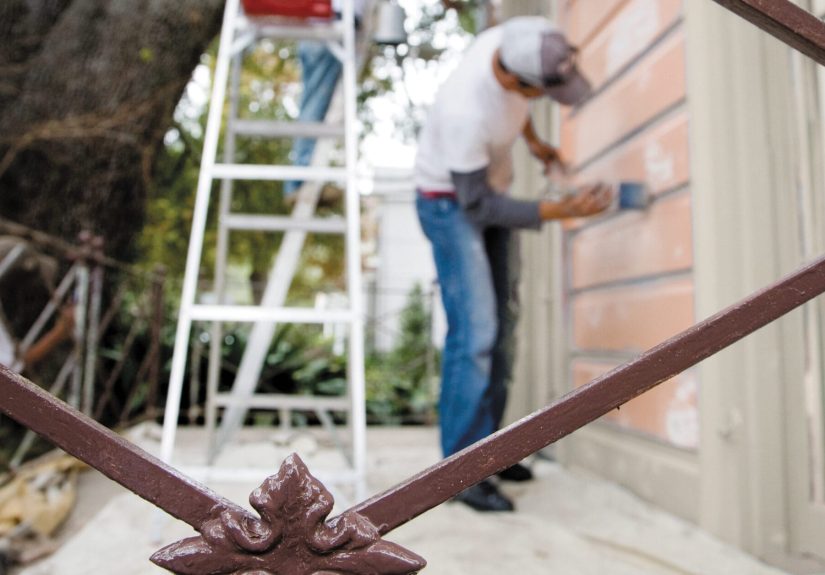
The most dangerous part of exterior painting is often not the paintit’s gravity. Ladder safety is non-negotiable.
Take the time to set up correctly and work like your future self is watching (because your future self is the one who has to live with the consequences).
Safer ladder setup
- Pick the right ladder: Use an extension ladder tall enough that you don’t stand on the top rungs.
- Use a stable base: Level ground is ideal. On slopes or soft soil, stabilize the footing or reposition.
- Angle matters: A common safety guideline is the 4-to-1 setup (for every 4 feet of height, the base is about 1 foot out).
- Top support: Secure the ladder if possible and avoid leaning it on gutters that can bend or fail.
- Stay clear of electrical hazards: Look up and around before raising or moving ladders.
Safer ladder habits while painting
- Three points of contact: Keep two hands and a foot, or two feet and a hand, in contact when climbing.
- Don’t overreach: If your belt buckle passes the ladder side rail, climb down and move the ladder. Yes, it’s annoying. So is falling.
- Keep tools controlled: Use a tool belt, bucket hook, or traydon’t climb with arms full of supplies.
- Take breaks: Fatigue turns “I’ve got this” into “why is the world sideways?”
For long sections or higher elevations, scaffolding can be safer than constantly repositioning a ladderespecially for cutting in, trim work, and detailed areas.
If you use scaffolding, follow the manufacturer instructions and keep platforms level and secured.
Wash and Prep Without Damaging the House (or Yourself)
Cleaning options: hose + brush vs. pressure washer
A clean surface helps paint stick. But “clean” doesn’t mean “blast the siding into another ZIP code.” Pressure washers can gouge wood, shatter glass,
or drive water behind siding and trim if you’re not careful. If you’re not experienced, a garden hose, pump sprayer, and scrub brush can be safer and surprisingly effective.
If you do pressure wash:
- Wear eye protection and sturdy shoeswet surfaces get slick fast.
- Start with a wider spray pattern and lower pressure.
- Keep the wand moving and avoid spraying upward under laps of siding.
- Keep people and pets away from the spray zone and flying debris.
- Inspect your equipment and follow manufacturer directions.
Mildew removal: yes, it matters (and no, don’t mix chemicals)
Painting over mildew is like putting a bandage over a leak. It will come back. Many pros use a bleach-and-water solution for mildew on exterior surfaces,
but the key safety rule is simple: never mix bleach with ammonia or other cleaners. Wear gloves and eye protection, rinse well,
and let surfaces dry fully before priming and painting.
Scrape, Sand, PatchSafely
Control dust and chips from day one
Prep work is the “boring” part that determines whether your paint job lasts five years or fails in one cranky season.
It’s also where you can create the most dust. Work in small zones. Capture debris. Keep it off soil and walkways.
If lead paint is possible, increase your containment and cleanup.
Repair problems before paint tries to “hide” them
Paint doesn’t fix rot, cracks, or loose caulkit just highlights them in a fresh, expensive color.
Replace rotten wood where needed, patch small holes, and recaulk gaps around trim, windows, and doors.
Use exterior-rated products and allow proper cure time. Rushing repairs is a great way to paint the same area twice: once now, and again after it fails.
Weather Is Your Co-Worker (and Sometimes a Saboteur)
Exterior paint needs the right conditions to dry and cure. Too cold, too hot, too humid, or too rainy, and your paint can blister, peel, or stay tacky longer than your patience.
Always follow the temperature and humidity guidance on your specific paint labeldifferent formulations have different limits.
Temperature and humidity: the “Goldilocks” zone
Many exterior paints perform best in moderate temperatures, often somewhere around the 50°F to 80–85°F range (but again: check your product).
High humidity can slow drying and encourage issues like poor adhesion and mildew.
If the forecast calls for big temperature drops at night, plan accordingly so paint has time to set up before conditions shift.
Dew point, rain, and the “it looked fine an hour ago” problem
Even without rain, heavy moisture can form on surfaces when temperatures approach the dew point.
If the siding feels damp in the morning, wait. Painting over moisture can trap water and undermine adhesion.
Also, don’t paint when rain is likely during the drying window. If you must paint during unpredictable weather, focus on smaller sections you can finish and protect.
Painting Day: Safe Workflow and Pro-Level Habits
Work top-down and keep a predictable rhythm
A safe paint day is organized. Start at the top and move down so drips don’t ruin finished work.
Keep your “wet edge” to avoid lap marks, and don’t paint yourself into a corner where you have to climb over freshly painted surfaces.
Keep paint and tools under control
- Stage supplies: Put paint, brushes, rollers, and rags in a stable, central spot to reduce trips up and down ladders.
- Close containers: Prevent spills, keep debris out, and reduce vapor exposure.
- Mind splatter zones: Cover plants, walkways, and fixtures with drop cloths. Bonus: fewer “oops” moments later.
- Use the right applicator: Brush and roll for control; spraying is faster but increases overspray risk and requires more protective measures.
Heat safety: exterior painting is sneaky-hard work
Painting outside can mean sun exposure, dehydration, and heat stressespecially in humid climates.
Take regular breaks, aim for cooler parts of the day when possible, and drink water consistently (not just when you feel thirsty).
Shade is a strategy, not a luxury.
Cleanup and Disposal: Don’t Gift Your Trash Collector a Surprise
Daily cleanup keeps hazards from spreading
At the end of each day, collect chips and debris, fold drop cloths carefully (so dust stays contained), and store tools where kids and pets can’t access them.
A tidy site is safer and makes the next day faster.
Latex vs. oil-based paint disposal
Disposal rules vary by location, but a common best practice is:
don’t throw liquid paint in the trash.
Many communities treat leftover paint as household hazardous waste (especially oil-based paint) and provide drop-off sites or special collection days.
Water-based latex paint is often allowed in regular trash only after it’s fully dried/solidifiedagain, check local requirements.
Oily rags can start firesseriously
If you use oil-based products, stains, or solvent-heavy coatings, treat used rags like a fire risk. Some oily rags can heat up as they dry and ignite if piled up.
Safer options include laying rags flat to dry outdoors away from structures (if allowed in your area), or storing them in a sealed, non-combustible container
meant for oily waste until proper disposal. This is one of those “sounds dramatic until it isn’t” safety rules.
Quick Safety Checklist (Print This Before You Climb Anything)
- Confirmed whether the home may have lead paint (especially if built before 1978).
- Set up a work zone: moved items, protected plants, and kept kids/pets away.
- Wore eye protection, gloves, proper footwear, and task-appropriate respiratory protection.
- Used stable ladder placement and avoided overreaching.
- Cleaned and dried surfaces fully before priming/painting.
- Controlled dust and captured debris during scraping/sanding.
- Checked weather, including overnight temperatures and rain risk.
- Planned hydration and breaks for hot or humid conditions.
- Cleaned up daily and disposed of paint and rags safely.
Experiences and Lessons That Make Exterior Painting Safer (and Way Less Stressful)
If you ask ten homeowners about exterior painting, you’ll get ten different paint colors and at least twelve stories that start with, “So I thought I could do it in a weekend…”
The most useful “experience-based” advice is usually not about the paint itselfit’s about the little safety and workflow decisions that either keep the project smooth
or turn it into a chaotic obstacle course with wet sleeves.
One common lesson: setup time is never wasted time. People who have a calmer, safer experience almost always do the same boring things up front:
they move hoses and furniture, they clear a wide walking path, they pick one place for tools, and they keep paint containers from wandering around the yard like lost pets.
That reduces trips, prevents spills, and cuts down on ladder climbsthe moment-to-moment risk in this job.
Another big takeaway: ladders punish impatience. Folks who feel safest tend to reposition more often than they think they “should.”
They avoid the lean-and-reach move (you know the one), and they treat climbing down as part of the process, not an interruption.
A surprising number of close calls happen late in the day when the last section is “so close” to finished and the body is tired.
Experienced DIYers often set a personal rule: if you catch yourself rushing, that’s your cue to take a break, drink water, and reset.
Weather teaches its own lessons. Many people learn that “no rain today” isn’t the whole storymorning dew, high humidity, or sharp temperature drops can mess with drying,
and they can also make surfaces slippery while you’re working. A practical habit is to do a quick touch test: if the siding feels damp or cool-wet in the shade, wait.
The safest painters tend to plan in shorter blocks (for example, “north wall prep in the morning, prime after lunch”) instead of trying to coat the entire house in one heroic push.
It’s less dramatic, but it’s also how you avoid painting into bad conditions.
Cleaning and prep is where “experience” really shows. People who’ve been through it once usually stop treating prep like an optional warm-up.
They wash away dirt and chalk, they handle mildew properly, and they don’t skip repairs hoping paint will cover everything.
Why does this matter for safety? Because poor prep often leads to rework: more scraping, more sanding, more ladder time, more fatigue.
A safer paint job is often the one you only have to do once.
Finally, the best lived-and-learned tip is about cleanup: don’t let the mess roam. Paint chips migrate.
Dust gets tracked into the house. Rags pile up. Drop cloths get stepped on. People with smoother experiences build a “closing routine” at the end of the day:
collect debris, fold coverings carefully, store chemicals out of reach, and leave the site ready for tomorrow. It’s oddly satisfyingand it keeps your project from becoming
a multi-day safety hazard disguised as home improvement.
If you take only one “experience” lesson, take this: exterior painting rewards the person who slows down just enough to stay in control.
You’ll paint straighter lines, you’ll make fewer mistakes, and you’ll dramatically reduce the chances that your big reveal includes an ice pack.
Conclusion
Learning how to safely paint your home’s exterior is really about managing three things: heights, hazards, and habits.
Respect ladders and platforms, take lead paint and dust control seriously (especially in older homes), choose PPE that matches the task, and work with the weathernot against it.
Do that, and your “fresh coat of paint” story ends with curb appeal and compliments… not a tale titled “How I Invented New Words While Falling Into a Shrub.”